

Finding flaws in mayor’s proposed fourth crisis response service

Advertisement
Read this article for free:
or
Already have an account? Log in here »
To continue reading, please subscribe:

Digital Subscription
One year of digital access for only $205*
- Enjoy unlimited reading on winnipegfreepress.com
- Read the E-Edition, our digital replica newspaper
- Access News Break, our award-winning app
- Play interactive puzzles
*First annual payment billed as $205.00 + GST for one year. This annual subscription will automatically renew at $233.00 + GST every 52 weeks (10% off the regular annual price of $259.35). Offer available to new and qualified returning subscribers only. Cancel any time.
To continue reading, please subscribe:
Add Free Press access to your Brandon Sun subscription for only an additional
$1 for the first 4 weeks*
- Enjoy unlimited reading on winnipegfreepress.com
- Read the E-Edition, our digital replica newspaper
- Access News Break, our award-winning app
- Play interactive puzzles
*Your next Brandon Sun subscription payment will increase by $1.00 and you will be charged $17.95 plus GST for four weeks. After four weeks, your payment will increase to $24.95 plus GST every four weeks.
Read unlimited articles for free today:
or
Already have an account? Log in here »
The best thing one can say about Mayor Scott Gillingham’s proposal for a fourth crisis response service — to deal with citizens suffering from mental health and addictions problems — is that there is still time to make it the response service the city actually needs.
As it stands, the proposal, which is largely shaped by a consultant’s report, is incomplete and steers well clear of the most critical issues faced by the city when it comes to finding the best and safest system to help people in the throes of a crisis.
To be fair, the mayor did not present this plan as a completed idea. We should also acknowledge that Gillingham is advancing a very important and much-needed idea.
However, the report treats the problem of mental health and addictions as largely a human resource challenge: how can we find trained civilians to assume responsibility for “wellness calls” to free police and the fire and paramedic services to do other, more appropriate work?
Taking the burden off other emergency responders is certainly part of the challenge.
As has been frequently pointed out, the police in particular are asked to attend far too many wellness calls that could be handled by civilians trained in addictions and mental health. Gillingham said as many as 10,000 of these calls could be diverted to a new crisis response service.
Unfortunately, diverting lower priority calls does make this a “crisis” response service. Citizens who are overcome by addictions or mental health problems will still face the police.
Freeing the police from these run-of-the-mill wellness calls may allow police to spend their time on more serious and more appropriate police tasks, but it won’t make people suffering from genuine crises any safer.
Freeing the police from these run-of-the-mill wellness calls may allow police to spend their time on more serious and more appropriate police tasks, but it won’t make people suffering from genuine crises any safer.
They tend to often be volatile, even violent. As is the case now, the proposal envisions that anyone demonstrating even the most modest sign of volatility or violence will be dealt with by police. And that often leads to tragedy.
On July 13, a man called 911 to report that his brother, who had long-standing mental health issues, had locked himself in the house they shared. The first call went unanswered for more than an hour, at which point the man inside the house had become more agitated and started yelling at his brother through the front window.
Following a second call for help, and based on the reports of more agitated behaviour, the decision was made to dispatch police rather than the Alternative Response to Citizens in Crisis unit — a hybrid response involving a police officer and mental health worker.
When police failed to get the man to surrender, he came out holding what was described as an “edged weapon.” Following procedure, the police shot the man and he died.

One can look at this event through a number of different lenses, but in essence here is what happened: a man suffering from a mental health crisis was shot and killed by police after he threatened the people he no doubt felt were threatening him.
As worthy as the mayor’s proposal is, neither he nor the consultant have to date advanced a single idea on how a situation such as this could be avoided through a change in protocol for triaging calls for assistance, or a change to provincial legislation to allow non-police resources to be used to execute orders under the public health law.
Another case in point: in February 2024, police were asked to apprehend a 59-year-old man who had failed to attend court-ordered psychiatric appointments and take him for an involuntary examination.
The man refused to come out of his house and then sprayed a fire extinguisher at officers who were trying to enter. This prompted a call for the police tactical unit, which used its armoured vehicle ram to break through plywood that covered the front window.
Eventually, police breached the house and found the man armed with an edged weapon. He was shot and killed.
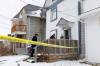
Again, the man was not acting violently or erratically until he was confronted by police. Mental health professionals believe that many situations could be de-escalated if trained civilians were employed to make first contact.
Considering cases such as this, the mayor’s proposal — again, as it stands now — is more about shifting the burden of non-crisis calls to civilians. That may be good for police resources, but it won’t save the lives of anyone experiencing a genuine crisis.
The mayor’s proposal as it stands now is more about shifting the burden of non-crisis calls to civilians. That may be good for police resources, but it won’t save the lives of anyone experiencing a genuine crisis.
The best news about the mayor’s proposal is that there is time to make it better.
The new fourth-arm of crisis response could be trained to deal with more volatile cases, and tasked to execute orders issued under the mental health law.
In instances where someone is armed and dangerous, police will be a necessary presence.
But there is every reason to believe that if trained civilians are dispatched to more serious cases, they will never escalate to the point where lethal force has to be applied.
At some point, the welfare of the people in crisis has to become part of this discussion. Otherwise, we will be sentencing them to death.
dan.lett@freepress.mb.ca
Dan Lett is a columnist for the Free Press, providing opinion and commentary on politics in Winnipeg and beyond. Born and raised in Toronto, Dan joined the Free Press in 1986. Read more about Dan.
Dan’s columns are built on facts and reactions, but offer his personal views through arguments and analysis. The Free Press’ editing team reviews Dan’s columns before they are posted online or published in print — part of the our tradition, since 1872, of producing reliable independent journalism. Read more about Free Press’s history and mandate, and learn how our newsroom operates.
Our newsroom depends on a growing audience of readers to power our journalism. If you are not a paid reader, please consider becoming a subscriber.
Our newsroom depends on its audience of readers to power our journalism. Thank you for your support.
Dan Lett is a columnist for the Free Press, providing opinion and commentary on politics in Winnipeg and beyond. Born and raised in Toronto, Dan joined the Free Press in 1986. Read more about Dan.
Dan’s columns are built on facts and reactions, but offer his personal views through arguments and analysis. The Free Press’ editing team reviews Dan’s columns before they are posted online or published in print — part of the our tradition, since 1872, of producing reliable independent journalism. Read more about Free Press’s history and mandate, and learn how our newsroom operates.
Our newsroom depends on a growing audience of readers to power our journalism. If you are not a paid reader, please consider becoming a subscriber.
Our newsroom depends on its audience of readers to power our journalism. Thank you for your support.
Related Articles
Mayor backs new way to handle 911 mental health, addiction calls


Advertisement Advertise With Us
Advertisement Advertise With Us