Lessons well drawn

Comic book legend Frank Miller shares insights on life, myth, the creative process and more

Advertisement

Advertise with us

Best known for Batman: The Dark Knight Returns and Sin City, Frank Miller is a multi-award-winning American comic book writer whose talent transcends that medium. He’s also a proficient screenwriter, film director and producer.

Read this article for free:


or

Already have an account? Log in here »

To continue reading, please subscribe:

Subscribe and receive a limited-edition Free Press branded hat or tote.

Digital Subscription

One year of digital access for only $205*

  • Enjoy unlimited reading on winnipegfreepress.com
  • Read the E-Edition, our digital replica newspaper
  • Access News Break, our award-winning app
  • Play interactive puzzles

*First annual payment billed as $205.00 + GST for one year. This annual subscription will automatically renew at $233.00 + GST every 52 weeks (10% off the regular annual price of $259.35). Offer available to new and qualified returning subscribers only. Cancel any time.

To continue reading, please subscribe:

Add Free Press access to your Brandon Sun subscription for only an additional

$1 for the first 4 weeks*

  • Enjoy unlimited reading on winnipegfreepress.com
  • Read the E-Edition, our digital replica newspaper
  • Access News Break, our award-winning app
  • Play interactive puzzles
Start now

*Your next Brandon Sun subscription payment will increase by $1.00 and you will be charged $17.95 plus GST for four weeks. After four weeks, your payment will increase to $24.95 plus GST every four weeks.

Best known for Batman: The Dark Knight Returns and Sin City, Frank Miller is a multi-award-winning American comic book writer whose talent transcends that medium. He’s also a proficient screenwriter, film director and producer.

Based on this book, he’s no slouch as a memoirist, either.

Equal parts memoir, tutorial, guide to the creative process and polemic, Push The Wall is a revealing view of the author/illustrator and a masterful exploration of the link between graphic storytelling and myth, religion and literature.

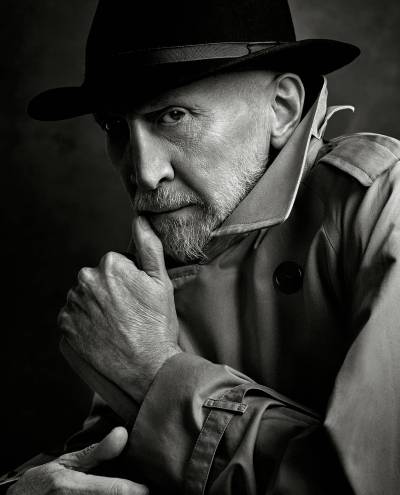
Sophy Holland photo
                                Frank Miller ’s book is equal parts memoir, tutorial, polemic and guide to the creative process.

Sophy Holland photo

Frank Miller ’s book is equal parts memoir, tutorial, polemic and guide to the creative process.

While its contents are styled as “lessons” for aspiring comic book writers, the book’s so broadly thoughtful it’ll hold appeal for anyone interested in art and its creation.

The title is an all-purpose metaphor for soldiering on in the face of obstacles — creative, occupational and political. Based on his recounting, Miller did that time and again, so much so he sometimes sounds like a cheerleader for the quality of perseverance.

He’s emphatic right off the hop about being pedagogical. Instead of dividing the book into chapters, he structures it as 16 lessons. The lessons imparted range from drawing techniques and mentor tributes to finances and maintaining creative control.

The book is technical at times, addressing layout, storyboarding, horizontal versus vertical panels and colouration. In many ways it’s a sibling to the raft of books on the market about how to write fiction.

Miller writes with passion and deep knowledge, not only about comic storytelling but also classical literature, the visual arts and mythology. At different points he references everyone from ancient Greek playwrights Aeschylus and Sophocles to modern noir-mystery masters Raymond Chandler and Dashiell Hammett, inclusive of detours to discussion of the works of Goya and El Greco.

While Miller is celebrated as an illustrator, and holds that “the combination of words and pictures is what makes comics unique,” he comes across as an old-fashioned storyteller.

“No matter the visual pyrotechnics and format innovations, a comic book is still a reading experience,” he writes, “and if you want to keep your readers, you had better tell them a story, and it better be a good one.”

In the same vein, he reminds contemporary wannabe superhero-crafting comic writers that theirs are legacy creations. “Heroes go way back — to Beowulf and Siegfried and Robin Hood and Moses and Samson,” Miller writes.
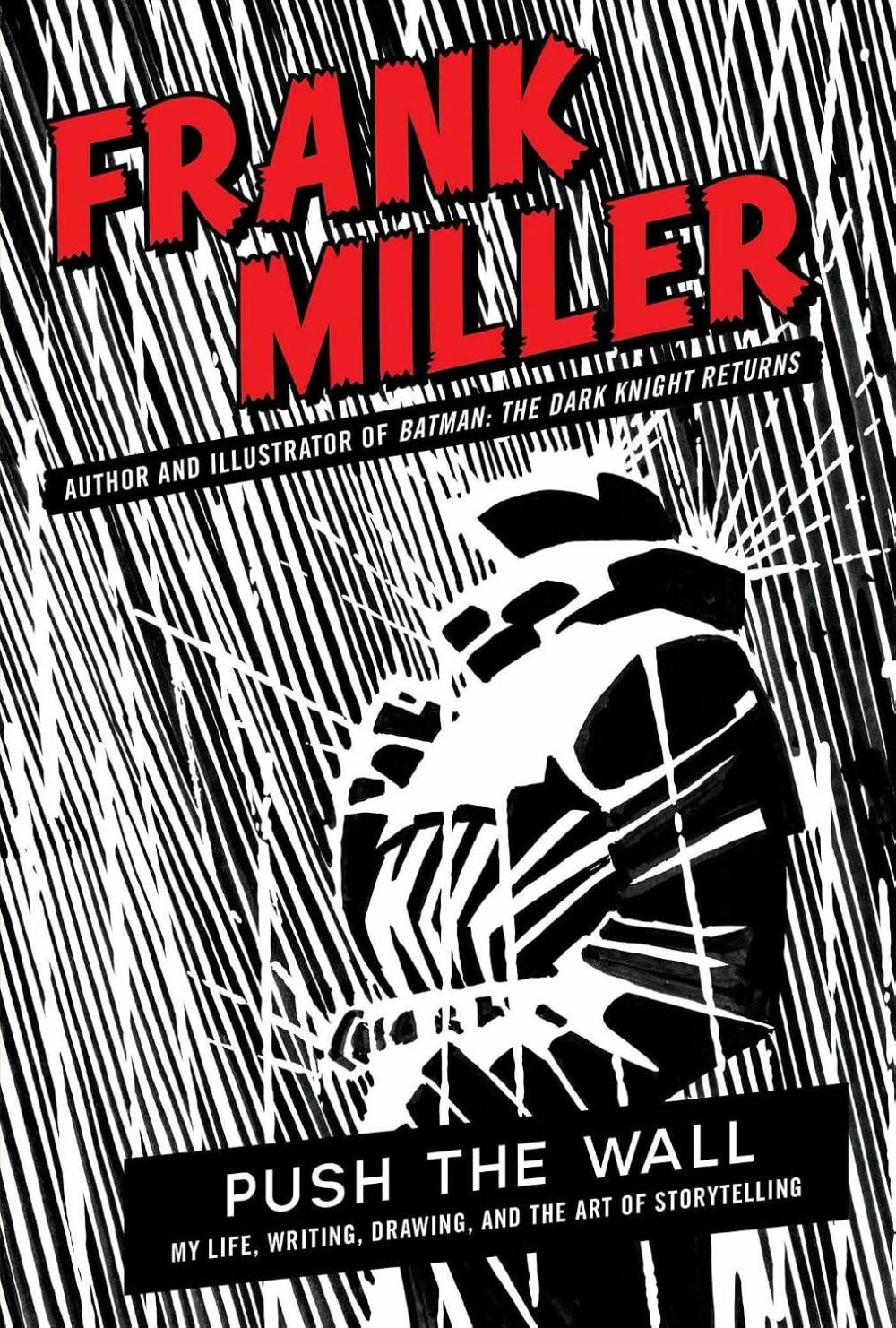
Push the Wall

Push the Wall

At first blush oddly, but ultimately appropriately, a couple lessons near the book’s end are meditations on disparate pieces of Americana.

The first is the 1952 western movie High Noon, which starred Gary Cooper as a retired town marshal who, solo, takes on four outlaws who’ve returned to town to kill him. The second is a re-appraisal of the work of Norman Rockwell, the mid-20th-century painter and portrayer of middle America. The lessons disclose him as a perceptive critic of popular culture.

At its base, this is a book about how to tell stories that are at once suspenseful and morally engaged.

Fizzing with ideas, and fuelled by a righteous belief in comics as an art form for adults, Miller persuasively promotes comics as inhabiting a world of near-Shakespearean intensity.

Douglas J. Johnston is a Winnipeg lawyer and writer.
Report Error Submit a Tip

More Stories

Watching while we work

Tory McNally 7 minute read Preview

Watching while we work

Tory McNally 7 minute read 2:01 AM CDT

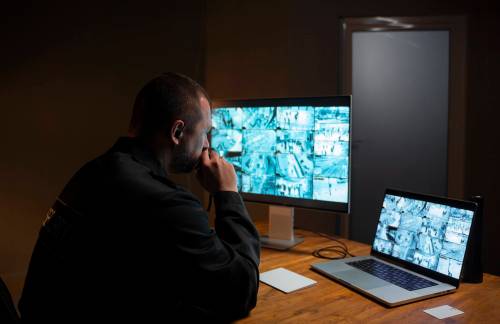
For many employees, the idea that their employer might be tracking how long they spend at their keyboard, how often they move their mouse, or whether they are actively working throughout the day feels unsettling. For many employers, however, workplace surveillance is increasingly viewed as another management tool, particularly as hybrid and remote work become more common. The recent news that TD plans to monitor certain employees’ activity during the workday has reignited a conversation that has been quietly growing for several years: where is the line between legitimate oversight and excessive monitoring?

The reality is that workplace surveillance is nothing new. Employers have long monitored attendance, reviewed security camera footage, tracked company vehicles using GPS, audited expense reports, and reviewed internet usage on company-owned devices. What has changed is the sophistication of the technology. Today’s software can record login times, monitor application usage, track keystrokes, capture screenshots, analyze email activity, and even generate reports ranking employees based on their perceived productivity.

This naturally raises an important question. Does increased surveillance actually make people work harder?

The answer is not nearly as straightforward as many organizations hope.

Read
2:01 AM CDT

Quaker movement fuelled by a fierce sense of social justice

Josiah Neufeld 11 minute read Preview

Quaker movement fuelled by a fierce sense of social justice

Josiah Neufeld 11 minute read Thursday, Aug. 6, 2026

A few weeks ago, the erstwhile punk-rock-poet John Samson Fellows taught an auditorium full of people how to fold a paper cup.

With each fold, he explained that origami is an activity he likes to do with people who are incarcerated.

“It can be really empowering to make something with your hands in that environment,” he explained over the rustle of fingers creasing paper.

Samson Fellows is perhaps best known as the former frontman for the indie-rock band the Weakerthans and the author of an anthem beloved in his hometown for its self-deprecating refrain: “I hate Winnipeg.”

Read
Thursday, Aug. 6, 2026

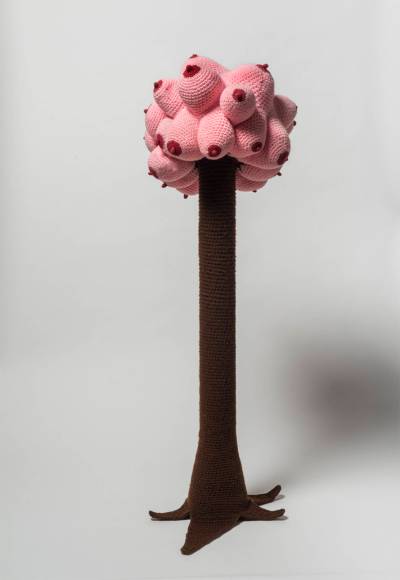
The view from here: Phyllis Green. Boob Tree, 1975

2 minute read Preview

The view from here: Phyllis Green. Boob Tree, 1975

2 minute read 2:01 AM CDT

Staycation: The Art of Being Here feautres more than 100 Manitoba-related artworks from the Winnipeg Art Gallery-Qaumajuq collection, spanning the past 50 years. These pieces reveal how the places around us are layered with memory, story and lived experience. Over the coming weeks, the Free Press will spotlight works from this eclectic exhibition, each one offering a new way of seeing home. Experience it in person and enjoy some staycation time at the gallery, on view until December.

Phyllis Green. Boob Tree, 1975

(Yarn, wood. Collection of the Winnipeg Art Gallery; Acquired with funds from the Estate of Mr. and Mrs. Bernard Naylor, funds administered by The Winnipeg Foundation, 2014-128. Photo: Ernest Mayer.)

The year 1975 was designated International Women’s Year by the United Nations, and in celebration, the WAG staged the show Images of Women, which explored how women had historically been depicted, an impressive selection but by mostly male artists. Amid pushback from the community, Sharron Zenith Corne and Marian Yeo organized a second exhibition, Woman as Viewer, which challenged those portrayals by only featuring works by women. It was called the first Canadian exhibition of feminist art. American artist Phyllis Green’s Boob Tree, a four-foot-tall crochet sculpture of a cluster of breasts, adorned the exhibit posters, which were so popular they were snatched by passersby! The sculpture is playful and unsettling, re-appropriating the objectification of women’s bodies.

Read
2:01 AM CDT

Comic book legend Frank Miller shares insights on life, myth, the creative process and more

Reviewed by Douglas J. Johnston 4 minute read Preview

Comic book legend Frank Miller shares insights on life, myth, the creative process and more

Reviewed by Douglas J. Johnston 4 minute read 2:00 AM CDT

Best known for Batman: The Dark Knight Returns and Sin City, Frank Miller is a multi-award-winning American comic book writer whose talent transcends that medium. He’s also a proficient screenwriter, film director and producer.

Based on this book, he’s no slouch as a memoirist, either.

Equal parts memoir, tutorial, guide to the creative process and polemic, Push The Wall is a revealing view of the author/illustrator and a masterful exploration of the link between graphic storytelling and myth, religion and literature.

While its contents are styled as “lessons” for aspiring comic book writers, the book’s so broadly thoughtful it’ll hold appeal for anyone interested in art and its creation.

Read
2:00 AM CDT

New sci-fi/fantasy bookstore a welcome addition

Ben Sigurdson 5 minute read Preview

New sci-fi/fantasy bookstore a welcome addition

Ben Sigurdson 5 minute read Thursday, Aug. 6, 2026

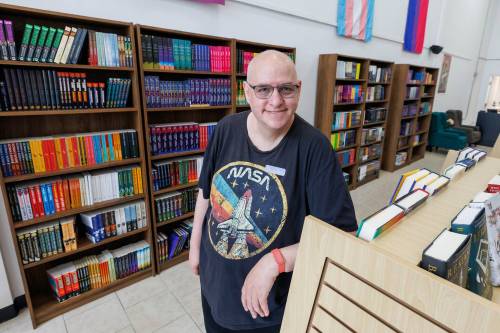
A new chapter has begun in Winnipeg’s literary landscape with the opening of science fiction and fantasy bookstore Other Places Books.

Located at 436 Graham Ave., the queer-owned and operated shop is the latest in a host of genre bookstores to have opened in the city over the last few years. In addition to longtime mainstay Whodunit? Mystery Bookstore (163 Lilac St.), the local scene now also features a horror bookstore (Raven’s End Books, which opened at 1859 Portage Ave. in 2024) and a shop focused on romance (Bound to Please, which opened at 995 McPhillips St. earlier this year).

The 900 titles currently in stock at Other Places, which opened Tuesday, span a range of sci-fi and fantasy sub-genres, with a particular focus on queer writers and storylines. The bookstore is the brainchild of Didi Chanoch, who moved to Winnipeg from Israel in 2025 after the Canadian federal government began offering work permits to those in Israel and Palestine looking to leave the area due to the conflict.

Winnipeg ended up on Chanoch’s radar in large part due to a more reasonable cost of living than other Canadian cities.

Read
Thursday, Aug. 6, 2026

Puzzles Palace

1 minute read Monday, Jul. 27, 2026

To solve our puzzles, please subscribe with this special offer: |