Flight attendants and pilots have highest risk of dying from radiation-linked cancers, study says

Advertisement

Advertise with us

NEW YORK (AP) — Flight attendants and pilots are at the highest risk of dying from radiation-related cancers — even more than people who work with radioactive materials, according to a new study.

Read this article for free:


or

Already have an account? Log in here »

To continue reading, please subscribe:

Subscribe and receive a limited-edition Free Press branded hat or tote.

Digital Subscription

One year of digital access for only $205*

  • Enjoy unlimited reading on winnipegfreepress.com
  • Read the E-Edition, our digital replica newspaper
  • Access News Break, our award-winning app
  • Play interactive puzzles

*First annual payment billed as $205.00 + GST for one year. This annual subscription will automatically renew at $233.00 + GST every 52 weeks (10% off the regular annual price of $259.35). Offer available to new and qualified returning subscribers only. Cancel any time.

To continue reading, please subscribe:

Add Free Press access to your Brandon Sun subscription for only an additional

$1 for the first 4 weeks*

  • Enjoy unlimited reading on winnipegfreepress.com
  • Read the E-Edition, our digital replica newspaper
  • Access News Break, our award-winning app
  • Play interactive puzzles
Start now

*Your next Brandon Sun subscription payment will increase by $1.00 and you will be charged $17.95 plus GST for four weeks. After four weeks, your payment will increase to $24.95 plus GST every four weeks.

NEW YORK (AP) — Flight attendants and pilots are at the highest risk of dying from radiation-related cancers — even more than people who work with radioactive materials, according to a new study.

Cosmic radiation comes from space. Only a small amount reaches the Earth’s surface, but exposure is greater for people flying at high altitudes.

There’s been limited evidence from small studies suggesting that the exposure translates to higher cancer death rates among people who fly often — particularly pilots and flight attendants. The new study “brings important new evidence to bear on this question,” two Australian radiation experts who weren’t involved in the research wrote in an accompanying commentary.
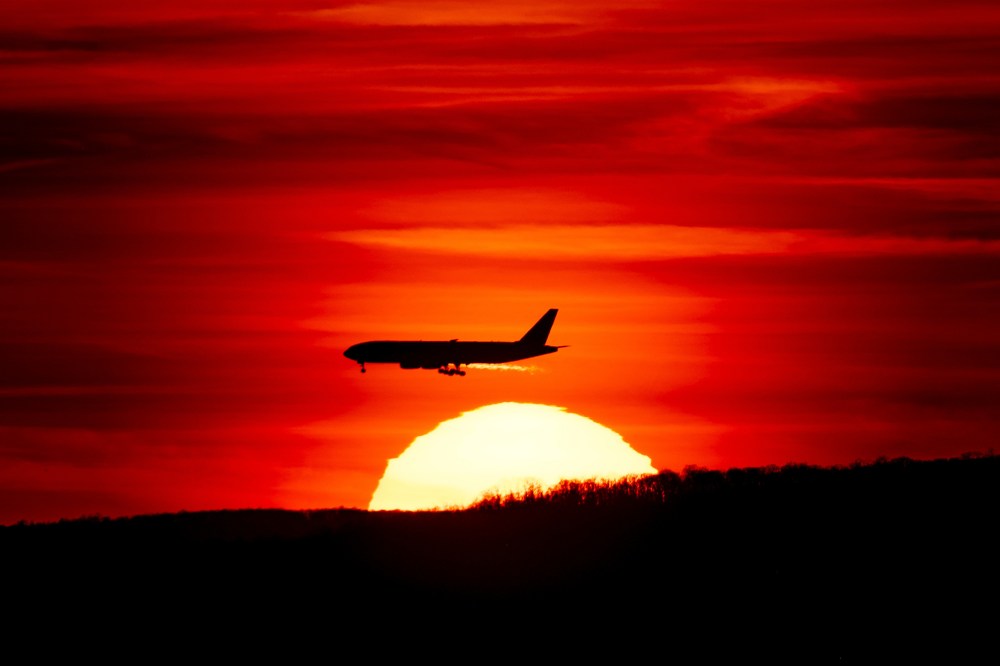
FILE - A passenger jet on approach to Newark Liberty International Airport flies over the setting sun in Newark, N.J., March 27, 2019. (AP Photo/J. David Ake, File)

The latest study, published Monday by JAMA Internal Medicine, used national data from more than 12 million death certificates that included information about occupations. The authors looked at death rates from cancers that are tied to radiation exposures, including leukemia, lymphoma, multiple myeloma, and cancers of the skin, breast, thyroid, prostate and central nervous system.

Among more than 500 occupations, flight attendants had the highest percentage of deaths from radiation-related cancers, and pilots were second, the researchers found. For those two occupations, the odds of dying were unusually high for each type of radiation-related cancer.

Neither group showed higher-than-normal death rates from cancers that aren’t tied to radiation exposure, noted the commentary writers, Catherine Olsen and Ken Karipidis. That fact “supports the hypothesis that occupational radiation exposure, rather than lifestyle or socioeconomic factors, underlies the observed excess,” they wrote.

The researchers found that flight attendants had about 50% higher odds of dying from a radiation-related cancer than the general working population, and pilots had about 36% higher odds.

In terms of absolute risk, about 6.9% of flight attendant deaths were from these cancers — roughly 1 in 14. Among pilots, it was 6.7%. For the general working population, it was 5%, said the study’s first author, Dr. Vishal Patel of Harvard Medical School.

The authors acknowledged some limitations in their study. They do not know how much exposure each flight attendant and pilot got in the air or from other sources. It’s also possible occupations were misclassified on some death certificates.

They also could not account for another possible contributor specific to the professions: Cancer risk can be worsened by frequent disruption of the body’s internal clock, which can be affected by jet lag, crossing time zones and irregular work schedules.

The Federal Aviation Administration has acknowledged that aircrews are exposed to ionizing radiation, but the government does not set federal dose limits or require monitoring, the authors noted.

“You can’t manage an exposure you’ve decided not to measure,” Patel said in an email.

Sara Nelson, who leads a union representing 55,000 flight attendants, said the report reinforces that radiation exposure needs to be taken seriously, as the union has suggested for years.

“The risk is known, but crew are not educated or informed. And, no one is taking responsibility,” said Nelson, president of the Association of Flight Attendants-CWA.

Annual skin examinations may be warranted for all people working on high-altitude flights, and women in those jobs may want to get mammograms earlier or more frequently, Olsen and Karipidis wrote. Doctors who care for pilots and flight attendants also should have a “heightened index of suspicion” for cancer when evaluating these patients, they said.

___

The Associated Press Health and Science Department receives support from the Howard Hughes Medical Institute’s Department of Science Education and the Robert Wood Johnson Foundation. The AP is solely responsible for all content.


Report Error Submit a Tip

More Stories

Time for the PUB to review Winnipeg water rates

Editorial 4 minute read Preview

Time for the PUB to review Winnipeg water rates

Editorial 4 minute read 2:01 AM CDT

We take you now to just over a month ago, to the Public Utilities Board and its decision about water and sewer rates for Russell, Binscarth, Angusville, Rossburn and Gambler First Nation.

Why? Just wait.

The area is supplied with water and sewage services by the Russell-Binscarth Water and Wastewater Utility, which has a total of 1,014 customers.

As the PUB noted in an Aug. 27, 2026 order on the utility’s rates, “The [water treatment plant] gets water from two groundwater wells that were upgraded in 2016 and the raw water main was installed in 1984. The water distribution system is primarily cast iron pipe. The raw water line will need to be upgraded in the near future to keep up with demand.”

Read
2:01 AM CDT

WSO kicks off season pairing Beethoven, Tchaikovsky

Conrad Sweatman 5 minute read Preview

WSO kicks off season pairing Beethoven, Tchaikovsky

Conrad Sweatman 5 minute read 2:01 AM CDT

French fries and milkshake, watermelon and feta cheese … Beethoven’s Fifth and Tchaikovsky’s Fifth?

Few events mark the beginning of the classical concert season like the Winnipeg Symphony Orchestra’s season-opener and this year they kick things off with an unusual but satisfying pairing.

“I think that for me, the combination of these two pieces is, first of all, a celebration of great masterworks that have withstood 100 years of being probed by time for their relevancy,” says conductor Daniel Raiskin, the WSO’s music director. “It’s the quality of music, it’s the quality of narrative that attracts us to these masterworks again and again.”

Both symphonies are so hefty and canonical, one might have expected half of the concert would be devoted to a concerto, tone poem or something smaller or lesser known.

Read
2:01 AM CDT

Public versus private schooling

John R. Wiens 5 minute read 2:01 AM CDT

A Recent Maggie Macintosh piece (Enrolment up at alternative schools, Sept. 7) and several letters to the editor touted the benefits and values of private schooling. The executive director of the Manitoba Federation of Independent Schools, Andrew Micklefield, emphasized schools of choice and governmental cost-saving. A private, formerly public, schoolteacher emphasized finances, academics and parental support.

None are wrong in their arguments, but they are missing the main reasons for the existence of public schools, which has less to do with money and academics than with inclusion and equality. Nor do they adequately acknowledge the downsides of exclusion and elitism fostered by some aspects of choice and inequality. The increase in numbers of private schools and their attendees is a cause for some public concern.

Micklefield’s assertion is that private schools save the government money. Letter-writer Paulo Borges intimates he saves the province $52,500 ($15,000 each for three home-schooled children and $7500 for one private-school tuition), further suggesting that the savings are not used wisely by governments in supporting public schools.

In the front-page article, Micklefield and others go further to suggest that the main reason parents choose private schools is to receive an education in a Christian setting. That is a very limited rationale and certainly does not include the much larger variety of reasons why people choose private schooling or an even more restricted version of schools of choice, home schooling.

Is a better Winnipeg on the horizon?

Tom Brodbeck, Rebecca Chambers, Niigaan Sinclair and Brent Bellamy 20 minute read Preview

Is a better Winnipeg on the horizon?

Tom Brodbeck, Rebecca Chambers, Niigaan Sinclair and Brent Bellamy 20 minute read Yesterday at 4:00 PM CDT

Four Free Press columnists weigh in on the challenges ahead and how the city can become better.

Read
Yesterday at 4:00 PM CDT

Prost! Raise a glass to Oktoberfest

Ben Sigurdson 4 minute read Preview

Prost! Raise a glass to Oktoberfest

Ben Sigurdson 4 minute read 2:01 AM CDT

As September comes to a close, a pair of local breweries are bringing some serious gemütlichkeit.

For the uninitiated, gemütlichkeit’s a word that doesn’t translate neatly from German to English, but which roughly means friendliness and good cheer.

Both Devil May Care Brewing Co. (155 Fort St.) and Kilter Brewing Co. (450 Rue Deschambault) are hosting Oktoberfest parties this weekend featuring food, music, games and, of course, plenty of beer.

Both breweries are rolling out special releases to coincide with their respective Oktoberfests — expect malty festbiers, marzens, rauchbiers and other German-inspired brews, served up in hefty steins alongside Bavarian-inspired fare. Devil May Care’s festivities run through to Sunday and feature eats by Freebird Kitchen, while Kilter keeps the party going through to Saturday, Oct. 3, and is offering pretzels and Oktoberfest-themed hot dogs. Lederhosen is encouraged.

Read
2:01 AM CDT

Whether it’s coffee or tea, think of what’s holy

John Longhurst 5 minute read Preview

Whether it’s coffee or tea, think of what’s holy

John Longhurst 5 minute read 2:01 AM CDT

I was an instructor at a week-long event for aspiring Catholic journalists in Toronto in August. Whenever journalists gather, there will be conversation — and coffee. Lots of coffee. In this case, Catholic coffee.

“Catholic coffee?” you ask. “What is that?”

Catholic Coffee is the name of a small family business in Charlotte, N.C. Its goal is to use a daily habit of drinking coffee, especially in the morning, to focus attention on God through devotion and prayer.

The idea for using coffee in this way came to the founders through their Catholic faith.

Read
2:01 AM CDT