Pulling from ancient cooling principles, the ‘swamp cooler’ remains important today
Advertisement
Read this article for free:
or
Already have an account? Log in here »
To continue reading, please subscribe:

Digital Subscription
One year of digital access for only $205*
- Enjoy unlimited reading on winnipegfreepress.com
- Read the E-Edition, our digital replica newspaper
- Access News Break, our award-winning app
- Play interactive puzzles
*First annual payment billed as $205.00 + GST for one year. This annual subscription will automatically renew at $233.00 + GST every 52 weeks (10% off the regular annual price of $259.35). Offer available to new and qualified returning subscribers only. Cancel any time.
To continue reading, please subscribe:
Add Free Press access to your Brandon Sun subscription for only an additional
$1 for the first 4 weeks*
- Enjoy unlimited reading on winnipegfreepress.com
- Read the E-Edition, our digital replica newspaper
- Access News Break, our award-winning app
- Play interactive puzzles
*Your next Brandon Sun subscription payment will increase by $1.00 and you will be charged $17.95 plus GST for four weeks. After four weeks, your payment will increase to $24.95 plus GST every four weeks.
Read unlimited articles for free today:
or
Already have an account? Log in here »
Before air conditioning spread across the United States, before temperatures increased and the world heated up, people in the Southwest sweltered.
Dry heat and minimal relief were day-to-day life, and many had to get a little creative. Some slept outdoors under damp sheets. Others adjusted schedules to avoid working outside during high daylight hours.
Then a great way to beat the heat emerged. It was dubbed the “swamp cooler.”
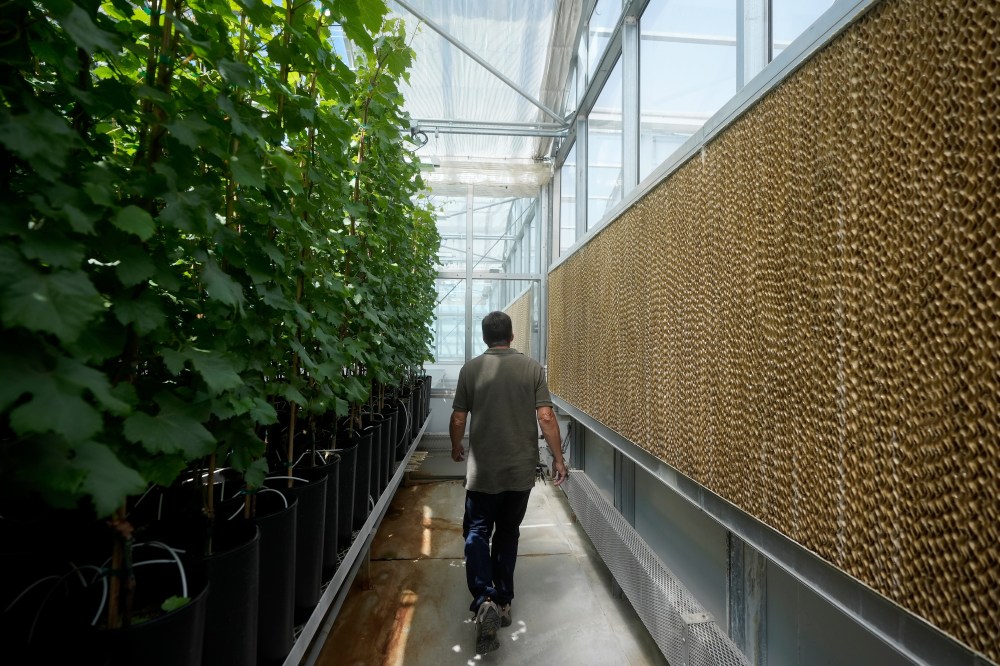
Basic cooling principles were used centuries ago in ancient civilizations; air was fanned by hand over water in clay pots or jars. In the early 20th century, those same principles were refined in the United States. The evaporative cooler, or swamp cooler, was the result. America’s first system using the concept of evaporative cooling was perfected by Oscar Palmer in 1908 in Arizona.
It’s relatively simple: A fan pulls a stream of fresh hot air through vertical, porous pads saturated with water. It evaporates, cooling and humidifying the air and directing it indoors.
By the 1930s, the gadgets changed entire swaths of the country, cooling southwestern states like New Mexico and Nevada. Even today, in the age of air conditioning, they play a role in making desert-like states more livable.
“If it’s really dry out, in Arizona, you’re going to get a greater cooling effect,” says Eric Verpolegen, the founder of CoolVeg, a nonprofit dedicated to evaporative cooling for fruits and vegetables.
Traditional air-conditioning units didn’t become standard in the U.S. until the 1950s, and central air conditioning remains a luxury. But the swamp cooler endures.
“Where you don’t have air conditioning and where the climate allows, evaporative coolers could be a good solution and are low cost, low energy consumption,” says Ankit Kalanki, principal of cooling at RMI, a nonprofit dedicated to clean energy.
Swamp coolers and fans fall short in humid regions because the air is already saturated and can’t handle more water. Experts say humidity has been worsening in some areas.
“There is a lot of innovation happening where people are trying to come up with hybrid solutions, where they are marrying evaporative cooling with something that can manage humidity separately,” Kalanki says, “and so now you have the best of both worlds.”
Evaporative coolers remain in use for Americans and many around the world who lack other cooling options.
“We’ve got this vicious circle where the hotter it gets, the more cooling we need,” Verpolegen says. “So you’re going to spend more energy, which could lead to more greenhouse gas emissions.” That’s where Palmer’s cooler tech and even more modern iterations come into play.
___
Part of a recurring series, “American Objects,” marking the 250th anniversary of the United States. For more American objects, click here. For more stories on the anniversary, click here. Alexa St. John is an Associated Press climate reporter. Follow her on X: @alexa_stjohn. Reach her at ast.john@ap.org.