‘Come winter I’d die’: rider City inundated with thousands of complaints after launch of new transit system
Read this article for free:
or
Already have an account? Log in here »
To continue reading, please subscribe:

Digital Subscription
One year of digital access for only $205*
- Enjoy unlimited reading on winnipegfreepress.com
- Read the E-Edition, our digital replica newspaper
- Access News Break, our award-winning app
- Play interactive puzzles
*First annual payment billed as $205.00 + GST for one year. This annual subscription will automatically renew at $233.00 + GST every 52 weeks (10% off the regular annual price of $259.35). Offer available to new and qualified returning subscribers only. Cancel any time.
To continue reading, please subscribe:
Add Free Press access to your Brandon Sun subscription for only an additional
$1 for the first 4 weeks*
- Enjoy unlimited reading on winnipegfreepress.com
- Read the E-Edition, our digital replica newspaper
- Access News Break, our award-winning app
- Play interactive puzzles
*Your next Brandon Sun subscription payment will increase by $1.00 and you will be charged $17.95 plus GST for four weeks. After four weeks, your payment will increase to $24.95 plus GST every four weeks.
Read unlimited articles for free today:
or
Already have an account? Log in here »
It was a statutory holiday — Canada Day — but that didn’t stop Winnipeg Transit riders from working up a steam.
Just two days after the launch of Winnipeg’s new primary transit network on June 29, 2025, users were giving the city an earful. The 95 complaints filed last July 1 were just the tip of the iceberg.
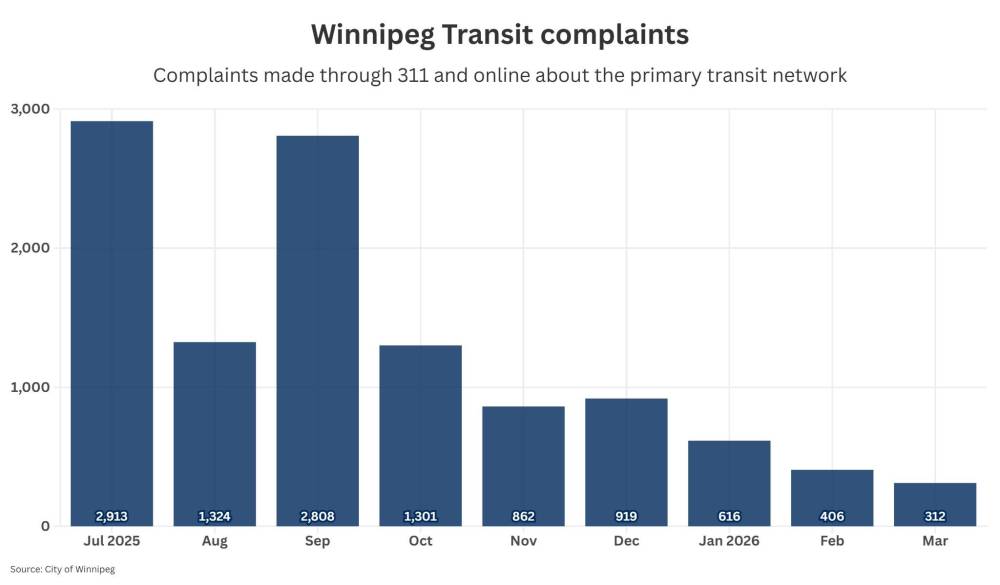
In the first full month of the city’s relaunch of its transit system — a redesign promised to increase revenue and improve ridership for a struggling network — more than 2,900 complaints were filed through 311 and other feedback portals.
And they kept coming. By the nine-month mark, more than 11,000 official complaints had been made, according to analysis by the Free Press.
But despite the volume of dissatisfied users, the city didn’t hit the brakes on its rollout. And it appears that ignoring the public response cost Winnipeg Transit millions of dollars in lost revenue and ridership.
The Free Press recently obtained a copy of the complaints about the new network during its first full month of operation through a freedom of information request. They range widely, but a common theme was that the new system, which cost the city roughly $20.4-million, was a downgrade from the previous one.
“This change is a slap in the face and a nightmare of huge proportions for me and others,” said one rider, who filed a complaint at 9:15 a.m. on July 1 about the D19 route, which runs predominately along Corydon Avenue, connecting Assiniboine Park and downtown.
The rider said commuters had been “blindsided” by the overhaul, calling it a “deception of the highest order.”
“This is terrible,” a different rider wrote that same day, complaining about the lack of late-night service. “I’m going to lose my job now because of these changes.”
“The new bus system is a nightmare!!!!!” wrote another. “Are you trying to kill bus ridership?”
By the end of that first month, riders were sounding more desperate. “I’m almost ready to trade my first-born child for a fully functioning transit system,” one user wrote on July 28.
Touted as the biggest modernization of Winnipeg Transit in 60 years, the new network moved from the decades-old hub-and-wheel route design to a series of high-frequency spine routes on major corridors, which was anticipated to deliver faster, more reliable service.
Another one chides the bus
The Free Press reviewed more than 2,900 complaints, spanning 500 pages, filed in July 2025, the first full month of the new primary transit network.
The complaints were logged with the city’s 311 service or via other feedback portals.
All personal information was redacted, including names and addresses.
The length of each complaint varied. Some took up several paragraphs, while others were short and direct. One rider submitted a one-word complaint on July 2: “Horrible.”
The complaints ranged widely, but a common opinion was that the new system was a downgrade, not an upgrade.
Roughly 40 positive comments were received, but those were often tempered with suggestions for additional improvements.
A year in and transit is forecasting a $18-million drop in revenue, from a projected $97 million in its current budget to $79 million.
The loss of ridership — specifically a drop in use by international students and workers — and fare scofflaws were cited as the main factors for the anticipated shortfall, the city reported in June.
The number of complaints fell during the second month, with only 1,324 logged in August 2025. But when school resumed last September, the complaints ballooned to more than 2,800.
At the time, city transit downplayed the negative feedback, chalking it up to growing pains.
This year, only 188 complaints were received in July, with a spokesperson attributing the lessening of negative feedback to ongoing adjustments in response to the criticism.
However, one expert, whose research into building age-friendly cities and shaping Winnipeg’s downtown includes public transportation, said people can only complain so much.
“I would think that’s more like learned helplessness,” said Richard Milgrom, associate professor in the University of Manitoba’s department of city planning.
“You’ve complained, but how many times can you complain? … People already have busy days, they don’t want to spend all of their time writing to complain about things.”
Milgrom suggested the city went “all in” on its plan to launch a new system, but put no real investment behind it, saying even though the formal complaints have slowed, dissatisfaction remains.
“The volume, I think, reflects the fact that the city has done something that just isn’t working for a lot of people,” he said, adding that even among some of his transit-minded colleagues, the bus is no longer considered a viable option.
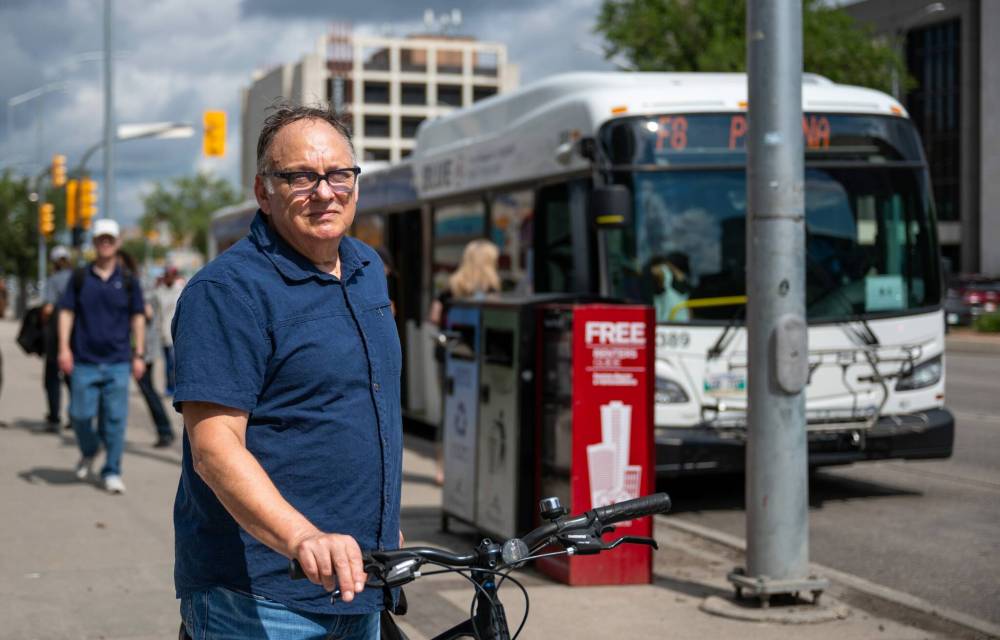
While a rise in complaints is expected when a new system is launched, Milgrom said, the city should be actively seeking feedback.
“It’s actually, in a way, the best time to do consultation,” he said. “All projects are going to fall short in some way. This one’s falling short in a lot of ways, but everything falls short and needs to be tweaked.”
He said the city should not dabble in a system that doesn’t serve riders’ needs and thwarts its own climate-change targets. If Winnipeg “is serious about their climate goals of reducing emissions,” he said, “they’re going the totally wrong way.”
The city initially planned to wait a full year before making major changes, but then began tweaking the system in response to the criticism.

Those tweaks include increasing transfer windows to 90 minutes, expanding both the hours and boundaries of the city’s on-request zones and extending late-night service to 10 routes.
The city has also cracked down on fare evaders while adding more safety officers “to enhance rider and operator safety,” a spokesperson said.
Mayor Scott Gillingham said in a recent interview with the Free Press that officials knew the move would be disruptive and would negatively impact some riders, but the overhaul was a critical phase in the city’s Transit Master Plan.
The $4.7-billion plan, which establishes a road map for transit until 2050, will help the city as it grows to a population of one million while also allowing for the potential implementation of light-rail rapid transit, he said.
“We made the change to set transit up for the future of the city that we are building and the city we are growing to be,” Gillingham said. “We have to remember that the old transit network wasn’t working either — there were a lot of complaints.”
City data indicates ridership is slowly climbing, but is still significantly lower than the post-pandemic high logged in October 2024, when 4,730,474 people rode the bus.
In June 2026, there were 3,112,499 riders, a decrease of more than 34 per cent, or 1,617,975 fewer people riding the bus.
However, when comparing June 2025 to June 2026, the decrease is only 13 per cent, or 494,949 fewer riders.
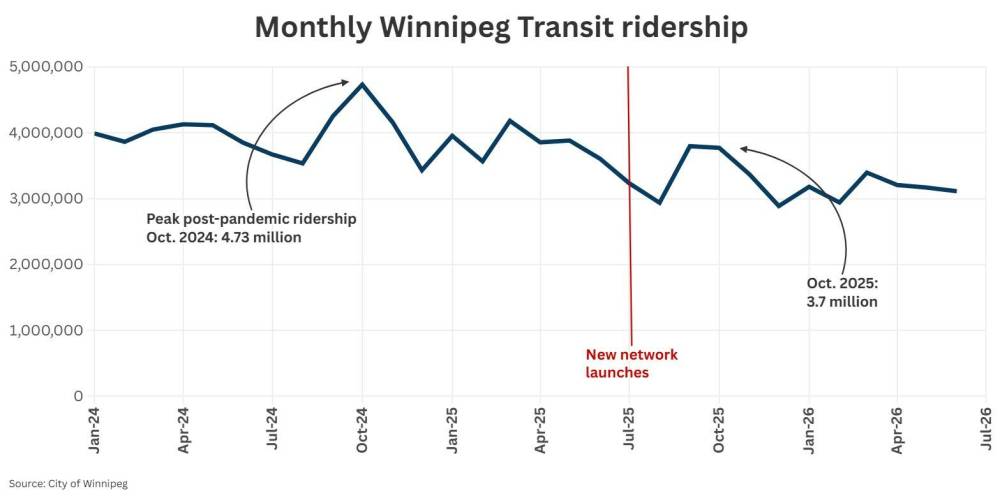
“Complaints are down 95 per cent and transit ridership has recovered to more than 98 per cent of where it was a year ago,” Gillingham said.
“The question wasn’t whether there were complaints after a major change — of course there was going to be — the question is whether we listened as a city. Whether we made the changes and improved the system, and we’ve done that.”
A review of rider complaints by the Free Press revealed that people with mobility issues and seniors were among the hardest hit.
“This system is ridiculous. I have emphysema and arthritis, transit is my main source of (transportation). Now there is no way I can use it. I can’t walk more than a block or 2 … Come winter I’d die, simple as that,” a user wrote on July 3.
“I am disabled and unable to walk to any of the new bus stops in my area. You have caused me to become a prisoner in my home.”
“I don’t have money for a cab,” said one senior, detailing how a route change required her to walk two kilometres. “Walking more than a few blocks is not an option for me. I’m in tears right now because we are so low on groceries.”
“I am disabled and unable to walk to any of the new bus stops in my area,” another person wrote. “You have caused me to become a prisoner in my home. In addition, I am unable to get to my doctor’s office since your change. Thank you very much for making me very sorry that Winnipeg is my home.”
James Van Gerwen, president of the Amalgamated Transit Union 1505, which represents Winnipeg bus drivers, mechanics and technicians, agreed the old system “was broken” but said the new network should’ve been rolled out in stages, allowing for feedback with each significant change.
“It was literally flicking a switch on a Saturday night and then on Sunday morning, you’re starting with a brand-new system,” Van Gerwen said.
“If it had been a slower rollout, you could have fixed those situations as they arise, not fix everything all at once … That’s where their major problem was and that’s where it was a flop.”
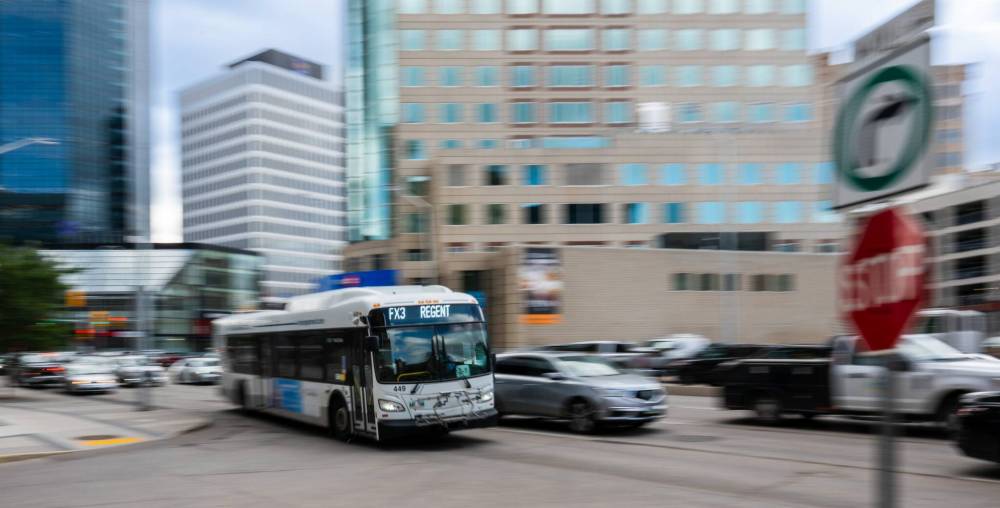
And riders took out their frustrations on the drivers, he said.
“They don’t have access to talk to the director of transit and complain to him. But they do have the ability to scream at a driver from around that shield. That causes a lot of stress.”
Online gathering places offering people a place to vent about the system are still active, said Tracey Honeybunn, an administrator for the Facebook page Winnipeggers Against the New Transit System.
“Every day someone wants to join,” she said of the page, which has more than 12,000 members.
People are still raising concerns, and for the most part, they have not changed.
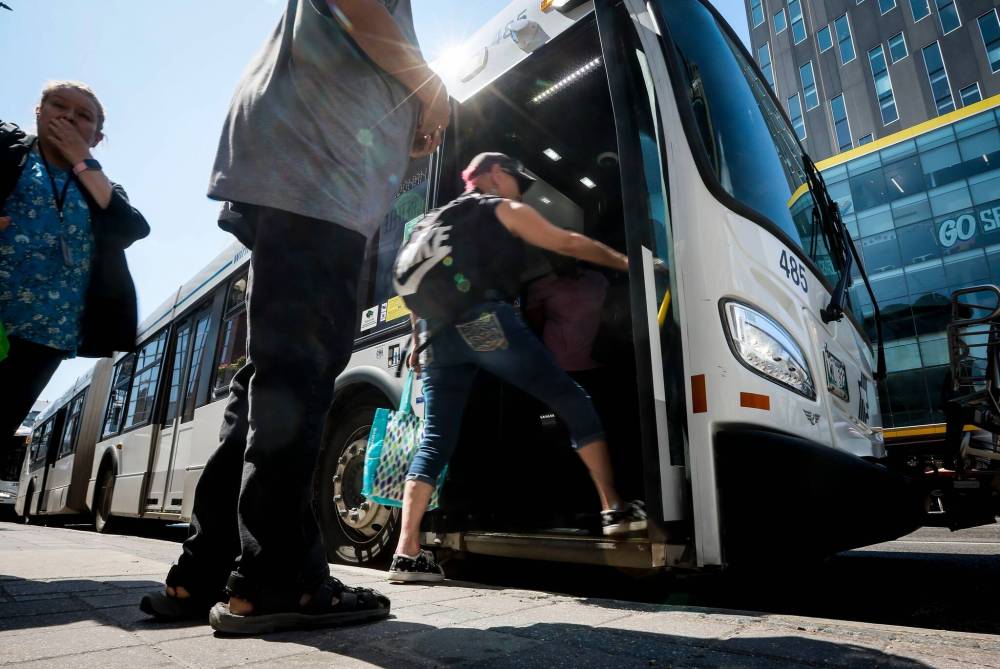
“It’s basically the same thing,” she said. “It’s people complaining about the stops, people complaining about how many transfers they have to take.”
Based on observations she’s made through the Facebook page comments, she feels the changes have damaged the relationship between riders and the system.
Once an avid transit user, she now tries to avoid it, she said, opting for a ride whenever possible. She said in addition to the change in the service, the new system has created an underlying tension on the bus, for riders and drivers alike.
Winnipeg Transit has been Barbara Stasiuk’s main form of transportation since 1982. She wanted to believe the city’s promise that the overhaul would make transit more functional and efficient, but now — a year in — she says she’s resigned to the inferior service.
Her commutes are longer and involve more transfers and have led to increased feelings of dread, she said, adding that she sometimes has to rely on rideshares, a more expensive service that she rarely needed in the past.
“It’s a complete disconnect for me,” she said. “My transit time every day between the two rides, is at least half an hour to 45 minutes longer and the connection points are in sketchier areas … None of it feels safe. And quite frankly, it’s baffling that they thought this would be better.”
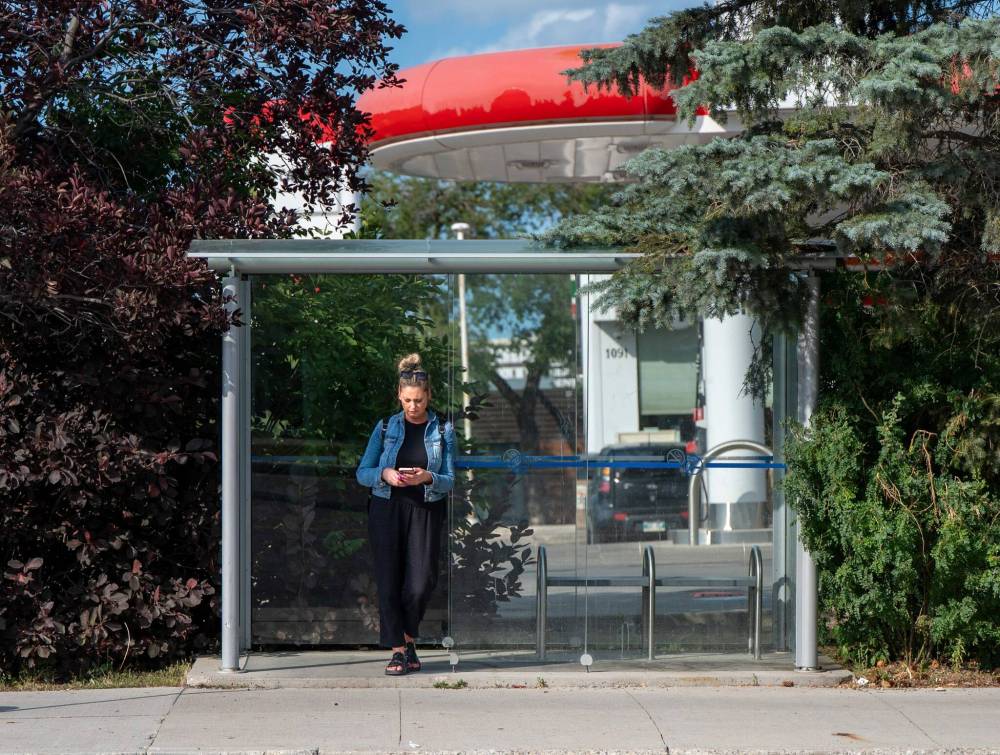
Her roommate Tania Homenchuk is also a frequent transit user, and the two vent about their concerns regularly.
“There’s a lot of frustration and curse words,” Stasiuk said, adding the constant worry “does drain your energy.”
Gillingham, meanwhile, hopes Winnipeggers will eventually look back on the change as critical for the city’s future in establishing a more modern system.
And not everyone was disappointed by the overhaul. There was a scattering of positive reviews, 40 or so, among the 2,900 complaints.
“Just wanted to say after 20 years of my husband having to take 2 buses to work and often missing the transfer bus due to late buses, he gets to take ONE bus to and from work. Bravo!” one person stated on July 2.
“I wanted to take the time to say how much I appreciate the work the transit team has done in designing everything needed for this very important project for our city,” another user wrote on July 3.
“Just writing to say that the new transit system is awesome and has cut down my travel time significantly,” said a rider on July 23. “Thanks for the great upgrade!”
morgan.modjeski@freepress.mb.ca

Morgan Modjeski
Reporter
Signal
Morgan Modjeski is a news reporter and multimedia producer for the Free Press. Read more about Morgan.
Every piece of reporting Morgan produces is reviewed by an editing team before it is posted online or published in print — part of the Free Press‘s tradition, since 1872, of producing reliable independent journalism. Read more about Free Press’s history and mandate, and learn how our newsroom operates.
Our newsroom depends on a growing audience of readers to power our journalism. If you are not a paid reader, please consider becoming a subscriber.
Our newsroom depends on its audience of readers to power our journalism. Thank you for your support.
Related Articles
WSD official expects older students to get free youth Transit passes first in staggered rollout of pilot program