Jollof joust Chefs gather in St. Boniface to see whose version of rice dish is best

Chef Alex Bockarie is bringing an age-old African culinary battle to Winnipeg.

Read this article for free:


By clicking the button above, an account will be created and you will begin to receive some of our recommended newsletters. You may opt out of any newsletter by visiting your Email and Communication Preferences page or by clicking "unsubscribe" at the bottom of any email.

or

Already have an account? Log in here »

To continue reading, please subscribe:

Digital Subscription

One year of digital access for only $1.44 a week*

  • Enjoy unlimited reading on winnipegfreepress.com
  • Read the E-Edition, our digital replica newspaper
  • Access News Break, our award-winning app
  • Play interactive puzzles

*Billed as $5.77 plus GST every four weeks. After 52 weeks, price increases to the regular rate of $19.95 plus GST every four weeks. Offer available to new and qualified returning subscribers only. Cancel any time.

To continue reading, please subscribe:

Add Free Press access to your Brandon Sun subscription for only an additional

$1 for the first 4 weeks*

  • Enjoy unlimited reading on winnipegfreepress.com
  • Read the E-Edition, our digital replica newspaper
  • Access News Break, our award-winning app
  • Play interactive puzzles
Start now

*Your next Brandon Sun subscription payment will increase by $1.00 and you will be charged $17.95 plus GST for four weeks. After four weeks, your payment will increase to $24.95 plus GST every four weeks.

Chef Alex Bockarie is bringing an age-old African culinary battle to Winnipeg.

Event Preview

Culinary Crown Cooking Competition – Jollof War
• Saturday, 1 p.m.
• Centre culturel franco-manitobain, 340 Provencher Blvd.
• Free admission; search Facebook or Instagram for more information.

On Saturday, five local chefs hailing from Senegal, Liberia, Sierra Leone, Ghana and Nigeria will go head-to-head to determine who makes the best jollof — a rice dish simmered in a savoury tomato-based stew.

“Jollof rice originated from Senegal but it has spread throughout West Africa and every country has its own method of cooking it,” Bockarie says. “It’s a long-standing fight; even among the communities here in Winnipeg, everybody’s always saying that Sierra Leone’s (jollof) is the best, Ghana’s is the best, Nigeria’s is the best.

“It’s a friendly competition; friendly, but very serious too.”

Bockarie grew up in Sierra Leone, where jollof was a special-occasion dish served at important holiday gatherings.

“If you don’t have jollof rice, then your party is not complete,” he says.

Prior to moving to Winnipeg 25 years ago, Bockarie worked as an executive chef in diplomatic residencies in the Middle East and today runs a private catering and meal prep business called Xpress Chef Kitchen.

SUPPLIED
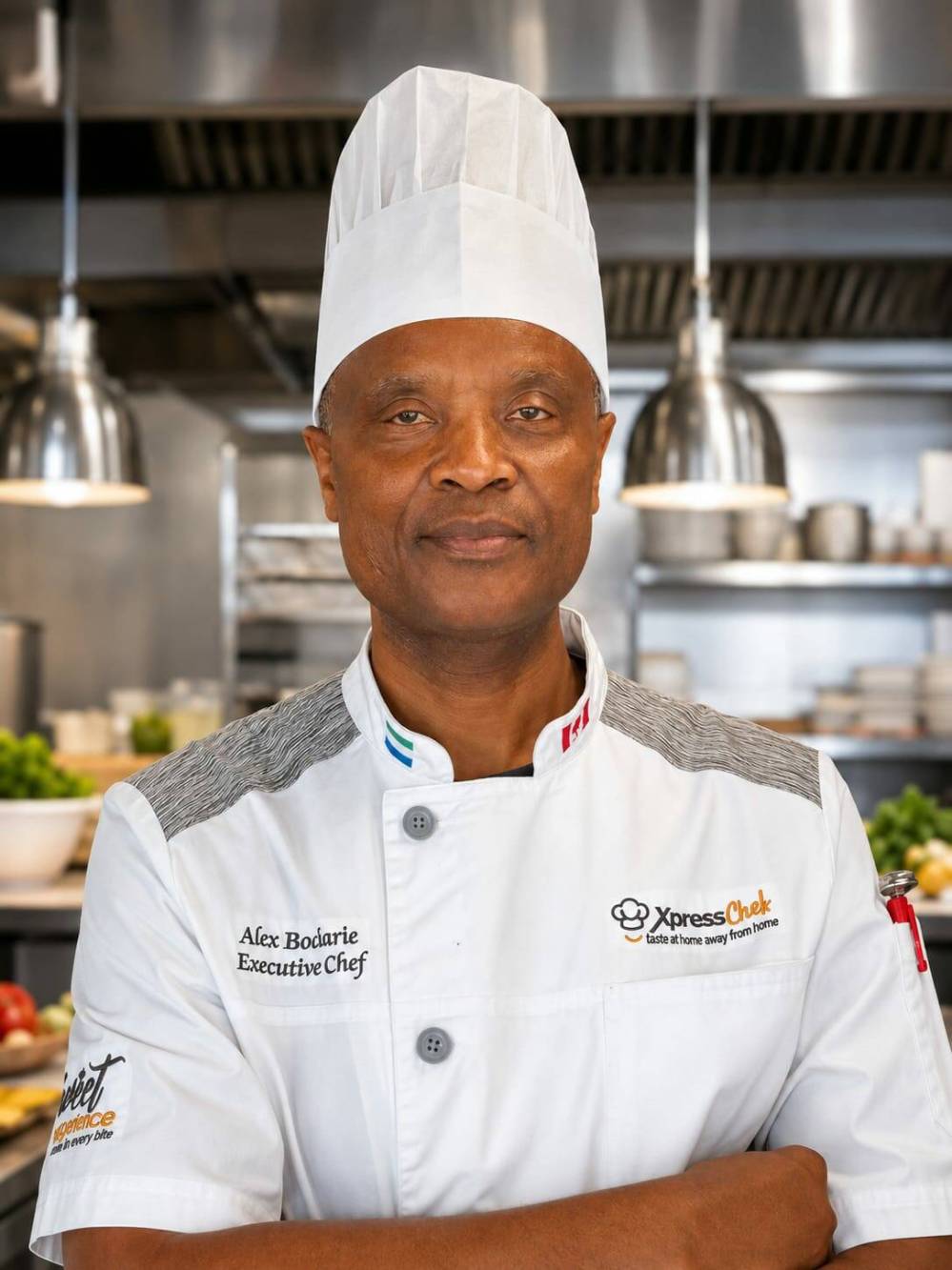
                                Chef Alex Bockarie is hosting Winnipeg’s first jollof rice cooking competition this weekend.
SUPPLIED

Chef Alex Bockarie is hosting Winnipeg’s first jollof rice cooking competition this weekend.

This weekend’s event, dubbed the Jollof War, is the maiden voyage of Bockarie’s new Culinary Crown Cooking Competition series, which aims to celebrate different African cuisines during annual live cooking contests.

Regional differences abound when it comes to making jollof, which can be more or less smoky, spicy and acidic, depending on its country of origin.

“Some countries use a white rice that is almost like long-grain basmati and there are countries that use parboiled rice, but the big difference lies in making the stew,” Bockarie says. “We have different ways of cooking it and there are some spices that Sierra Leone might add that Nigeria or Liberia will not.”

The battle will unfold at Centre culturel franco-manitobain in St. Boniface, where attendees will be able to sample and vote for their favourite jollof, while enjoying entertainment and a vendor market.

The competing chefs — Abigail Obuobi, representing Ghana; Linda Amiolemeh-Soyemi, Nigeria; Margaret Konteh, Sierra Leone; William Browne, Liberia; and Ndeye Lo, Senegal — will also be assessed by a panel of judges assembled by the Winnipeg branch of the Canadian Culinary Federation, which has partnered with Bockarie on the event.

“We’re going to be looking at the differences that set each jollof apart. Flavour is going to be the No. 1 detail we’re looking at, as well as presentation and aroma,” says chef Scott Hyndman, president of the federation’s local chapter. “And specifically during the cooking competition, it’s going to be how they execute and how they perform in front of the (crowd).”

NOAH ALORWU / WIKIMEDIA COMMONS
                                Ghana-style jollof rice
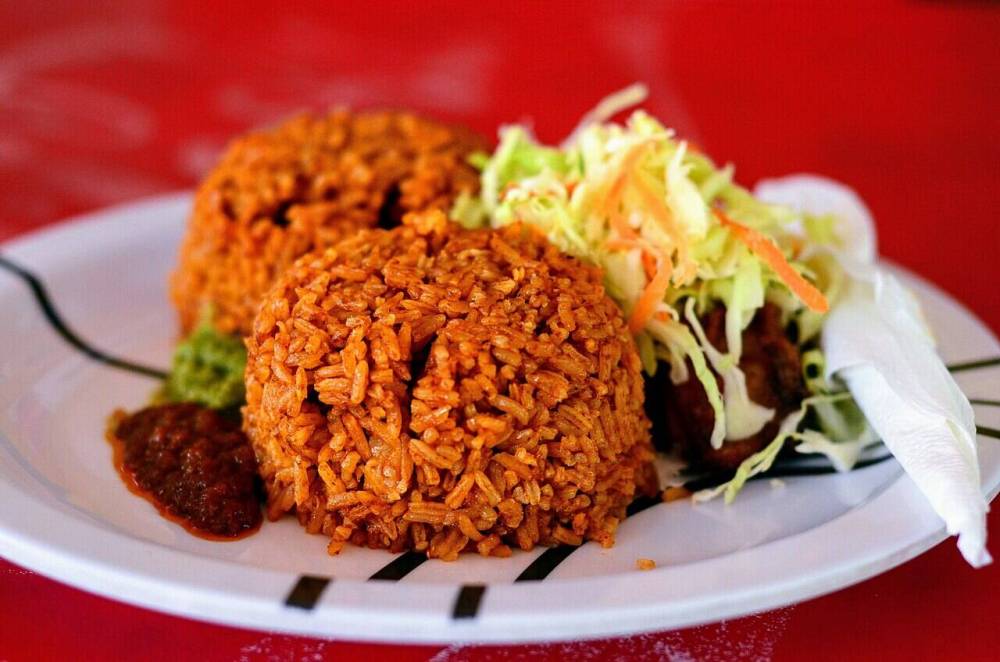
NOAH ALORWU / WIKIMEDIA COMMONS

Ghana-style jollof rice

In addition to bragging rights, the winning chef will receive a trophy and prize pack from the Canadian Culinary Federation, a national organization for culinary professionals.

Bockarie hopes to take his Jollof War to other Canadian cities and plans to host a new Culinary Crown Cooking Competition in Winnipeg every September. Attendees to the inaugural event can expect a day of good food and high-energy fun.

“It’s going to be like when two African nations are playing soccer … I know all these countries are ready to put on a show,” he says.

eva.wasney@winnipegfreepress.com

Eva Wasney

Eva Wasney
Reporter

Eva Wasney covers environmental issues in Manitoba for The Narwhal in partnership with the Winnipeg Free Press. Read more about Eva.

Every piece of reporting Eva produces is reviewed by an editing team before it is posted online or published in print — part of the Free Press‘s tradition, since 1872, of producing reliable independent journalism. Read more about Free Press’s history and mandate, and learn how our newsroom operates.

Our newsroom depends on a growing audience of readers to power our journalism. If you are not a paid reader, please consider becoming a subscriber.

Our newsroom depends on its audience of readers to power our journalism. Thank you for your support.
Report Error Submit a Tip

More Stories

Reviving democracy requires engagement

John R. Wiens 5 minute read 2:00 AM CDT

Democracy is on the ropes everywhere in the world as politics have become extreme, divisive, virulent — just plain toxic.

It would seem like a reasonable, visceral decision not to participate, to not be contaminated or compromised by association. However, like education, where more education is the cure to a lack, a deficit in democratic politics calls for more, not less, political engagement.

In his 1919 poem The Second Coming, W. B. Yeats wrote, “Things fall apart; the centre cannot hold;” as a description of social and political catastrophe and the failure of usual safeguards in the aftermath of the First World War. He ends the first stanza with: “The best lack all conviction, while the worst / Are full of passionate intensity.”

I believe it’s an apt description of what’s going on today — not new but frightening, nonetheless.

Chefs gather in St. Boniface to see whose version of jollof is best

Eva Wasney 4 minute read Preview

Chefs gather in St. Boniface to see whose version of jollof is best

Eva Wasney 4 minute read Tuesday, Sep. 1, 2026

Chef Alex Bockarie is bringing an age-old African culinary battle to Winnipeg.

On Saturday, five local chefs hailing from Senegal, Liberia, Sierra Leone, Ghana and Nigeria will go head-to-head to determine who makes the best jollof — a rice dish simmered in a savoury tomato-based stew.

“Jollof rice originated from Senegal but it has spread throughout West Africa and every country has its own method of cooking it,” Bockarie says. “It’s a long-standing fight; even among the communities here in Winnipeg, everybody’s always saying that Sierra Leone’s (jollof) is the best, Ghana’s is the best, Nigeria’s is the best.

“It’s a friendly competition; friendly, but very serious too.”

Read
Tuesday, Sep. 1, 2026

Consumer apprehension grows as US retailers adopt AI-assisted pricing tools

Dee-ann Durbin And Anne D'innocenzio, The Associated Press 7 minute read Preview

Consumer apprehension grows as US retailers adopt AI-assisted pricing tools

Dee-ann Durbin And Anne D'innocenzio, The Associated Press 7 minute read Updated: Yesterday at 6:00 PM CDT

U.S. consumers aren't just frustrated with high prices. They're angry and confused about the increasingly high-tech ways that restaurant chains and major retailers are setting those prices.

Digital price tags are rapidly replacing paper ones in grocery aisles. Artificial intelligence tools help businesses decide what to charge by predicting how customers might respond. Terms like “dynamic pricing” and “surveillance pricing” are stirring anxiety on social media, where users wonder if different people are getting different prices for the same product.

Americans have grown accustomed to changing prices when booking flights, hotel rooms and rides, but the prospect of everyday spending shaped by algorithms they don’t understand and personal data they may not realize they’re sharing has touched a nerve.

“There are major tensions happening right now between who’s really going to have the power with some of these algorithms and usage of bots and AI: the companies or the shopper,” said Katie Thomas, who leads an internal consumer behavior think tank at the management consulting firm Kearney.

Read
Updated: Yesterday at 6:00 PM CDT

Feds hold back on stable health funding

Editorial 4 minute read Preview

Feds hold back on stable health funding

Editorial 4 minute read 2:00 AM CDT

The federal government wants provinces to improve health care, expand treatment services and find better ways to deliver care. But it’s refusing to provide provincial governments with the one thing they need most to plan for the future: stable, predictable funding.

That’s not a serious way to manage public health care.

Provincial and territorial health ministers gathered in Winnipeg last week hoping to secure long-term federal funding commitments to help manage mounting pressures on their health-care systems. They left with little more than a promise to keep talking.

Ottawa agreed to extend a $1.2-billion annual funding agreement for mental-health and substance-use treatment, home care and community care by one year. That’s welcome, but it hardly provides the certainty provinces need to maintain existing programs, never mind expand services to meet growing demand.

Read
2:00 AM CDT

Disgraced ex-dean landed job at German university after fleeing Winnipeg

Maggie Macintosh 8 minute read Preview

Disgraced ex-dean landed job at German university after fleeing Winnipeg

Maggie Macintosh 8 minute read Friday, Oct. 16, 2026

Before he was arrested in a posh Paris suburb, the disgraced dean of Manitoba’s only law school — who fled the country following a 2020 expense scandal — kept a low profile at a German university.

Read
Friday, Oct. 16, 2026

Would Canada actually spy on Cuba?

Peter McKenna 5 minute read Preview

Would Canada actually spy on Cuba?

Peter McKenna 5 minute read 2:00 AM CDT

The Globe and Mail recently ran a series of stories on how “Havana syndrome” negatively impacted a number of diplomats working at the Canadian embassy in Cuba. As of this writing, there has been unusual radio silence on the topic from Mark Carney’s governing Liberals.

The reportage also linked the so-called “sonic attacks” or what the Americans call “anomalous health incidents” (and the attendant concussion-like symptoms) to a Russian high-frequency microwave weapon. More importantly, the Globe maintained that Moscow’s retaliation against Canadian officials in Havana was because of their close co-operation with U.S. intelligence agencies in spying on the Cuban government.

Some of the articles claimed that high-tech satellite gear, which was brought into Cuba covertly by U.S. officials, was installed on the roofs of the residences of Canadian diplomats in Havana. Presumably, Canadian officials — or what are sometimes referred to as officers or agents working under the Global Security Reporting Program (GSRP) within the Department of Global Affairs — were using this satellite technology to collect intelligence on human sources in Cuba.

The secret information was eventually passed on to Canada’s partners in the so-called “Five Eyes” alliance (the U.S., Australia, Britain and New Zealand). It’s worth pointing out that this wouldn’t have been the first time Canadian officials in Cuba were funnelling sensitive intelligence to their U.S. counterparts.

Read
2:00 AM CDT