

Fathers united by loss share warning about dangers of fentanyl

Advertisement
Read this article for free:
or
Already have an account? Log in here »
To continue reading, please subscribe:

Digital Subscription
One year of digital access for only $205*
- Enjoy unlimited reading on winnipegfreepress.com
- Read the E-Edition, our digital replica newspaper
- Access News Break, our award-winning app
- Play interactive puzzles
*First annual payment billed as $205.00 + GST for one year. This annual subscription will automatically renew at $233.00 + GST every 52 weeks (10% off the regular annual price of $259.35). Offer available to new and qualified returning subscribers only. Cancel any time.
To continue reading, please subscribe:
Add Free Press access to your Brandon Sun subscription for only an additional
$1 for the first 4 weeks*
- Enjoy unlimited reading on winnipegfreepress.com
- Read the E-Edition, our digital replica newspaper
- Access News Break, our award-winning app
- Play interactive puzzles
*Your next Brandon Sun subscription payment will increase by $1.00 and you will be charged $17.95 plus GST for four weeks. After four weeks, your payment will increase to $24.95 plus GST every four weeks.
Read unlimited articles for free today:
or
Already have an account? Log in here »
Harlan James Edward Fourre would have turned 35 on Sunday.
But instead of celebrating his birthday, Fourre’s father organized a sombre walk through downtown Winnipeg to commemorate his son and the many others who have died of fentanyl poisoning.
Three and a half years ago, Harlan Fourre took a recreational drug he believed was ecstasy but turned out to contain fentanyl, which killed him, said his father Joseph Fourre, a Red River Métis citizen, actor and filmmaker.
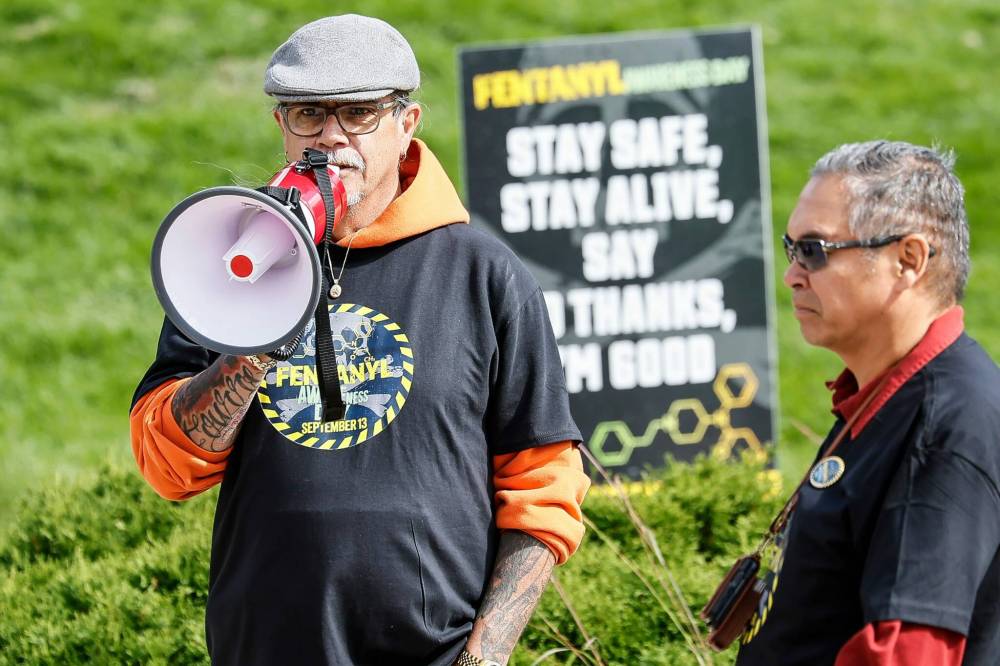
Fourre said his son was a master roofer, working on a job in The Pas around the time of his death. He wasn’t known to use drugs — in fact, his boss relayed that if someone pulled out an illicit substance at the end of a job, Harlan’s response would be: “no thanks, I’m good.”
“Had he known that fentanyl was in that recreational drug, he would have stuck with his words of ‘no thanks, I’m good.’ I’m sure of it. But because it was hidden, he was lied to — he had no idea,” Fourre said in an interview ahead of Sunday’s walk.
That phrase has become a rallying cry for Fourre, who, in response to his son’s death, founded the Singing Red Bear Foundation. This year marks the organization’s third annual Fentanyl Awareness Day walk, which began at the Oodena Circle at the Forks and ended at the legislative building. The idea is to bring awareness to fentanyl poisoning and create a space for families to grieve “without shame,” Fourre said.
Given fentanyl’s cheap and addictive nature, many recreational drugs are intentionally cut with it by dealers. The drug’s potency — two milligrams, or around five grains of salt, can be a fatal dose for an adult. For unsuspecting users, who may think they’re taking ecstasy, cocaine, benzodiazepines (such as Xanax) or methamphetamine, it could be a deadly mix.
RCMP have warned that even the “occasional user” can still be inadvertently exposed to fentanyl, adding that Health Canada has reported that between 2018 and 2022, more than 40 per cent of overdose deaths were caused from cocaine laced with fentanyl. Public Safety Canada noted in 2022 that the “street-level drug supply is increasingly contaminated and toxic,” often with fentanyl, as well as carfentanil and “other highly potent fentanyl analogues.”
There were 388 suspected substance-related deaths in Manitoba in 2025.
For Fourre, the message of his son’s death is clear — and it’s one he’s been sharing in workshops for young people across Manitoba.
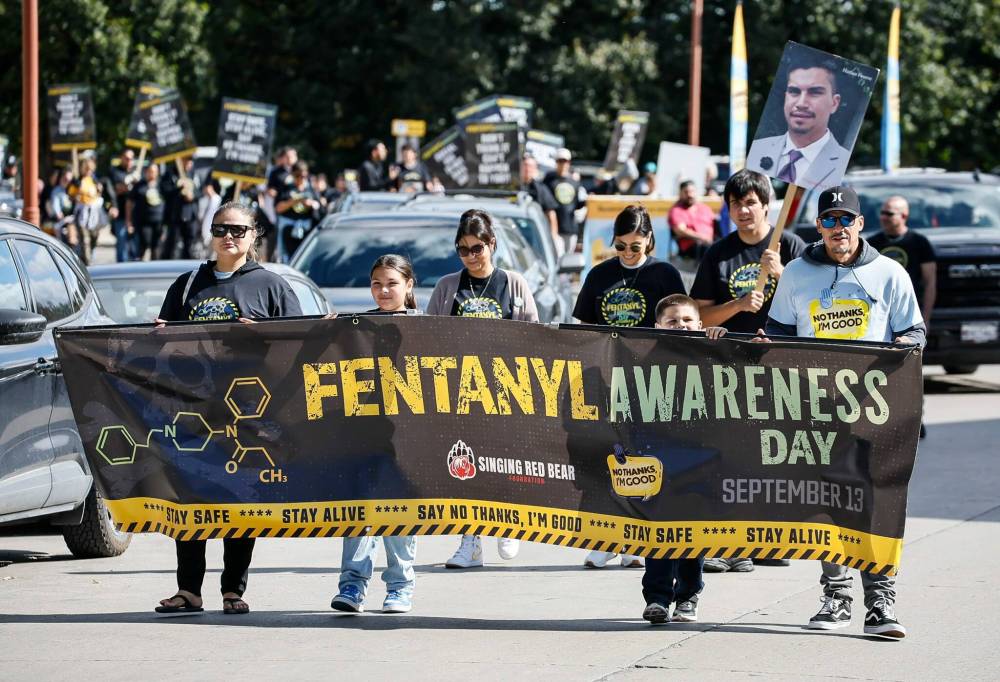
“Social use is not safe use. Don’t let one decision affect the rest of your life — well, you won’t have a life,” he said. “If you’re going to buy a gram of cocaine or you’re going to do a hit of Molly (ecstasy), then you’re expecting that. And you’re not expecting to have the fentanyl in there.”
Fourre wants to get the message out that because of the presence of fentanyl in the drug supply, a first-time user, an occasional user, a recreational user is still risking their life. With school starting, he’s aware that some young people may feel pressure to try drugs for the first time.
“If we could get our youth to understand that you don’t know your dealer’s dealer’s dealer’s dealer,” he said.
Fourre, who struggled with a heroin addiction in the past himself, wants to draw a distinction in that he believes his son’s death should be referred to as “fentanyl poisoning” — not an overdose.
It’s a distinction he sees as having important policy implications: for the young person who might be considering a drug for the first time — and could end up unknowingly consuming fentanyl — Fourre called prevention and awareness “paramount.” He said the government response to drug use is focused on harm reduction, which he said can’t be the sole tool.
Stewart Hill attended the first fentanyl awareness walk in 2024, where he met Fourre and realized the two men shared a devastating experience.

Hill’s oldest son, Stewart Dylan Joseph Hill, died on Sept. 8, 2024 — just days before that first walk.
His son, who went by Dylan, was 35 when he died, with two types of fentanyl found in his system.
At the time, Dylan was working at Ashley Furniture, delivering and assembling furniture all around Winnipeg. He was the first of three siblings and was especially close his mom, Hill said. His family did not know him to be a regular drug user, Hill said. He thinks Dylan may have believed he was taking cocaine.
At that first walk, Hill remembered thinking the toll of fentanyl does not discriminate.
“There were people there from all walks of life, different cultures — white, East Indian, Indigenous — this drug does not discriminate, it affects everyone,” he said Saturday.

Hill, who is Cree from God’s Lake First Nation in northern Manitoba, said he and his family are suffering immensely, but take comfort in the fact that Dylan is buried in their home territory, near his grandparents.
“He’s not out there somewhere lost. He’s home,” said Hill.
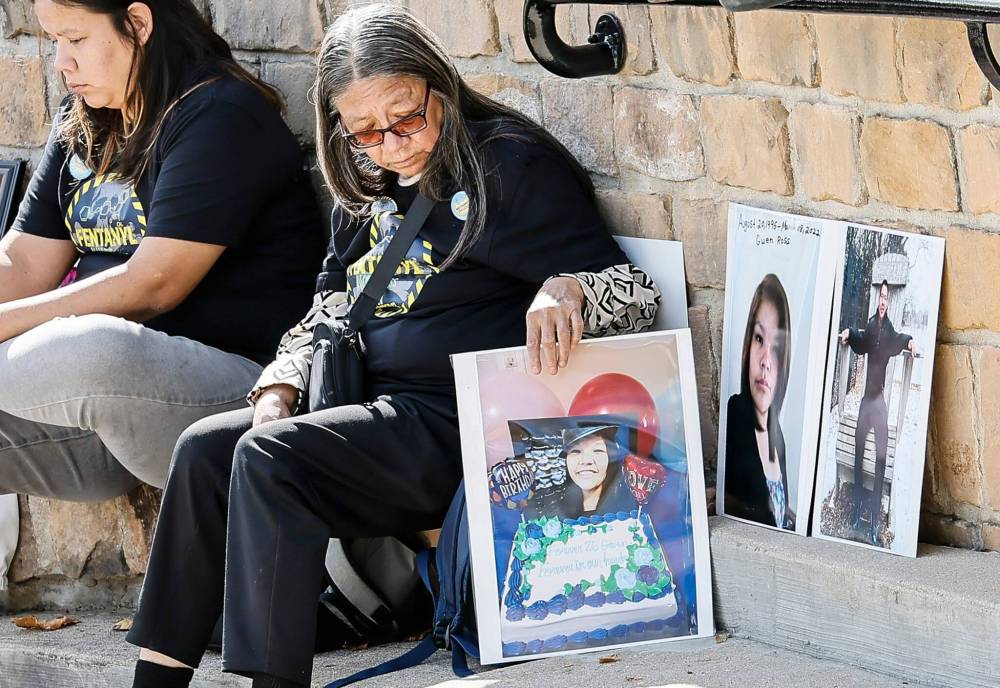
With a PhD in natural resources and environmental management, Hill plans to one day turn to his chemistry background to look into fentanyl further. For now, he focused on his own healing: starting counselling and attending an Indigenous men’s group at the University of Manitoba.
“When you go through a loss like this, everything changes. You change. You’re no longer the same. Life is no longer the same. So you have to you have to start seeking that healing.”
marsha.mcleod@freepress.mb.ca
Marsha McLeod
Investigative reporter
Signal
Marsha McLeod is an investigative reporter at the Free Press. She joined the Free Press in 2023. Read more about Marsha.
Every piece of reporting Marsha produces is reviewed by an editing team before it is posted online or published in print — part of the Free Press‘s tradition, since 1872, of producing reliable independent journalism. Read more about Free Press’s history and mandate, and learn how our newsroom operates.
Our newsroom depends on a growing audience of readers to power our journalism. If you are not a paid reader, please consider becoming a subscriber.
Our newsroom depends on its audience of readers to power our journalism. Thank you for your support.
Marsha McLeod
Investigative reporter
Signal
Marsha McLeod is an investigative reporter at the Free Press. She joined the Free Press in 2023. Read more about Marsha.
Every piece of reporting Marsha produces is reviewed by an editing team before it is posted online or published in print — part of the Free Press‘s tradition, since 1872, of producing reliable independent journalism. Read more about Free Press’s history and mandate, and learn how our newsroom operates.
Our newsroom depends on a growing audience of readers to power our journalism. If you are not a paid reader, please consider becoming a subscriber.
Our newsroom depends on its audience of readers to power our journalism. Thank you for your support.
Related Articles
Drug recovery centre opens office in ‘heart of the city’








Advertisement Advertise With Us
Advertisement Advertise With Us