Action needed to ensure groups aren’t unduly ‘de-banked’ over terror risks: report

Advertisement

Advertise with us

OTTAWA - There's "a near-total absence" of effective recourse for non-profit organizations and individuals whose banking services are cut off due to alleged ties to terrorist financing, a new report says.

Read this article for free:


or

Already have an account? Log in here »

To continue reading, please subscribe:

Subscribe and receive a limited-edition Free Press branded hat or tote.

Digital Subscription

One year of digital access for only $205*

  • Enjoy unlimited reading on winnipegfreepress.com
  • Read the E-Edition, our digital replica newspaper
  • Access News Break, our award-winning app
  • Play interactive puzzles

*First annual payment billed as $205.00 + GST for one year. This annual subscription will automatically renew at $233.00 + GST every 52 weeks (10% off the regular annual price of $259.35). Offer available to new and qualified returning subscribers only. Cancel any time.

To continue reading, please subscribe:

Add Free Press access to your Brandon Sun subscription for only an additional

$1 for the first 4 weeks*

  • Enjoy unlimited reading on winnipegfreepress.com
  • Read the E-Edition, our digital replica newspaper
  • Access News Break, our award-winning app
  • Play interactive puzzles
Start now

*Your next Brandon Sun subscription payment will increase by $1.00 and you will be charged $17.95 plus GST for four weeks. After four weeks, your payment will increase to $24.95 plus GST every four weeks.

OTTAWA – There’s “a near-total absence” of effective recourse for non-profit organizations and individuals whose banking services are cut off due to alleged ties to terrorist financing, a new report says.

The International Civil Liberties Monitoring Group report examines the phenomenon known as derisking or de-banking — ending or restricting access to financial services for clients or sectors in order to avoid perceived risks.

The Ottawa-based group includes dozens of non-governmental organizations, unions, professional associations, faith groups, environmental organizations, human rights and civil liberties advocates, and representatives of immigrant and refugee communities in Canada.
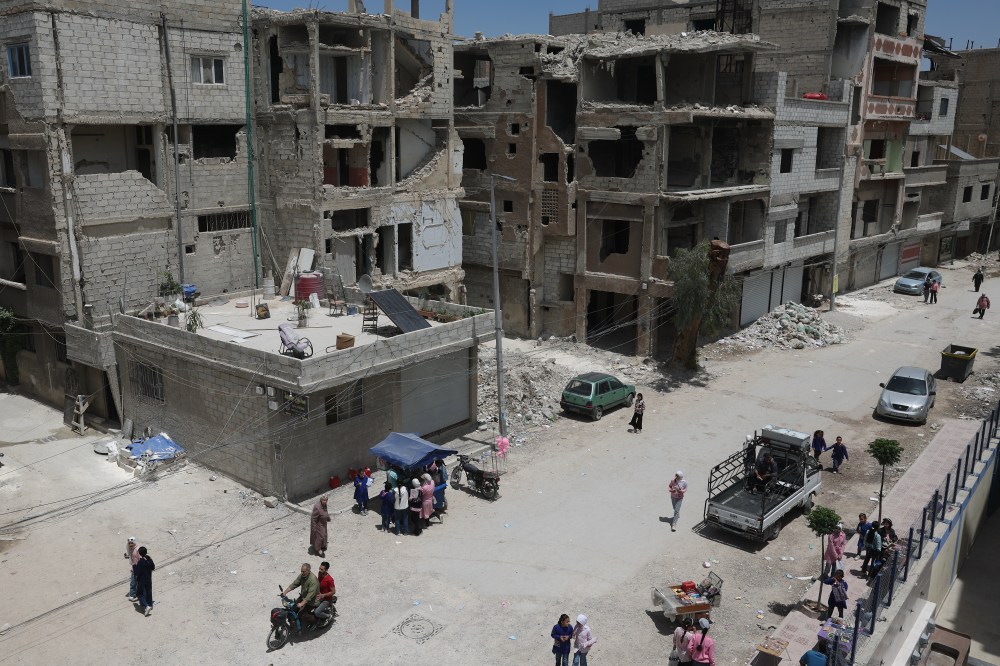
Daily life continues among damaged buildings, some under reconstruction, in the Yarmouk Palestinian refugee camp, devastated by years of fighting and displacement during the Syrian war, in Damascus, Syria, Tuesday, May 19, 2026. (AP Photo/Ghaith Alsayed)

Its report says a lack of case-specific and evidence-based decision-making by banks has resulted in “unjustified and discriminatory decisions” that affect their clients, including non-profits and charities.

It argues that the derisking of organizations — particularly those active in Muslim communities or carrying out humanitarian activities abroad — is not a series of isolated commercial decisions by individual banks but a predictable outcome of Canada’s anti-money laundering and anti-terrorist financing framework.

Charities and advocacy organizations are reporting episodes of service denial that appear to be based on risk avoidance rather than case-by-case assessment, raising “serious questions of discrimination, profiling, disproportionate impact and unintended consequences,” the report says.

Tim McSorley, the monitoring group’s national co-ordinator, said that while “any financial crime, including terrorist financing, needs to be addressed,” organizations with no extremist involvement face “penalties and harm because of overly broad and opaque anti-terror financing laws.”

That means millions of dollars intended for life-saving aid and international development are being cut off, McSorley said.

The organizations most affected by derisking include Muslim-led charities, international humanitarian and development NGOs and organizations linked to jurisdictions such as Syria, Palestine or Pakistan, the report says.

It says the consequences of derisking include abrupt account closures and service denials, exclusion from payment processors, disruption to humanitarian programs, individual derisking of employees, board members and their families, and lasting reputational harm.

In one case, a donation-processing platform notified a large, established humanitarian organization operating in Syria and other countries that it would be dropped within 15 to 30 days after the platform’s new banking partner made a derisking decision, the report says.

“No explanation of the underlying risk was given.”

In another case outlined in the report, a charity’s application for credit card services was welcomed by account managers, only for the account and associated donation processing to be suspended without warning a week later.

The report says financial institutions are not legally required to provide a specific reason for closing an account. It adds that no independent body in Canada has the mandate to review whether a derisking decision was reasonable, non-discriminatory or evidence-based, and no authority systematically collects data on the scale or nature of derisking in Canada.

“The result is a system in which life-altering financial decisions are made behind closed doors, based on undisclosed criteria, without meaningful appeal,” the report says.

The monitoring group’s report follows a study earlier this year by University of Toronto law and history professor Anver Emon. It found strict measures to prevent terrorism financing are prompting Muslim charities in Canada to withdraw humanitarian assistance from countries in need because they fear losing access to banking services.

The monitoring group’s report says derisking is embedded across the financial system — not confined to a single institution or sector — and cannot be addressed without structural reform, transparency requirements and meaningful accountability mechanisms.

The report makes a dozen recommendations to the federal government, supervisory bodies, financial institutions and payment processors.

It calls on the private sector to adopt due process standards for account closures, including clear reasons, a formal opportunity to respond and an independent internal review mechanism separate from the original decision-maker

The Canadian Bankers Association said Tuesday in a media statement that Canada has one of the most accessible banking systems in the world.

“Any decision to close an account is not taken lightly,” the association said. “Banks make these decisions independently, taking into consideration applicable laws, regulatory requirements and institution-specific factors.”

The Canada Revenue Agency does not comment on third-party reports. The Finance Department and Public Safety Canada had no immediate comment on the recommendations.

The Finance Department has said the federal government continues to engage with interested parties to ensure anti-terrorism financing measures remain effective, proportionate and responsive to emerging issues.

The monitoring group welcomes further engagement with the government but wants more than meetings and consultations, McSorley said.

“We need to see concrete policy changes.”

This report by The Canadian Press was first published Sept. 15, 2026.

Report Error Submit a Tip

The Free Press acknowledges the financial support it receives from members of the city’s faith community, which makes our coverage of religion possible.

More Stories

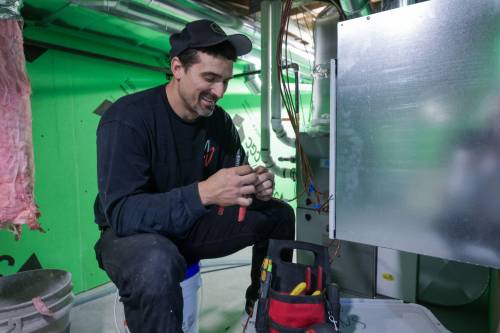
Former Bombers linebacker Gauthier enjoying career as electrician

Taylor Allen 6 minute read Preview

Former Bombers linebacker Gauthier enjoying career as electrician

Taylor Allen 6 minute read Yesterday at 12:44 PM CDT

Most professional football players don’t ride off into the sunset on their own terms.

Shayne Gauthier was well aware of that, but it didn’t make it sting any less when the Winnipeg Blue Bombers informed the veteran linebacker that they weren’t bringing him back for 2026.

“I was really hoping to play one more (season) because it would have been my 10th season, so, I’d say it didn’t really end the way I wanted,” Gauthier recently told the Free Press.

“It left a little sour taste in my mouth, but that’s part of pro sports. If everybody got the ending that they wanted, then it wouldn’t really work.”

Read
Yesterday at 12:44 PM CDT

Cabernet Sauvignon star of wine festival

Ben Sigurdson 5 minute read Preview

Cabernet Sauvignon star of wine festival

Ben Sigurdson 5 minute read 3:00 AM CDT

The Winnipeg Wine Festival will celebrate the king of red wine grapes next weekend — the theme of this year’s festival, which takes place Sept. 25 and 26 at the RBC Convention Centre, is Cabernet Sauvignon.

Cab Sauv, as it’s also known, is the world’s most widely planted wine grape of any colour, first coming to prominence in the 1800s in France’s Bordeaux region, where the grape is still popular. Rather than single-variety wines, Bordeaux reds tend to be blends, with those coming from the left bank of the Gironde estuary being Cabernet-dominant, while right-bank wines are Merlot-dominant, with Cabernet Sauvignon playing a supporting role. Cabernet and Merlot work well together and many other countries have followed suit in blending the two.

A team at University of California Davis put Cabernet Sauvignon through a DNA test in 1996 and discovered its parent grapes are Cabernet Franc and Sauvignon Blanc — it’s likely that at some point the two varieties, planted next to each other in some vineyard, crossed and mutated and became the grape we know today. (Someone growing grapes in the 19th century must have had an inkling of what was up, as the grape has been called Cabernet Sauvignon since long before the DNA test.)

Flavour-wise, most Cabernet Sauvignon wines are big and bold, with a core of deep dark berry flavours, some graphite and spice notes and relatively bright acidity. It’s a grape that is well-suited to barrel aging, with most examples seeing at least some time in wood.

Read
3:00 AM CDT

Day 1 of Jets training camp in the books with pairings essentially cemented

Ken Wiebe 7 minute read Preview

Day 1 of Jets training camp in the books with pairings essentially cemented

Ken Wiebe 7 minute read Thursday, Sep. 17, 2026

Nearly six minutes into his question-and-answer session, Scott Arniel took a welcome detour from the news of the day.

After exhausting the discussion around the goalie who wasn’t in training camp, the head coach of the Winnipeg Jets finally got a query about the line combinations and defensive pairings that were unveiled in training camp.

And unlike past years, when exhibition games were more frequent and the training camp wasn’t this condensed, Arniel conceded these groupings were intentional and were likely staying together for some time.

The expansion to an 84-game regular season brings with it a reduction to four pre-season games and a much shorter training camp, which could limit the amount of experimentation that Arniel can do during the next two weeks.

Read
Thursday, Sep. 17, 2026

Not good bet to shoulder gambling issue alone

Maureen Scurfield 5 minute read 2:01 AM CDT

DEAR MISS LONELYHEARTS: We’re living a lie over at our house, but it’s holding the family together.

I know my husband is deeply into gambling. If it weren’t for my steady job I don’t know where the family would be! I insist on paying all of our bills. I also funnel some major cash off to my sister, in case my husband tries to tap into my accounts somehow when I’m out of the house.

He doesn’t know my passwords, since I keep changing them, but he sometimes shows up behind me when I’m online, like he’s dying to ask something.

I say, “What are you looking at? Stop looking over my shoulder!” Then he makes a lame joke and goes away.

Gillingham in lead with decided voters

Nicole Buffie 6 minute read Preview

Gillingham in lead with decided voters

Nicole Buffie 6 minute read Yesterday at 6:55 PM CDT

A cloud of uncertainty is hanging over Winnipeg as October’s municipal election nears.

Three months after a poll showed more than 40 per cent of Winnipeggers wanted to see someone other than current mayor Scott Gillingham elected, a new Abacus Data poll indicates more than half of Winnipeg voters are undecided heading into next month’s civic election.

Of decided voters, 55 per cent favour Gillingham compared to 23 per cent for former councillor and provincial cabinet minister Kevin Klein and 11 per cent for funeral director Mike Vogiatzakis.

Of all respondents, just over 50 per cent said they were unsure while 13 per cent said they will not vote.

Read
Yesterday at 6:55 PM CDT

Canada must not accept another Iranian autocracy

David Matas 5 minute read 2:01 AM CDT

Iran is a state run by a radical government victimizing its citizens and its neighbours. How do we change that? Any regime change that repeats the mistakes of the past is not a solution.

What went wrong in the past which led to the current regime? One answer is the U.K. and American aided coup which led to the ouster in 1953 of a democratically elected government headed at the time by Mohammad Mossadegh and its replacement with an American friendly autocrat, the Shah of Iran, Mohammad Reza Pahlavi.

The Shah imposed his rule through the Iranian National Intelligence and Security Organization — SAVAK, the acronym of its Persian name. SAVAK systematically inflicted torture, arbitrary killings and extra-judicial killings on perceived opponents of the regime. It was only a matter of time before repression of a regime directed to serving foreign interests would be overthrown.

What replaced the regime of the Shah, in 1979, the current regime of the mullahs, is a regime as intolerant and violent as the regime of the Shah and then some. That was not inevitable. But neither was it surprising. The vicious nature of the current regime, following the example set by the Shah, and its hatred for the United States, reacting to the U.S. aided imposition of the Shah, both echoes and reacts to the past. In 1979, the U.S. reaped what it sowed in 1953.