Diverting intoxicated people from ER to recovery program ‘transformative’: study

Advertisement

Advertise with us

TORONTO - A new study suggests diverting intoxicated people from emergency rooms to a safe recovery space can help free up valuable health care resources and offer more suitable care.

Read this article for free:


or

Already have an account? Log in here »

To continue reading, please subscribe:

Subscribe and receive a limited-edition Free Press branded hat or tote.

Digital Subscription

One year of digital access for only $205*

  • Enjoy unlimited reading on winnipegfreepress.com
  • Read the E-Edition, our digital replica newspaper
  • Access News Break, our award-winning app
  • Play interactive puzzles

*First annual payment billed as $205.00 + GST for one year. This annual subscription will automatically renew at $233.00 + GST every 52 weeks (10% off the regular annual price of $259.35). Offer available to new and qualified returning subscribers only. Cancel any time.

To continue reading, please subscribe:

Add Free Press access to your Brandon Sun subscription for only an additional

$1 for the first 4 weeks*

  • Enjoy unlimited reading on winnipegfreepress.com
  • Read the E-Edition, our digital replica newspaper
  • Access News Break, our award-winning app
  • Play interactive puzzles
Start now

*Your next Brandon Sun subscription payment will increase by $1.00 and you will be charged $17.95 plus GST for four weeks. After four weeks, your payment will increase to $24.95 plus GST every four weeks.

TORONTO – A new study suggests diverting intoxicated people from emergency rooms to a safe recovery space can help free up valuable health care resources and offer more suitable care.

The study, published in the Canadian Journal of Public Health this week, evaluated the first two years of a non-medical Stabilization and Connection Centre in Toronto launched in 2022.

The centre was created to redirect people who are intoxicated by alcohol or opioids and don’t require medical attention from the ER to a 10-bed facility with support workers. 
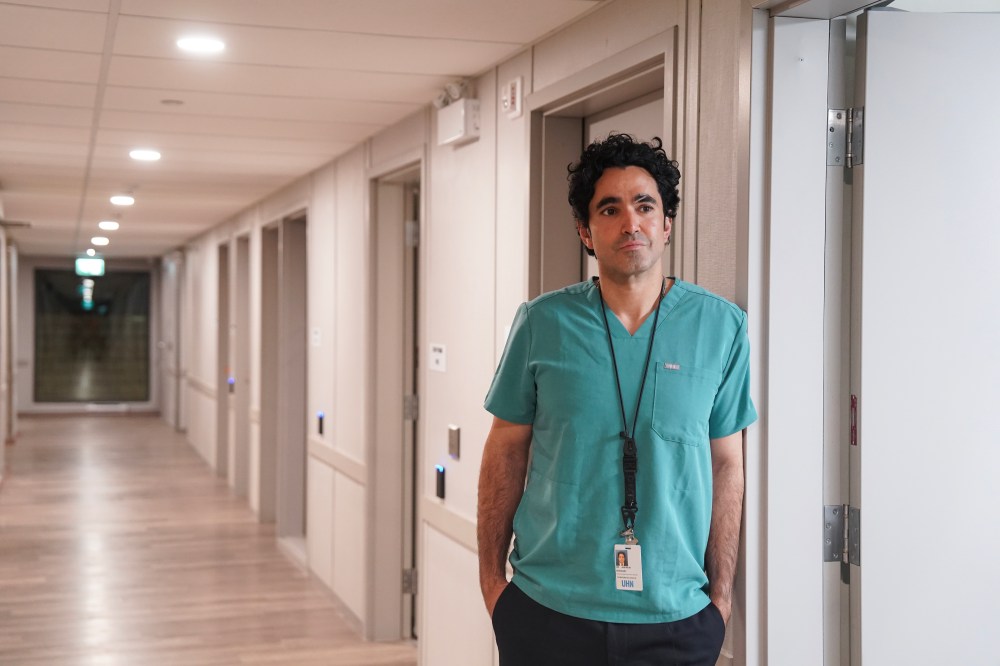
Dr. Andrew Boozary, of UHN, is photographed at the site of a new Social Medicine Housing Initiative in Toronto on Wednesday, October 2, 2024. THE CANADIAN PRESS/Chris Young

The University Health Network program partners with The Neighbourhood Group Community Services and Parkdale Queen West Community Health Centre, who staff the site.

The study said paramedics were on site for a mean of about seven minutes, compared to more than 34 minutes at two nearby ERs. 

One of the centre’s founders Dr. Andrew Boozary said that means paramedics were back on the streets much faster. 

Less than seven per cent of patients were transferred to hospital from the stabilization centre, which Boozary said shows this approach is safe and catching the people who need it. 

More than half of the centre’s 4,500 visits were among people who were homeless. Many were referred to homeless services and substance use care by staff at the site. 

“The status quo wasn’t working for the way the system was responding to many of the alcohol intoxication and opioid overdoses, especially for people who are experiencing homelessness,” Boozary said. 

Dr. Kate Hayman, medical director of the emergency department at Toronto General Hospital, said the impact of diverting patients who are medically stable from the ER is “transformative.” 

“Every person who had an admission to the SCC would have been a patient admitted to our ED,” Hayman said. 

That amounts to about six less people per day in the ER who each would have spent four or five hours there, she said. 

“It enabled us to provide more focused care for people who maybe have more severe overdoses, as well as people with other kinds of emergencies, strokes, heart attacks,” Hayman said. 

The study also found the length of stay at the stabilization centre was significantly longer, with a mean of more than 10 hours, compared to just over 4 1/2 hours in the ER. 

Florencia Leston, director of community health services at the Neighbourhood Group, said that longer stay is by design. 

Patients can spend up to 24 hours at the centre, where they can sleep, shower and eat. There are harm reduction and personal support workers on staff, along with a physician-on-call.

Leston said a lot of clients would typically spend hours on a stretcher sleeping in the emergency department. 

“Here they have a different opportunity,” she said.  

“They are able to actually build some sort of rapport that allows them to start even being curious in changing some of their circumstances. And I think that that’s one of the most valuable things that we are able to actually do in the SCC.”

Leston said she hopes to open admission to more hospitals in future to broaden the community the centre can support. 

This report by The Canadian Press was first published Sept. 16, 2026. 

Canadian Press health coverage receives support through a partnership with the Canadian Medical Association. CP is solely responsible for this content.

Note to readers:This is a corrected story. A previous version incorrectly stated that the mean length of stay in the ER was just over 8 1/2 hours, when in fact it was just over 4 1/2 hours.

Report Error Submit a Tip

More Stories

Sex sounds in stereo a sad score for singleton

Maureen Scurfield 5 minute read 2:00 AM CDT

DEAR MISS LONELYHEARTS: I just moved into a big old house with two buddies who curl and play hockey with me. They have girlfriends, but I don’t.

I thought they’d be staying at their girlfriends’ places on nights they were “sleeping” together, but oh no!

So now I get to listen to the duelling sex noises of two couples, on weekends and some weeknights as well.

Do I have any rights here? I really don’t want to admit defeat and move back in with my parents, when feels like I just moved out. But it’s really uncomfortable to be the only guy with no sex life in this household, and then having to hear it, while it’s happening.

‘Parental rights’ issue resurfaces

Maggie Macintosh 5 minute read Preview

‘Parental rights’ issue resurfaces

Maggie Macintosh 5 minute read 2:00 AM CDT

Trustee campaign material that condemns rainbow flags is being met with outrage of all kinds, written complaints and, in one case, a cease-and-desist order.

“Parental rights,” including questions about classroom diversity, equity and inclusion policies, are resurfacing heading into school board elections across Manitoba.

“People are trying to advance their politics and their issues while simultaneously calling teachers ideologues and brainwashers,” said Shannon Moore, an associate professor at the University of Manitoba who studies sexual health education. “And I find that rich.”

Moore said parents have a right to choose independent school or homeschool, but they do not have a right to dictate curriculum that is currently developed using research and mainstream morals.

Read
2:00 AM CDT

Letters, Sept. 17

7 minute read 2:00 AM CDT

It’s done here, too

The GLITTER program in Portland was held up last week as a glowing example of progressive, community-minded litter removal that Winnipeg and its downtown agencies should aspire to replicate.

Well, the grass may seem greener, and the encampments a little cleaner, but ask around and you may learn that Winnipeg already has community-led programs doing this work and doing it well.

I can’t fault anyone for raising the merits of a made-in-Portland program for the sake of discussion. After all, it is a timeless Winnipeg pastime to ask why our city lags behind others on any number of trends, programs, or amenities. But the suggestion that “some version” of GLITTER should be considered here falls short when it fails to acknowledge the parallel efforts already delivering results here.

We’re not falling back, springing forward anymore; Manitoba staying on daylight time

Carol Sanders 3 minute read Preview

We’re not falling back, springing forward anymore; Manitoba staying on daylight time

Carol Sanders 3 minute read Updated: 9:55 AM CDT

Time’s up for the time change in Manitoba.

Manitobans won’t be setting their clocks back an hour when daylight time comes to an end elsewhere on Nov. 1.

After surveying residents on the twice annual clock adjustment, the province announced Thursday that it will no longer spring forward and fall back, as has been the case for the majority of the past 110 or so years.

“We heard from Manitobans loud and clear — no more changing the clocks in Manitoba,” Premier Wab Kinew said in a news release Thursday. “Permanent daylight saving time is good for our health, good for business and good for parents… This change means one less adjustment families have to deal with each spring and fall. That’s why this November, your clocks won’t be changing.”

Read
Updated: 9:55 AM CDT

Federal Court awards OCN $27M, 62 years after construction of hydro dam

Nicole Buffie 5 minute read Preview

Federal Court awards OCN $27M, 62 years after construction of hydro dam

Nicole Buffie 5 minute read Updated: Yesterday at 12:02 PM CDT

The Federal Court has ordered Ottawa pay Opaskwayak Cree Nation $27 million over damages suffered due to the construction of the Grand Rapids hydro dam in the 1960s.

In a decision dated Sept. 3, Federal Court Justice Sébastien Grammond says the federal government had a fiduciary duty to protect the community from the impacts of the dam.

“When the Crown exercises a discretionary power over an Indigenous interest, it has a fiduciary duty and it must exercise the discretion in the best interests of the Indigenous group,” the ruling said. “Canada breached its fiduciary duty to OCN because it approved the (project) without ensuring that the impacts of the Grand Rapids dam on OCN’s traditional way of life were mitigated or compensated.”

The First Nation took the federal government to court in February over impacts on the community after the dam, located about 145 kilometres southeast of Opaskwayak Cree Nation, was installed on the Saskatchewan River in 1964. The case was heard over 14 days in a judge-alone trial in Winnipeg.

Read
Updated: Yesterday at 12:02 PM CDT

Sweeney’s sexist U.S. gambling-site ad isn’t the real problem

Dan Lett 5 minute read Preview

Sweeney’s sexist U.S. gambling-site ad isn’t the real problem

Dan Lett 5 minute read Yesterday at 1:33 PM CDT

Until very recently, there was no reason to connect actress and model Sydney Sweeney with online sports betting. But the degrees separating these two culture trends evaporated in short order this week.

Read
Yesterday at 1:33 PM CDT