UNGA lingo: A guide to UN General Assembly meeting acronyms, buzzwords and more
Advertisement
Read this article for free:
or
Already have an account? Log in here »
To continue reading, please subscribe:

Digital Subscription
One year of digital access for only $205*
- Enjoy unlimited reading on winnipegfreepress.com
- Read the E-Edition, our digital replica newspaper
- Access News Break, our award-winning app
- Play interactive puzzles
*First annual payment billed as $205.00 + GST for one year. This annual subscription will automatically renew at $233.00 + GST every 52 weeks (10% off the regular annual price of $259.35). Offer available to new and qualified returning subscribers only. Cancel any time.
To continue reading, please subscribe:
Add Free Press access to your Brandon Sun subscription for only an additional
$1 for the first 4 weeks*
- Enjoy unlimited reading on winnipegfreepress.com
- Read the E-Edition, our digital replica newspaper
- Access News Break, our award-winning app
- Play interactive puzzles
*Your next Brandon Sun subscription payment will increase by $1.00 and you will be charged $17.95 plus GST for four weeks. After four weeks, your payment will increase to $24.95 plus GST every four weeks.
Read unlimited articles for free today:
or
Already have an account? Log in here »
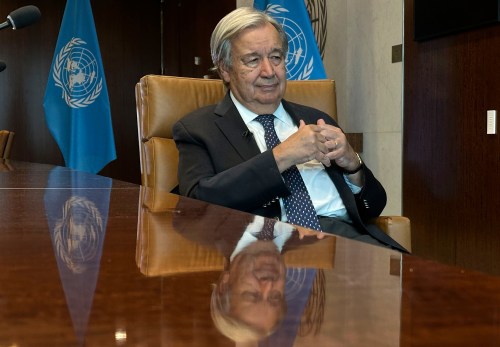
UNITED NATIONS (AP) — The U.N. General Assembly is launching into its yearly meeting of world leaders, a week of diplomacy, dealmaking, speechmaking — and lingo.
Here is some of the key vocabulary, decoded.
For starters …
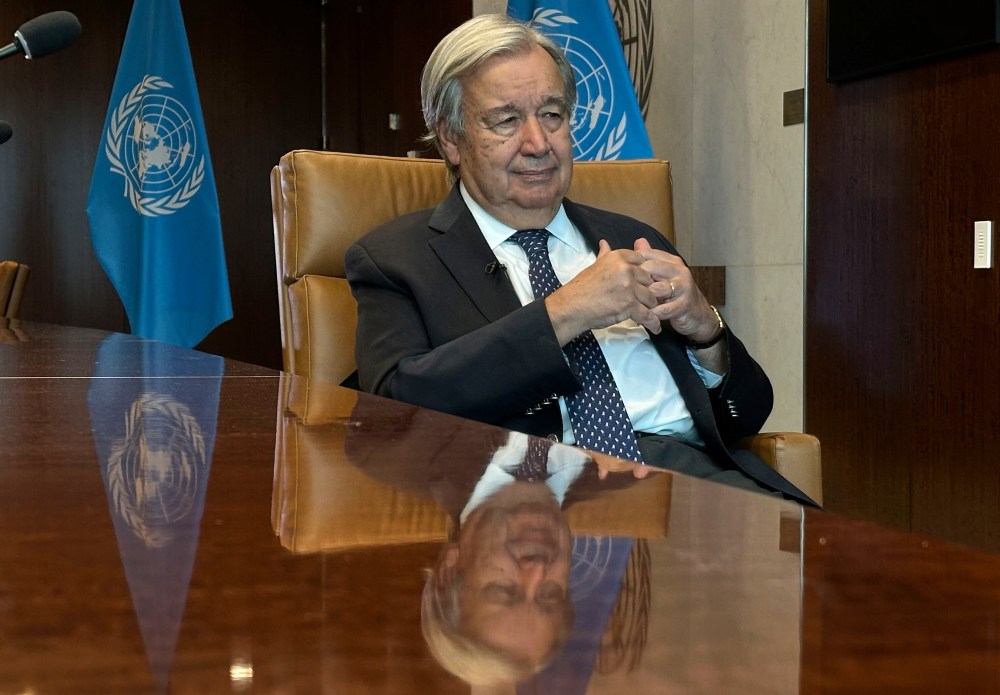
UNGA: Shorthand (often pronounced “UN’-gah”) for the U.N. General Assembly’s “High-level Week,” when presidents, prime ministers, monarchs and other top leaders of all 193 U.N. member countries are invited to speak to the world and each other. New Yorkers sometimes just groan “General Assembly” to describe what many experience as a week of epic traffic, but the assembly isn’t just this meeting. It’s a body that discusses many global issues and votes on resolutions throughout the year.
GENERAL DEBATE: The centerpiece of the week, it gives each country’s leader (or a designee) the microphone for a state-of-the-world speech. This year’s theme is “restoring trust, managing transformation” and ensuring the 81-year-old United Nations “delivers for all.” But speakers often opine on the planet’s biggest issues and hot spots, spotlight domestic accomplishments and needs, air grievances and try to exude statesmanship. While the “debate” is more a series of speeches than an interactive discussion, rebuttals are allowed at the end of each long day, and some embittered neighbor nations routinely go multiple rounds.
BILATERAL (or “bilat,” for short): Private meetings between high-ranking officials of two countries. Many UNGA veterans say the gathering’s real value lies in these tête-à-têtes and other personal, off-camera encounters among decision-makers.
MINISTERIAL: Applies to meetings of cabinet-level officials, such as foreign ministers, from different countries.
SECURITY COUNCIL: The U.N.’s most powerful component, charged with maintaining international peace and security. The 15-member council can enact binding (though sometimes ignored) resolutions, impose sanctions and deploy peacekeeping troops. While this week is the General Assembly’s show, the council generally also holds a high-wattage meeting or two.
Fun with numbers!
P5: The Security Council’s five permanent members with veto power. Under a structure set up in 1945, they are China, France, Russia, the United Kingdom and the United States.
E10: The Security Council’s 10 elected, nonpermanent members. The General Assembly elects them for two-year terms in seats allocated by region. Calls for council reform are an UNGA staple. One major complaint is the lack of permanent members from Africa and the Latin America-Caribbean region, though some other nations also have angled for years for a permanent presence.
G77: Stands for the “Group of 77 and China,” a developing-countries interest group that formed within the U.N. in 1964. Despite its name, it actually now has 134 members.
COP31: A major U.N. climate conference coming up in November in Antalya, Turkey.
1.5 DEGREES: A crucial climate threshold. Under the 2015 Paris climate accord, countries agreed to work to limit warming to 1.5 degrees Celsius (2.7 degrees Fahrenheit) over preindustrial times. The goal has long seemed elusive, and the U.N. acknowledged this month that the planet will surpass that threshold in the next few years.
Initial here
SDGs: The U.N.’s “ sustainable development goals,” which range from combating climate change to eliminating hunger and poverty to achieving gender equality. The U.N.’s member countries unanimously adopted the goals in 2015 as a 15-year action plan, but the pace is seriously lagging.
SIDS: At the U.N., this stands for some 39 “small island developing states.” UNGA is an important platform for them to elevate concerns such as climate change and the existential threat they face from projections of rising seas and intensifying storms, often a painfully timely subject at a meeting that falls in the thick of the Atlantic hurricane season.
BRICS: A developing-economies coalition that initially included Brazil, Russia, India, China and South Africa and has grown to 11 countries. There are many international groups centered around regional, economic, defense or other ties, but BRICS nations boast about half the world’s population and a lot of its resources and economic activity. The group has been a venue for China and Russia to project influence and work to counter the West. It also is struggling with internal divisions.
NGO: “Nongovernmental organization,” such as an advocacy group, charitable foundation or nonprofit relief organization.
LDCs: Very poor nations that are known at the U.N. as “ least-developed countries.” Forty-four nations currently meet the criteria, which include a gross national income of $1,088 or less per person per year.
IFIs: International financial institutions, including the World Bank and the International Monetary Fund, which were established at a 1944 U.N. conference in Bretton Woods, New Hampshire. Critics see the Bretton Woods duo as sclerotic entities that have badly failed poor and developing countries. The institutions have defended their work while saying they are trying to evolve.
Phrasebook
MULTILATERALISM: Global or near-global partnership that is united and collectively develops enduring rules and shared norms. The idea undergirds the U.N. itself, though many warn it’s under threat.
MULTIPOLAR: A scenario in which there are several different and sometimes competing centers of power, not a single superpower or two.
MULTISTAKEHOLDER: An approach to big projects and problem-solving that incorporates not only governments but businesses, NGOs and possibly others. Fans see this concept as key to the future of world cooperation. But some progressive groups view it as a sell-out to big corporations and other powers that be.
TWO-STATE SOLUTION: A concept for resolving the Israeli-Palestinian conflict by establishing an independent Palestinian nation living in peace alongside Israel. The framework was set down in the 1993 Oslo Accords and embraced by the U.N., but progress toward implementing it stalled long before the recent Israel-Hamas war in Gaza and the expansion of Israeli settlements in the occupied West Bank. Most of the international community considers the settlements illegal.
SOUTH-SOUTH COOPERATION: Collaboration among countries, organizations and people in what is known as the Global South. The term refers to developing nations that are largely, though not exclusively, in the Southern Hemisphere and generally want a bigger say in their own development and in international affairs.
UNILATERAL COERCIVE MEASURES: A usually critical way of describing sanctions imposed by one country in hopes of spurring some action in another.