National Arts Centre to create department of indigenous theatre
Advertisement
Read this article for free:
or
Already have an account? Log in here »
To continue reading, please subscribe:

Digital Subscription
One year of digital access for only $205*
- Enjoy unlimited reading on winnipegfreepress.com
- Read the E-Edition, our digital replica newspaper
- Access News Break, our award-winning app
- Play interactive puzzles
*First annual payment billed as $205.00 + GST for one year. This annual subscription will automatically renew at $233.00 + GST every 52 weeks (10% off the regular annual price of $259.35). Offer available to new and qualified returning subscribers only. Cancel any time.
To continue reading, please subscribe:
Add Free Press access to your Brandon Sun subscription for only an additional
$1 for the first 4 weeks*
- Enjoy unlimited reading on winnipegfreepress.com
- Read the E-Edition, our digital replica newspaper
- Access News Break, our award-winning app
- Play interactive puzzles
*Your next Brandon Sun subscription payment will increase by $1.00 and you will be charged $17.95 plus GST for four weeks. After four weeks, your payment will increase to $24.95 plus GST every four weeks.
Read unlimited articles for free today:
or
Already have an account? Log in here »
Hey there, time traveller!
This article was published 23/03/2016 (3840 days ago), so information in it may no longer be current.
TORONTO – It’s being heralded as a historic move that will finally bring Canada’s disparate indigenous voices together and put a long-needed national spotlight on their artistic works.
The National Arts Centre in Ottawa announced Thursday it’s creating a new Department of Indigenous Theatre as part of its strategic plan for 2015-2020.
“I really see it as a place where the next great works could be developed,” says actor-director Michael Greyeyes, a Plains Cree artistic director of Signal Theatre in Toronto.
“There are many countries that have actually had national indigenous theatres, and Canada — one of the most highly developed, wealthiest countries in the world — not having one has been an odd thing because we’ve had a vibrant theatre community for decades.”
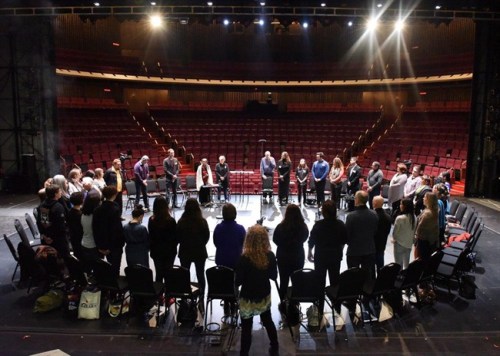
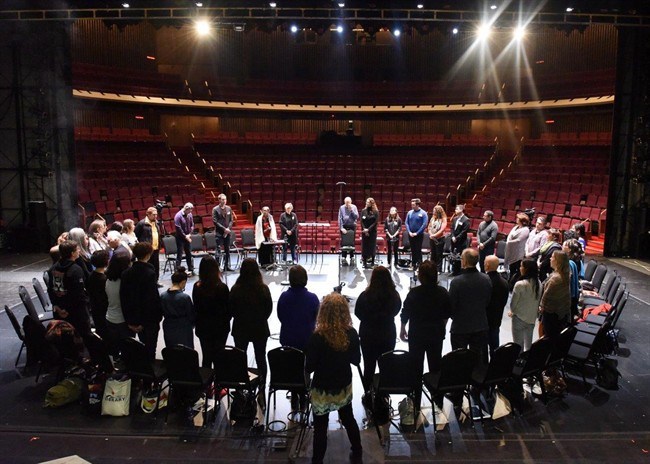
The NAC says the seeds for the idea were first planted 10 years ago, when Peter Hinton was artistic director and programmed indigenous work into every season. In that time, the NAC also worked with indigenous artists on various projects and started doing retreats with them.
“When we were working on our strat plan, it was like, ‘It’s time. In fact, this should have been the way it was in ’69. Why did we wait?'” says Rosemary Thompson, the NAC’s director of communications and public affairs, referring to the year the venue opened its doors.
“It’s a very, very gratifying moment for us, because we’ll be 50 in 2019, and that we will have a full-fledged indigenous theatre department to mark our 50th anniversary is right.
“It should’ve happened a long time ago.”
Greyeyes, who also teaches at York University’s Department of Theatre, was among those who took part in the NAC’s 2014 summit in Banff, Alta. He says it was there that the formal conversations about the indigenous theatres began.
When the NAC conducted a study looking at the artistic projects of Canada’s indigenous population, it found “the body of work was astounding.”
“Even us, like people who are creating the body of work, were simply astounded,” says Greyeyes. “Production after production, play after play, it was pages upon pages.”
Such works spanned the worlds of theatre, dance and opera, among others.
Many aren’t aware of this vast body of work because it isn’t produced a lot, says Greyeyes.
“‘The Rez Sisters’ (play) gets produced a lot, other big plays get remounted, but many, many plays don’t see that rich production history, and it’s production history that turns good plays into canonical works.

“I think that’s one of the purposes of the NAC indigenous theatre, is to allow a place for these incredible works, deservedly canonical works, to gain the recognition across the country.”
Thompson says the theatre will be partly financed through both public and private donations, and they’re “convinced it’s going to be very well supported.”
The NAC will appoint an artistic director for the theatre in 2017 and launch its first season of full programming in the fall of 2019.
“What we’re hearing from indigenous artists is that it should be multi-disciplinary — it could be dance, it could be music, it could be visual, it could be craft,” says Thompson.
“We take their lead.”