Drama an austere look at death penalty
Radiating effect of trauma presented without sentiment

Advertisement
Read this article for free:
or
Already have an account? Log in here »
To continue reading, please subscribe:

Digital Subscription
One year of digital access for only $205*
- Enjoy unlimited reading on winnipegfreepress.com
- Read the E-Edition, our digital replica newspaper
- Access News Break, our award-winning app
- Play interactive puzzles
*First annual payment billed as $205.00 + GST for one year. This annual subscription will automatically renew at $233.00 + GST every 52 weeks (10% off the regular annual price of $259.35). Offer available to new and qualified returning subscribers only. Cancel any time.
To continue reading, please subscribe:
Add Free Press access to your Brandon Sun subscription for only an additional
$1 for the first 4 weeks*
- Enjoy unlimited reading on winnipegfreepress.com
- Read the E-Edition, our digital replica newspaper
- Access News Break, our award-winning app
- Play interactive puzzles
*Your next Brandon Sun subscription payment will increase by $1.00 and you will be charged $17.95 plus GST for four weeks. After four weeks, your payment will increase to $24.95 plus GST every four weeks.
Read unlimited articles for free today:
or
Already have an account? Log in here »
Hey there, time traveller!
This article was published 12/03/2020 (2352 days ago), so information in it may no longer be current.
The drama in this death-row story runs deep. There are no surface fireworks. Forget the crusading lawyers, the rousing courtroom scenes, the last-minute reversals. The feelings in this potent film are anguished but rigorously tamped down. And that’s the point.
In Clemency, which won the Sundance Grand Jury prize in 2019, writer-director Chinonye Chukwu (alaskaLand) explores, with quiet, unsentimental rigour, the emotional toll surrounding the drawn-out legal, bureaucratic and practical processes of capital punishment.
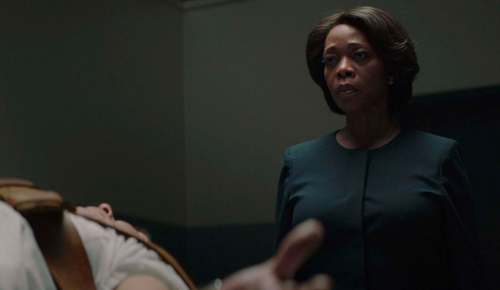
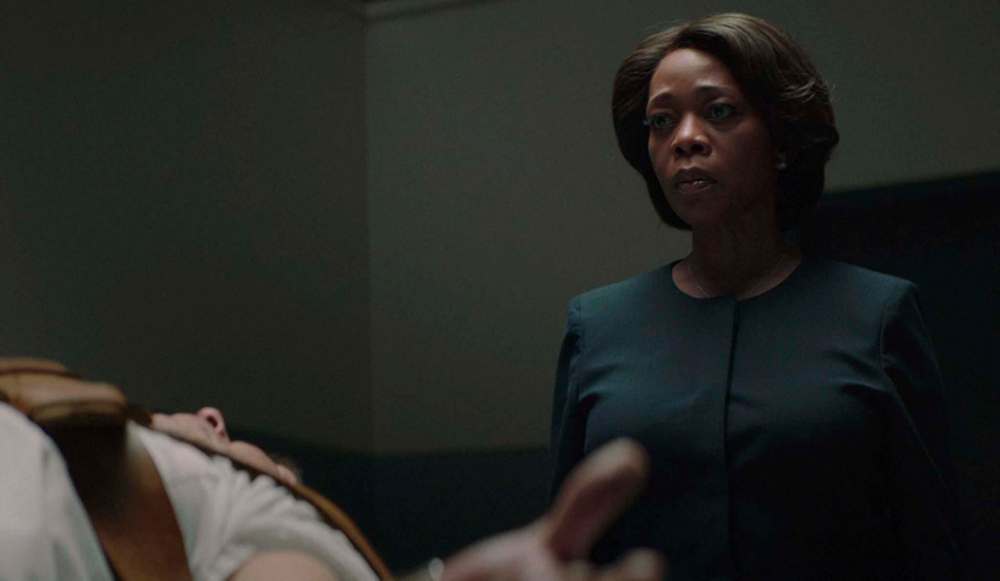
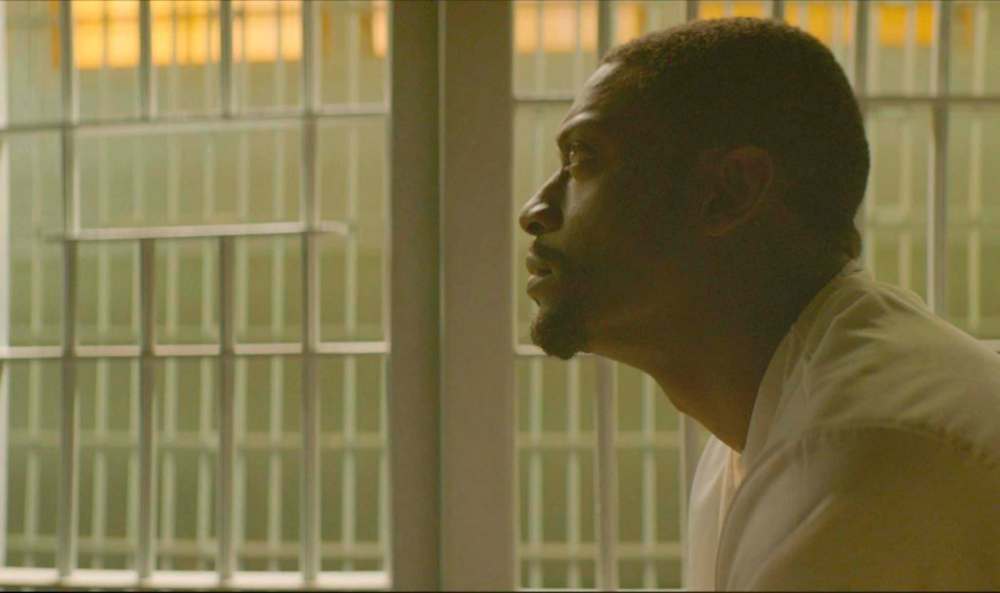
Though there is no obvious scenery-chewing, this restrained psychological study is an actors’ showcase, focusing on Alfre Woodard (12 Years a Slave) as prison warden Bernadine Williams and Aldis Hodge (Hidden Figures) as Anthony Woods, the prisoner awaiting his scheduled, state-sanctioned death.
In the opening sequence, as Bernadine prepares to oversee an execution, one of her guards calls her. “Warden… Warden,” he says, as she stares, unhearing, into space. Then he says her name, “Bernadine,” and she snaps back into focus. It’s a revealing moment, one that suggests how she toggles between her official role and her human impulses.
It’s a moral and emotional tension that has become almost unbearable. Haunted by a recent botched execution by lethal injection, Bernadine reluctantly prepares for another, numbing herself in order to function. At work she scrupulously follows rules and protocol.
Away from work, she drinks too much. She barely sleeps. She avoids her husband, Jonathan (Wendell Pierce of The Wire), a warm, supportive high school English teacher who reads Ralph Ellison to his students, because she cannot bear to feel anything.
Trying to remain humane in an inhumane system, she reassures herself that she is doing some kind of good. “I give these men respect,” she tells Anthony’s lawyer, Marty Lumetta (Richard Schiff). “All the way through.”
Marty, emotionally and physically exhausted, has decided this will have to be his last case. The prison chaplain who attends the executions (Michael O’Neill) is likewise set to retire. His wife tells him he has started to bring the darkness of his job home with him.
Anthony has confessed to committing a robbery many years ago, but Marty argues that he has been wrongfully convicted of murder, and that recent developments in ballistics testing exonerate him. But the narrative is not really about Anthony’s guilt or innocence.
In the same way, the racist implications of the death penalty, which in the U.S. has always been disproportionately applied against people of colour, are present in Clemency, thrumming underneath the surface. But they are never raised explicitly.
Clemency is really about Anthony’s experience within the prison system. Hodge’s visceral performance, which includes long passages of harrowing silence broken up by sudden eruptions of pain, embodies not just the fear of impending execution, but the more mundane miseries of life on death row, where faint hope can be crueller than no hope at all. We get a sense of repeated appeals denied, of human contact increasingly shut down.
And crucially, we see how Anthony’s trauma radiates outward — to his family, to the family of the shooting victim, who are desperate for some kind of closure, and to every member of the execution team.
This is a difficult and austere film, and there are perhaps times when its minimalism works against it, and we wish Chukwu would give way, just a little, to more conventional emotional expression. But in the end, Woodard and Hodge’s unflinching performances reach into the stillness and pull up something extraordinary.
alison.gillmor@freepress.mb.ca
Studying at the University of Winnipeg and later Toronto’s York University, Alison Gillmor planned to become an art historian. She ended up catching the journalism bug when she started as visual arts reviewer at the Winnipeg Free Press in 1992.
Our newsroom depends on a growing audience of readers to power our journalism. If you are not a paid reader, please consider becoming a subscriber.
Our newsroom depends on its audience of readers to power our journalism. Thank you for your support.
Movie review
Clemency
Starring Alfre Woodard and Aldis Hodge
● Cinematheque
● To March 18
● PG
● 113 minutes
★★★★ out of five
Studying at the University of Winnipeg and later Toronto’s York University, Alison Gillmor planned to become an art historian. She ended up catching the journalism bug when she started as visual arts reviewer at the Winnipeg Free Press in 1992.
Our newsroom depends on a growing audience of readers to power our journalism. If you are not a paid reader, please consider becoming a subscriber.
Our newsroom depends on its audience of readers to power our journalism. Thank you for your support.
Advertisement Advertise With Us
Advertisement Advertise With Us