Songwriter throws perfect opening-day strike
John K. Samson puts summer 2020's angst and ennui on baseball-themed song's roster

Advertisement
Read this article for free:
or
Already have an account? Log in here »
To continue reading, please subscribe:
Digital Subscription
One year of digital access for only $1.44 a week*
- Enjoy unlimited reading on winnipegfreepress.com
- Read the E-Edition, our digital replica newspaper
- Access News Break, our award-winning app
- Play interactive puzzles
*Billed as $5.77 plus GST every four weeks. After 52 weeks, price increases to the regular rate of $19.95 plus GST every four weeks. Offer available to new and qualified returning subscribers only. Cancel any time.
To continue reading, please subscribe:
Add Free Press access to your Brandon Sun subscription for only an additional
$1 for the first 4 weeks*
- Enjoy unlimited reading on winnipegfreepress.com
- Read the E-Edition, our digital replica newspaper
- Access News Break, our award-winning app
- Play interactive puzzles
*Your next Brandon Sun subscription payment will increase by $1.00 and you will be charged $17.95 plus GST for four weeks. After four weeks, your payment will increase to $24.95 plus GST every four weeks.
Read unlimited articles for free today:
or
Already have an account? Log in here »
Hey there, time traveller!
This article was published 27/07/2020 (2281 days ago), so information in it may no longer be current.
There are no peanuts and Cracker Jack and there is certainly no joy in Mudville.
That’s how many baseball fans feel as the boys of summer kicked off the long-delayed and abridged 2020 Major League Baseball season Thursday night without one fan in the seats, owing to pandemic restrictions.
It also matches the tone in John K. Samson’s latest single, Fantasy Baseball at the End of the World, which stepped up to the plate on social media and streaming services Friday morning.

Samson, who rose to fame as the frontman for Winnipeg band the Weakerthans, reveals the helplessness many feel with today’s world in the song in the first two lines: “I manage my fantasy baseball team better than I manage my anger these days.”
Later in the spare one-minute, 53-second tune, Samson sings about calling up love and faith to his roster and “putting fear on a long-term IL (injury list).”
Samson began his career with anti-establishment punk group Propagandhi, and takes his hacks at the political class in Fantasy Baseball too, and the video depicts unnamed presidents past, present and future with an orange fish head atop a business suit.
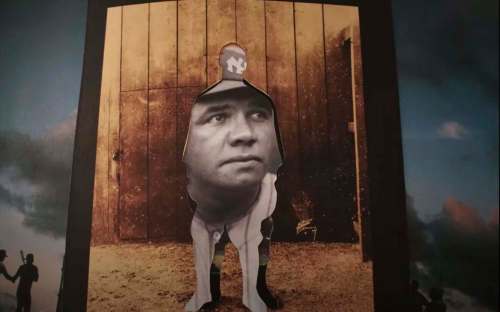
The song’s video uses a collage of photos of baseball greats from Yogi Berra and Jackie Robinson to Sandy Koufax and Satchel Paige to create a form of animation, lending action to still images. The song, and the video, end with hope by looking to the future and lingering on a young female Little Leaguer ready to field the next grounder.
● ● ●
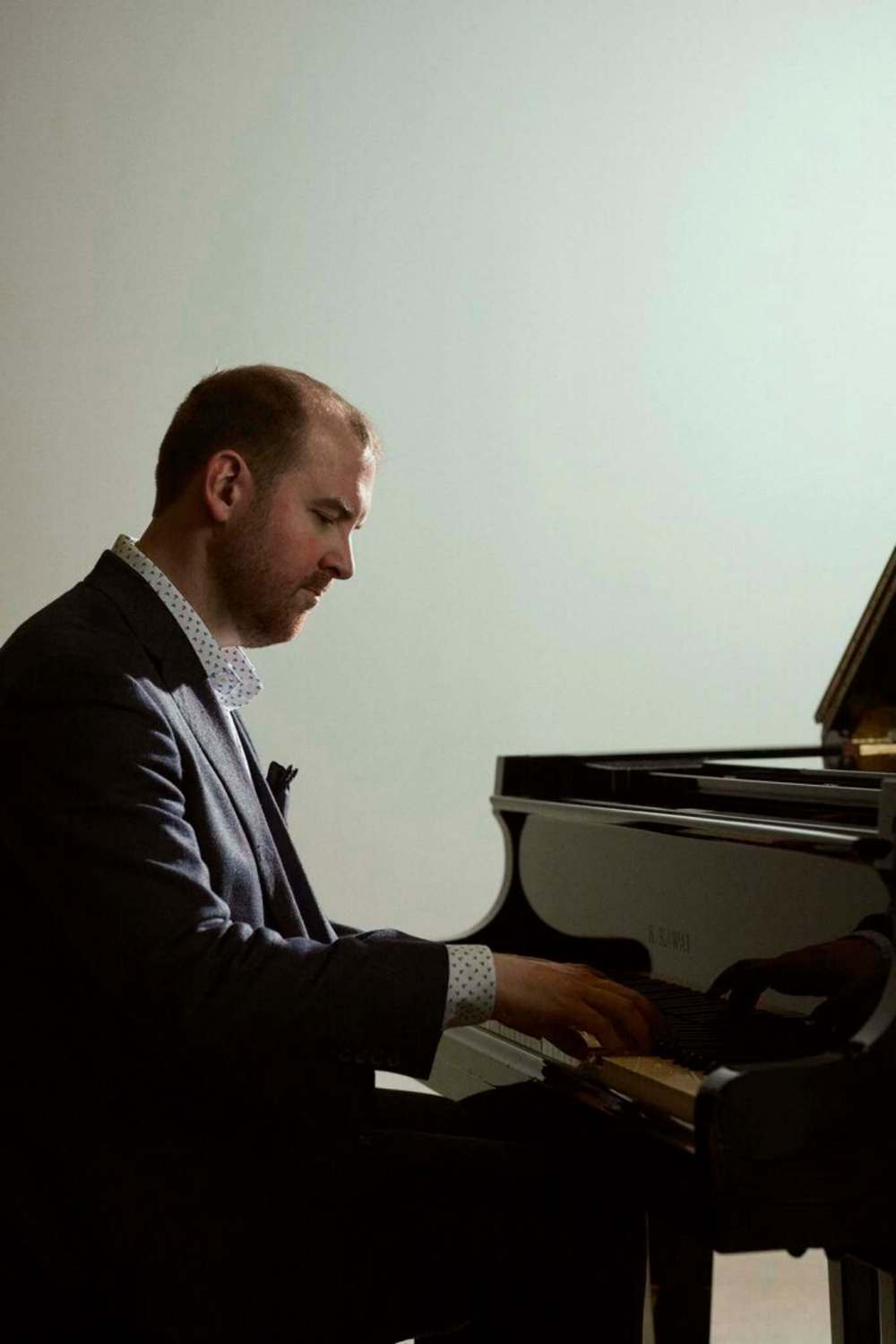
Winnipeg jazz pianist Will Bonness last week unveiled Burning Bridges, a new song from an album scheduled for release in the fall. The fast-paced tune blends Bonness’s quick piano lines, a captivating solo from New York saxophonist Jon Gordon, a flashy outburst from drummer Fabio Ragnelli — Bonness’s professorial colleague at the University of Manitoba’s Desautels Faculty of Music — and another Winnipegger, bassist Julian Bradford.
“There’s a lot of different stuff on it. That’s actually the only track like that, an uptempo swing kind of thing,” says Bonness, who recorded the album, as yet untitled, in November 2019.
“There’s a few ballads and one that’s more like — I don’t want to say pop song; it’s kind of singer-songwritery in a way, but with a more complicated harmony.
“I think every track is pretty unique… I just like a lot of different stuff.”
Bonness also enlisted vocalist and guitarist Jocelyn Gould, a former Winnipegger who teaches guitar at Toronto’s Humber College, and they combine on the 1955 standard In the Wee Small Hours of the Morning, which Bonness says will be the next single.
Bonness, who grew up in Winnipeg, began his jazz career at 17 when he joined Maynard Ferguson’s Big Bop Nouveau Band. The new record will be his third, after 2009’s Subtle Fire and 2016’s Halcyon.
He usually keeps a busy schedule in the summer, whether it’s accompanying other Winnipeg artists at concerts around the city or leading his own band at festivals around North America.
These are far from usual times though, and COVID-19 has kept Bonness, like almost every other musician in the world, stuck at home. He ended a four-month absence from live performance early in July when he was part of the Derrick Gardner Quintet that launched the Winnipeg Art Gallery’s Rooftop Retreat series.
“I’ve done a lot of livestreaming in front of my computer, so it just feels really good to play again in front of an audience. It’s a very different feeling. It gives you a whole other type of energy.”
● ● ●
One of the final live performances in London before the COVID-19 pandemic hit was by the Flowers of Hell, a Canada-U.K. rock-classical fusion group that includes soprano and actor Danie Friesen, formerly of Steinbach.
Several Flowers of Hell members, including Friesen, performed at the Tate Britain gallery on March 2 as part of the opening of an exhibition of works by British illustrator Aubrey Beardsley, who died in 1898 at age 25. During his short life, he became one of Britain’s most influential contemporary artists.
“I’ve been all over Europe but it was my first time in London,” Friesen says. “The Tate is quite prestigious and it was kind of funny as we were doing our load-in and bringing in all our instruments, you could tell the people who were running the opening were a little nervous that we might be a little too noisy for their patrons. But it turned out people really enjoyed it, so it was a pleasure to sing there.”
Greg Jarvis, the Toronto-based composer and leader of the Flowers of Hell, used Beardsley’s works as an influence for the album cover of 2009’s Come Hell or High Water, and Tate Britain included the cover in the exhibition along with other well-known album-cover art influenced by Beardsley, such as Revolver by the Beatles and Procol Harum’s self-titled 1967 debut.
“We didn’t know the lockdown was coming and didn’t know it would be our final show in a long time,” Jarvis says. “A bit of a sad thing is the director of the Musée d’Orsay was there from Paris… she loved our performance and wanted us for the Paris opening that’ll happen later in the year, but of course we won’t be able to do that.”
Friesen grew up in Steinbach, but moved to Toronto in 2007. Besides recording and concerts with the Flowers of Hell, she maintains a connection to the opera world.
“I also own a small independent opera company out here (Opera Revue), where our mandate is to make opera accessible as possible for young people,” Friesen says “So we sing opera in bars and casual pub settings, (where people can) sit back and enjoy a drink and come and go as they please.”

The Flowers of Hell released a new song, Last Beat of My Heart, July 17 in preparation for a new record, Outlanders, which is due out in the fall.
The group’s experimental style of music is a nice change-up from the strict rules of opera, Friesen says.
“It’s quite freeing, actually. You’re not given a score you need to learn exactly but instead to blend in and fit your voice in where you feel like. It’s a lot of freedom and a lot of choice, which I enjoy.”
alan.small@freepress.mb.ca
Twitter:@AlanDSmall
Alan Small
Reporter
Alan Small was a journalist at the Free Press for more than 22 years in a variety of roles, the last being a reporter in the Arts and Life section.
Our newsroom depends on a growing audience of readers to power our journalism. If you are not a paid reader, please consider becoming a subscriber.
Our newsroom depends on its audience of readers to power our journalism. Thank you for your support.
Advertisement Advertise With Us
Advertisement Advertise With Us