Eating away at us
Pandemic isolation impacted our relationship with food, self-image

Advertisement
Read this article for free:
or
Already have an account? Log in here »
To continue reading, please subscribe:
Digital Subscription
One year of digital access for only $1.44 a week*
- Enjoy unlimited reading on winnipegfreepress.com
- Read the E-Edition, our digital replica newspaper
- Access News Break, our award-winning app
- Play interactive puzzles
*Billed as $5.77 plus GST every four weeks. After 52 weeks, price increases to the regular rate of $19.95 plus GST every four weeks. Offer available to new and qualified returning subscribers only. Cancel any time.
To continue reading, please subscribe:
Add Free Press access to your Brandon Sun subscription for only an additional
$1 for the first 4 weeks*
- Enjoy unlimited reading on winnipegfreepress.com
- Read the E-Edition, our digital replica newspaper
- Access News Break, our award-winning app
- Play interactive puzzles
*Your next Brandon Sun subscription payment will increase by $1.00 and you will be charged $17.95 plus GST for four weeks. After four weeks, your payment will increase to $24.95 plus GST every four weeks.
Read unlimited articles for free today:
or
Already have an account? Log in here »
Hey there, time traveller!
This article was published 23/08/2021 (1881 days ago), so information in it may no longer be current.
Food has been a global preoccupation during the pandemic. Home cooking became a necessary lockdown pastime and sourdough bread became shorthand for the many food trends that tore through social media. At the same time, one Winnipeg dietitian has seen a rise in emotional and disordered eating over the last year and a half.
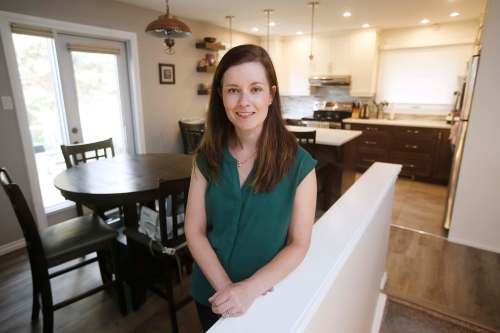
“A lot of the things that people use to cope have changed,” says Raschelle Sabourin, a registered dietitian who runs a virtual nutrition counselling practice locally. “People were more isolated and there’s a lack of routine… and people’s relationships changed, so that caused more stress and people are sometimes using food to fill that void.”
Sabourin says that while using food as a coping mechanism can be a quick fix for quelling difficult emotions, the comfort of binge eating doesn’t last.

“For the short term, they might feel really good, but in the long term they’re not feeling good after emotional eating,” she says.
The pandemic may have compounded the issue, but Sabourin has been specializing in emotional eating and eating disorder treatment for the last decade. Her focus is on helping clients improve their relationship with food while educating on the harmful effects of diet culture.
“A lot of my clients struggle with chronic dieting,” she says. “When people go on diets, a lot of times, they’re more prone to having eating disorders… they’re going to be more preoccupied with their weight and have distorted views of their body.
Diet culture values appearance over physical well-being, and it’s pervasive — cropping up everywhere from magazines promoting weight loss to family members commenting on physical appearance to doctors recommending dieting as a health intervention, Sabourin says.
Recent taglines, like the “Quarantine 15,” have added shame and judgment to weight gained during the pandemic.
Diet culture not only takes a toll on mental health — leading to depression, anxiety and low self-esteem — but yo-yo dieting can also hinder physical health.
“There’s still a lot of people that recommend diets to people and they’re just not sustainable,” she says. “There’s a lot of negative side effects, (dieting) takes up a lot of your time and then you can’t focus on other areas of your life… when you go on a diet that slows your metabolism, it might affect your cholesterol and you might actually gain weight.”
“As a society we’re taught to restrict and when people go on diets, their hunger cues get blunted. You can teach yourself to relearn those hunger and fullness cues, but it takes time.”– Raschelle Sabourin
Instead of focusing on the scale, Sabourin teaches clients how to practise intuitive eating, where diet mentality is rejected; hunger cues are observed and honoured; foods aren’t labelled good or bad; and the thorough enjoyment of food is encouraged, among other things.
“As a society we’re taught to restrict and when people go on diets, their hunger cues get blunted,” she says, adding that food restriction often leads to craving and binge eating. “You can teach yourself to relearn those hunger and fullness cues, but it takes time.”
When it comes to emotional eating amid the pandemic, Sabourin recommends finding different coping strategies — like talking with a friend, reading, spending time with a pet or exercising for enjoyment — as well as taking stock of things that might trigger bingeing with a food and mood diary.
“That can be helpful for identifying different patterns,” she says.
Maintaining regular mealtimes and eating consistently throughout the day can also help curb emotional overeating.
Above all, kindness and positive self-talk go a long way to improving someone’s relationship with food.
“During the pandemic, it’s normal to be emotionally eating because of the stress of everything,” Sabourin says. “I try to encourage people to give themselves grace because they’re going through a lot right now.
“Once people improve their relationship with food, it can help with a lot of other areas of their life.”
eva.wasney@freepress.mb.ca
Twitter: @evawasney
Eva Wasney covers environmental issues in Manitoba for The Narwhal in partnership with the Winnipeg Free Press. Read more about Eva.
Every piece of reporting Eva produces is reviewed by an editing team before it is posted online or published in print — part of the Free Press‘s tradition, since 1872, of producing reliable independent journalism. Read more about Free Press’s history and mandate, and learn how our newsroom operates.
Our newsroom depends on a growing audience of readers to power our journalism. If you are not a paid reader, please consider becoming a subscriber.
Our newsroom depends on its audience of readers to power our journalism. Thank you for your support.
Eva Wasney covers environmental issues in Manitoba for The Narwhal in partnership with the Winnipeg Free Press. Read more about Eva.
Every piece of reporting Eva produces is reviewed by an editing team before it is posted online or published in print — part of the Free Press‘s tradition, since 1872, of producing reliable independent journalism. Read more about Free Press’s history and mandate, and learn how our newsroom operates.
Our newsroom depends on a growing audience of readers to power our journalism. If you are not a paid reader, please consider becoming a subscriber.
Our newsroom depends on its audience of readers to power our journalism. Thank you for your support.
Advertisement Advertise With Us
Advertisement Advertise With Us