Rebel with a cause
Indigenous-owned streetwear company giving employees a second chance

Advertisement
Read this article for free:
or
Already have an account? Log in here »
To continue reading, please subscribe:

Digital Subscription
One year of digital access for only $205*
- Enjoy unlimited reading on winnipegfreepress.com
- Read the E-Edition, our digital replica newspaper
- Access News Break, our award-winning app
- Play interactive puzzles
*First annual payment billed as $205.00 + GST for one year. This annual subscription will automatically renew at $233.00 + GST every 52 weeks (10% off the regular annual price of $259.35). Offer available to new and qualified returning subscribers only. Cancel any time.
To continue reading, please subscribe:
Add Free Press access to your Brandon Sun subscription for only an additional
$1 for the first 4 weeks*
- Enjoy unlimited reading on winnipegfreepress.com
- Read the E-Edition, our digital replica newspaper
- Access News Break, our award-winning app
- Play interactive puzzles
*Your next Brandon Sun subscription payment will increase by $1.00 and you will be charged $17.95 plus GST for four weeks. After four weeks, your payment will increase to $24.95 plus GST every four weeks.
Read unlimited articles for free today:
or
Already have an account? Log in here »
Hey there, time traveller!
This article was published 25/10/2023 (1058 days ago), so information in it may no longer be current.
Red Rebel Armour isn’t just streetwear, it’s streetwear with activism at its heart.
Founder Sean Rayland’s business model is about creating opportunities for people like him: those who were previously incarcerated but are now seeking a different path.
The label employs six people who produce T-shirts, hoodies, cargo pants and crew necks, among other things, at its Century Street production facility and storefront.
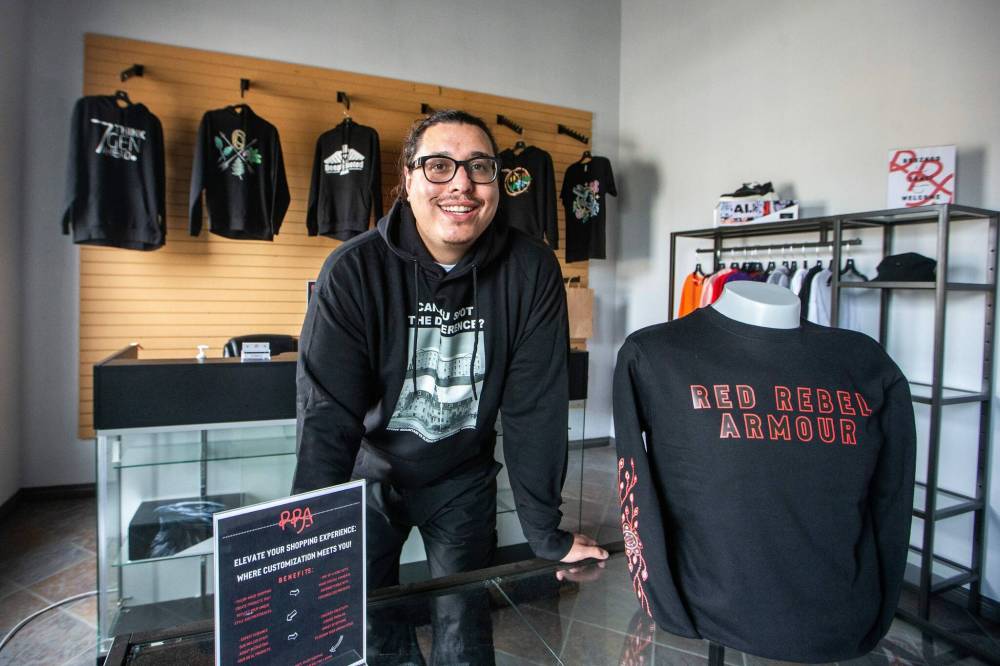
MIKAELA MACKENZIE / WINNIPEG FREE PRESS
Red Rebel Armour owner Sean Rayland hires people who have been incarcerated but are looking to turn their lives around.
A large component of Red Rebel Armour’s success is digital marketing; the brand’s advertisements pop up regularly on Instagram and TikTok.
The clothes centre Indigeneity, with original prints by Ojibwa artist Kale Bonham featuring traditional medicines, sacred symbols and spiritual iconography.
Hoodies with strong messages such as “Fatherhood Is Sacred” and “Land Back,” as well as T-shirts promoting Indigenous allyship, fly off the shelves.
A recent collection, Breaking Free, aims to raise awareness about the over-incarceration of Indigenous people in Manitoba.
The clothes are the visible product of the business, but Rayland’s ultimate goal is to reduce recidivism through the label’s employment service, which provides on-the-job paid training for those returning to the community from the criminal justice system.
“Red Rebel Armour represents the message that it’s not advocacy all the time. It’s about empowerment and resilience. We are about hope. We are about rebelling against a lifestyle of drugs and gangs,” Rayland explains.
“We need to change that narrative. I want to talk about Indigenous culture and Indigenous heroes.”
It wasn’t always this way. It’s a life Rayland, 36, couldn’t have envisioned for himself seven years ago when he was in and out of jail.

MIKAELA MACKENZIE / WINNIPEG FREE PRESS
Now in his 30s, Sean Rayland established his clothing business, Red Rebel Armour, in 2018 after deciding to change the direction of his life.
“This is a part of my redemption story,” he says with a laugh.
“With this business I’m going to repair the wrongs that I did. I am going to repair the community. I have moved from survival mode to living.”
Drugs had always been a part of Rayland’s life. He started selling weed at 12 years old and was soon smoking crack.
The first time he landed in prison, he was 18. The path he was on saw him in and out of jail for the majority of his youth.
Then in 2016, he met Lionel Houston, a knowledge keeper who would change the course of Rayland’s life by reminding Rayland of his Anishinaabe roots.
“Lionel Houston worked as a spiritual caregiver while I was incarcerated. Meeting with him, learning about our culture, about who we are as a people, was an eye-opener,” Rayland says.
“I had to change the way of my thinking. I questioned everything. Lionel made me want to change.”
A chance conversation with a fellow inmate saw Rayland making the decision to get his Grade 12 diploma as a mature student. When he came out of prison, he decided to pursue a social innovation and community development course at Red River College, which taught him the skills he needed to set up Red Rebel Armour.
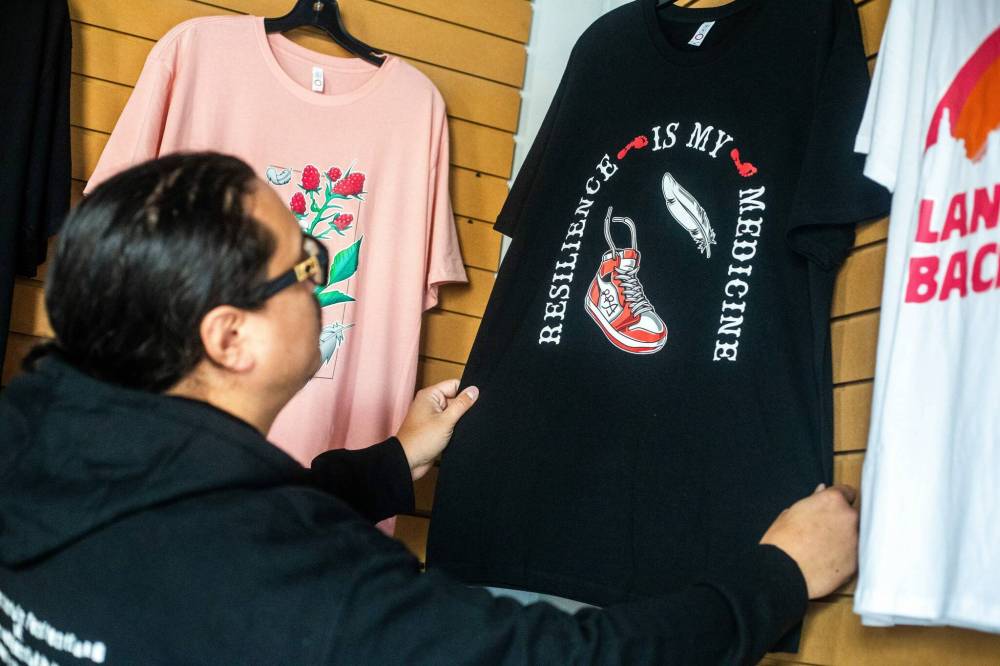
MIKAELA MACKENZIE / WINNIPEG FREE PRESS
Red Rebel Armour has various themes on its clothing, including its latest, Resilience is my Medicine.
Applying himself to his studies while juggling work in a stockroom and taking care of his family was tough, he concedes, but Rayland was determined to make a go of it.
He would come home from his job and watch YouTube tutorials on everything from how to build a website to how to market a business.
His dream was to create a social enterprise he could bring to the community.
“We don’t have to be complex about community work; sometimes it’s just about creating a safe space for community members to come and thrive,” he says.

Using the business skills he learned on the street and the knowledge gained in his course has helped him change not just his life but those of his employees.
Being a former gang member and ex-addict himself has imbued him with compassion and empathy.
“When I got out of jail, I reached out to Lionel. I didn’t want to be the person I was. When Lionel made me an Oshkaabaywis — a helper to a knowledge keeper, to firekeep during ceremony or cut wood — that was one of the turning points for me. Because Lionel trusted me, I didn’t want to break that responsibility. That was one of my key learnings.
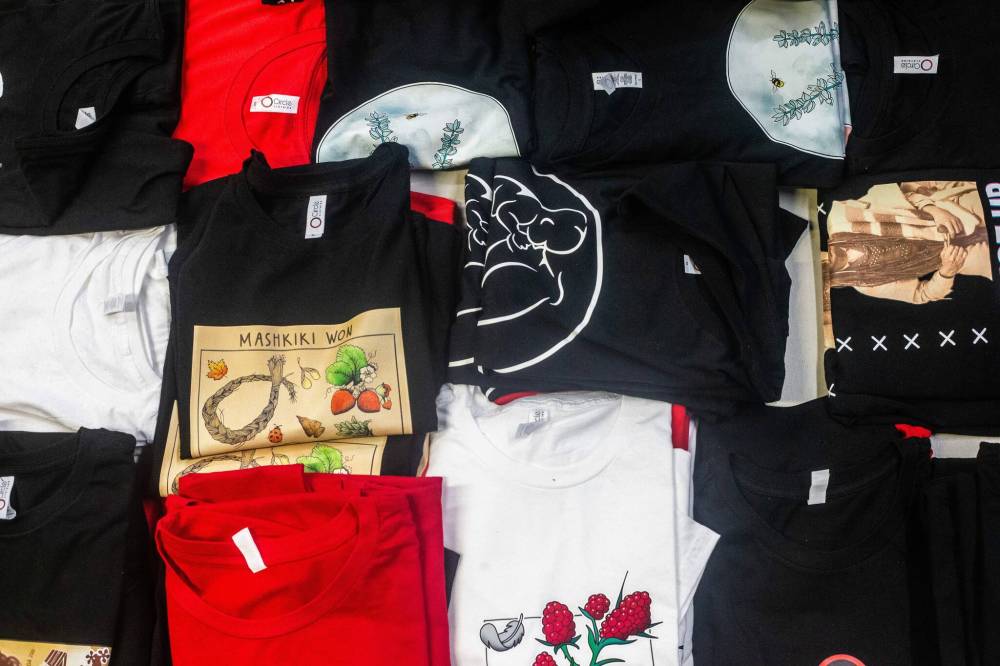
MIKAELA MACKENZIE / WINNIPEG FREE PRESS
Rayland employs six people who produce T-shirts, hoodies and cargo pants.
“That is what I do with my staff now because there is a sense of ownership when someone trusts you.”
His purpose now is to be of service.
As much as his business grows, Rayland says the core values of Red Rebel Armour will stay the same
“We are a social enterprise centre. The whole point to starting the brand is to help the people. If we are not doing that then there is no point in existing.”
av.kitching@winnipegfreepress.com
AV Kitching is an arts and life writer at the Free Press. She has been a journalist for more than two decades and has worked across three continents writing about people, travel, food, and fashion. Read more about AV.
Every piece of reporting AV produces is reviewed by an editing team before it is posted online or published in print — part of the Free Press‘s tradition, since 1872, of producing reliable independent journalism. Read more about Free Press’s history and mandate, and learn how our newsroom operates.
Our newsroom depends on a growing audience of readers to power our journalism. If you are not a paid reader, please consider becoming a subscriber.
Our newsroom depends on its audience of readers to power our journalism. Thank you for your support.
AV Kitching is an arts and life writer at the Free Press. She has been a journalist for more than two decades and has worked across three continents writing about people, travel, food, and fashion. Read more about AV.
Every piece of reporting AV produces is reviewed by an editing team before it is posted online or published in print — part of the Free Press‘s tradition, since 1872, of producing reliable independent journalism. Read more about Free Press’s history and mandate, and learn how our newsroom operates.
Our newsroom depends on a growing audience of readers to power our journalism. If you are not a paid reader, please consider becoming a subscriber.
Our newsroom depends on its audience of readers to power our journalism. Thank you for your support.
Advertisement Advertise With Us
Advertisement Advertise With Us