Reporterbot in space: Game developer uses journalism background as inspiration
Advertisement
Read this article for free:
or
Already have an account? Log in here »
To continue reading, please subscribe:

Digital Subscription
One year of digital access for only $205*
- Enjoy unlimited reading on winnipegfreepress.com
- Read the E-Edition, our digital replica newspaper
- Access News Break, our award-winning app
- Play interactive puzzles
*First annual payment billed as $205.00 + GST for one year. This annual subscription will automatically renew at $233.00 + GST every 52 weeks (10% off the regular annual price of $259.35). Offer available to new and qualified returning subscribers only. Cancel any time.
To continue reading, please subscribe:
Add Free Press access to your Brandon Sun subscription for only an additional
$1 for the first 4 weeks*
- Enjoy unlimited reading on winnipegfreepress.com
- Read the E-Edition, our digital replica newspaper
- Access News Break, our award-winning app
- Play interactive puzzles
*Your next Brandon Sun subscription payment will increase by $1.00 and you will be charged $17.95 plus GST for four weeks. After four weeks, your payment will increase to $24.95 plus GST every four weeks.
Read unlimited articles for free today:
or
Already have an account? Log in here »
Hey there, time traveller!
This article was published 19/06/2024 (793 days ago), so information in it may no longer be current.
EDMONTON – Journalism isn’t the most glamorous job.
It can be thankless work and involve shoddy coffee-shop Wi-Fi, makeshift lunches low in nutritional value and long stretches of sedentariness.
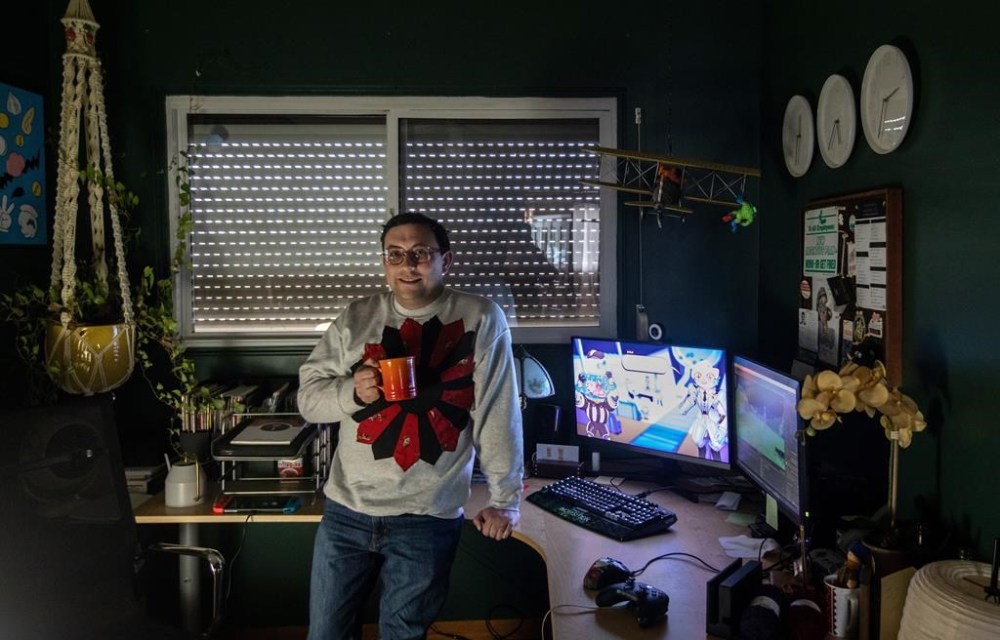
Ben Gelinas is hoping his video game about journalism is both interesting and fun.
“Times and Galaxy,” set for release June 21 on consoles and PC, puts players in the shoe-analogues of a robo-intern for the eponymous publication, “the solar system’s most trusted holopaper.”
Gelinas left high school wanting to be journalist and studied at the University of Regina, with his first job interning for the Edmonton Journal.
After stints with two newspapers in southern Ontario, he got a call from a Journal editor asking if he wanted to return to Alberta.
The job, unfortunately for him, was for a crime reporter.
“I hated crime reporting so much,” Gelinas says in a recent interview. “I’m shy at the best of times. As a journalist, I put on my hat … but writing about crime was just the hardest thing.
“There’s so much trauma, other people’s trauma, that you want to make sure you’re doing everything and everyone justice and still staying very true to facts and holding power to account.”
However, he missed Edmonton and it was a permanent job in journalism pretty much right out of school, so off he went.
Gelinas spent three years at the Edmonton newspaper as a crime reporter, covering “all kinds of murders” — probably more than 100 homicides, he estimates.
“After a while, I was starting to get really burnt out on it,” he says.
He took a break by writing arts stories like concert reviews, but he also missed “the meat of breaking news.”
“It was a hard place to be,” he says.
One day, an editor at the Edmonton-based video game studio BioWare called with a job opportunity they thought would be a good fit.
“They needed somebody to take their fantasy lore in the ‘Dragon Age’ series and turn it into something referenceable internally” — like Wikipedia, he says.
It was a six-month contract offer.
Gelinas, who was in his mid-20s at the time, was faced with a choice: stay in his permanent journalism job or jump into a potentially temporary gig in an industry he always loved.
“I took the risk and never looked back,” he says before correcting himself. “Well, sometimes I look back. (“Times and Galaxy”) is looking back, right? And I miss it, but I’m no longer a journalist. I’m a game developer.
“It’s so weird. I’ve been doing it for so long and I still feel like an impostor.”
His journalism experience was an asset in his burgeoning game developing career because he brought fresh ideas and perspectives. His contract was eventually made permanent.
“I was bringing in a lot of — not specific stories — but realism into this game we were making,” he says.
“I took the risk and never looked back. Well, sometimes I look back.”–Ben Gelinas
“It’s like, this person has suffered a great loss or is traumatized, but in space. Or a dragon ate their loved one. How do you make that ring true in a piece of fiction, right?”
When his wife got a job in Toronto, Gelinas quit BioWare and moved east again. Eager to expand his skill set beyond writing and editing, Gelinas connected with the local indie developer community and created “Speed Dating for Ghosts,” billed as a “wholesome horror game.”
After doing contract work, including writing for “Control” by Finland-based developer Remedy Entertainment and “Gotham Knights” by WB Games Montreal, Gelinas eventually moved back to Edmonton, where his wife is a reporter.
“Times and Galaxy,” his first big project, took years with the help of a group of creatives he had met over the years in Edmonton and beyond.
“My only goal with the team I built was, are you weird and are you not a jerk,” he says of his studio, Copychaser Games. “And creatively, will you jell with us.
“We’re a bunch of weirdos from across Canada and one person in New Jersey making this game.”
Weirdness is everywhere in “Times and Galaxy,” a comedy adventure game where the player, as Reporterbot, is sent out to cover all manner of stories, including intersolar cat shows and space ghost funerals.
The game features 2D characters in 3D environments, like the Nintendo series “Paper Mario.”
An early assignment sees Reporterbot dispatched to a shuttle crash on an arid planet. Our intrepid intern is greeted by a Policebot, which offers a technically not wrong explanation: “There was an incident. That incident is now under investigation.”
“We’re a bunch of weirdos from across Canada and one person in New Jersey making this game.”–Ben Gelinas
Upon further questioning, the Policebot gets slightly more specific: “A shuttle impacted a rocklike object.” (Reporterbot is later advised to speak with the police’s Mediarelationsbot.)

It’s up to the player to interview any witnesses, officials or experts on scene to gather information, then build a story.
Gelinas says players are given a “toes in the water” experience of the types of challenges reporters face when they’re collecting information.
One of his favourite parts of being a journalist, he says, was trying to capture what he had learned and write a story that was both accurate and worth reading.
“I’m trying to make that a video game, with aliens and robots.”
This report by The Canadian Press was first published June 18, 2024.