Manitoba Museum hires new reconciliation adviser

Advertisement

Advertise with us

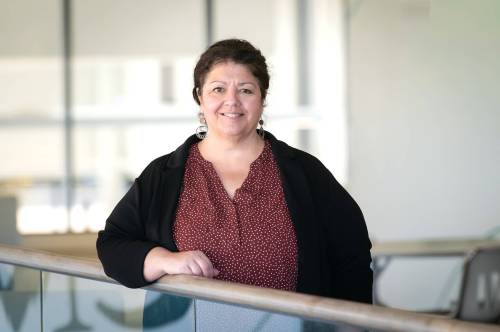
Manitoba Museum has appointed Tabitha Harper as museum adviser on Indigenous relations and reconciliation, a new post created, in part, to acknowledge the role the museum has played in colonization and to demonstrate its commitment to advance decolonization, reconciliation and repatriation in all facets of its work.

Read this article for free:


By clicking the button above, an account will be created and you will begin to receive some of our recommended newsletters. You may opt out of any newsletter by visiting your Email and Communication Preferences page or by clicking "unsubscribe" at the bottom of any email.

or

Already have an account? Log in here »

To continue reading, please subscribe:

Digital Subscription

One year of digital access for only $1.44 a week*

  • Enjoy unlimited reading on winnipegfreepress.com
  • Read the E-Edition, our digital replica newspaper
  • Access News Break, our award-winning app
  • Play interactive puzzles

*Billed as $5.77 plus GST every four weeks. After 52 weeks, price increases to the regular rate of $19.95 plus GST every four weeks. Offer available to new and qualified returning subscribers only. Cancel any time.

To continue reading, please subscribe:

Add Free Press access to your Brandon Sun subscription for only an additional

$1 for the first 4 weeks*

  • Enjoy unlimited reading on winnipegfreepress.com
  • Read the E-Edition, our digital replica newspaper
  • Access News Break, our award-winning app
  • Play interactive puzzles
Start now

*Your next Brandon Sun subscription payment will increase by $1.00 and you will be charged $17.95 plus GST for four weeks. After four weeks, your payment will increase to $24.95 plus GST every four weeks.

Hey there, time traveller!
This article was published 09/07/2024 (839 days ago), so information in it may no longer be current.

Manitoba Museum has appointed Tabitha Harper as museum adviser on Indigenous relations and reconciliation, a new post created, in part, to acknowledge the role the museum has played in colonization and to demonstrate its commitment to advance decolonization, reconciliation and repatriation in all facets of its work.

Raised in Kinonjeoshtegon First Nation, located on the west shore of Lake Winnipeg 255 kilometres north of Winnipeg, Harper, 27, attended high school in Winnipeg before graduating with a diploma from Red River College Polytechnic’s social innovation and community development program with a major in Indigenous social entrepreneurship.

“I’m truly honoured and thankful to have been selected as the museum adviser on Indigenous relations and reconciliation. Each day that I am here I feel more excited and confident about learning and applying my knowledge as a First Nations woman,” she says.

Supplied
                                Tabitha Harper is the Manitoba Museum’s adviser on Indigenous relations and reconciliation.

Supplied

Tabitha Harper is the Manitoba Museum’s adviser on Indigenous relations and reconciliation.

“However, I can’t help but think of my parents, grandparents, and my ancestors who gave many sacrifices for me to be here today — it’s a balance of grief and gratitude.”

Previously the first Indigenous cultural program instructor for the Assiniboine Park Conservancy, in her new position Harper will guide the museum in developing a framework to ensure museum policies and practices uphold the articles of the United Nations Declaration on the Rights of Indigenous People.

Her life experience will aid her in building new relationships, as well as strengthening existing ones within the community, she says.

“Moving forward, I will be learning and understanding what the museum’s position is on Indigenous relations and reconciliation and how I can expand Indigenous capacity. More so, I am supporting leadership and the museum as a whole, with grace and guidance towards reconciliation; I look forward to bringing an Indigenous perspective in a good way.”

As a steward of First Nations, Inuit and Métis artifacts, the Manitoba Museum has a profound responsibility to partner with those communities in sharing their stories, which are at the heart of the province’s history, says Dorota Blumczynska, museum CEO.

“While Tabitha brings invaluable knowledge and wisdom to this role, the museum as a whole carries the responsibility to repair relationships with First Nations, Inuit and Métis communities,” she says.

“Tabitha has strong relationships with many communities, understands the complex and delicate work required to advance truth and reconciliation, and offers a very solution-focused mindset … She has a wealth of direct community engagement experience, is an exceptional communicator and demonstrated a readiness to both offer her expertise to the museum’s efforts while learning from our colleagues what the museum can in turn offer to others.”

av.kitching@freepress.mb.ca

AV Kitching

AV Kitching
Reporter

AV Kitching is an arts and life writer at the Free Press. She has been a journalist for more than two decades and has worked across three continents writing about people, travel, food, and fashion. Read more about AV.

Every piece of reporting AV produces is reviewed by an editing team before it is posted online or published in print — part of the Free Press‘s tradition, since 1872, of producing reliable independent journalism. Read more about Free Press’s history and mandate, and learn how our newsroom operates.

Our newsroom depends on a growing audience of readers to power our journalism. If you are not a paid reader, please consider becoming a subscriber.

Our newsroom depends on its audience of readers to power our journalism. Thank you for your support.

History

Updated on Tuesday, July 9, 2024 7:04 AM CDT: Changes reference to diploma

Report Error Submit a Tip

More Stories

Winnipeg put on a great event with Heritage Classic, Jets can’t hold up their end of the bargain

Mike McIntyre 7 minute read Preview

Winnipeg put on a great event with Heritage Classic, Jets can’t hold up their end of the bargain

Mike McIntyre 7 minute read Yesterday at 10:56 PM CDT

The Winnipeg Jets know how to throw a great outdoor party. Unfortunately for the club, they haven’t perfected the all-important hockey portion of the Heritage Classic.

A 2-1 loss to the Montreal Canadiens on Sunday night inside Princess Auto Stadium comes 10 years after a 3-0 downer against the Edmonton Oilers inside the same football facility.

Better luck in 2036, perhaps?

Hey, at least the Jets finally found a way to score a goal in this one as Isak Rosen broke Jacob Fowler’s shutout bid with just under five minutes left in regulation. But they were ultimately unable to finish off a memorable weekend with a much-needed win in front of a raucous, sold-out crowd of 32,343.

Read
Yesterday at 10:56 PM CDT

Asessippi counting on flood relief to save ski season

Connor McDowell 5 minute read Preview

Asessippi counting on flood relief to save ski season

Connor McDowell 5 minute read Updated: 6:34 AM CDT

Asessippi Ski Area and Resort remains optimistic about the coming ski season, but is depending on disaster financial assistance to repair roughly $2.2 million in flood damage, a spokesperson said.

Read
Updated: 6:34 AM CDT

School division’s mental-health liaison helps students in crisis access help faster

Kelly-Anne Riess 4 minute read Preview

School division’s mental-health liaison helps students in crisis access help faster

Kelly-Anne Riess 4 minute read Yesterday at 9:19 AM CDT

A youth experiencing a mental-health crisis at a River East Transcona school was connected with specialized care within hours this fall, offering an early example of how a new partnership is helping students in distress.

After the teen made statements that raised safety concerns, school administrators contacted a newly appointed mental-health crisis liaison, who arrived within 30 minutes, assessed the situation and met with the student, their family and school staff.

By the end of the morning, the student was admitted to a crisis stabilization unit for several days, and arrangements were made for followup therapy.

The intervention was possible because of a pilot partnership between RETSD and The Link: Youth and Family Supports, which began at the start of the school year.

Read
Yesterday at 9:19 AM CDT

When privacy means deprivation

John R. Wiens 5 minute read 2:00 AM CDT

The right to a private life is a fundamental human need — that is not in dispute. However, our current practices of privacy, particularly when it comes to privacy for children, are a recipe for deprivation, an unintended consequence of our otherwise good intentions.

Two articles in the Oct. 17 Free Press — “If every child matters, why no public inquiry?” by Marion Willis; and “Student violence surges” by Maggie Macintosh — raised serious questions which make privacy seem more like neglect than benefit.

A democratic society has every right to be concerned about privacy and its many advantages. Ancient Greeks likened privacy to home life, a safe place where you could make foolish mistakes, behavioural and otherwise, away from public scrutiny and judgment. The point was that it was a place to test your ideas to make them fit for appearing in public.

Our public schools are to a large measure built on those premises — classrooms out of the public eye where children can make mistakes and learn without paying a price. It’s why all visitors must first report to the office to establish their validity. That sense of privacy has proved beneficial and essential as we try to teach children the civility, respect, empathy, integrity and personal responsibility essential for entering and contributing to a healthy public — thriving communities and a humane society where everyone is welcomed and valued.

Opening of Portage and Main shows even seemingly insurmountable impasses can be overcome

Jason Syvixay 10 minute read Preview

Opening of Portage and Main shows even seemingly insurmountable impasses can be overcome

Jason Syvixay 10 minute read Saturday, Oct. 24, 2026

There are places in a city that become more than places. Portage and Main is one of them. For generations of Winnipeggers, the intersection has represented downtown, traffic, development and civic identity. Its reopening to pedestrians in 2025, after 46 years of closure, was about more than crossing a street. It was a reminder that decisions made by one generation can shape the choices available to another — and that even seemingly permanent decisions can be reconsidered.

I have spent much of my professional life thinking about Winnipeg as a planner, working in public, private and non-profit settings. My PhD research gave me an opportunity to examine Portage and Main differently: not simply as a debate about cars and pedestrians, but as a window into how power operates in a city. I reviewed 569 archival documents spanning the 1960s to the present, interviewed 48 planners with experience in Winnipeg, and mapped the relationships between planners, politicians, developers, engineers, residents, businesses and advocacy groups.

What emerged was a story about how planning decisions become embedded in a city’s institutions, agreements, infrastructure, professional practices and political expectations — shaping not only what gets built, but who gets to influence what gets built.

The closure of Portage and Main in 1979 did not remain a decision confined to a particular political moment. Over time, it was reinforced by development agreements, physical infrastructure, property relationships, traffic-engineering practices, administrative routines, and public narratives about mobility and downtown revitalization. The people who made many of those original decisions eventually left office. The arrangements they created remained. Later planners inherited them.

Read
Saturday, Oct. 24, 2026

Seniors’ program closures serve no one

Editorial 4 minute read Preview

Seniors’ program closures serve no one

Editorial 4 minute read 2:00 AM CDT

It sounds like just the kind of respite struggling families dealing with seniors and their often complicated needs would cling to like a life preserver.

“Our adult day program consists of planned activities designed to promote well-being through social, mental and recreational services. The day program will focus on enriching the participants’ lives and building their skills, knowledge, and unique abilities and strengths, all in a fun, enjoyable way!”

That’s the web description of the Lions Adult Day Program, one piece of which includes the Charleswood Adult Day Program on Roblin Boulevard.

Or, at least, it used to be the web description of the program in Charleswood.

Read
2:00 AM CDT