Giving a voice to the North American buffalo

New documentary tells overdue story of bison ‘genocide’

Advertisement

Advertise with us

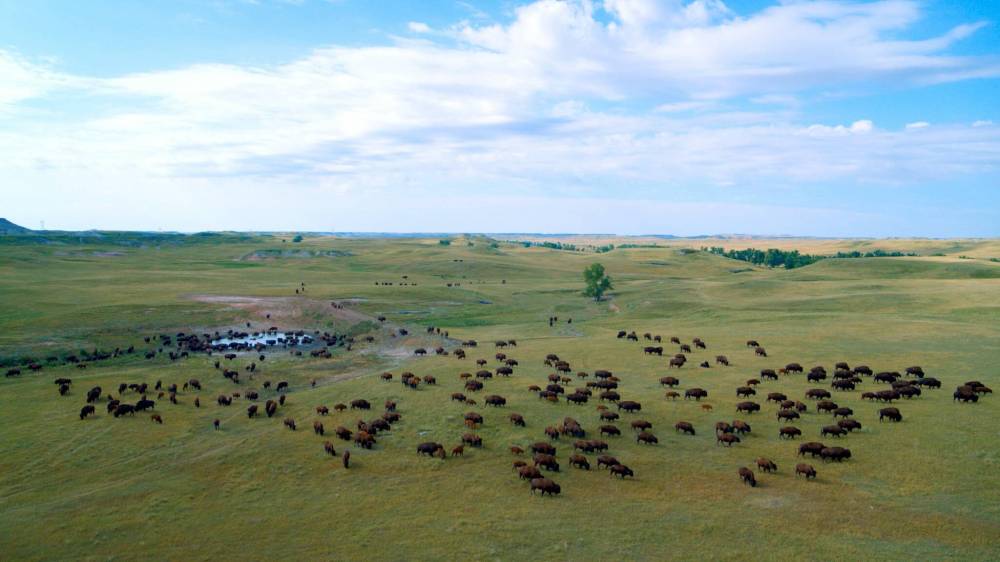
TORONTO — In 2016, Cree filmmaker Tasha Hubbard was at work on her documentary Singing Back the Buffalo. She was chasing a longtime dream to explore the subject of the bison that once roamed all over North America in herds of tens of millions until the late 19th century when they were slaughtered almost to the point of extinction.

Read this article for free:


or

Already have an account? Log in here »

To continue reading, please subscribe:

Subscribe and receive a limited-edition Free Press branded hat or tote.

Digital Subscription

One year of digital access for only $205*

  • Enjoy unlimited reading on winnipegfreepress.com
  • Read the E-Edition, our digital replica newspaper
  • Access News Break, our award-winning app
  • Play interactive puzzles

*First annual payment billed as $205.00 + GST for one year. This annual subscription will automatically renew at $233.00 + GST every 52 weeks (10% off the regular annual price of $259.35). Offer available to new and qualified returning subscribers only. Cancel any time.

To continue reading, please subscribe:

Add Free Press access to your Brandon Sun subscription for only an additional

$1 for the first 4 weeks*

  • Enjoy unlimited reading on winnipegfreepress.com
  • Read the E-Edition, our digital replica newspaper
  • Access News Break, our award-winning app
  • Play interactive puzzles
Start now

*Your next Brandon Sun subscription payment will increase by $1.00 and you will be charged $17.95 plus GST for four weeks. After four weeks, your payment will increase to $24.95 plus GST every four weeks.

Hey there, time traveller!
This article was published 14/09/2024 (749 days ago), so information in it may no longer be current.

TORONTO — In 2016, Cree filmmaker Tasha Hubbard was at work on her documentary Singing Back the Buffalo. She was chasing a longtime dream to explore the subject of the bison that once roamed all over North America in herds of tens of millions until the late 19th century when they were slaughtered almost to the point of extinction.

An associate professor in the faculty of native studies and department of English and film at the University of Alberta, Hubbard had written a dissertation on buffalo consciousness and the subject was near and dear to her heart.

But the documentary was interrupted with the 2016 death of Colten Boushie, a 22-year-old Cree man who was shot by Saskatchewan farmer Gerald Stanley. Hubbard explored the incident, and Stanley’s subsequent acquittal, in her 2019 film nîpawistamâsowin: We Will Stand Up.

“When I heard about Colten, I asked the buffalo to pause and wait and be patient,” Hubbard says during a coffee shop conversation in April when the film premièred at Hot Docs in Toronto.

“I had to do this other film that was urgent, and I needed to tell it.”

Hubbard says after We Will Stand Up was released, she was approached to tell similar types of stories, but felt she didn’t have it in her.

“My family actually came to me and said, ‘You’re telling these really important stories, but they’re all hard stories.’ They said, ‘You need to bring some balance back and make something that brings you joy.’”

That was when Hubbard resolved to “go back and tell my Buffalo story.”
SUPPLIED
                                Bison once roamed North America in herds of tens of millions.

SUPPLIED

Bison once roamed North America in herds of tens of millions.

“There are still hard elements,” Hubbard admits.

Singing Back the Buffalo is about the “rematriation” of buffalo herds back into North America. It captures the beauty of the buffalo and the majestic plains into which the herds are being reintroduced, but yes, it does take on the tough subjects.

“I will say my work fundamentally is about injustice. I can look at my body of work, every single one, and whether it’s a different approach, or I’m using a different form of filmmaking, that’s what they’re about.” Hubbard says.

“And this one is no different. We tend to think of justice and injustice only pertaining to human beings, and ultimately, what this film is about (is): What does justice for the buffalo mean?”

The parallel between Indigenous peoples and the buffalo is such that Hubbard uses the term “genocide” to describe the buffalo’s fate.
SUPPLIED
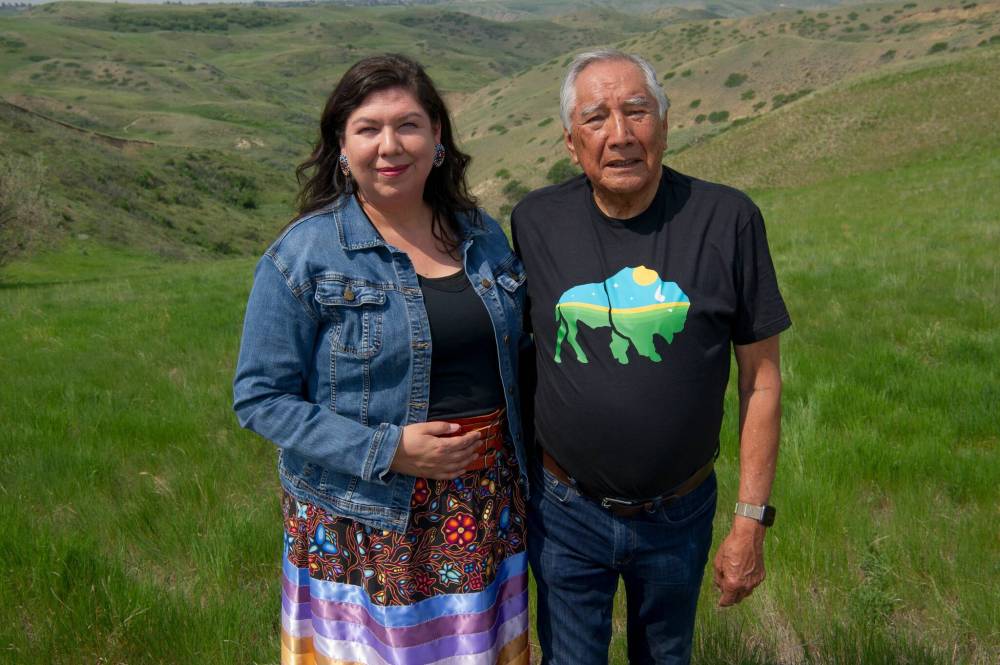
                                Filmmaker Tasha Hubbard (left) and Indigenous scholar Leroy Little Bear

SUPPLIED

Filmmaker Tasha Hubbard (left) and Indigenous scholar Leroy Little Bear

“Humans aren’t the only people, from an Indigenous perspective. We can think of it that way in the strategic destruction of buffalo … people forget that the destruction of the buffalo was an attack on us as much as it was also an attack on them,” the filmmaker says.

She points out that the same kind of injustices that have been perpetrated on Indigenous people have also been perpetrated on the bison — “their lack of freedom, their lack of agency, their lack of territory, the loss of body sovereignty.”

That awareness permeates the film, but Hubbard also interlaces it with scenes of stunning natural beauty and hope for a world in which natural balance is restored.

“You have to feel joy,” Hubbard says. “That’s a big teaching that I’ve had in the last five years. We need to work to undo injustice. We need to go to the dark places and expose them.

“But part of our human experience is to have those moments of joy and beauty. It’s what sustains us to keep doing that other work.”
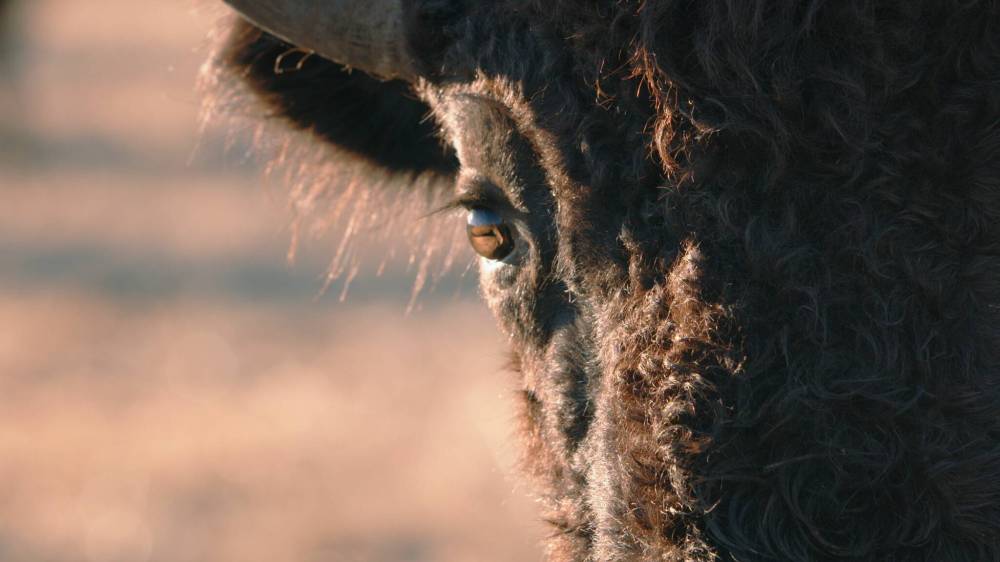
SUPPLIED
                                Bison once roamed all over North America in herds of tens of millions.

SUPPLIED

Bison once roamed all over North America in herds of tens of millions.

After the 7 p.m. screening tonight, the Winnipeg Indigenous Filmmakers Collective will present a conversation about the film with director-mentee Charlene Moore and local filmmaker Amanda Kindzierski.

arts@freepress.mb.ca
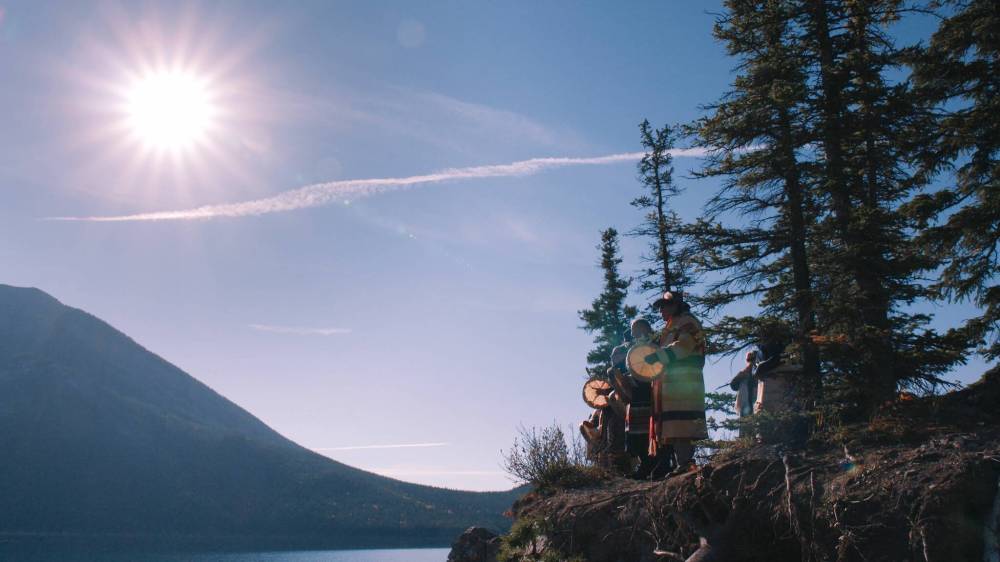
SUPPLIED
                                Hubbard parallels the fate of Indigenous peoples and the fate of the bison in her new documentary.

SUPPLIED

Hubbard parallels the fate of Indigenous peoples and the fate of the bison in her new documentary.

Randall King

Randall King
Writer

Randall King writes about film for the Winnipeg Free Press.

Our newsroom depends on a growing audience of readers to power our journalism. If you are not a paid reader, please consider becoming a subscriber.

Our newsroom depends on its audience of readers to power our journalism. Thank you for your support.

Report Error Submit a Tip

More Stories

Brandonmeat packer thriving on its own

Abiola Odutola 3 minute read Preview

Brandonmeat packer thriving on its own

Abiola Odutola 3 minute read 2:01 AM CDT

BRANDON — Canada Packers has strengthened its business and laid the foundation for future growth during its first year as an independent company, its president says.

The Brandon-based pork producer, separated from Maple Leaf Foods in October 2025, established its own leadership, strategy, systems, culture and identity while continuing operations across its hog production farms and regional hog barns in southern and eastern Manitoba.

The company’s first year was focused on building a successful standalone business while continuing to serve customers, communities and shareholders, president Dennis Organ said.

“Market conditions over the past year have been more challenging than we anticipated when we became a separate entity,” he said in an email. “Despite that, we continued to execute against our priorities, including increasing processing volumes, maintaining disciplined operations and strengthening the business.”

Read
2:01 AM CDT

Clock ticks down on destruction of records documenting residential school abuses

Marsha McLeod 13 minute read Preview

Clock ticks down on destruction of records documenting residential school abuses

Marsha McLeod 13 minute read Yesterday at 12:49 PM CDT

In less than a year, a private company is set to destroy the largest cache of records detailing the widespread abuse of Indigenous children at residential schools in Canada.

The destruction, which was ordered by an Ontario court in 2014 and later upheld by the Supreme Court, is set to take place on Sept. 19, 2027.

This countdown is igniting emotional conversations that seek to balance the immense historical value of the records alongside the confidentiality survivors were promised as part of the process of providing detailed testimony about abuses they’d suffered.

The records were created as part of the Indian Residential Schools Settlement Agreement, a class-action settlement stemming from survivors who began suing the federal government in the late 1990s over the harm they’d been subjected to at residential schools.

Read
Yesterday at 12:49 PM CDT

Letters, Oct. 3

7 minute read 2:01 AM CDT

A morning in the life …

My very first lesson does not start when I walk into that lecture hall, oh no — it starts long before. It begins when I walk to my car, check the estimated arrival time to the University of Manitoba and hope that Winnipeg traffic agrees with it.

A drive that appears completely manageable changes almost immediately when I’m greeted by a tsunami of orange pylons and a line of cars that appears to go on forever. Traffic moves by the inch, lanes magically disappear and the detour I took yesterday now has a detour of its own. These factors make me do a calculation that I have become all too familiar with. How late can I arrive and still find parking, run to my class across campus and get to class with enough time left to make it worth it?

I have grown used to people saying, “Why not just leave earlier?” I do. But when I’m already leaving for my 8:30 a.m. class at 7 a.m., there’s only so much I can do. This drive that some would think is relaxing is one that feels like an assignment that I didn’t know I had to complete and is due at 8:30 a.m.

Blown lead spoils Jets opener

Mike McIntyre 7 minute read Preview

Blown lead spoils Jets opener

Mike McIntyre 7 minute read Yesterday at 11:09 PM CDT

Younger. Faster. Stronger.

They may still be a long ways from a finished product, but it’s safe to say the new-look Winnipeg Jets made a mostly favourable first impression on Friday night in front of a sold-out crowd at Canada Life Centre.

Sure, a 4-3 overtime loss to a hard-nosed Boston Bruins outfit is going to sting a little, especially since the home team was just 98 seconds away from a regulation victory.

But if the Jets can bottle up this kind of energy and effort, they should enjoy plenty of success over the course of the 84-game campaign.

Read
Yesterday at 11:09 PM CDT

Nearly four in 10 Manitobans hope Canada restarts trade talks after U.S. midterm elections, poll reveals

Gabrielle Piché 5 minute read Preview

Nearly four in 10 Manitobans hope Canada restarts trade talks after U.S. midterm elections, poll reveals

Gabrielle Piché 5 minute read Yesterday at 7:00 AM CDT

Disorganized — that’s what Marcus Langlois calls recent United States tariffs.

He expects suppliers’ prices to increase — on mugs, pens, hoodies — for his employer, Dreamcatcher Promotions, if the United States–Canada trade war persists.

Still, he’s not pining for a quick trade deal.

“I think it should wait,” said Langlois, Dreamcatcher Promotions’ vice-president. “Let’s hope that it’s later on with proper negotiations happening.”

Read
Yesterday at 7:00 AM CDT

Six high school hockey programs ceased operations following new Hockey Manitoba policy

Joshua Frey-Sam 7 minute read Preview

Six high school hockey programs ceased operations following new Hockey Manitoba policy

Joshua Frey-Sam 7 minute read Updated: Yesterday at 8:19 PM CDT

She lived the best of both worlds.

For the last three years, the 17-year-old wore a sweater for two different hockey programs — her high school team and AAA club in the Manitoba Female Hockey League — and was preparing to flourish in both colours again this winter.

Recently, however, the blue-liner was disappointed to learn she is no longer eligible to play her Grade 12 season with her school owing to a new policy imposed by Hockey Manitoba that bans players from participating in the Manitoba Women’s High School Hockey League if they are rostered on a U18 AAA team.

The rule applies to all athletes who play for both Winnipeg-based and rural AAA teams.

Read
Updated: Yesterday at 8:19 PM CDT