Hot stuff Free Press writers discuss the blazing phenomenon of Heated Rivalry
Read this article for free:
or
Already have an account? Log in here »
To continue reading, please subscribe:

Digital Subscription
One year of digital access for only $205*
- Enjoy unlimited reading on winnipegfreepress.com
- Read the E-Edition, our digital replica newspaper
- Access News Break, our award-winning app
- Play interactive puzzles
*First annual payment billed as $205.00 + GST for one year. This annual subscription will automatically renew at $233.00 + GST every 52 weeks (10% off the regular annual price of $259.35). Offer available to new and qualified returning subscribers only. Cancel any time.
To continue reading, please subscribe:
Add Free Press access to your Brandon Sun subscription for only an additional
$1 for the first 4 weeks*
- Enjoy unlimited reading on winnipegfreepress.com
- Read the E-Edition, our digital replica newspaper
- Access News Break, our award-winning app
- Play interactive puzzles
*Your next Brandon Sun subscription payment will increase by $1.00 and you will be charged $17.95 plus GST for four weeks. After four weeks, your payment will increase to $24.95 plus GST every four weeks.
Read unlimited articles for free today:
or
Already have an account? Log in here »
Hey there, time traveller!
This article was published 20/01/2026 (253 days ago), so information in it may no longer be current.
Everyone is talking about Heated Rivalry.
It’s no exaggeration to say that the gay hockey romance from Jacob Tierney (Letterkenny, Shoresy) — based on Rachel Reid’s Game Changers novels about the secret relationship between professional hockey players and on-ice rivals Shane Hollander (Hudson Williams) and Ilya Rozanov (Connor Storrie) — is dominating the cultural discourse. From think pieces to interviews to fan art to endless TikToks and memes, Heated Rivalry clearly has people hot and bothered.
So we thought we’d talk about it, too. Here, Free Press arts reporters AV Kitching, Eva Wasney and Jen Zoratti and sports reporter Jeff Hamilton parse what makes Heated Rivalry such a phenomenon, what it could do for hockey culture and why sometimes art needs to be a soft place to land. Warning: some spoilers ahead.
BELL MEDIA Hudson Williams (left) and Connor Storrie play Shane Hollander and Ilya Rozanov in the Canadian streaming series turned global phenomenon Heated Rivalry.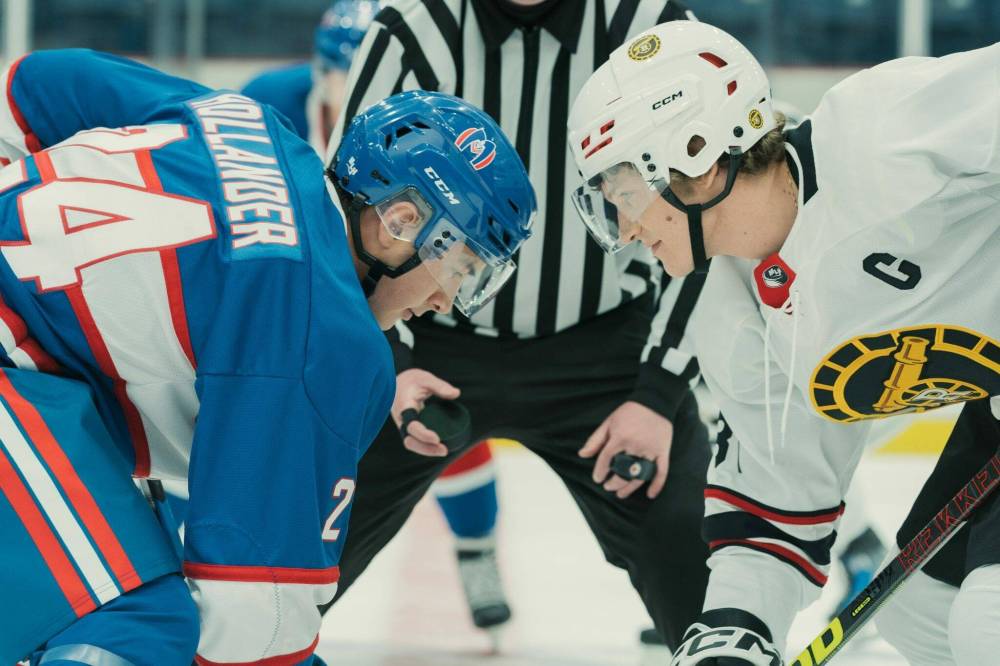
Eva Wasney: Why has this show become such a massive global hit?
Jen Zoratti: This is the closest we’ve come to having a true pop culture moment in a long time because so much of what we consider popular culture now is algorithm-based. We can all have entirely different viewing and listening habits. It’s very rare to have a cultural capital-M Moment where it feels like everybody’s watching the same thing. And it’s pretty improbable that a six-episode show with a Canadian director, no stars, that dropped on a Canadian streaming service has taken the world by storm. It’s a CanCon come-from-behind win.
EW: Literally.
AV Kitching: I had no idea what was going on, then I started seeing it in messages from my gay friends in Asia who had heard about it. So, I think it has made an impact within the gay community.
JZ: For me, it was every single woman I have ever met asking, “Are you watching Heated Rivalry?” One of my friends gave me an hour-long unbroken TedTalk about the show.
Jeff Hamilton: For me, the buzz was on social media. When Scott and Kip kiss on the ice, I saw that scene on social media first and I was really touched by it but had zero context. None of my friends were talking about it.
Heated Rivalry is based on Reid’s Game Changers book series.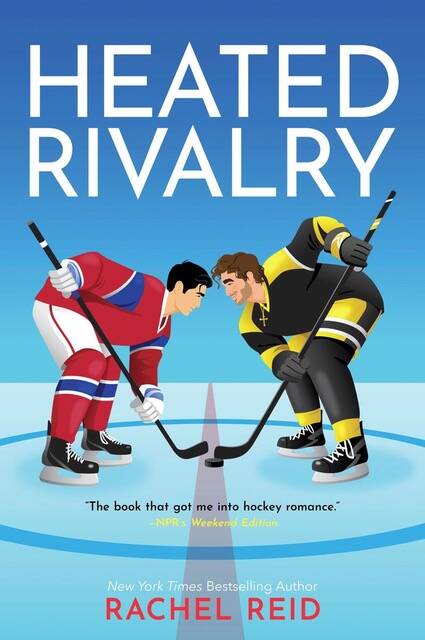
EW: I heard about it from other women too and, full disclosure, I am completely obsessed with this show. I feel like I finally understand the Swifties. I haven’t read the books — I’m currently 261st in line on the library waiting list — but this story comes from a very niche romance genre of gay hockey smut that’s written specifically for women. The fact that it’s become such a big cultural touchstone is a perfect example of why we shouldn’t discount female desire and queer representation in mainstream media.
AV: At first I was really taken aback by how raunchy it was. I was born in Malaysia. Homosexuality is illegal there, you’d lose your job, you’d be jailed. On top of that, I was brought up in a Pentecostal Christian environment. As a grown-up, I thought I had moved past all of that, but I had to turn it off in the first 25 minutes because I felt uncomfortable. I had to really look within and realize it was because I had been told it was wrong for so many years and the seed of that had stayed with me.
The same week I was getting messages about Heated Rivalry from my Malaysian “gayfia,” there was a raid of a male-only wellness centre in Malaysia. Around 200 people got arrested, some people lost their jobs. When I was living in Kuala Lumpur, some of my closest friends were gay men but never once did I confront how hard it must be for them to love each other. It was really important to see this through and confront my own bias that I didn’t even know existed.
CALEB LATREILLE PHOTO Heated Rivalry author Rachel Reid
JH: I went through an emotional roller-coaster, too. My family was very open and accepting, but growing up in a hockey dressing room, I was thinking about how my friends might interpret me watching this, or as a sports reporter what it might mean to have my name attached to this. The characters have these expectations about what they need to be and how they need to act (as professional athletes), and I was wrestling with these same things at the same time.
I couldn’t watch any of the sex scenes through the first episodes, but I felt like I was missing context because there are major moments in there — these sexual encounters are what make the show, you truly see the human behind these players. It wasn’t until I pictured them as my family member, or my friend, or people who mattered to me, that I didn’t see gender. I needed to change my mindset.
EW: Watching it for the first time, I was like, “Oh my god, they’re really showing everything, this is wild,” and it was exciting, but it almost felt gratuitous by the end of the second episode. But I’m now in the middle of my third viewing and the sex is so important to the narrative, this is the arc of their closeted relationship. It’s also pushing the boundaries of how queer sex is portrayed, so I think it’s inevitably going to be a bit shocking because we’re not used to seeing this on television.
JZ: It wasn’t even the fact that the sex was, I’d say, “artfully graphic.” It was the intimacy and the vulnerability that surprised me. Usually, with heterosexual sex on TV, someone is an object or someone is the secretary or the bad sex is the point. Here, there’s no woman in the equation being hurt or exploited. It was almost relaxing to watch as a female viewer because there’s no spectre of violence here, it’s just two equal people enjoying intimacy, enjoying each other’s bodies and being vulnerable with each other. We don’t see that, ever.
EW: I think one of the reasons it resonates with women so much is that you’re able to just be an observer, not the thing being observed.
JZ: Let’s also not ignore the pleasure of seeing two very hot men have sex with each other.
BELL MEDIA Things get steamy for actors Storrie (left) and Williams in Heated Rivalry.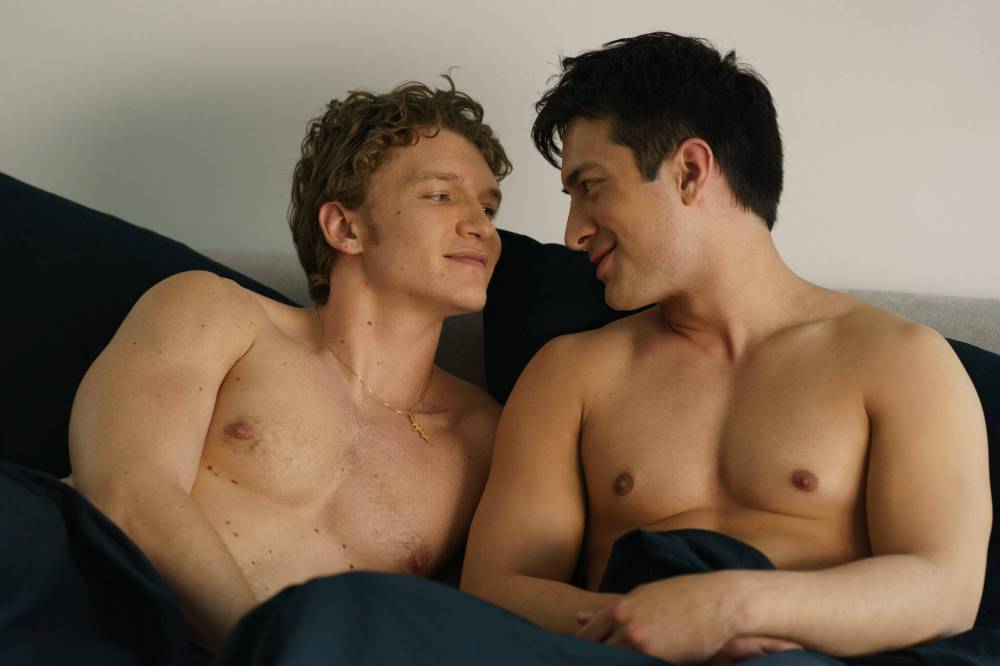
EW: They’re so attractive. (Storrie and Williams) were so well cast for the amount of nudity in this show. Those hockey butts are very accurate.
JZ: I think there is a craving for male intimacy. Look at I Love You, Man (2009). It was about heterosexual, male “bromance,” but people loved it because they hadn’t really seen it before. This is obviously very different, but I think people really want to see a variety of representations of love, of masculinity, of relationships reflected in the mainstream.
JH: I think Heated Rivalry is going to normalize things in a way few other things have done. How can two masculine hockey players, how can two locker room leaders be so vulnerable with each other and express this kind of love? Before this series, you didn’t really have an answer to that question.
These are alpha male characters who are in love with each other. We just don’t usually see that and that kind of representation matters.
EW: These are alpha male characters who are in love with each other. We just don’t usually see that and that kind of representation matters. Showing how vulnerability and masculinity can go hand in hand matters.
JZ: Masculinity, like gender, like sexuality, is a spectrum and there’s many different kinds of masculinity. Hockey will tell you that there’s one kind of masculinity and that’s how you have to be. That has to change first before cultural change can happen.
EW: In real life, there are no out players in major league hockey. Statistically, there are definitely gay players in the league, but the culture of hockey is very toxically masculine — even at the lower levels. There are former (non-NHL) players who’ve come out publicly in the wake of Heated Rivalry and, even as teenagers, that culture is why they felt like they needed to leave the sport they really loved because they couldn’t be themselves.
JH: As a hockey guy, as someone who’s been in dressing rooms, who’s seen that behaviour, that fear of what it would be like to be openly gay, I noticed those dynamics were missing from the show. And I think it was important that it was missing because it would’ve dominated the narrative versus creating a safe environment for the viewer.
EW: Exactly. I don’t think they needed to include outright homophobia from other players or coaches because we already have a framework of understanding based on reality. The fantasy of an alternate reality is a big part of the appeal.
JZ: For so long when — and if — you saw queer narratives in mainstream movies and TV, it was all horrific coming-out stories, or humiliation and bullying, or the AIDS crisis, or a fleeting glimpse of joy only for someone to die, a.k.a. the ‘bury your gays’ trope. This is a real example of showing what queer joy looks like. It’s not a utopia — they’re saved as women’s names in each other’s phones — but knowing the reality and seeing the fantasy is what makes it so powerful.
AV: What could life look like if you felt safe? I saw the parents as the perfect example of people who just accept it. The way the mother apologizes, “I’m sorry that I made you feel like you couldn’t tell me.” Not “if” I made you feel that way.
JH: It almost felt too easy at times, but I guess dealing with all of the good and none of the bad, that’s the fantasy of this whole thing.
AV: It had to be shown as those two players at the highest level of the game, otherwise it would’ve been exploitative. The power dynamic had to be an ideal scenario in a fantasy land. That’s why there was no tension.
JZ: Just sexual tension.
EW: It can be a soft landing. And I think this is why it’s become so many people’s comfort show. It’s why I can’t leave this world yet. It’s why I’m listening to episode-by-episode podcast recaps. It’s why I can’t stop watching clips on Instagram. It’s just so nice to see things going right and being relatively easy for people who have historically not had it easy. Especially when it feels like we’re so far and moving further away from that in the real world.
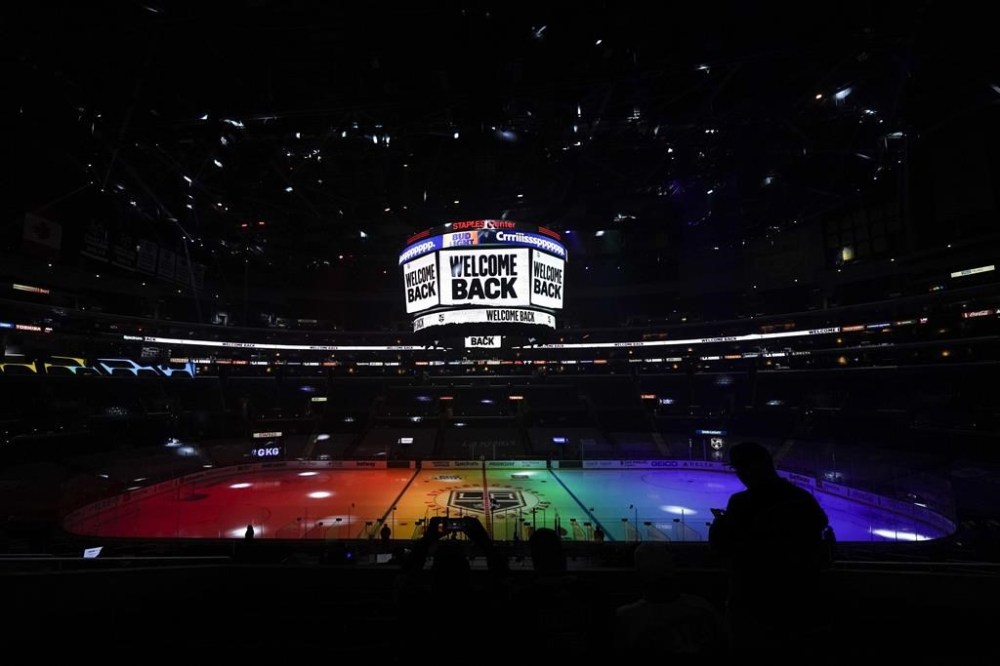
(For example: The NHL banned players from using rainbow-coloured Pride tape on their sticks in 2023, but later reversed the decision owing to backlash.)
JH: Teams still have Pride nights, but they’re not always supported by players. We’re talking about accepting a community, not your teammates, and it’s clear some individuals have a hard time doing that.
EW: That’s so disappointing. The NHL is obviously paying attention and I can only imagine the conversations that are happening in back rooms right now as they try to capitalize on this fandom, but I don’t think they’re going to have an easy time connecting with this show or its audience for obvious reasons.
SABRINA LANTOS / BELL MEDIA As professional hockey players, Shane Hollander (Hudson Williams, left) and Ilya Rozanov (Connor Storrie) have to hide their relationship in Heated Rivalry.
JH: Gary Bettman (commissioner of the NHL) said that he watched all six episodes in one night, but there also hasn’t been an active player who has opined on the series and I think that’s interesting. Players, at one time, used to comment on a lot of stuff, even politics. Now, with social media and instant reactions and news aggregates, everyone’s now afraid of saying the wrong thing.
JZ: Hockey rewards conformity, so if you deviate from the norm, you’re liable to be punished. Until that changes, I don’t know if hockey culture is gonna change. But for every person who decides to take a chance on this show and has their worldview challenged or changed because of it, that’s progress.
JH: This show is not going to be a magic wand that opens a world up to people, but I do think it’s going to prove to be historical.
JZ: This might be an unpopular opinion, but I think the show should end where it does. I’m worried about what HBO is going to do to it because it has such a charming Canadian quality to it. It could just be a really perfect lighting-in-a-bottle limited series. I also hope Connor Storrie and Hudson Williams are OK because that is a wild amount of fame to absorb at one time.
EW: Agreed, I don’t need to know what the rest of these characters’ lives are like. I’m also worried the second season might ruin it by playing too much to the fandom.
AV: I want to just leave them there driving down that road as the sun sets.
JH: Do we have to get real in Season Two, now? Does Scott retire? Is he allowed to go back to his locker room, is he still the captain? Is Kip going to hang out with the WAGs (wives and girlfriends)?
EW: Oh my god, I would love to see that, actually.
JH: Here’s the thing: hockey was an escape for me as a kid. Maybe this series can be an escape for other people and it doesn’t have to be cloaked in reality or bring in the shittiness of our society.
This round table has been edited for length and clarity.
Coach’s Corner
There’s no denying the appeal of well-made smut, and it is its own reward.
But here are three other elements of Heated Rivalry that elevate it, according to our fearless leader, arts and life editor Jill Wilson, who was unable to join the round table in person:
1. Kissing: Not since Westley and Princess Buttercup locked lips has kissing had so much meaning and maybe never has it been done so well, with such chemistry. Sex can be choreographed to look hot, but stage-managed kisses will always lack passion.
From devouring, hungry kisses to sweet, tender ones, from pecks on the forehead to glancing touches on the shoulder, every time the characters kiss it feels like they are imprinting on each other.
2. Representation of neurodivergence: Though it’s strongly implied that Shane Hollander is on the autism spectrum — his trouble with eye contact, his love of order and routine, his need to follow a burger recipe and his inability to cut that recipe in half — it’s never stated, and it doesn’t interfere with his ability to be a great captain and a successful person.
It’s part of what Ilya calls “boring” about him, which is code for the calm and order Ilya craves himself.
3. Why straight women are drawn to it: The characters in Heated Rivalry do not have an exemplary relationship. It is fraught with conflict, burdened by secrecy and riddled with poor communication.
But what they do have is equal footing, something many onscreen heterosexual romances do not, and cannot, portray. As Katherine B. says in a viral essay on LinkedIn: “What Heated Rivalry removes is not desire or dominance, but the structural conditions that allow dominance to flow in one direction. The relationship is symmetrical. The characters are matched in strength, status, wealth and credibility.
“No one is economically dependent. No one’s social status collapses if they walk away. No one is managing another person’s emotions to say safe … in other words, the fantasy does something culturally radical: it makes coercive control structurally impossible.”
If you value coverage of Manitoba’s arts scene, help us do more.
Your contribution of $10, $25 or more will allow the Free Press to deepen our reporting on theatre, dance, music and galleries while also ensuring the broadest possible audience can access our arts journalism.
BECOME AN ARTS JOURNALISM SUPPORTER
Click here to learn more about the project.

Eva Wasney covers environmental issues in Manitoba for The Narwhal in partnership with the Winnipeg Free Press.

Jeff Hamilton
Multimedia producer
Jeff Hamilton joined the Free Press newsroom in 2015, reporting on the sports and investigative beats until he left the Free Press in July 2026.


Jen Zoratti is a Winnipeg Free Press columnist and feature writer, working in the Arts & Life department.
Our newsroom depends on a growing audience of readers to power our journalism. If you are not a paid reader, please consider becoming a subscriber.
Our newsroom depends on its audience of readers to power our journalism. Thank you for your support.
Related Articles
PWHLers, NHL commissioner among fans of gay hockey drama 'Heated Rivalry'