Haunting doc examines how hero ends up homeless
Marathoner Fonyo struggles in Fox's shadow

Advertisement
Read this article for free:
or
Already have an account? Log in here »
To continue reading, please subscribe:

Digital Subscription
One year of digital access for only $205*
- Enjoy unlimited reading on winnipegfreepress.com
- Read the E-Edition, our digital replica newspaper
- Access News Break, our award-winning app
- Play interactive puzzles
*First annual payment billed as $205.00 + GST for one year. This annual subscription will automatically renew at $233.00 + GST every 52 weeks (10% off the regular annual price of $259.35). Offer available to new and qualified returning subscribers only. Cancel any time.
To continue reading, please subscribe:
Add Free Press access to your Brandon Sun subscription for only an additional
$1 for the first 4 weeks*
- Enjoy unlimited reading on winnipegfreepress.com
- Read the E-Edition, our digital replica newspaper
- Access News Break, our award-winning app
- Play interactive puzzles
*Your next Brandon Sun subscription payment will increase by $1.00 and you will be charged $17.95 plus GST for four weeks. After four weeks, your payment will increase to $24.95 plus GST every four weeks.
Read unlimited articles for free today:
or
Already have an account? Log in here »
Hey there, time traveller!
This article was published 15/01/2016 (3858 days ago), so information in it may no longer be current.
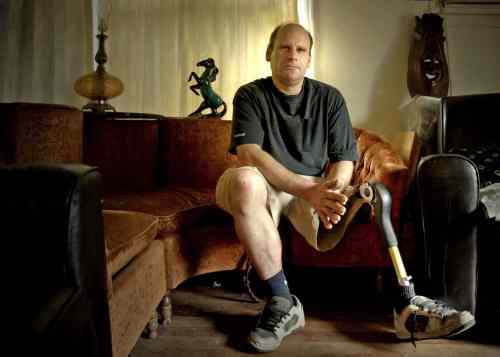
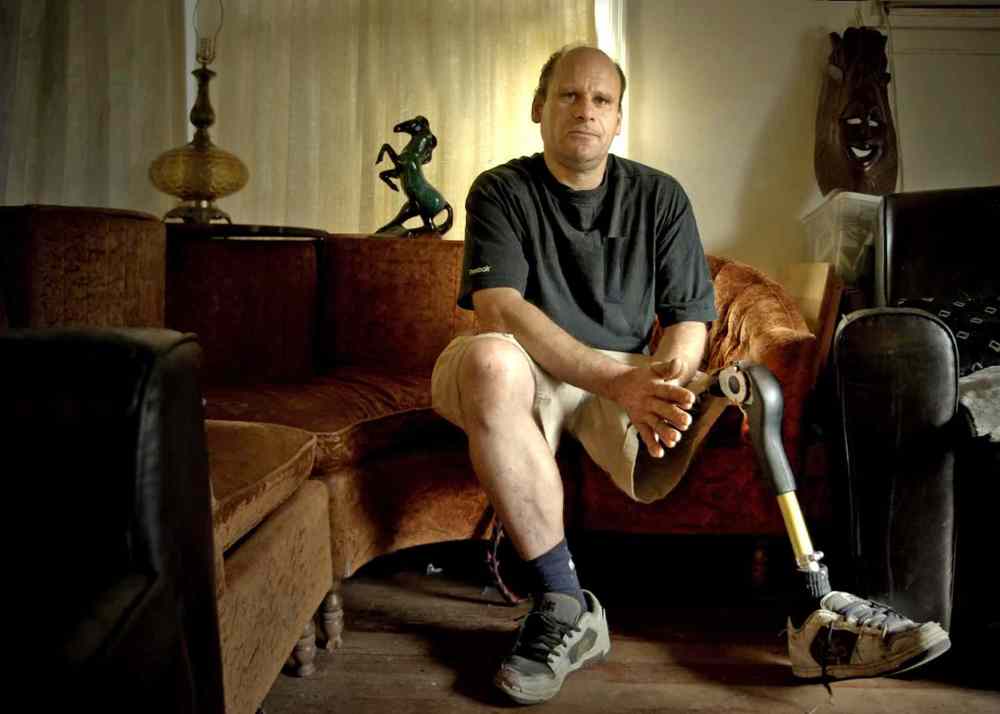
Maybe you’ve never heard of Steve Fonyo. Or maybe you haven’t thought of him for a while. This new documentary by Toronto filmmaker Alan Zweig will change that, with its melancholy, moving look at the cross-Canada marathoner whose early celebrity slumped into petty crime, poverty and addiction. Starting as a deeply sad character study, the film becomes a deeper investigation of identity, fame and failure.
“What’s a hero’s life?’ Fonyo asks plaintively at one point. Hurt, which won the inaugural Platform Prize at the 2015 Toronto International Film Festival, grapples with that question.
Fonyo lost a leg to cancer at age 12. In 1984, as an 18-year-old, he started the cross-country run Terry Fox had not been able to complete, beginning in St. John’s, N.L., and hitting the Prairies as frigid winter set in. On May 29, 1985, Fonyo dipped his prosthetic foot in the Pacific Ocean.
Despite initial acclaim — there are photo ops with small-town beauty queens and cheering schoolchildren — the sometimes awkward and abrasive Fonyo seemed slated to live in the shadow of the beloved Fox. He was often dismissed as a copycat — the “second one-legged runner’ — rather than acknowledged for his toughness and tenacity.
By the time Zweig (When Jews Were Funny) catches up with Fonyo, he’s doing crack cocaine, stealing car parts and occasionally landing in jail. He and his wife, Lisa, have endured bouts of homelessness on the mean streets of Vancouver.
Zweig’s camera explores Fonyo’s sketchy neighbourhood in Surrey, B.C., with its rundown houses, derelict cars, toothless meth addicts, wary pit bulls and on-camera fist fights. The film seems to drift dangerously close to reality-TV freak show, but Zweig counters this tendency with his empathetic, on-the-ground approach to Fonyo and his troubles.
In Zweig’s Mirror Trilogy, which includes his breakthrough film, Vinyl (2000), I, Curmudgeon (2004) and Lovable (2007), he inserted himself into his work, sharing in the problems of his subjects with naked, needy honesty.
This personal approach to filmmaking turned outward in the Genie Award-winning A Hard Name (2009), about ex-convicts trying to reintegrate into society. In Hurt, Zweig remains out of frame but is present as a grumbly interrogative voice. Zweig meets with Fonyo four times over the course of a year, sometimes acting as a driver (he shuttles Fonyo to court appearances and Canadian Tire), sometimes as a therapist or social worker.
The relationship between documentarian and subject has been raising tricky emotional and ethical questions since Nanook of the North (1922). Zweig likes to get things out into the open. This is not so much fly-on-the-wall filmmaking as fly-in-the-ointment filmmaking.

Zweig keeps nudging Fonyo toward self-analysis, trying to break him out of deceptive and self-defeating patterns of thought. At one point, he arranges a counselling session with addiction specialist Gabor Maté.
Zweig and Fonyo’s dynamic is testy and unpredictable but it doesn’t feel exploitative. Fonyo’s situation spans some extremes, from early adulation to middle-aged destitution, but Zweig frames it as a common human problem. Fonyo is a man who finds himself bewildered by the course of his own life.
“He can’t figure out why he’s not doing better,’ explains his wife. “And it’s driving him nuts.’
“Everybody wants a happy ending for a story,’ Fonyo says, as he looks back on his fame and its unexpected aftermath. Hurt concludes abruptly with yellow police tape and ominous news footage, but this haunting documentary also holds out muted hope Fonyo might rediscover the resilience that made him, briefly, a household name.
alison.gillmor@freepress.mb.ca
If you value coverage of Manitoba’s arts scene, help us do more.
Your contribution of $10, $25 or more will allow the Free Press to deepen our reporting on theatre, dance, music and galleries while also ensuring the broadest possible audience can access our arts journalism.
BECOME AN ARTS JOURNALISM SUPPORTER
Click here to learn more about the project.
Studying at the University of Winnipeg and later Toronto’s York University, Alison Gillmor planned to become an art historian. She ended up catching the journalism bug when she started as visual arts reviewer at the Winnipeg Free Press in 1992.
Our newsroom depends on a growing audience of readers to power our journalism. If you are not a paid reader, please consider becoming a subscriber.
Our newsroom depends on its audience of readers to power our journalism. Thank you for your support.
Movie Review
Hurt
- Directed by Alan Zweig
- Cinematheque
- 14A
- 84 minutes
- Four stars out of five
The middle-aged Fonyo proves to be a compelling character in this portrait, which sympathizes with his plight but often seems to wonder how much of his bad luck he brought on himself.
— John DeFore, Hollywood Reporter
Given Zweig’s history of finding himself in his subjects, perhaps he sees Fonyo as his own worst-case scenario, an exemplar of failure who rose higher and fell further than the filmmaker ever did or could.
— Jason Anderson, Cinema Scope
If you value coverage of Manitoba’s arts scene, help us do more.
Your contribution of $10, $25 or more will allow the Free Press to deepen our reporting on theatre, dance, music and galleries while also ensuring the broadest possible audience can access our arts journalism.
BECOME AN ARTS JOURNALISM SUPPORTER
Click here to learn more about the project.
Studying at the University of Winnipeg and later Toronto’s York University, Alison Gillmor planned to become an art historian. She ended up catching the journalism bug when she started as visual arts reviewer at the Winnipeg Free Press in 1992.
Our newsroom depends on a growing audience of readers to power our journalism. If you are not a paid reader, please consider becoming a subscriber.
Our newsroom depends on its audience of readers to power our journalism. Thank you for your support.
Advertisement Advertise With Us
Advertisement Advertise With Us
History
Updated on Friday, January 15, 2016 10:13 AM CST: Adds photo