Mastodons: Nova Scotia was home to hairy, elephant-like creatures 80,000 years ago
Advertisement
Read this article for free:
or
Already have an account? Log in here »
To continue reading, please subscribe:

Digital Subscription
One year of digital access for only $205*
- Enjoy unlimited reading on winnipegfreepress.com
- Read the E-Edition, our digital replica newspaper
- Access News Break, our award-winning app
- Play interactive puzzles
*First annual payment billed as $205.00 + GST for one year. This annual subscription will automatically renew at $233.00 + GST every 52 weeks (10% off the regular annual price of $259.35). Offer available to new and qualified returning subscribers only. Cancel any time.
To continue reading, please subscribe:
Add Free Press access to your Brandon Sun subscription for only an additional
$1 for the first 4 weeks*
- Enjoy unlimited reading on winnipegfreepress.com
- Read the E-Edition, our digital replica newspaper
- Access News Break, our award-winning app
- Play interactive puzzles
*Your next Brandon Sun subscription payment will increase by $1.00 and you will be charged $17.95 plus GST for four weeks. After four weeks, your payment will increase to $24.95 plus GST every four weeks.
Read unlimited articles for free today:
or
Already have an account? Log in here »
Hey there, time traveller!
This article was published 25/02/2022 (1688 days ago), so information in it may no longer be current.
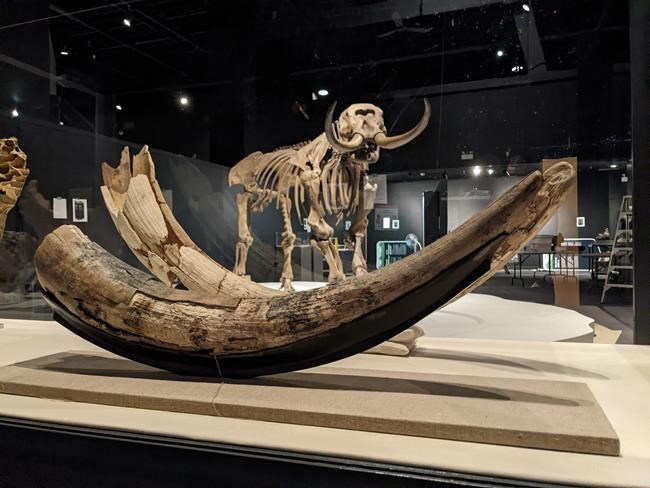
HALIFAX – The remains of a massive, woolly beast that once trod on the land that would become Nova Scotia will go on display this weekend at the Museum of Natural History in Halifax.
Curator of geology Tim Fedak says the bones, teeth and a tusk from an elephant-like mastodon were found in 1991 in a gypsum quarry north of Halifax, near Milford.
“They were cleaning out this muddy layer and the excavator operator happened to notice … what looked link chunks of tusk and teeth,” said Fedak. “Then they called the museum.”
Gypsum is among the minerals left behind after an ancient ocean evaporates. As it is susceptible to erosion from water, gypsum deposits can be laced with tunnels, caves and sinkholes.
“Our mastodon was probably coming along and having a drink and fell into the sinkhole,” said Fedak. As glaciers returned to the area, the mastodon’s body was covered by oxygen-starved muck. “It was protected by this muddy archive.”
The paleontologists who exhumed the remains worked for eight months to unearth a trove of fossils, including ancient turtles, frogs, plants and even some mastodon dung.
“We’re coming to understand that these sinkhole deposits are really a unique opportunity to get a glimpse of ancient ecosystems,” Fedak said, adding that analysis of the dung revealed the mastodon had died in the autumn.
Using a technique known as electron-spin resonance, researchers determined the remains were 80,000 years old, which means the giant creature died before the last of the ice age glaciers covered the province with ice up to two kilometres thick.

The Age of the Mastodon exhibit opening Saturday will also feature a full, mounted skeleton, which is a composite of previous finds from other parts of the world.
Mastodons were slightly smaller than elephants, measuring about three metres at the shoulder, and their range extended from Alaska and Yukon to central Mexico, and from the Pacific to Atlantic coasts.
One of the largest of the ice age mammals, mastodons were partial to Nova Scotia’s spruce woodlands and marshes.
The exhibit in Halifax will remain on display until January of 2023, and it will then be taken on a tour of the province.
This report by The Canadian Press was first published Feb. 25, 2022.