Julia Elliott wins US$150k Carol Shields Prize for ‘Hellions’

Advertisement

Advertise with us

TORONTO - Julia Elliott's eerie short story collection "Hellions" has won the US$150,000 Carol Shields Prize for Fiction.

Read this article for free:


or

Already have an account? Log in here »

To continue reading, please subscribe:

Subscribe and receive a limited-edition Free Press branded hat or tote.

Digital Subscription

One year of digital access for only $205*

  • Enjoy unlimited reading on winnipegfreepress.com
  • Read the E-Edition, our digital replica newspaper
  • Access News Break, our award-winning app
  • Play interactive puzzles

*First annual payment billed as $205.00 + GST for one year. This annual subscription will automatically renew at $233.00 + GST every 52 weeks (10% off the regular annual price of $259.35). Offer available to new and qualified returning subscribers only. Cancel any time.

To continue reading, please subscribe:

Add Free Press access to your Brandon Sun subscription for only an additional

$1 for the first 4 weeks*

  • Enjoy unlimited reading on winnipegfreepress.com
  • Read the E-Edition, our digital replica newspaper
  • Access News Break, our award-winning app
  • Play interactive puzzles
Start now

*Your next Brandon Sun subscription payment will increase by $1.00 and you will be charged $17.95 plus GST for four weeks. After four weeks, your payment will increase to $24.95 plus GST every four weeks.

TORONTO – Julia Elliott’s eerie short story collection “Hellions” has won the US$150,000 Carol Shields Prize for Fiction.

“Hellions” includes elements of horror, Southern gothic and folklore, and jurors praise it for taking “no half-measures,” saying “every sentence of Hellions crackles or crawls.”

The book includes stories about a teen discovering her power, a young woman who goes up against a shape-shifting older professor and a nun working on a forbidden manuscript. 
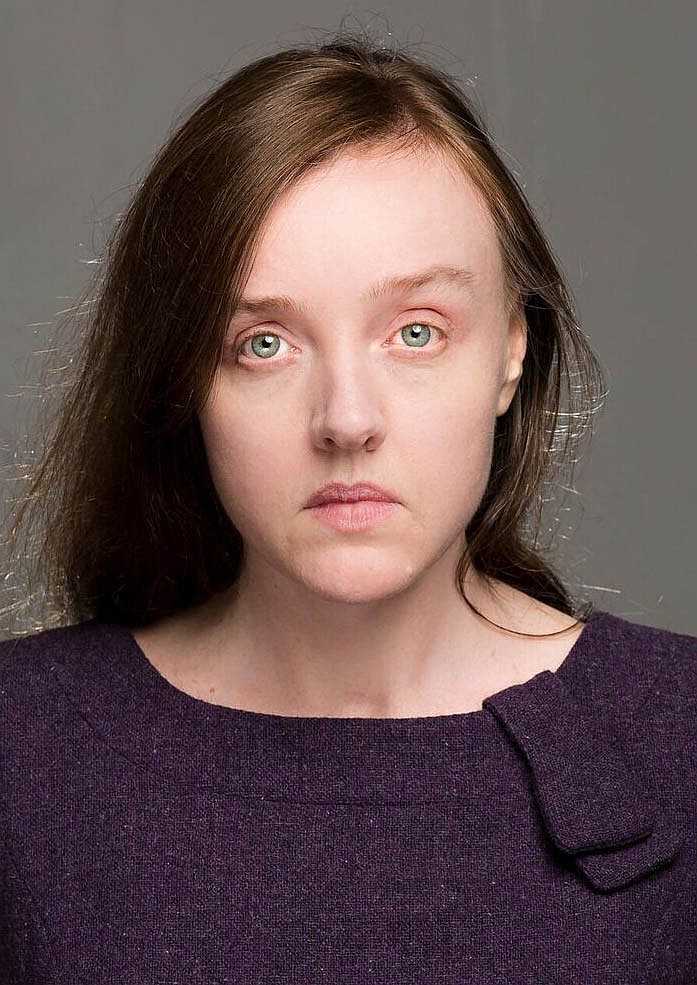
Author Julia Elliott seen in this undated photo. Julia Elliot is the winner of the 2026 Carol Shields Prize for Fiction. THE CANADIAN PRESS/Handout -  Forrest Clonts (Mandatory Credit)
Author Julia Elliott seen in this undated photo. Julia Elliot is the winner of the 2026 Carol Shields Prize for Fiction. THE CANADIAN PRESS/Handout - Forrest Clonts (Mandatory Credit)

Elliott was celebrated at a gala in Toronto on Tuesday night.

The award is the largest English-language literary prize in the world for women and non-binary authors, and writers from Canada and the United States both qualify.

The shortlisted authors, who receive US$12,500 apiece, were Quiara Alegría Hudes for “The White Hot,” Lee Lai for “Cannon,” Megha Majumdar for “A Guardian and a Thief” and Sonya Walger for “Lion.” 

This report by The Canadian Press was first published June 2, 2026.
Report Error Submit a Tip

More Stories

Canadians loving Carney’s decision to stand tall against floundering U.S. bully

Tom Brodbeck 5 minute read Preview

Canadians loving Carney’s decision to stand tall against floundering U.S. bully

Tom Brodbeck 5 minute read 12:11 PM CDT

It’s hard to imagine a more dramatic political contrast than the one unfolding on opposite sides of the Canada-U.S. border.

Mark Carney is fighting a trade war with Donald Trump, taking the occasional verbal punch from the American president and imposing retaliatory tariffs on U.S. products.

And the prime minister is being rewarded for it politically.

Trump, meanwhile, is fighting pretty much everyone he can find — including some of America’s closest allies — and his own voters are increasingly giving him the political equivalent of a raised middle finger. That’s quite a tale of two leaders.

Read
12:11 PM CDT

Julia Elliott wins US$150k Carol Shields Prize for ‘Hellions’

Nicole Thompson, The Canadian Press 2 minute read Preview

Julia Elliott wins US$150k Carol Shields Prize for ‘Hellions’

Nicole Thompson, The Canadian Press 2 minute read Tuesday, Jun. 2, 2026

TORONTO - Julia Elliott's eerie short story collection "Hellions" has won the US$150,000 Carol Shields Prize for Fiction.

"Hellions" includes elements of horror, Southern gothic and folklore, and jurors praise it for taking "no half-measures," saying "every sentence of Hellions crackles or crawls."

The book includes stories about a teen discovering her power, a young woman who goes up against a shape-shifting older professor and a nun working on a forbidden manuscript. 

Elliott was celebrated at a gala in Toronto on Tuesday night.

Read
Tuesday, Jun. 2, 2026

Education minister’s reasons for revoking teacher’s licence ‘not good enough,’ judge decides

Maggie Macintosh 5 minute read Preview

Education minister’s reasons for revoking teacher’s licence ‘not good enough,’ judge decides

Maggie Macintosh 5 minute read Updated: 9:14 AM CDT

A Manitoba judge has rejected the education minister’s decision to end a teacher’s career because he repeatedly messaged with a 13-year-old girl on social media.

Read
Updated: 9:14 AM CDT

U of M students call for ban on far-right group

Maggie Macintosh 4 minute read Preview

U of M students call for ban on far-right group

Maggie Macintosh 4 minute read Yesterday at 6:00 AM CDT

Some University of Manitoba students are calling on their school to ban a far-right group from campus after posters promoting mass deportations were found during the summer break.

More than 50 people rallied on Wednesday, the first day of classes, to make known their concerns about a group called the Dominion Society of Canada.

The protest was organized after a supporter of the self-described nationalist group posted a video over the Labour Day weekend that shows him putting up flyers in Fort Garry.

“Canada is a really beautiful country and I have been welcomed here by a lot of beautiful people and it’s been amazing, but when I see harmful rhetoric online and now, on campus, it gives me a lot of anxiety,” said Ela Ancheta, an arts major at U of M.

Read
Yesterday at 6:00 AM CDT

Paranoid and high, man kills dad, takes photos of body, calls 911

Dean Pritchard 3 minute read Preview

Paranoid and high, man kills dad, takes photos of body, calls 911

Dean Pritchard 3 minute read Yesterday at 6:00 PM CDT

Paranoid and sleep-deprived after a night of smoking crack, Donato Pellettieri stabbed his 64-year-old father 27 times, called 911 and waited outside their Maryland Avenue residence until police arrived minutes later and arrested him for murder, court was told Thursday.

“Paranoia led him to believe this was a kill-or-be-killed situation,” Crown attorney Joel Refvik told Court of King’s Bench Justice Ken Champagne. “This is an individual who, but for his drug use and paranoia, likely would not have killed his father.”

The 39-year-old pleaded guilty to second-degree murder for the July 2021 killing of Salvatore Pellettieri and was sentenced to life in prison with no chance of parole for at least 10 years.

The resolution of his case was delayed by long periods in which he was mentally unfit to stand trial, and changed lawyers and awaited reports to determine whether he should be found not criminally responsible for his actions.

Read
Yesterday at 6:00 PM CDT

Exhibition examines the bonds we make with humanoid objects

Jen Zoratti 8 minute read Preview

Exhibition examines the bonds we make with humanoid objects

Jen Zoratti 8 minute read 6:27 PM CDT

For the past few years, Winnipeg visual artist Emilie St-Hilaire has been fascinated by the way humans relate to artificial bodies — dolls, robots, mannequins — through play, care and connection, and how those synthetic relationships can produce very real emotions in humans.

Objects of Fidelity: Barbies, bots, bébés, her solo exhibition on view now at La Maison des artistes visuels francophones, explores this space between object and companion. It’s what she calls the “visual culmination” of work that began with her 2024 PhD dissertation at Concordia University in Montreal, which examined Reborn Dolls — hyper-realistic art dolls that resemble newborns — from a feminist perspective.

But when a robot included in the exhibition started malfunctioning and giving signs that it was at the end of its life, St-Hilaire was given a new question to puzzle: what does it mean for a robot, or any other artificial body, to “die”?

To understand that, one must first understand how these human attachments to humanlike objects form in the first place.

Read
6:27 PM CDT