Cuba’s cherished ballet tradition endures through daily blackouts and shortages

Advertisement

Advertise with us

HAVANA (AP) — For months, two-thirds of Cuba had no electricity at night. Some neighborhoods in the capital of Havana have been without running water for more than two weeks. Transportation is scarce and eggs, bread and cooking oil are hard to find.

Read this article for free:


or

Already have an account? Log in here »

To continue reading, please subscribe:

Subscribe and receive a limited-edition Free Press branded hat or tote.

Digital Subscription

One year of digital access for only $205*

  • Enjoy unlimited reading on winnipegfreepress.com
  • Read the E-Edition, our digital replica newspaper
  • Access News Break, our award-winning app
  • Play interactive puzzles

*First annual payment billed as $205.00 + GST for one year. This annual subscription will automatically renew at $233.00 + GST every 52 weeks (10% off the regular annual price of $259.35). Offer available to new and qualified returning subscribers only. Cancel any time.

To continue reading, please subscribe:

Add Free Press access to your Brandon Sun subscription for only an additional

$1 for the first 4 weeks*

  • Enjoy unlimited reading on winnipegfreepress.com
  • Read the E-Edition, our digital replica newspaper
  • Access News Break, our award-winning app
  • Play interactive puzzles
Start now

*Your next Brandon Sun subscription payment will increase by $1.00 and you will be charged $17.95 plus GST for four weeks. After four weeks, your payment will increase to $24.95 plus GST every four weeks.

HAVANA (AP) — For months, two-thirds of Cuba had no electricity at night. Some neighborhoods in the capital of Havana have been without running water for more than two weeks. Transportation is scarce and eggs, bread and cooking oil are hard to find.

Yet every morning, about 178 young students gather for classes at the National Ballet School in the capital. Housed in an imposing Art Nouveau building in the heart of Old Havana, the school combines rigorous dance training with academic classes in math, Spanish, history and science.

Training to become a top-tier classical dancer demands discipline and sacrifice anywhere. In Cuba today, where blackouts and shortages of fuel, water and food complicate daily life, those demands extend far beyond the dance studio.
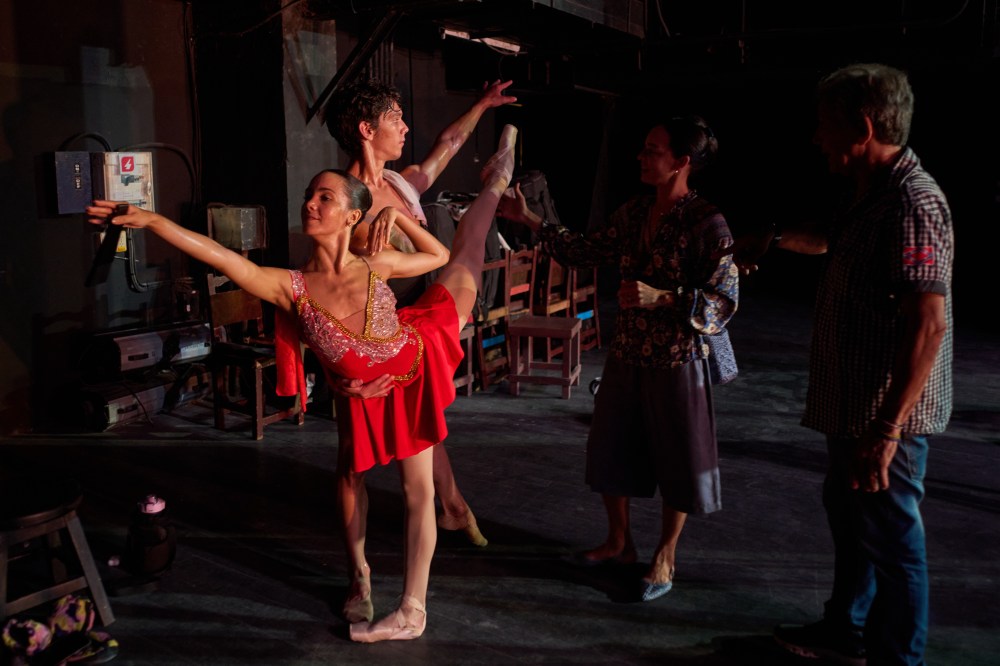
Dancers from the National Ballet of Cuba practice under the direction of National Ballet Director Viengsay Valdes, center, in Havana, Cuba, Friday, Aug. 21, 2026. (AP Photo/Ramon Espinosa)

For 14-year-old Roxana Pérez de La Mora, that means waking up before dawn and traveling about 20 kilometers (12 miles) from her home to the school.

“Sometimes I tell my mom I don’t feel like going, but missing it could cause problems for me later in training,” she said. “I’ve always said that my dream is to be a prima ballerina.”

Ballet remains a source of pride for troubled island

Despite Cuba’s ongoing crises, classical ballet remains a celebrated part of the country’s culture, nearly as popular on the island as baseball. Over the decades, Cuba has produced internationally renowned dancers and choreographers whose careers are closely followed by a knowledgeable ballet audience.

The Cuban National Ballet, founded in the 1940s by revered ballerina Alicia Alonso and her husband Fernando Alonso, is considered one of the world’s most prestigious companies. Tickets cost less than $1, while comparable performances elsewhere can cost as much as $300.

For its season-ending gala in August, the company presented “Canto Vital,” a work by Russian choreographer Azari Plisetski to music by Gustav Mahler. The performance starred Dani Hernández, a principal dancer who also directs the National Ballet School, where Roxana trains each day.

Fuel shortages had left the streets nearly empty that night, but the Avellaneda Hall at the National Theatre of Cuba was packed with elegantly dressed patrons, their hair and makeup styled for the occasion. The audience gave a standing ovation, shouting “Bravo!”

The combination of demanding leadership at the National Ballet and rigorous training at a public school has helped produce dozens of prominent dancers. Some have gone on to become principals at leading companies including the Paris Opera Ballet, the Royal Ballet in London and American Ballet Theatre in New York.

Crisis tests resolve of aspiring dancers and seasoned professionals

Hernández, the professional dancer and teacher, rides an electric motorcycle every day from his apartment in Havana to ballet class, which is a risky commute for someone whose career depends on avoiding injury.

During recent persistent blackouts, heat and mosquitoes forced Hernández, 37, to sleep on the terrace of his apartment building.

“Whether I have electricity or not, I have to be in the studio,” he said. “But I keep thinking: Will the food in my refrigerator spoil?”

Hernández expressed his worry about how the country’s mounting crises could affect future generations of dancers.

“The entire situation we’re experiencing today could affect a generation of students training in ballet, dance, music, the visual arts,” he said in an interview with The Associated Press. “And it’s been the same for all other fields: engineering, medicine, education, everything else.”

Yet classical ballet remains a source of national pride while maintaining its internationally recognized standards, an endurance that is reflected in the discipline’s broad appeal across Cuban society.

“It’s one of those things where you go out on the street and say, ‘Hey, I saw the ballet,’ and everyone starts talking to you about ballet,” he said.

___

Follow AP’s coverage of Latin America and the Caribbean at https://apnews.com/hub/latin-america.

Report Error Submit a Tip

More Stories

Canada resorting to its tried and true playbook

Niigaan Sinclair 5 minute read Preview

Canada resorting to its tried and true playbook

Niigaan Sinclair 5 minute read Monday, Sep. 28, 2026

In 1846, Britain faced an emergency influenced by the Irish famine, so leaders repealed the country’s “Corn Laws” and restrictions on imported food and grain, transitioning to a system of free trade.

This created a crisis in the then Province of Canada, which had relied on British “preferential” status to prop up its agricultural and resource industries.

As a result, Canada looked south for new markets and eventually negotiated a free trade agreement with the United States.

This required land to be acquired and converted for industrial use quickly, so Canada quickly dispatched Commissioner William Robinson to negotiate with Indigenous communities along Lake Huron and Lake Superior for land.

Read
Monday, Sep. 28, 2026

Jets pick up netminder as relatively new 23-man roster announced

Mike McIntyre 7 minute read Preview

Jets pick up netminder as relatively new 23-man roster announced

Mike McIntyre 7 minute read Monday, Sep. 28, 2026

Let’s get the caveats out of the way: Nothing is set in stone, nor written in permanent ink, and what you see right now could change in the blink of an eye.

With that being said, allow us to introduce you to the 2026-27 Winnipeg Jets — where change is very much in the air.

The 23-man roster submitted to the NHL offices by Monday’s 4 p.m. deadline includes seven players who were not on the team at this time last year. In fact, there could be as many as 10 new faces in the opening-night lineup on Friday against Boston when you factor in three regulars didn’t start the 2025-26 campaign due to injury.

That’s a lot of turnover, which isn’t surprising for a team that finished 26th overall in the standings and was — to most fans and pundits — too old and too slow.

Read
Monday, Sep. 28, 2026

News briefs for Wednesday, September 30, 2026

3 minute read Updated: 10:42 AM CDT

A collection of breaking news briefs filed on Wednesday, September 30, 2026

Collisions send people to hospital; one fatality

10:42 AM

Five people are in hospital following a two-vehicle collision on Monday at the corner of Pembina Highway and Plaza Drive in which three pedestrians were struck.

Ferraro gets a call-up to the Jets

Mike McIntyre 6 minute read Preview

Ferraro gets a call-up to the Jets

Mike McIntyre 6 minute read 1:46 PM CDT

Landon Ferraro vividly recalls the moment his NHL career came to an extremely painful end — Oct. 20, 2017, in downtown Winnipeg.

“My last play was a breakaway on Connor Hellebuyck,” Ferraro told the Free Press this week.

“I tried to poke the puck past the first D. It was me and (Dustin) Byfuglien chasing it down. I thought he was going to throw me across the ice, so I tried to cut in on him, and he moved. I overextended, and I literally ripped my abductor off the bone and gave myself a hernia.”

Ferraro — at the time playing forward for the visiting Minnesota Wild — said he managed to get off a weak shot that hit the Jets goaltender square in the chest. But his 77th appearance in the big leagues would be his last following previous stops with Detroit (which drafted him 32nd overall in 2009) and Boston.

Read
1:46 PM CDT

Woman took ‘meaningful’ responsibility after disposing of body: lawyer

Dean Pritchard 5 minute read Preview

Woman took ‘meaningful’ responsibility after disposing of body: lawyer

Dean Pritchard 5 minute read 6:00 AM CDT

A woman who was threatened with death if she didn’t help dispose the body of a Mexican man murdered in the basement of a North End home should serve no more jail time, a judge has been told.

Devlin Langlois, 25, has pleaded guilty to accessory after the fact to murder in the March 2025 killing of 28-year-old Diego Moscoza.

“By pleading guilty, Ms. Langlois has already taken meaningful accountability for her actions,” defence lawyer Joshua Rogala told King’s Bench Justice Candace Grammond at a sentencing hearing Monday.

He urged the judge to sentence Langlois to the equivalent of 14 months already served, plus two years supervised probation.

Read
6:00 AM CDT

Klein vows to freeze water, sewer rate for next two years

Joyanne Pursaga 5 minute read Preview

Klein vows to freeze water, sewer rate for next two years

Joyanne Pursaga 5 minute read Yesterday at 6:09 PM CDT

Mayoral candidate Kevin Klein is promising to cancel a water and sewer rate hike proposed for next year and freeze the fee for two years.

Klein said Winnipeggers are simply paying far too much for the utility.

“I think we have to freeze them right now because we’ve seen (a substantial increase) in the last four years. We are facing some of the most difficult financial times for families right now,” he said.

He would also ask the provincial Public Utilities Board to set Winnipeg’s future water and sewer rates, a power currently held by city council.

Read
Yesterday at 6:09 PM CDT