This year’s MacArthur ‘geniuses’ include a musician, painter and economist all confronting history
Advertisement
Read this article for free:
or
Already have an account? Log in here »
To continue reading, please subscribe:

Digital Subscription
One year of digital access for only $205*
- Enjoy unlimited reading on winnipegfreepress.com
- Read the E-Edition, our digital replica newspaper
- Access News Break, our award-winning app
- Play interactive puzzles
*First annual payment billed as $205.00 + GST for one year. This annual subscription will automatically renew at $233.00 + GST every 52 weeks (10% off the regular annual price of $259.35). Offer available to new and qualified returning subscribers only. Cancel any time.
To continue reading, please subscribe:
Add Free Press access to your Brandon Sun subscription for only an additional
$1 for the first 4 weeks*
- Enjoy unlimited reading on winnipegfreepress.com
- Read the E-Edition, our digital replica newspaper
- Access News Break, our award-winning app
- Play interactive puzzles
*Your next Brandon Sun subscription payment will increase by $1.00 and you will be charged $17.95 plus GST for four weeks. After four weeks, your payment will increase to $24.95 plus GST every four weeks.
Read unlimited articles for free today:
or
Already have an account? Log in here »
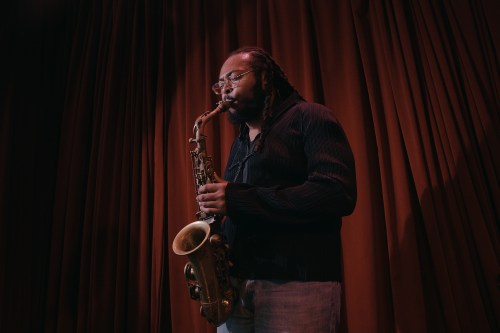
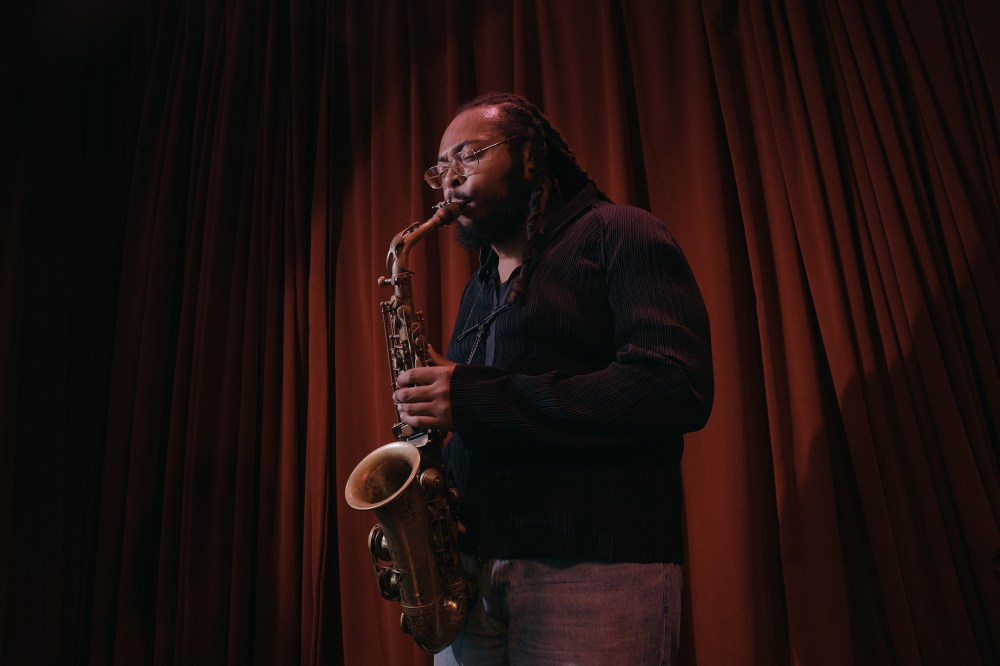
NEW YORK (AP) — Immanuel Wilkins was riding the Amtrak from New York to Philadelphia when he got a call from the John D. and Catherine T. MacArthur Foundation. But he said he had to wait to deboard the train to find out if it was life-changing news or not.
The Brooklyn-based saxophonist, bandleader and composer hesitated to believe they were calling to say he was part of their prestigious fellows class. He spent the last 15 minutes of his ride convincing himself they only wanted his recommendations.
“I was just outside,” said Wilkins, 29, when he finally confirmed it was the former. “Which was nice because then I could yell as loud as I wanted to and celebrate.”
The foundation unveiled its 2026 fellows class on Tuesday: 20 individuals ranging in discipline from the performing arts to the social sciences, separated in age by four decades and spread across three continents. They will each receive $800,000 over the next five years in recognition of their “exceptional creativity.” Commonly referred to as “genius grants,” the no-strings-attached awards are intended to provide the flexibility necessary for recipients to pursue their artistic or scholarly visions.
This year’s class shows a particular interest in history. There’s a philosopher using cognitive science to investigate the relationship between memory and forgiveness; a poet repurposing historical texts to probe colonial violence and the resilience of Native American communities; and a choreographer breaking down the barriers between difference dance styles across time and place.
They “explore the depths of our humanity; they reveal untold origins to challenges; they expand the edges of scientific inquiry and life-saving research,” Kristen Mack, the vice president of communications for fellows and partnerships at the MacArthur Foundation, said in a statement.
“They show us new ways to understand the world,” Mack said.
Take Wilkins, the youngest member. His debut album “Omega” connects the 1918 lynching of a pregnant Black woman, Mary Turner, to the 2014 fatal police shooting of a Black teenager, Michael Brown. The abstraction of music, Wilkins told The Associated Press, allows him to represent these stories without “recreating the violence of them.”
That abstraction — the rhythms of jazz music that are difficult to capture in written scores — has drawn him to visual art, too.
Jazz musicians have long debated how to notate the “swing” so central to the genre, Wilkins explained. He is exploring whether that sound could be rendered through sculptures or spectrograms in the same way it is currently represented through eighth notes or triplets.
With “RECESS” — an immersive experience recently presented in his hometown of Philadelphia — he attempted a “graphic score” by performing on an industrial jungle gym that was both bandstand and playground.
“The system of Western notation, as we know it, doesn’t have the capacity to hold the sound of Black music. Like, a lot of what makes Black music maybe sound ‘Black’ is these quantum entanglements with the time,” he said. “I’m kind of trying to radically debate: what actually is this Western system of notation holding when it comes to Black music? That opens up a wide set of possibilities for what a score could look like.”
A Princeton labor economist who centers racial inequality
Awardees who spoke with AP had no concrete plans for how they’d use the sudden gift. Nor does the MacArthur Foundation expect any answer to that question.
Unlike traditional grants, the award requires no progress reports from its fellows. The program does not accept applications, instead relying on an ever-changing list of outside nominators whose recommendations are reviewed by a confidential committee.
Ellora Derenoncourt, a New Jersey-based associate professor at Princeton University’s department of economics, wants to use the award’s platform to translate issues of economic justice for the broader public and interested policymakers.
Racial wealth disparities may seem too entrenched to ever reverse, she said. But she finds that history explains the origins of economic inequality and highlights “watershed moments” where public policies narrowed those differences. A 2021 paper showed a drop in the Black-white earnings gap after Congress raised the minimum wage and extended its protections in industries such as agriculture, domestic services and healthcare.
Another project explained how northern cities spent less on education and recreation in the communities where the Great Migration sent millions of Black Americans escaping the southern United States’ low wages and racial barriers.
As the Trump administration tosses aside requirements for workforce demographic reports and limits the availability of other official sources, she fears her field might lack the information needed to calculate today’s racial inequality. Universities and researchers like herself, she said, must figure out how to maintain robust data sets.
“I hope that I can take this responsibility seriously to highlight these issues,” she said. “And maybe also make some more people into history nerds. Because I think, really, we need to turn back the clock to figure out sometimes either what works or what has made things the way they are today.”
A painter seeking to counter ‘social amnesia’
It’s not dissimilar from the mantle taken up by Vincent Valdez.
The contemporary painter was drawing in his studio when the MacArthur Foundation called. For once in his life, he joked, he went “deathly silent.” Most every artist is aware of the award, he said, which carries a 45-year legacy of recognizing, as he sees it, individuals “pushing boundaries.”
Valdez tackles questions of American identity through representational paintings recalling murals of the southwestern United States. Murals, he learned at a young age, created an “undeniable presence” for his Mexican American community whose stories weren’t reflected in dominant culture. He aims to counter what he calls “social amnesia” by helping the public remember “what we are and where we’re headed.”
His 30-foot-wide painting “The City I” depicts a modern Ku Klux Klan with hooded figures holding a smartphone, a beer and a Pikachu-toting baby. The second part of that trilogy, “Dream Baby Dream,” situates Muhammad Ali’s many eulogists in boxes that imitate “The Brady Bunch” title sequence.

He’s working on the final installment, called “The New Americans.” Unlike their predecessors, these colorful portraits stand vertically rather than horizontally. The images aim to highlight overlooked “pillars” of society who he considers to be “fighting the good fight” — or, he said, “the stubborn pulses in a dying heartbeat.”
From a soaring Michael Jordan to the forceful eviction of a mostly Mexican American community to build Dodger Stadium, Valdez’s work often engages sports. When making such images, he said, he’s reminded of San Antonio Spurs’ games with his dad. He was “overwhelmed” and “mesmerized,” he recalled, at the unified effort required to pull off a vertical version of “the wave.” Beginning courtside and moving up to the last-row dollar seats, he said, fans would stand and throw their hands in the air “like a tornado.”
“If we can do it for sports on any given Saturday and Sunday in this country, then we can do this as a collective people for the things that truly matter and affect our daily lives and the lives of our neighbors,” Valdez said.
___
Associated Press coverage of philanthropy and nonprofits receives support through the AP’s collaboration with The Conversation US, with funding from Lilly Endowment Inc. The AP is solely responsible for this content. For all of AP’s philanthropy coverage, visit https://apnews.com/hub/philanthropy.