‘Truth is made visible’: Digital book explores art and the residential school legacy
Advertisement
Read this article for free:
or
Already have an account? Log in here »
To continue reading, please subscribe:

Digital Subscription
One year of digital access for only $205*
- Enjoy unlimited reading on winnipegfreepress.com
- Read the E-Edition, our digital replica newspaper
- Access News Break, our award-winning app
- Play interactive puzzles
*First annual payment billed as $205.00 + GST for one year. This annual subscription will automatically renew at $233.00 + GST every 52 weeks (10% off the regular annual price of $259.35). Offer available to new and qualified returning subscribers only. Cancel any time.
To continue reading, please subscribe:
Add Free Press access to your Brandon Sun subscription for only an additional
$1 for the first 4 weeks*
- Enjoy unlimited reading on winnipegfreepress.com
- Read the E-Edition, our digital replica newspaper
- Access News Break, our award-winning app
- Play interactive puzzles
*Your next Brandon Sun subscription payment will increase by $1.00 and you will be charged $17.95 plus GST for four weeks. After four weeks, your payment will increase to $24.95 plus GST every four weeks.
Read unlimited articles for free today:
or
Already have an account? Log in here »
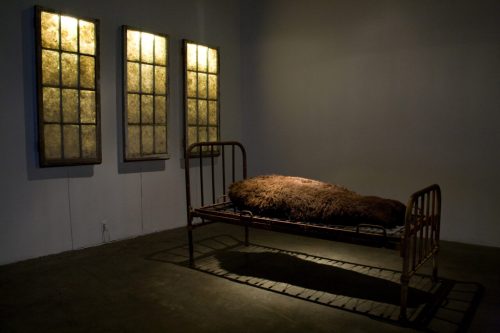
A spotlight shines a light on a salvaged infirmary bed from a residential school in southern Alberta that kept Indigenous families apart for almost a century.
A bison robe lies on the bed in front of three backlit window frames that were also from the Old Sun Residential School on the Siksika Nation, which operated from 1886 to 1971.
The installation piece called “Sick and Tired” by Siksika member and artist Adrian Stimson is being revisited two decades after it first appeared as part of an exhibition memorializing the children removed from their homes and forced to attend the school.
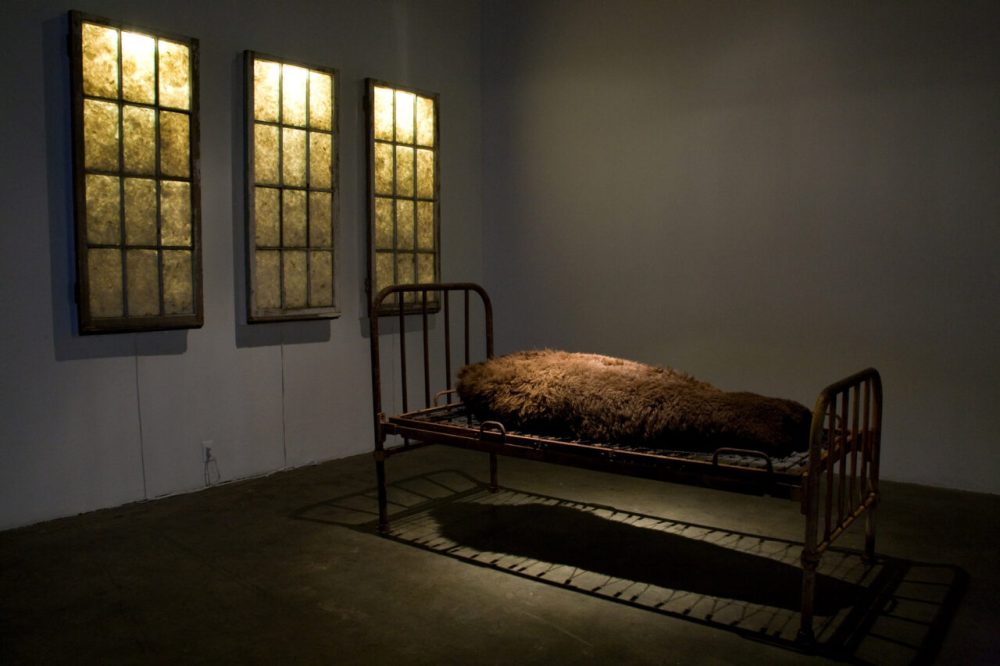
A photo of the artwork is part of a new digital book by renowned curator, scholar and Plains Cree artist Gerald McMaster called “Art, Truth and Reconciliation.” It was released Tuesday by Art Canada Institute, a non-profit, research organization.
The book explores how generations of Indigenous artists have responded to the residential school system and its legacy. It features a collection of 70 works with drawings by children who attended the schools, pieces by survivors and artwork by intergenerational survivors.
For McMaster, the two-year-long project was deeply personal.
McMaster grew up on the Red Pheasant Cree Nation in Saskatchewan and several of his family members attended residential and day schools. He attended a day school on the First Nation for two grade levels.
When McMaster began researching art and residential schools, he found an abundance of material but nothing that brought artists and the subject matter together in an expansive way.
“There was not anything of a visual account,” McMaster said in an interview.
“Elders (have) spoken in a very similar way about being creative in times that are difficult — to express difficult ideas, difficult moments and looking for ways to express this. The artists over time have done this in remarkable ways.”
McMaster examines the work of artists — including Indian Group of Seven members Alex Janvier, Inuk carver Abraham Anghik Ruben, and Cree and Métis visual artist Edward Poitras — and positions the pieces as “living practices grounded in Indigenous knowledge systems.”
More than 150,000 Indigenous children were forced to attend government-funded and church-run residential schools throughout Canada. The Truth and Reconciliation Commission documented thousands of children who died in the institutions and many others who reported sexual and physical abuse.
McMaster has witnessed what art can do for truth-sharing.
“Art becomes a place where truth is made visible, where denial is confronted and where knowledge is carried forward,” he writes in the book.
Stimson said he has seen the impact “Sick and Tired” has had on non-Indigenous people. The installation explores themes of cultural genocide through the buffalo slaughter and the residential school system.
“Most people say upon first encountering it, that it’s arresting, that it kind of makes you step back and lose your breath. And then you sit with it,” said the 61-year-old artist.
“For me, that’s successful in a sense that it sort of touches people in the heart and sort of builds that understanding and empathy by putting yourself in someone else’s shoes. You better understand and hopefully work towards making sure that never happens again.”
Stimson’s father attended the Old Sun Residential School, and the artist went to Gordon’s and Lebret residential schools in Saskatchewan in his elementary years.
Because of this, he said, it was a natural step to delve into the devastation these institutions left on Indigenous communities.
“It’s so important to be able to sort of look at the different perspectives and see how this trajectory of trauma unfolds.”
McMaster said working on the book enabled him to not only find new artists but to look at a piece in a way the artist may not have intended.
One of those is from Emma Hassencahl-Perley, a Wolastoqey visual artist and curator whose grandparents attended day school.
For her piece called “White Flag,” the 31-year-old from Tobique First Nation, N.B., shredded a copy of the Indian Act and pasted it on the Canadian flag.
Federal law empowered the establishment and expansion of residential schools.
“I was mainly focusing on governance,” she said.
“I think it’s always interesting to see people recontextualize your artwork, because I made it so long ago. I made it 10 years ago now.”
Hassencahl-Perley said art can be a record of one’s history and experiences.
“I think there are layers of emotion, feeling, perspective that are not always captured in a history book.”
This report by The Canadian Press was first published Sept. 29, 2026.