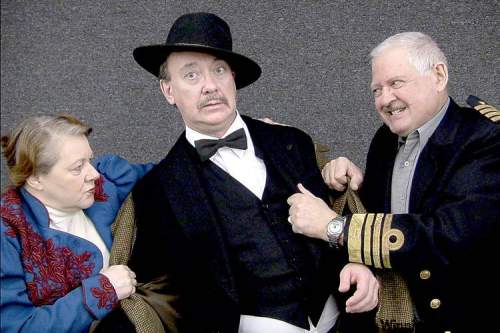
Gloves are off in acerbic farce about love’s bitter battlefield
Advertisement
Read this article for free:
or
Already have an account? Log in here »
To continue reading, please subscribe:

Digital Subscription
One year of digital access for only $205*
- Enjoy unlimited reading on winnipegfreepress.com
- Read the E-Edition, our digital replica newspaper
- Access News Break, our award-winning app
- Play interactive puzzles
*First annual payment billed as $205.00 + GST for one year. This annual subscription will automatically renew at $233.00 + GST every 52 weeks (10% off the regular annual price of $259.35). Offer available to new and qualified returning subscribers only. Cancel any time.
To continue reading, please subscribe:
Add Free Press access to your Brandon Sun subscription for only an additional
$1 for the first 4 weeks*
- Enjoy unlimited reading on winnipegfreepress.com
- Read the E-Edition, our digital replica newspaper
- Access News Break, our award-winning app
- Play interactive puzzles
*Your next Brandon Sun subscription payment will increase by $1.00 and you will be charged $17.95 plus GST for four weeks. After four weeks, your payment will increase to $24.95 plus GST every four weeks.
Read unlimited articles for free today:
or
Already have an account? Log in here »
Hey there, time traveller!
This article was published 01/02/2011 (5733 days ago), so information in it may no longer be current.
There is nothing very funny about August Strindberg’s Dance of Death, a relentlessly vicious portrait of married misery penned in 1900 during one of the Swedish playwright’s frequent black funks.
Swiss playwright Friedrich Dürrenmatt somehow saw — between the bitter insults and mockery of the bickering spouses — the comic potential in Dance of Death and used it 69 years later as the basis of a broadly farcical domestic satire called Play Strindberg.
Strindberg’s vision of marriage as a nuptial war is enhanced by Dürrenmatt (1921-1990), who presents the stormy relationship between pompous ex-military man Edgar and his shrewish wife Alice as a 12-round boxing match. Instead of the customary bell being struck before each round, a gong is sounded in this well-executed Adriana Theatre Collective presentation, running this week as part of StrindbergFest.
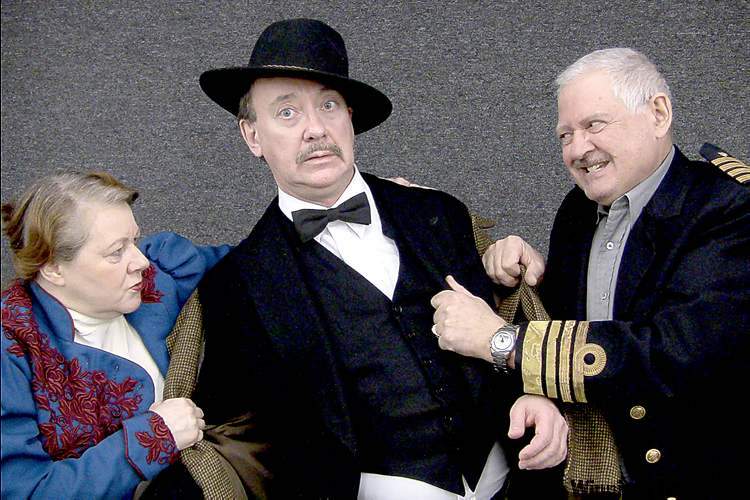
Play Strindberg does not patch over the original’s gloominess but mines plenty of humour to offset — for at least 90 minutes — the bleakness often portrayed onstage in this theatrical trailblazer. The game-playing is fun to watch, but the creaky plot turns do not beckon viewers to follow with much enthusiasm.
Stuck on a small island, glum retirees Edger and Alice are marking — certainly not celebrating — their silver anniversary in hell. Their marriage was not made in heaven, but there’s hope, because they’re getting on in age. “Soon it will be over,” he says. “I hope so,” she answers.
Their nightly pas de deux is carefully repeated, the same terse conversations leading to the same inevitable but stinging rebukes, the same delusions being blown up and summarily pricked. They are one in their suffering and differ only in their pronunciation of Copenhagen.
Director Bob Smith, a University of Manitoba drama teacher, has his veteran three-member cast in top form, effortlessly batting witty verbal abuse back and forth. Harry Nelken is especially impressive as Edgar, a military man of letters who, despite his failing health, frequently boasts that he will live 20 more years. Nelken’s very physical portrayal has him dancing to the Entry of the Boyars, losing consciousness several times and struggling to speak after a stroke.
Margaret Groome, an assistant professor at U of M, injects a commendable theatricality to her portrayal of Alice, who claims to have once been a famous actress. Jon Ted Wynne is well cast as Alice’s droll cousin and former lover Kurt, who is not the easy mark that he appears to be.

Play Strindberg is no knockout but everyone leaves feeling bruised after going the full 12 rounds.
kevin.prokosh@freepress.mb.ca