Play discusses MMIWG
Grim story includes message of hope

Advertisement
Read this article for free:
or
Already have an account? Log in here »
To continue reading, please subscribe:

Digital Subscription
One year of digital access for only $205*
- Enjoy unlimited reading on winnipegfreepress.com
- Read the E-Edition, our digital replica newspaper
- Access News Break, our award-winning app
- Play interactive puzzles
*First annual payment billed as $205.00 + GST for one year. This annual subscription will automatically renew at $233.00 + GST every 52 weeks (10% off the regular annual price of $259.35). Offer available to new and qualified returning subscribers only. Cancel any time.
To continue reading, please subscribe:
Add Free Press access to your Brandon Sun subscription for only an additional
$1 for the first 4 weeks*
- Enjoy unlimited reading on winnipegfreepress.com
- Read the E-Edition, our digital replica newspaper
- Access News Break, our award-winning app
- Play interactive puzzles
*Your next Brandon Sun subscription payment will increase by $1.00 and you will be charged $17.95 plus GST for four weeks. After four weeks, your payment will increase to $24.95 plus GST every four weeks.
Read unlimited articles for free today:
or
Already have an account? Log in here »
Hey there, time traveller!
This article was published 28/11/2019 (2440 days ago), so information in it may no longer be current.
Keith Barker’s The Hours That Remain was first produced in 2012, long before the phrase “missing and murdered Indigenous women and girls” had become familiar enough to merit its own sad abbreviation.
It was the debut play for Barker, an Algonquin Métis from northwestern Ontario who’s the artistic director at Native Earth Performing Arts in Toronto.
He was inspired to write it in 2009 — the first time he was introduced to the story behind the Highway of Tears the infamous stretch of Highway 16 in British Columbia where many women, mostly First Nations, have gone missing or been found dead since the 1970s.
Since then, MMIWG and, to a lesser extent, the Highway of Tears, have become part of our national dialogue. Earlier this year, Reclaiming Power and Place: The Final Report of the National Inquiry into Missing and Murdered Indigenous Women and Girls was released.
In this climate, one might expect that attendees of Theatre by the River’s production of The Hours That Remain — about an Indigenous woman haunted by her sister’s disappearance — would have a more informed response to the work than its original audiences.
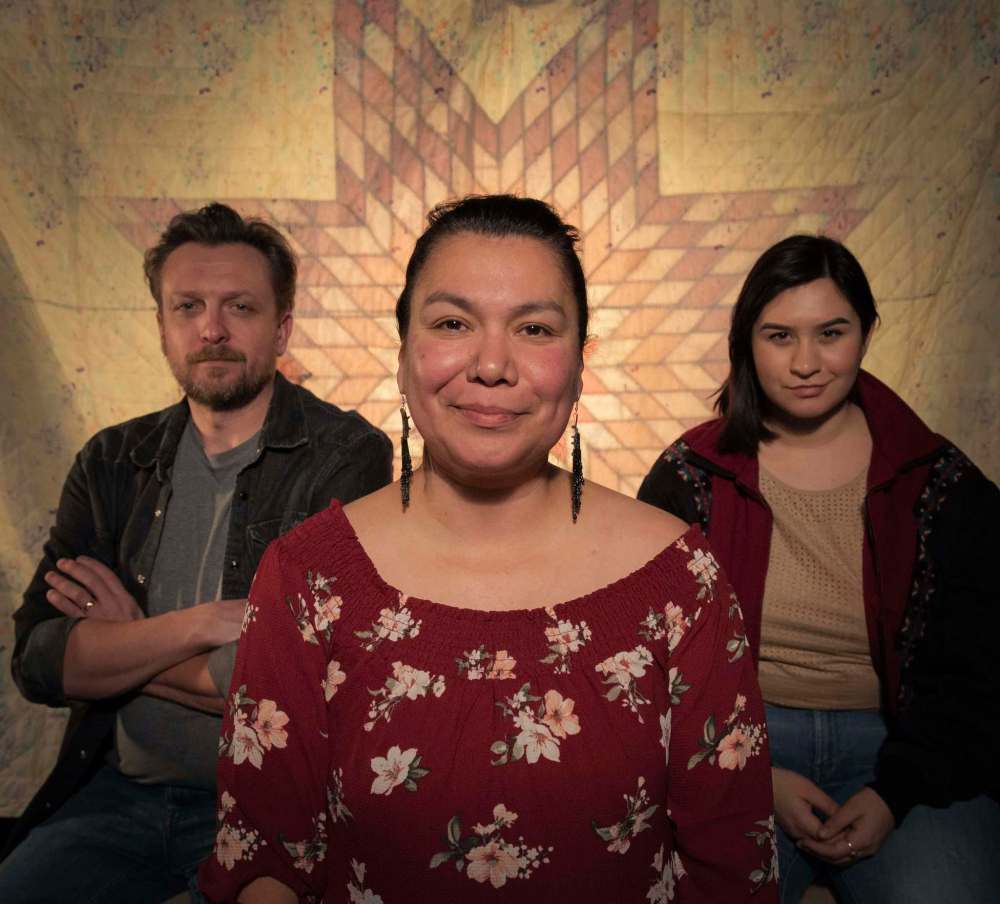
“I’ll be an optimist and say, yes,” Tracey Nepinak, the play’s director, says with a laugh. “But I think there’s not enough being done, especially the opportunity to have a discussion about it. Especially in this city, because there’s such a high Indigenous population and there isn’t much being done in the creative world to put this on a platform, to open up a dialogue.”
Nepinak, who was recently onstage as one of the stars of Prairie Theatre Exchange’s debut of Ian Ross’s The Third Colour, admits the topic of missing women is grim, but she says the play is far from humourless or hopeless.
“It could very easily be a tragedy — and it is — but there are moments of real lightness,” she says.
The director says she turned to the “beautiful women” of the cast and crew to help her mine the joy the piece has to offer, as well as to find the women’s voices.
The Hours That Remain stars Melanie Dean and Kelsey Kanatan Wavey as sisters Denise and Michelle, with local artist Jaime Black on sets and costumes and Erica Wilson as stage manager. (The cast is rounded out by Darcy Fehr as Denise’s husband, Daniel; Sean E. McMullen is the lighting designer and sound design is by Kelsey Braun.)
“What I found was, for myself, I needed to find the strength of the women in the story, because it was told by a man, so it kind of gets lost there,” she says. “It was a struggle to find a balance where we could really feel their presence in the story, and I think we’ve accomplished that.”
However, there’s no denying the material might cut close to the bone for some viewers. To that end, Theatre by the River has enlisted support workers from Wa-Say Healing Centre to help any audience members who may be upset by the troubling subject matter.
“I do a lot of theatre, but I haven’t seen a lot of theatre where they actually want to talk about murdered and missing women,” Nepinak says. “Just acknowledging that is going to be quite triggering for some people… We all want to fix this, but how do we do that without hurting people?”
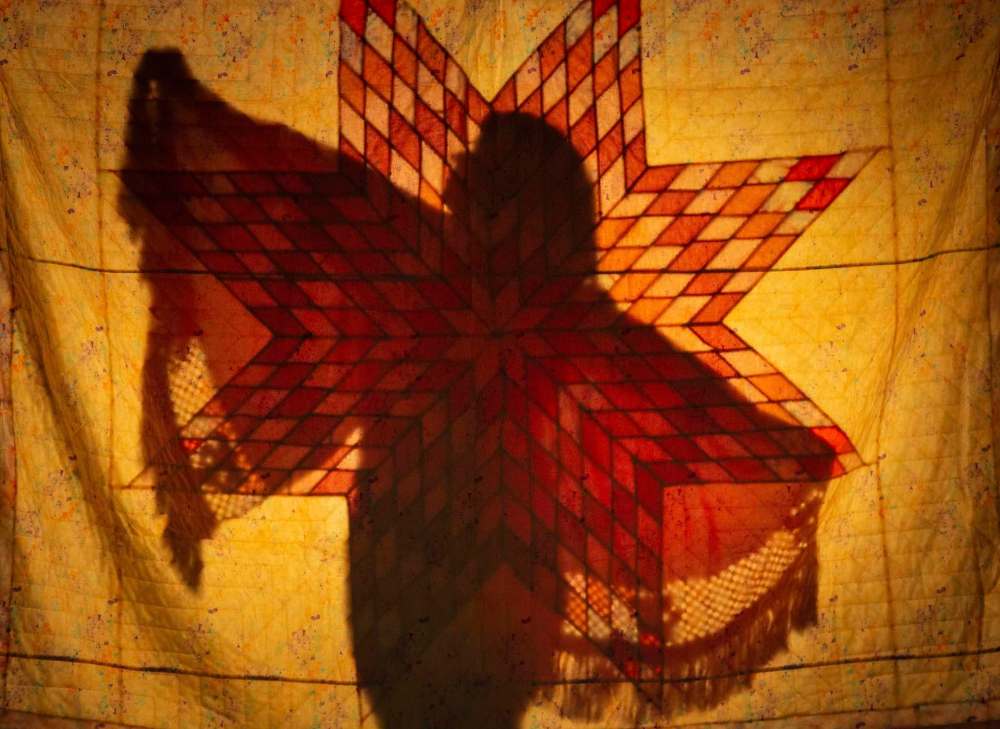
This is more than a rhetorical question. In order to tackle these thorny issues, Theatre by the River is including a speaker series; after select performances, Indigenous community leaders and artists will be present to talk to the audience about questions raised by the play.

“The play itself doesn’t really offer a lot of answers; it’s just one family’s perspective on what happens, what families go through,” Nepinak says.
“It’s quite beautiful and that’s what I liked about it — it’s very relatable to anyone who’s lost someone, when they go missing and there are no answers, how it destroys lives.
“The speaker series, I hope, invites people to ask more, especially about the murdered and missing women inquiry report, with all the recommendations,” she says. “A lot of people are not aware of what they found. The word ‘genocide’ was used.”
jill.wilson@freepress.mb.ca
Twitter: @dedaumier
Jill Wilson is the editor of the Arts & Life section. A born and bred Winnipegger, she graduated from the University of Winnipeg and worked at Stylus magazine, the Winnipeg Sun and Uptown before joining the Free Press in 2003. Read more about Jill.
Jill oversees the team that publishes news and analysis about art, entertainment and culture in Manitoba. It’s part of the Free Press‘s tradition, since 1872, of producing reliable independent journalism. Read more about Free Press’s history and mandate, and learn how our newsroom operates.
Our newsroom depends on a growing audience of readers to power our journalism. If you are not a paid reader, please consider becoming a subscriber.
Our newsroom depends on its audience of readers to power our journalism. Thank you for your support.
Theatre preview
The Hours That Remain
Theatre by the River
● Colin Jackson Theatre, Prairie Theatre Exchange
● To Dec. 8
● Tickets $15-$37 (with pay-what-you-can shows) at theatrebytheriver.com
Speaker series lineup
Nov. 30 matinee: Mitch Bourbonnaire, Mama Bear Clan and Ogijiita Pimatswin Kinamatwin
Dec. 4: Bernadette Smith, MLA, Manitoba Coalition of Families of Missing and Murdered Women
Dec. 5: Tina Keeper, political activist, producer, actor and honorary witness for the Truth and Reconciliation Commission
Dec. 6: Issa Kixen, Anishinaabe Two Spirit comedian and producer, co-founder of the Woke Comedy Hour
Dec. 7, 7 p.m.: Frances Koncan, Anishisnaabe/Slovene playwright, director and Winnipeg Free Press arts reporter
Jill Wilson is the editor of the Arts & Life section. A born and bred Winnipegger, she graduated from the University of Winnipeg and worked at Stylus magazine, the Winnipeg Sun and Uptown before joining the Free Press in 2003. Read more about Jill.
Jill oversees the team that publishes news and analysis about art, entertainment and culture in Manitoba. It’s part of the Free Press‘s tradition, since 1872, of producing reliable independent journalism. Read more about Free Press’s history and mandate, and learn how our newsroom operates.
Our newsroom depends on a growing audience of readers to power our journalism. If you are not a paid reader, please consider becoming a subscriber.
Our newsroom depends on its audience of readers to power our journalism. Thank you for your support.
Advertisement Advertise With Us
Advertisement Advertise With Us