The Dickens you say
PTE returns to A Christmas Carol tradition with another improv performance of novelist’s best-known work

Advertisement
Read this article for free:
or
Already have an account? Log in here »
To continue reading, please subscribe:

Digital Subscription
One year of digital access for only $205*
- Enjoy unlimited reading on winnipegfreepress.com
- Read the E-Edition, our digital replica newspaper
- Access News Break, our award-winning app
- Play interactive puzzles
*First annual payment billed as $205.00 + GST for one year. This annual subscription will automatically renew at $233.00 + GST every 52 weeks (10% off the regular annual price of $259.35). Offer available to new and qualified returning subscribers only. Cancel any time.
To continue reading, please subscribe:
Add Free Press access to your Brandon Sun subscription for only an additional
$1 for the first 4 weeks*
- Enjoy unlimited reading on winnipegfreepress.com
- Read the E-Edition, our digital replica newspaper
- Access News Break, our award-winning app
- Play interactive puzzles
*Your next Brandon Sun subscription payment will increase by $1.00 and you will be charged $17.95 plus GST for four weeks. After four weeks, your payment will increase to $24.95 plus GST every four weeks.
Read unlimited articles for free today:
or
Already have an account? Log in here »
Hey there, time traveller!
This article was published 12/12/2023 (1012 days ago), so information in it may no longer be current.
For several years, Christmastime at Prairie Theatre Exchange meant a trip into the world of children’s author Robert Munsch. But when the pandemic put the downtown theatre’s programming on pause, the artistic team had a chance to contemplate new customs for the holiday season.
That’s why, in 2022, Big Dickens Energy was born.
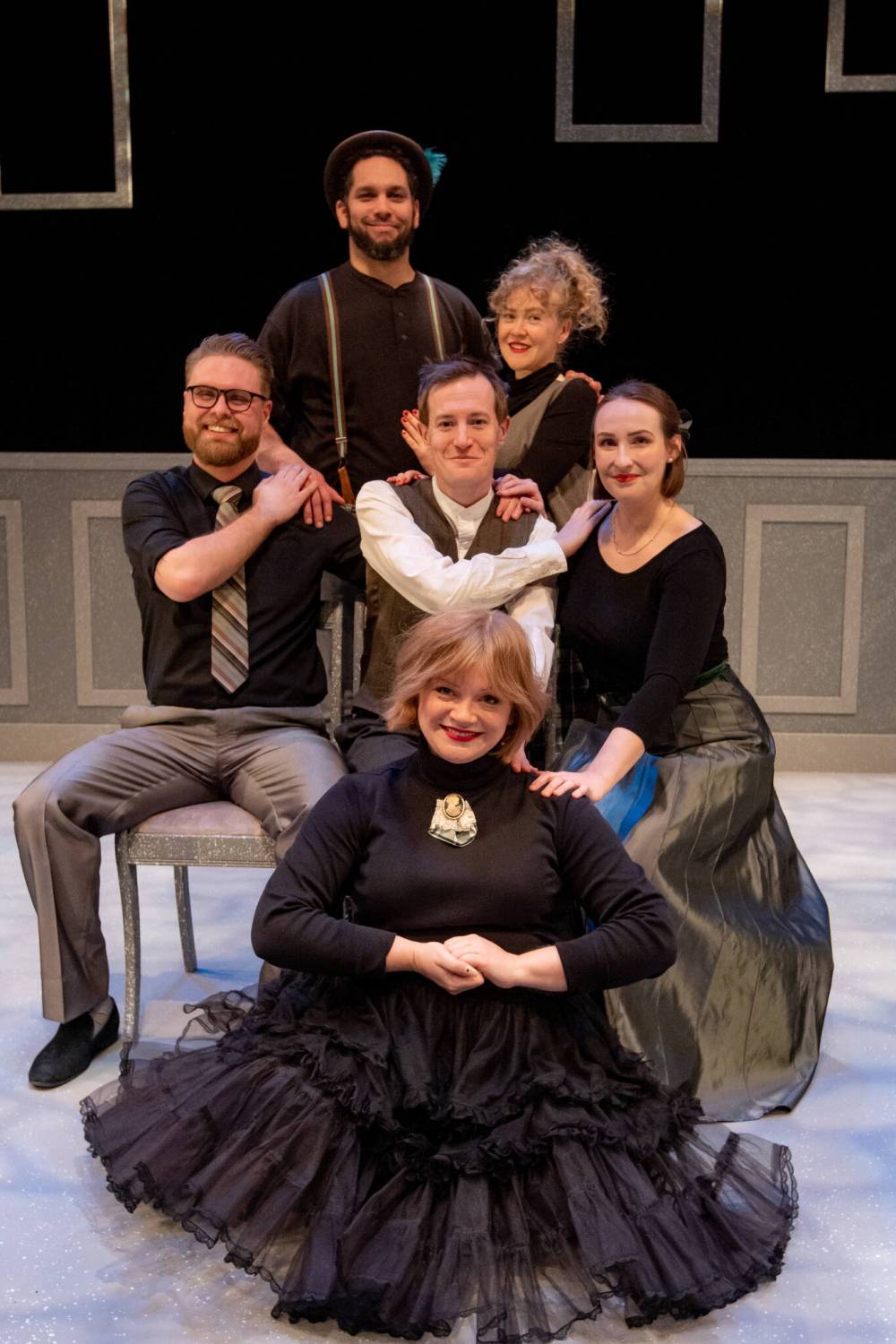
Last year, PTE artistic director Thomas Morgan Jones approached local comedy troupe Outside Joke to see whether it would be interested in collaborating on a Christmas-themed show, and the improv group’s players — Andrea del Campo, RobYn Slade, Jane Testar, Chadd Henderson, Toby Hughes and Paul De Gurse were eager to say yes.
Supplied
Improv comedy troupe Outside Joke returns with Bigger Dickens Energy, another take on A Christmas Carol.
In paying homage to Charles Dickens’ A Christmas Carol, the two groups found a magic formula: each night for two weeks, the ever-creative, sometimes crude, and always unpredictable troupe took the borders of the classic story and filled them in with entirely original characters and off-the-cuff musical numbers.
Far and away, Big Dickens Energy was PTE’s most successful show of the season when it came to single ticket sales. “We had one couple who came to see the show 12 times,” says Jones.
So there was very little doubt that the 51-year-old theatre company and the 21-year-old improv troupe had the makings of a new Christmas tradition on their hands. Starting tonight, Bigger Dickens Energy is returning to the Cherry Karpyshin Mainstage. God bless us, everyone.
The first time the troupe had to prepare for the holiday show, Outside Joke made time to watch several film versions of Dickens’ tale — including the Muppets take — while also diving into the 1843 novel.
“Last year, it was my first time reading the book,” says De Gurse, the troupe’s pianist, who scores the musical on the spot. “Now, I think we know it backwards and forwards.”
When the troupe started rehearsing this year, the members read the book aloud to one another to regain an understanding of Dickens’ storytelling rhythms and language. Slade compares the group’s rehearsal process to how a sports team practices: they prepare for in-game scenarios by keeping their improv muscles active and maintaining the chemistry they’ve developed through over two decades of performance.
For De Gurse, an in-demand music director who also works as managing director for the Village Conservatory, a significant proportion of the preparation happens in his ears. “I find myself especially drawn to listening to piano-driven music with weird harmonies and chord changes, because in my experience, that’s the hardest thing to generate wholesale in an improv show,” he says.
‘And then there’s the thinking about the actual form and how we can communicate ideas with the rest of the group,” he adds. “What’s the bare minimum we need to have in our heads musically, because of course, (the other members) have to actually friggin’ make up everything they sing.”
Compared to playing in a written show, De Gurse says playing solo with Outside Joke feels freer, which is thrilling but also nerve-wracking. “You get to practise instant forgiveness to the fullest extent,” he says. “Whether you make a mistake or not, you have to keep going, even if something seems kind of janky and weird.”
That weirdness, or in his words, irreverence, is part of what Jones and the most avowed Outside Joke fans — I’m talking to the people who saw last year’s show 12 times — love most about the troupe.
“They make it look so easy,” says Jones, whose first brush with Outside Joke was an improv show centred on Miley Cyrus incarcerated in a children’s penitentiary. “But it’s really chaos math theory.”
ben.waldman@winnipegfreepress.com
Ben Waldman is a National Newspaper Award-nominated reporter on the Arts & Life desk at the Free Press. Born and raised in Winnipeg, Ben completed three internships with the Free Press while earning his degree at Ryerson University’s (now Toronto Metropolitan University’s) School of Journalism before joining the newsroom full-time in 2019. Read more about Ben.
Every piece of reporting Ben produces is reviewed by an editing team before it is posted online or published in print — part of the Free Press‘s tradition, since 1872, of producing reliable independent journalism. Read more about Free Press’s history and mandate, and learn how our newsroom operates.
Our newsroom depends on a growing audience of readers to power our journalism. If you are not a paid reader, please consider becoming a subscriber.
Our newsroom depends on its audience of readers to power our journalism. Thank you for your support.
Ben Waldman is a National Newspaper Award-nominated reporter on the Arts & Life desk at the Free Press. Born and raised in Winnipeg, Ben completed three internships with the Free Press while earning his degree at Ryerson University’s (now Toronto Metropolitan University’s) School of Journalism before joining the newsroom full-time in 2019. Read more about Ben.
Every piece of reporting Ben produces is reviewed by an editing team before it is posted online or published in print — part of the Free Press‘s tradition, since 1872, of producing reliable independent journalism. Read more about Free Press’s history and mandate, and learn how our newsroom operates.
Our newsroom depends on a growing audience of readers to power our journalism. If you are not a paid reader, please consider becoming a subscriber.
Our newsroom depends on its audience of readers to power our journalism. Thank you for your support.
Advertisement Advertise With Us
Advertisement Advertise With Us