Time capsules Prized clocks on display at Manitoba Museum

The Mennonite wall clock has marked — with metronomic tick-tock precision — political and societal upheaval throughout the centuries.

Read this article for free:


or

Already have an account? Log in here »

To continue reading, please subscribe:

Subscribe and receive a limited-edition Free Press branded hat or tote.

Digital Subscription

One year of digital access for only $205*

  • Enjoy unlimited reading on winnipegfreepress.com
  • Read the E-Edition, our digital replica newspaper
  • Access News Break, our award-winning app
  • Play interactive puzzles

*First annual payment billed as $205.00 + GST for one year. This annual subscription will automatically renew at $233.00 + GST every 52 weeks (10% off the regular annual price of $259.35). Offer available to new and qualified returning subscribers only. Cancel any time.

To continue reading, please subscribe:

Add Free Press access to your Brandon Sun subscription for only an additional

$1 for the first 4 weeks*

  • Enjoy unlimited reading on winnipegfreepress.com
  • Read the E-Edition, our digital replica newspaper
  • Access News Break, our award-winning app
  • Play interactive puzzles
Start now

*Your next Brandon Sun subscription payment will increase by $1.00 and you will be charged $17.95 plus GST for four weeks. After four weeks, your payment will increase to $24.95 plus GST every four weeks.

Hey there, time traveller!
This article was published 15/02/2024 (963 days ago), so information in it may no longer be current.

The Mennonite wall clock has marked — with metronomic tick-tock precision — political and societal upheaval throughout the centuries.

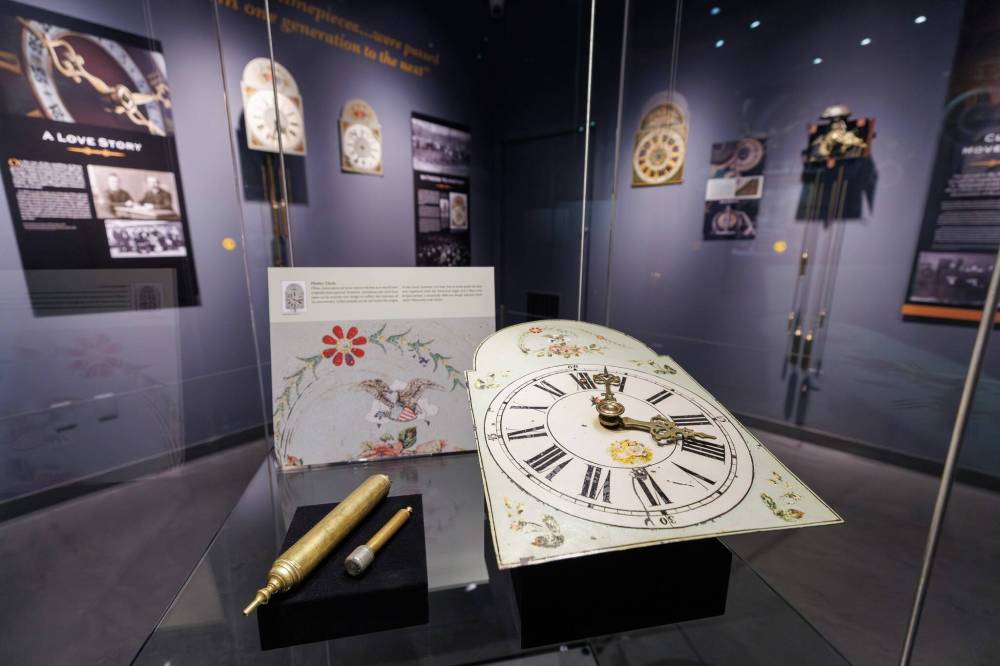
Fifteen are on temporary display at the Manitoba Museum in an exhibition developed by the Kroeger Clocks Heritage Foundation, in partnership with the Mennonite Heritage Village museum.

The timepieces were made between the late 1700s and early 1900s in Mennonite workshops in Ukraine, as meticulous clock builders passed the craft down through generations.
MIKE DEAL / WINNIPEG FREE PRESS
                                The ‘Mielitz’ clock was made by Abraham Kroeger (1791–1872) in Rosenthal, Russian Empire (now Ukraine), ca. 1835.

MIKE DEAL / WINNIPEG FREE PRESS

The ‘Mielitz’ clock was made by Abraham Kroeger (1791–1872) in Rosenthal, Russian Empire (now Ukraine), ca. 1835.

The clocks were prized possessions and were carefully transported to Manitoba by the Mennonite diaspora. Beyond providing rhythmic structure to the day, they represent Mennonite stories of migration, ingenuity, art and life.

The exhibit, which opened last October, is set to close Feb. 25.
MIKE DEAL / WINNIPEG FREE PRESS
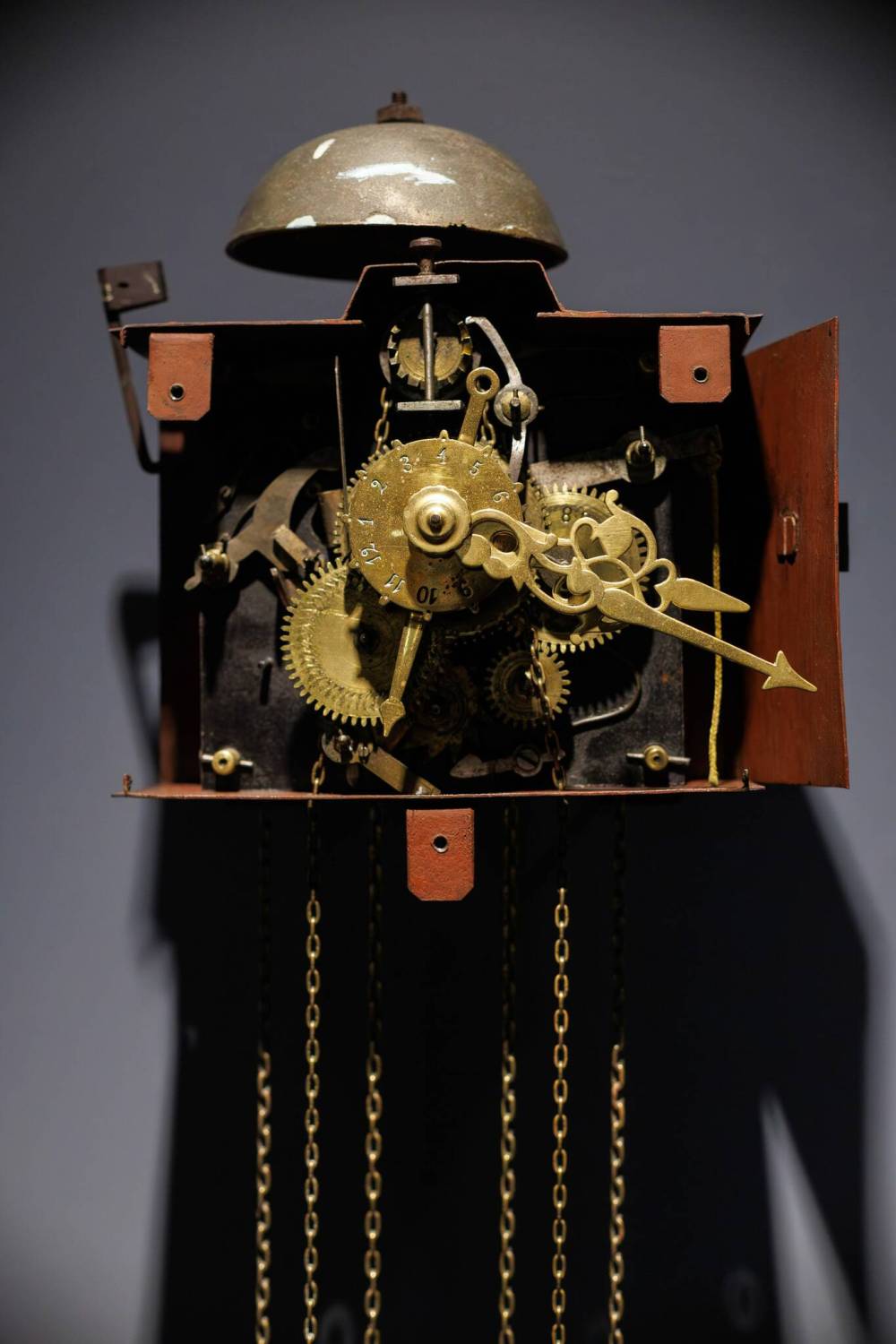
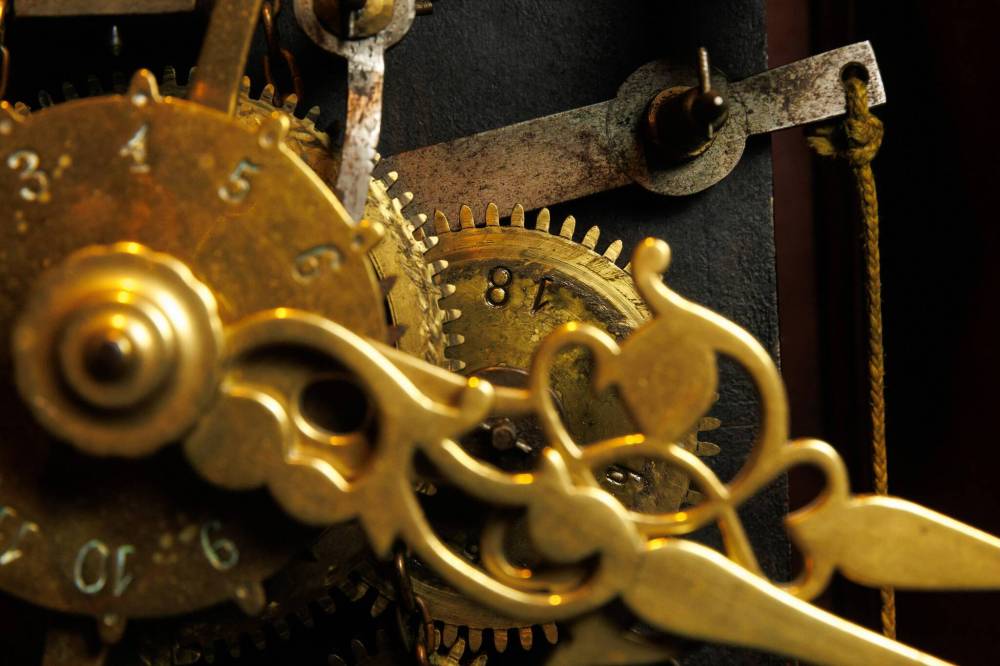
                                This “Cadillac Clock” has all the bells and whistles! It demonstrates the highest sophistication of Mennonite wall clocks, telling the hour, minute, month, and day, and also features an alarm setting (gears and mechanisms, above and below). In contrast to the rope-driven clock, this one has a chain drive. Rope drives required frequent cleaning, as the fibres clogged the mechanism. Chain drives were more expensive but practical.
MIKE DEAL / WINNIPEG FREE PRESS

This “Cadillac Clock” has all the bells and whistles! It demonstrates the highest sophistication of Mennonite wall clocks, telling the hour, minute, month, and day, and also features an alarm setting (gears and mechanisms, above and below). In contrast to the rope-driven clock, this one has a chain drive. Rope drives required frequent cleaning, as the fibres clogged the mechanism. Chain drives were more expensive but practical.

MIKE DEAL / WINNIPEG FREE PRESS
                                The “Cadillac” clock showcases the sophistication and ingenuity of the timepieces.
MIKE DEAL / WINNIPEG FREE PRESS

The “Cadillac” clock showcases the sophistication and ingenuity of the timepieces.

MIKE DEAL / WINNIPEG FREE PRESS
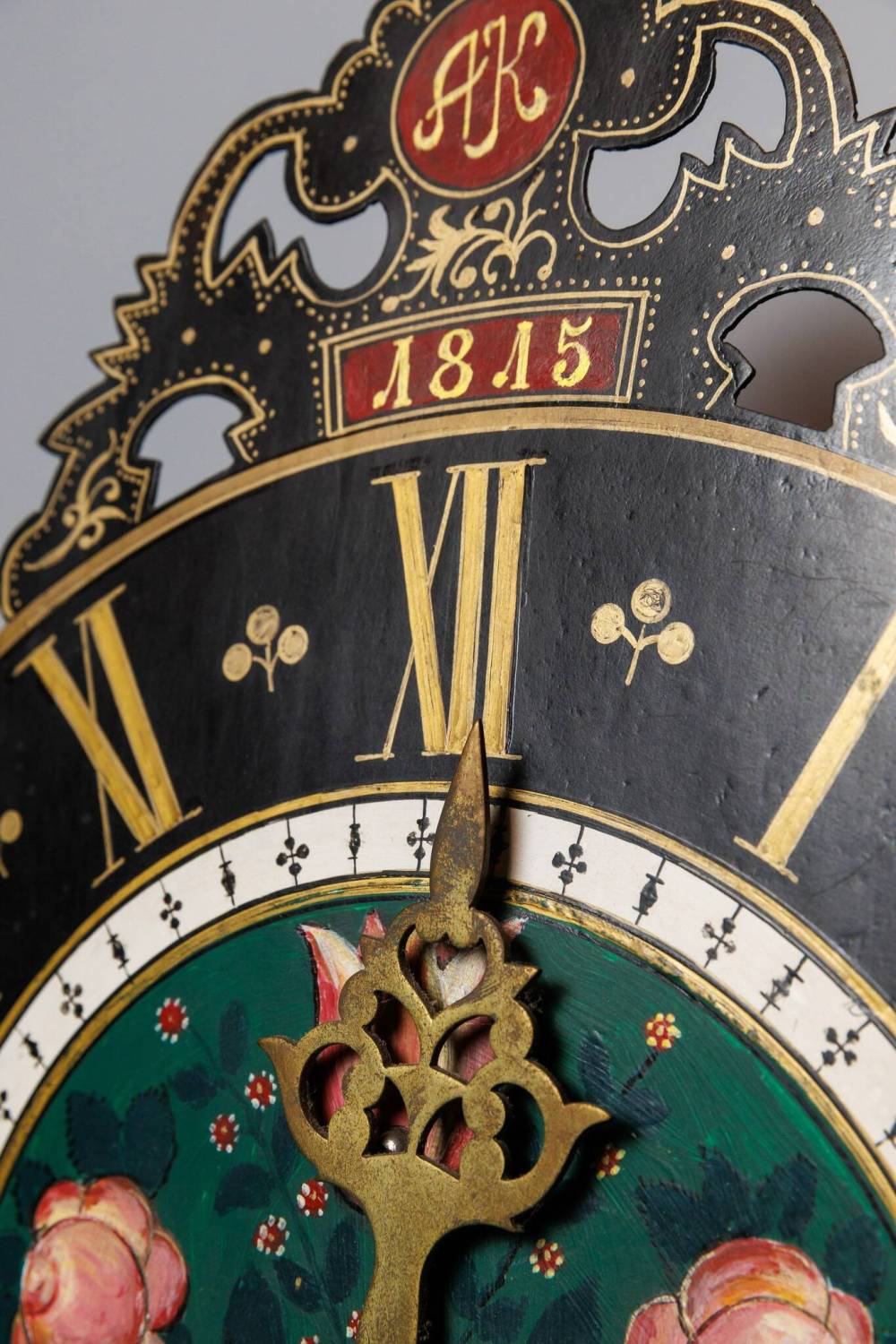
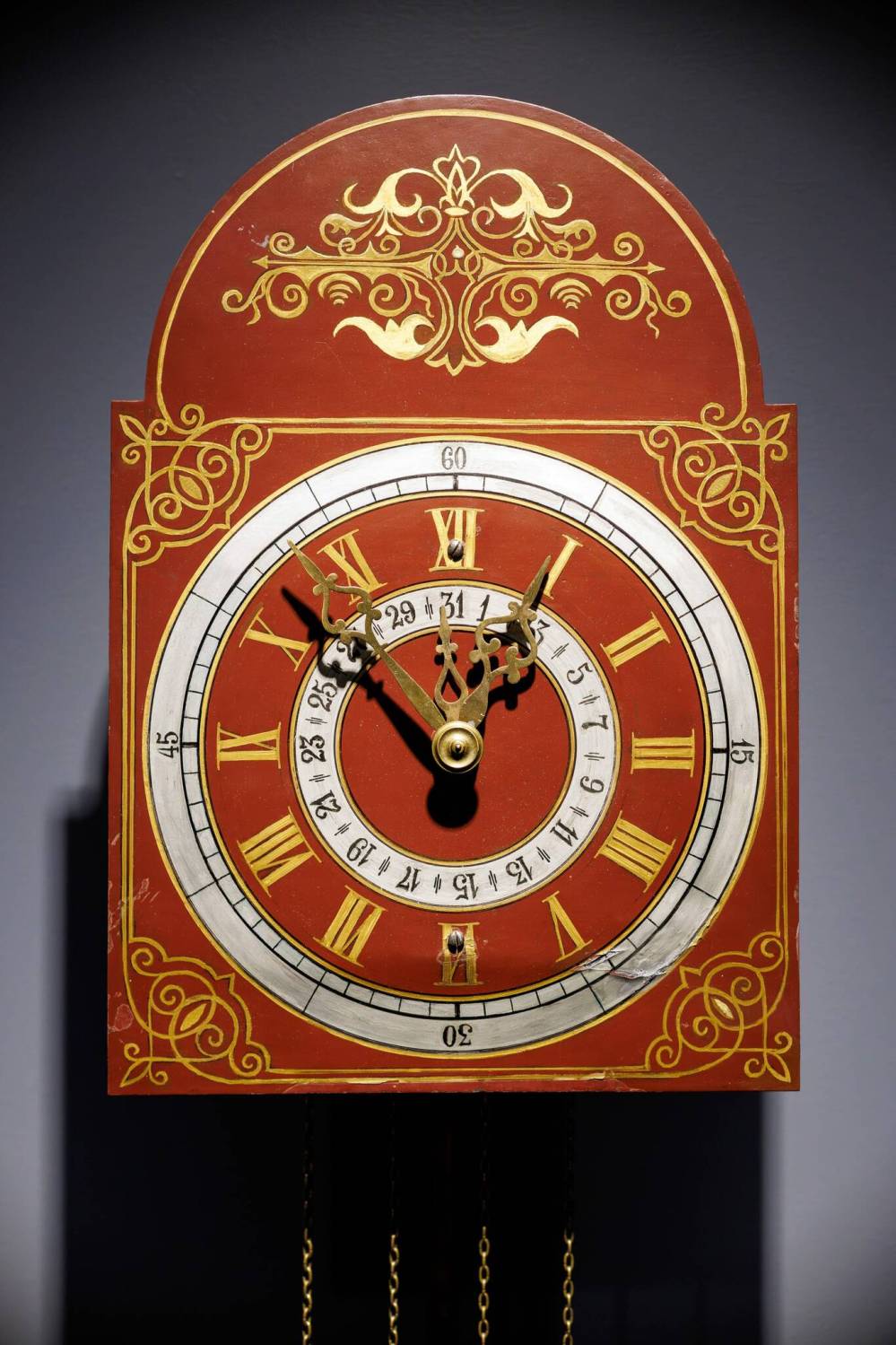
                                Abraham Kroeger (1791–1872) likely made this clock in Rosenthal around 1815.
MIKE DEAL / WINNIPEG FREE PRESS

Abraham Kroeger (1791–1872) likely made this clock in Rosenthal around 1815.

MIKE DEAL / WINNIPEG FREE PRESS
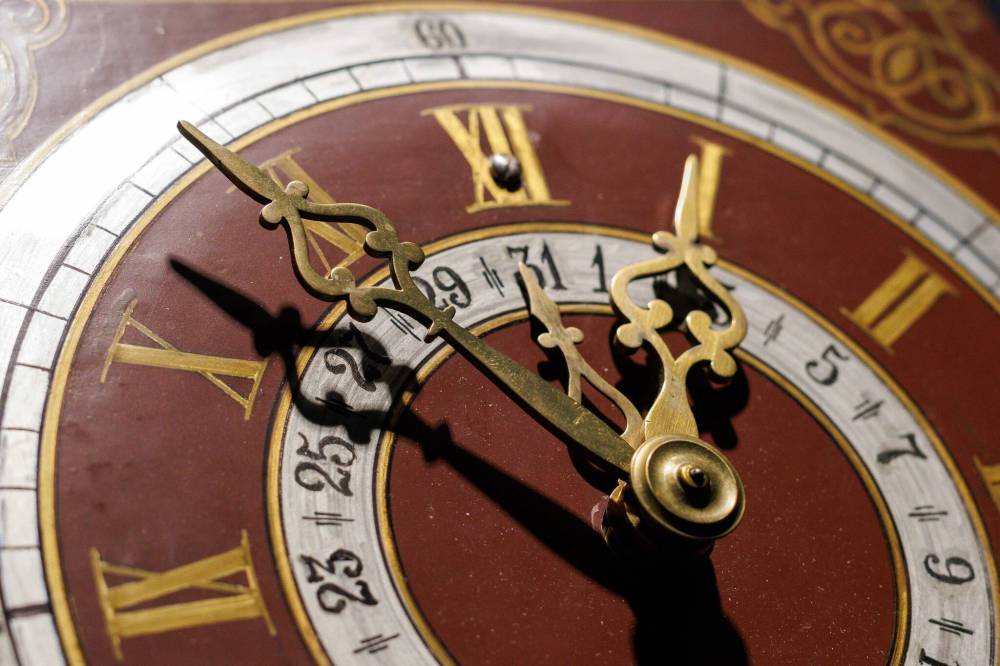
                                The 'Schulz' clock was made during the peak period of Kroeger clock manufacturing, between 1890 and 1910. It was commissioned by a wealthy Mennonite factory owner and would have been one of the most expensive models Kroeger Clockmakers made.
MIKE DEAL / WINNIPEG FREE PRESS

The 'Schulz' clock was made during the peak period of Kroeger clock manufacturing, between 1890 and 1910. It was commissioned by a wealthy Mennonite factory owner and would have been one of the most expensive models Kroeger Clockmakers made.

MIKE DEAL / WINNIPEG FREE PRESS
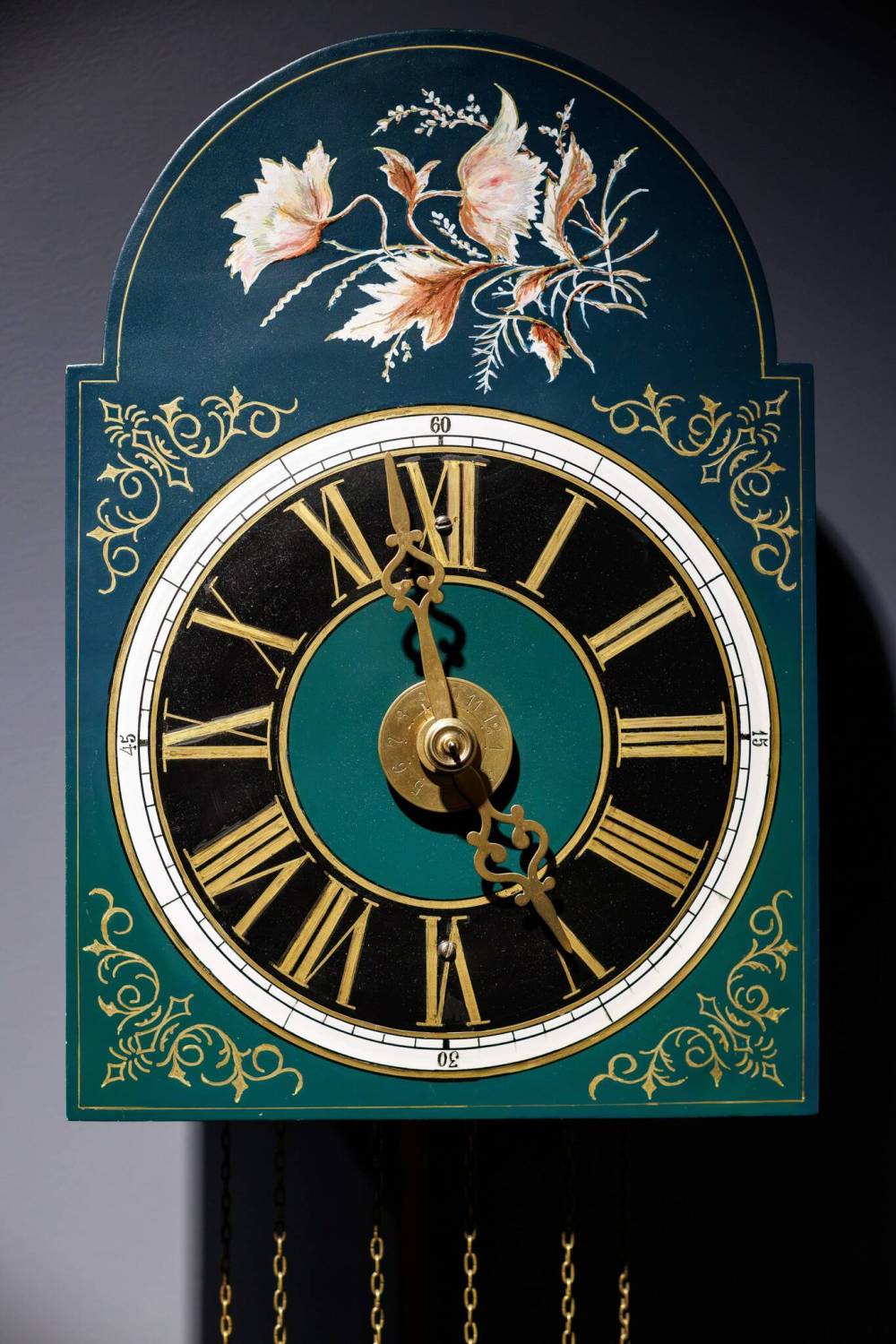
On the eve of the wedding of Anna Zacharias and Peter Schulz in 1893, the groom's father presented the couple with a Kroger clock to celebrate their marriage. The beautiful clock would become part of their family heritage for generations to follow. The couple's happiness, however, was not to last. In 1914, as war broke out in Europe, Peter died of a heart condition and left Anna a widow. In 1927, the family journeyed across the Atlantic Ocean to Canada, with the precious clock packed in their luggage, a reminder of life and family in Russia. Like Anna and Peter, Mennonite couples often received wall clocks as wedding gifts. Clocks represented a new start for young couples and symbols of prosperity and legacy as they were passed down from one generation to the next.
MIKE DEAL / WINNIPEG FREE PRESS

On the eve of the wedding of Anna Zacharias and Peter Schulz in 1893, the groom's father presented the couple with a Kroger clock to celebrate their marriage. The beautiful clock would become part of their family heritage for generations to follow. The couple's happiness, however, was not to last. In 1914, as war broke out in Europe, Peter died of a heart condition and left Anna a widow. In 1927, the family journeyed across the Atlantic Ocean to Canada, with the precious clock packed in their luggage, a reminder of life and family in Russia. Like Anna and Peter, Mennonite couples often received wall clocks as wedding gifts. Clocks represented a new start for young couples and symbols of prosperity and legacy as they were passed down from one generation to the next.

MIKE DEAL / WINNIPEG FREE PRESS 
                                The ‘Zaporoshye’ clock belonged to a family that, despite extreme hardship and suffering, stayed in the Soviet Union.

MIKE DEAL / WINNIPEG FREE PRESS

The ‘Zaporoshye’ clock belonged to a family that, despite extreme hardship and suffering, stayed in the Soviet Union.

MIKE DEAL / WINNIPEG FREE PRESS
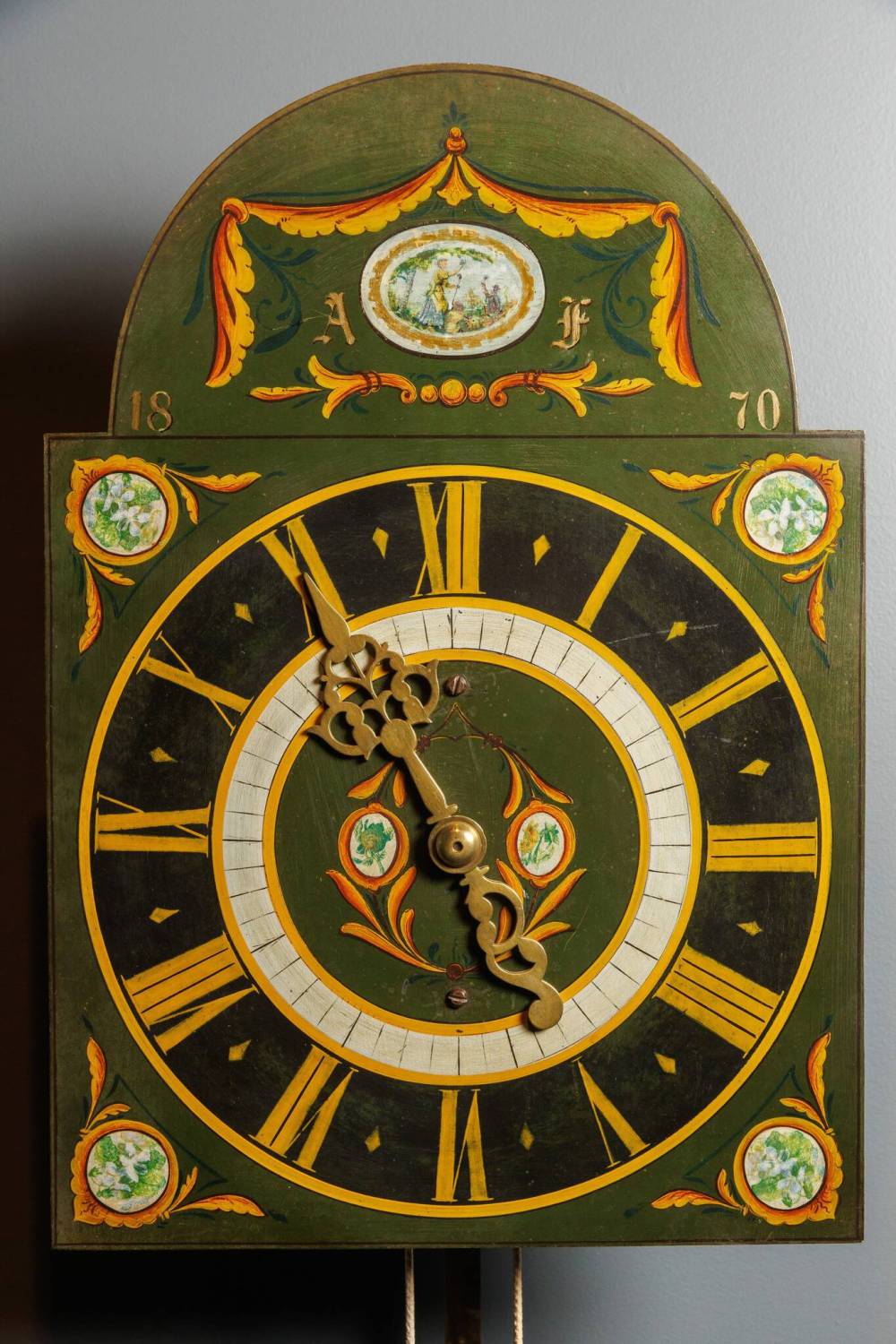
This clock beautifully illustrates the decal decorations that adorned Mennonite clocks at the turn of the twentieth century. Replacing hand-painted artwork on clock faces with decals became more efficient when the Industrial Revolution made large-scale production possible.
MIKE DEAL / WINNIPEG FREE PRESS

This clock beautifully illustrates the decal decorations that adorned Mennonite clocks at the turn of the twentieth century. Replacing hand-painted artwork on clock faces with decals became more efficient when the Industrial Revolution made large-scale production possible.

MIKE DEAL / WINNIPEG FREE PRESS 
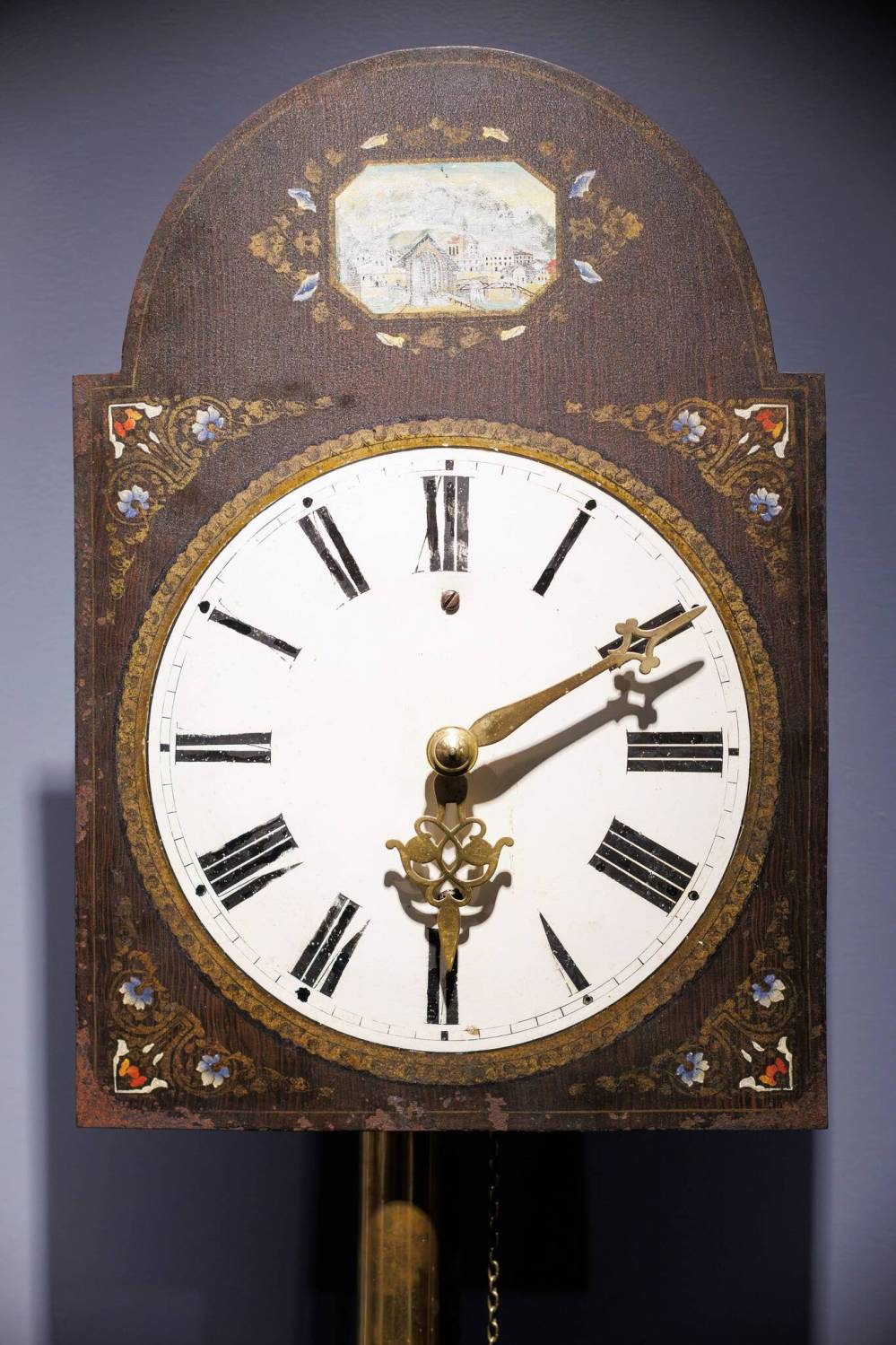
                                The ‘Lilac’ Mandtler (1870) is a one-handed clock. At the time, knowing the exact minute of the day was not crucial.
MIKE DEAL / WINNIPEG FREE PRESS

The ‘Lilac’ Mandtler (1870) is a one-handed clock. At the time, knowing the exact minute of the day was not crucial.

MIKE DEAL / WINNIPEG FREE PRESS 
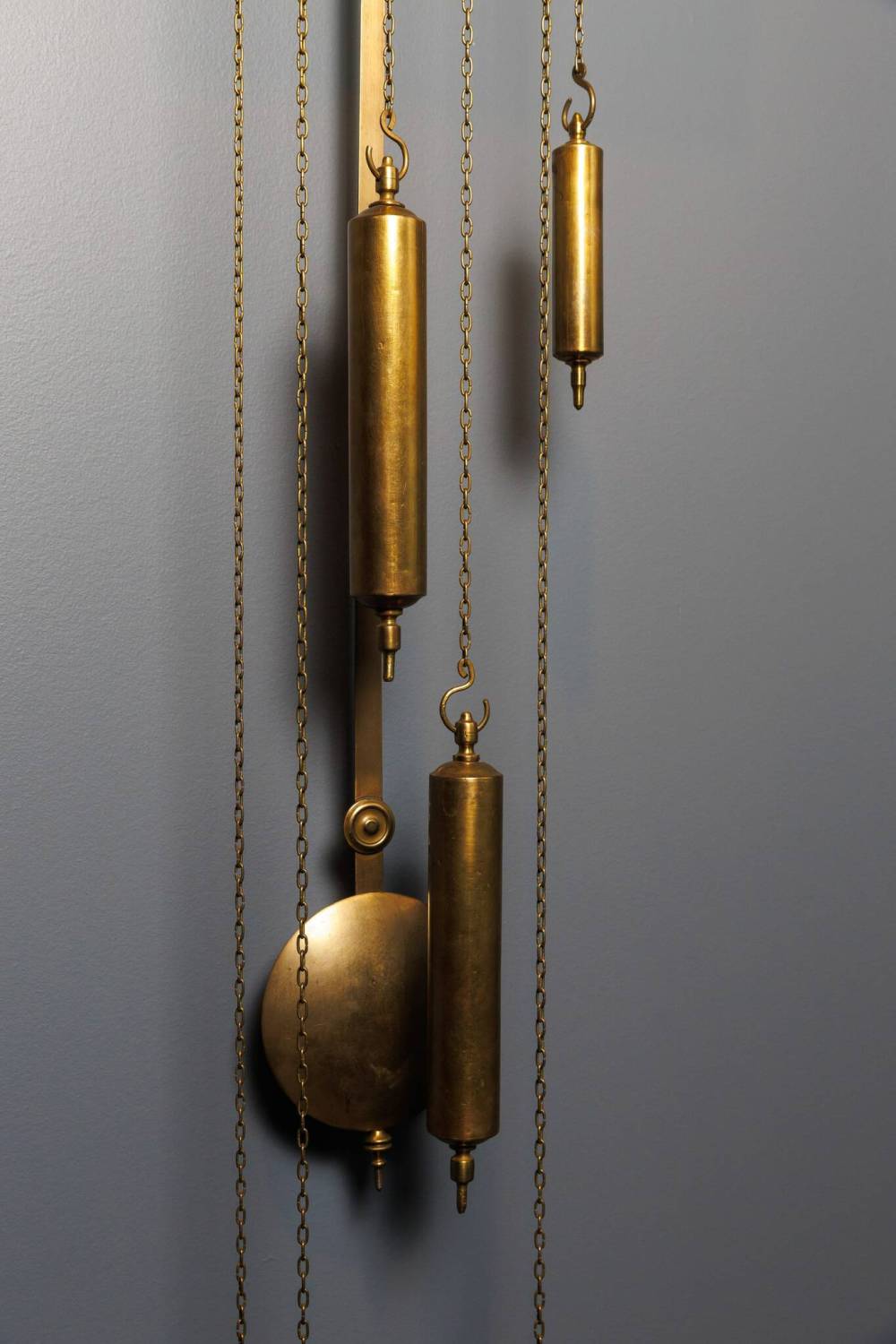
                                Gerhard Mandtler made this clock in 1865. The painted wood grain pattern was unique to Mennonite clocks.
MIKE DEAL / WINNIPEG FREE PRESS

Gerhard Mandtler made this clock in 1865. The painted wood grain pattern was unique to Mennonite clocks.

MIKE DEAL / WINNIPEG FREE PRESS
Fifteen Mennonite wall clocks are on temporary display at the Manitoba Museum in an exhibition developed by the Kroeger Heritage Clocks Foundation, in partnership with the Mennonite Heritage Museum.

MIKE DEAL / WINNIPEG FREE PRESS

Fifteen Mennonite wall clocks are on temporary display at the Manitoba Museum in an exhibition developed by the Kroeger Heritage Clocks Foundation, in partnership with the Mennonite Heritage Museum.

Mike Deal

Mike Deal
Photojournalist

Mike Deal started freelancing for the Winnipeg Free Press in 1997. Three years later, he landed a part-time job as a night photo desk editor.

Our newsroom depends on a growing audience of readers to power our journalism. If you are not a paid reader, please consider becoming a subscriber.

Our newsroom depends on its audience of readers to power our journalism. Thank you for your support.

History

Updated on Thursday, February 15, 2024 2:42 PM CST: Corrects location of exhibit

Updated on Saturday, February 17, 2024 10:17 AM CST: Corrects name of the museums

Report Error Submit a Tip

More Stories

Keeping the lights on

Hal Turner 4 minute read 2:00 AM CDT

Manitobans are hardy.

We live, work and play in one of the harshest winter climates in the world.

We’re used to the cold and the dark. We’re also used to escaping it by turning on the lights and the heat.

Manitoba Hydro’s responsibility is to make sure that works, no matter what and no matter when.

Bombers on outside looking in after beatdown from Als

Taylor Allen 7 minute read Preview

Bombers on outside looking in after beatdown from Als

Taylor Allen 7 minute read Yesterday at 6:34 PM CDT

The visitors’ locker room at Percival Molson Memorial Stadium was eerily quiet late Saturday night.

Many of the Winnipeg Blue Bombers sat in their stalls with dejected looks on their faces, trying to wrap their heads around what had just transpired: a 37-10 beatdown at the hands of the Montreal Alouettes.

“(That game) felt like s—-, honestly,” receiver Tim White told the Free Press postgame.

And the Bombers have plenty of reason to feel that way, especially when looking at the West Division standings.

Read
Yesterday at 6:34 PM CDT

Jets get first win of new NHL season

1 minute read Updated: Yesterday at 6:25 PM CDT

DETROIT - The Winnipeg Jets have their first victory of the new NHL season.

Stuart Skinner made 33 saves and the visitors struck three times on the power play to skate away with a 3-2 triumph over the Detroit Red Wings on Sunday afternoon.

Kyle Connor led the way with two goals and an assist, while Cole Perfetti had the other tally along with two helpers. Jets defenceman Josh Morrissey chipped in with two assists.

Tyrel Bauer also scored a decisive victory in a fight with Red Wings forward (and Winnipeg native) Keegan Kolesar.

Brandonmeat packer thriving on its own

Abiola Odutola 3 minute read Preview

Brandonmeat packer thriving on its own

Abiola Odutola 3 minute read Saturday, Oct. 3, 2026

BRANDON — Canada Packers has strengthened its business and laid the foundation for future growth during its first year as an independent company, its president says.

The Brandon-based pork producer, separated from Maple Leaf Foods in October 2025, established its own leadership, strategy, systems, culture and identity while continuing operations across its hog production farms and regional hog barns in southern and eastern Manitoba.

The company’s first year was focused on building a successful standalone business while continuing to serve customers, communities and shareholders, president Dennis Organ said.

“Market conditions over the past year have been more challenging than we anticipated when we became a separate entity,” he said in an email. “Despite that, we continued to execute against our priorities, including increasing processing volumes, maintaining disciplined operations and strengthening the business.”

Read
Saturday, Oct. 3, 2026

Winnipeggers witness unveiling of Japanese Canadian monument in B.C.

Morgan Modjeski 7 minute read Preview

Winnipeggers witness unveiling of Japanese Canadian monument in B.C.

Morgan Modjeski 7 minute read Saturday, Oct. 3, 2026

As Miki Stewart gathered with her family at the Japanese Cultural Association of Manitoba on Saturday afternoon, she was thinking of her parents, Yoshimaru and Yoshi Abe.

Both Stewart, 80, and her sister Yumi Falk, 81, alongside an older brother, were born in the Tashme internment camp in British Columbia. They were among more than 2,600 Japanese Canadians who were forcefully removed and interned at the camp following the bombing of Pearl Harbour and Canada’s declaration of war on Japan in 1941.

“They didn’t talk much about how they suffered,” Stewart said of her parents. “But they did.”

She was amongst a group of more than 150 people who gathered at the association’s McPhillips headquarters on Saturday afternoon to watch the unveiling of the Japanese Canadian Monument in Victoria B.C.

Read
Saturday, Oct. 3, 2026

Thank Manitoba’s teachers by investing in students

Lillian Klausen 5 minute read 2:00 AM CDT

Manitoba’s students are settling into a new school year. Whether you graduated in 1986 or 2006, today’s classrooms look very different from the ones you remember.

Students reflect the changing makeup of our communities — differences in social, emotional, physical and cognitive abilities and socioeconomic stresses are all increasingly present and adding to the complexity of our classrooms.

Meeting these differing individual needs is no easy feat. It requires manageable class sizes, school counsellors, social workers, specialized resource teachers and investment in the systems that can help students thrive. But when those supports aren’t available, students’ needs don’t disappear. Increasingly, it falls to classroom teachers to try to fill the gaps.

When I started working as a teacher more than 30 years ago, we had budgets for resources when we needed them. Today, the needs of students have diversified and increased, but the funding for our public schools is failing to meet them.