Personal films, powerful impact
Advertisement
Read this article for free:
or
Already have an account? Log in here »
To continue reading, please subscribe:

Digital Subscription
One year of digital access for only $205*
- Enjoy unlimited reading on winnipegfreepress.com
- Read the E-Edition, our digital replica newspaper
- Access News Break, our award-winning app
- Play interactive puzzles
*First annual payment billed as $205.00 + GST for one year. This annual subscription will automatically renew at $233.00 + GST every 52 weeks (10% off the regular annual price of $259.35). Offer available to new and qualified returning subscribers only. Cancel any time.
To continue reading, please subscribe:
Add Free Press access to your Brandon Sun subscription for only an additional
$1 for the first 4 weeks*
- Enjoy unlimited reading on winnipegfreepress.com
- Read the E-Edition, our digital replica newspaper
- Access News Break, our award-winning app
- Play interactive puzzles
*Your next Brandon Sun subscription payment will increase by $1.00 and you will be charged $17.95 plus GST for four weeks. After four weeks, your payment will increase to $24.95 plus GST every four weeks.
Read unlimited articles for free today:
or
Already have an account? Log in here »
Hey there, time traveller!
This article was published 01/02/2016 (3884 days ago), so information in it may no longer be current.
I like conceptual art. I like being asked to think. I enjoy coming to a place of profound appreciation for works of art I did not, at first, understand.
There are times though when I prefer — even need — art that connects me to others via less circuitous routes. The personal is political, as the second-wave feminist mantra goes.
On Friday at the Winnipeg Free Press News Café, First Fridays in the Exchange and the Winnipeg Free Press will celebrate powerful, female voices in film. Jackie Traverse and Hagere Selam Zegeye-Gebrehiwot (“Shimby” to her friends) make films that are autobiographical and full of intense feeling. Audiences will view their short films (each no longer than five minutes), followed by an interview and discussion.
Zegeye-Gebrehiwot’s film feels particularly timely. Titled yaya/ayat, it was made in 2010 under the mentorship of local filmmaker Danishka Esterhazy and as part of the Winnipeg Film Group’s Mosaic Women’s Film Project. It describes the effects of diaspora and the way geographical distance shapes identity.
Zegeye-Gebrehiwot’s family history spans three countries: Greece, Ethiopia and Canada. Over a beautiful haze of grainy travel imagery, the artist expresses longing for her distant grandmother and tells the story of journeying to meet her for the first time.
Though the story is a painful one, it is ultimately hopeful. Even without common language and culture, it is sometimes possible to form unique, albeit oblique connections.
“Perhaps I was more brazen at the time,” said Zegeye-Gebrehiwot with a laugh when asked about how she was able to be so personal and vulnerable in the film. “But it did seem like the perfect moment to explore real and pressing things, and to let people in in a way that was genuine. Diaspora is a complicated thing but it’s also a common experience.”
Zegeye-Gebrehiwot now cares for the histories of others; she was recently bequeathed a box of Super 8 film footage, the entire recorded history of an elderly woman’s life. “She was a relative stranger, but I felt like I was handed this huge gift,” says the artist.
She turned parts of the films into an art installation, shown recently at Winnipeg’s Aceartinc.
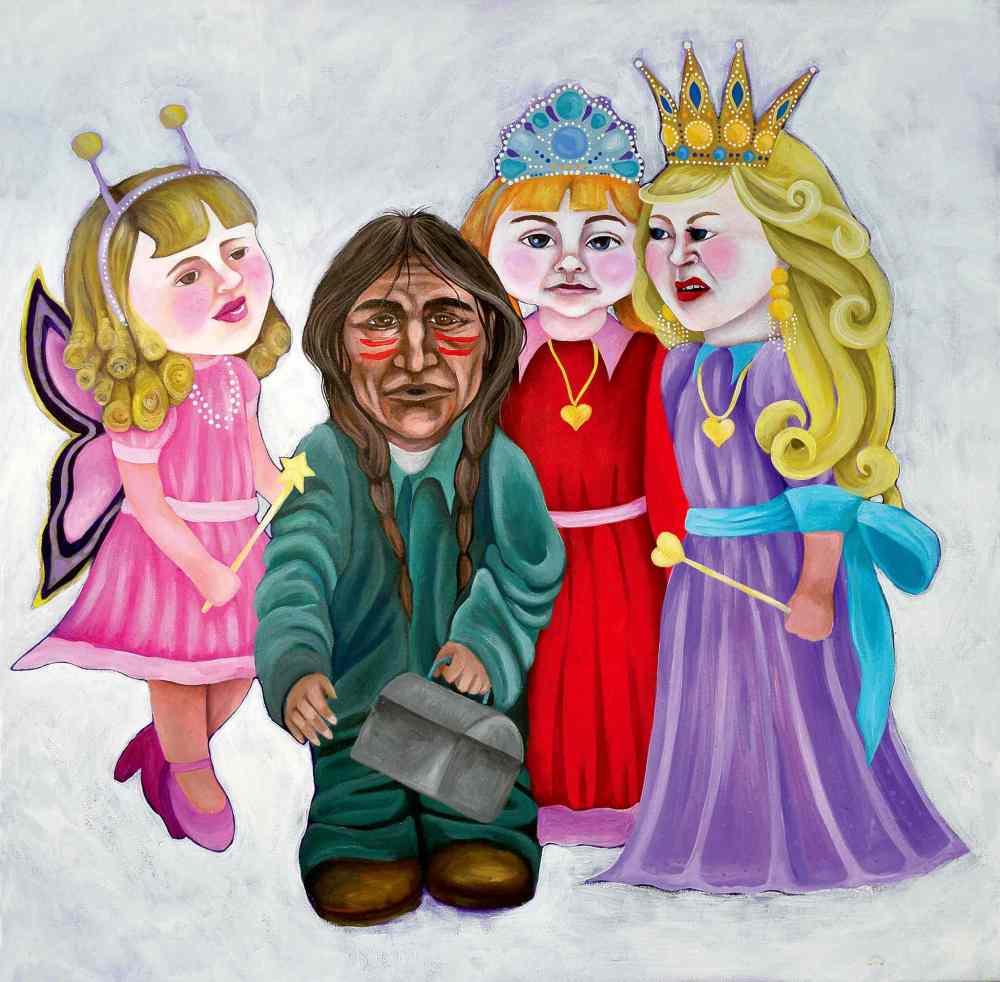
Jackie Traverse, an Anishinabe painter who is represented by Wah-Sa gallery at The Forks, made the films Empty and Two Scoops in 2008 and 2009. The Winnipeg Film Group, which distributes the films, says they continue to rank among its most popular.
The hand-painted animations may resonate with audiences partly because they tell one of the most vital and important Canadian stories; the so-called “scoop” of aboriginal children into the Canadian child-welfare system from the 1960s to the late ’80s. But more than that, as the stories are personal memories told from the point of view of Traverse as a child, they have an openness and frankness that goes right to the heart, making the statistics — more than 20,000 children were taken — seem all the more staggering.
Traverse was studying art at the University of Manitoba when she made her films, benefiting from the Crossing Communities Art Project, a Winnipeg-based organization that supports the making of art by marginalized youth and women.

“I tried telling my story with sculpture,” says the artist, “and I tried with painting and I tried with printmaking. It didn’t work. The stories needed to be animated and needed my voice.”
Traverse acknowledges that there is a particular power in the medium of film –it’s so easy to absorb. Film critic Roger Ebert once noted that, for better or for worse, every new Disney film immediately becomes part of the consciousness of almost every child in America. Filmmaker Ingmar Bergman said it more poetically: “No art passes our conscience in the way film does, and goes directly to our feelings, deep down into the dark rooms of our souls.”
Traverse and Zegeye-Gebrehiwot’s films portray the divisions and rifts in relationship — on both large and intimate scale. They are personal, but they also are far larger than the individual. There is pain, yes. But in the telling there is at least a little consolation.
Sarah Swan is the host of Art Talk/Art Walk. To reserve seats for this event please call 204-697-7069 or email wfpnewscafe@gmail.com.