Monogamy helped build nation, harmed women, natives
Advertisement
Read this article for free:
or
Already have an account? Log in here »
To continue reading, please subscribe:

Digital Subscription
One year of digital access for only $205*
- Enjoy unlimited reading on winnipegfreepress.com
- Read the E-Edition, our digital replica newspaper
- Access News Break, our award-winning app
- Play interactive puzzles
*First annual payment billed as $205.00 + GST for one year. This annual subscription will automatically renew at $233.00 + GST every 52 weeks (10% off the regular annual price of $259.35). Offer available to new and qualified returning subscribers only. Cancel any time.
To continue reading, please subscribe:
Add Free Press access to your Brandon Sun subscription for only an additional
$1 for the first 4 weeks*
- Enjoy unlimited reading on winnipegfreepress.com
- Read the E-Edition, our digital replica newspaper
- Access News Break, our award-winning app
- Play interactive puzzles
*Your next Brandon Sun subscription payment will increase by $1.00 and you will be charged $17.95 plus GST for four weeks. After four weeks, your payment will increase to $24.95 plus GST every four weeks.
Read unlimited articles for free today:
or
Already have an account? Log in here »
Hey there, time traveller!
This article was published 03/05/2009 (6366 days ago), so information in it may no longer be current.
The Importance of Being Monogamous
Marriage and Nation Building
in Western Canada to 1915
By Sarah Carter
The University of Alberta Press, 383 pages, $35
Reviewed by Ron Kirbyson
This is too important a book to be confined to the libraries of scholars, even though they may be the principal targets of a university publisher.
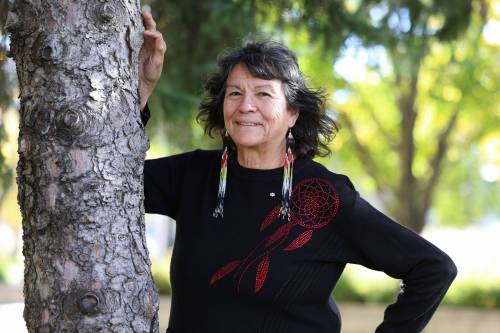
Sarah Carter, professor of history and native studies at the University of Alberta, sets out to show the function of monogamy, which some termed the “fortress of marriage,” in incorporating Western Canada into the Dominion of Canada.
In the process she depicts two major consequences, seemingly more relevant to race and gender status than nation building: the manipulation of First Nations and the reduction of the status of women, notably those of First Nations.
The Canadian government 125 years ago, she writes, was determined to get a handle on running the vast area that is now the Prairie provinces. While not heavily populated, it was inhabited by a very diverse population.
To Ottawa politicians and bureaucrats, monogamy was a key to managing the Canadian West. Of course, monogamy was a foundation of a male-dominated, Caucasian society within the British Empire.
Britain, meanwhile, was building its global empire on an assumption that it was the ultimate triumph of social Darwinism. English-speaking white Anglo-Saxons were represented as racially superior.
Such assumptions were bound to apply to Western Canada. People other than the racially superior needed to be assimilated. Part of the job fell to the Department of Indian Affairs.
Missionaries of the various Christian churches promoted the imperial view that a kind of nuclear family — headed by a husband and subordinate wife joined in marriage for a lifetime — was the building block of society.
Any alternative meant moral decay, especially in the West, where white single males were reputed to be vulnerable to the wiles of native women.
The problem was that the First Nations such as the Siksika (Blackfoot) had traditionally followed different models, one of which included multiple partners, viewed by the typical Anglo-Canadian as polygamy.
The same was true of the Mormons who settled in southern Alberta. Carter points out that neither Cree or Blackfoot languages had a word for polygamy.
For a male Cree or Blackfoot to have two or three wives was not unusual. It was a function of circumstances, including the fact that women outnumbered men. Extended families were traditionally inclusive, and, if a woman’s husband died his brother sometimes arranged for her to join him as a second wife.
As Carter notes, “There were no single mothers, and concepts such as ‘illegitimate’ children were unknown.” Further, every family had plenty of work, particularly in an economy based on products of the buffalo hunt.
Indian Affairs’ pressures (even having agents sneaking around reserves) were relentless, and destructive. “New unfamiliar categories were created … including the single mother and deserted wife … and the illegitimate child.”
Carter adds an appendix to indicate long-term confusion and harm visited upon following generations.
It is profoundly depressing to contemplate the destructiveness of Euro-Canadian interference in the aboriginal cultures (including those of the Canadian West) in the late Victorian era. Prior to colonial times, marriage in aboriginal cultures, according to Carter’s findings, was often rich in ceremony and spirituality.
A much published author of books and articles in journals, including Manitoba history, Carter presents her arguments from an array of sources. These include newspapers, diaries, government files, newsletters and memoirs, as well as commentaries by other experts. Some 20 photographs from as early as the 1870s enhance the text.
The Importance of Being Monogamous is a worthy example of history amplified and enriched. It won for best scholarly historical work last month in the Manitoba Historical Society’s annual Margaret McWilliams Awards.
Even with its long paragraphs and small print and sometimes heavy and sophisticated content, it is quite readable as well as thought-provoking.
Ron Kirbyson is a Winnipeg writer and teacher.