Smith has good eye for interesting story
Advertisement
Read this article for free:
or
Already have an account? Log in here »
To continue reading, please subscribe:

Digital Subscription
One year of digital access for only $205*
- Enjoy unlimited reading on winnipegfreepress.com
- Read the E-Edition, our digital replica newspaper
- Access News Break, our award-winning app
- Play interactive puzzles
*First annual payment billed as $205.00 + GST for one year. This annual subscription will automatically renew at $233.00 + GST every 52 weeks (10% off the regular annual price of $259.35). Offer available to new and qualified returning subscribers only. Cancel any time.
To continue reading, please subscribe:
Add Free Press access to your Brandon Sun subscription for only an additional
$1 for the first 4 weeks*
- Enjoy unlimited reading on winnipegfreepress.com
- Read the E-Edition, our digital replica newspaper
- Access News Break, our award-winning app
- Play interactive puzzles
*Your next Brandon Sun subscription payment will increase by $1.00 and you will be charged $17.95 plus GST for four weeks. After four weeks, your payment will increase to $24.95 plus GST every four weeks.
Read unlimited articles for free today:
or
Already have an account? Log in here »
Hey there, time traveller!
This article was published 24/07/2010 (5874 days ago), so information in it may no longer be current.
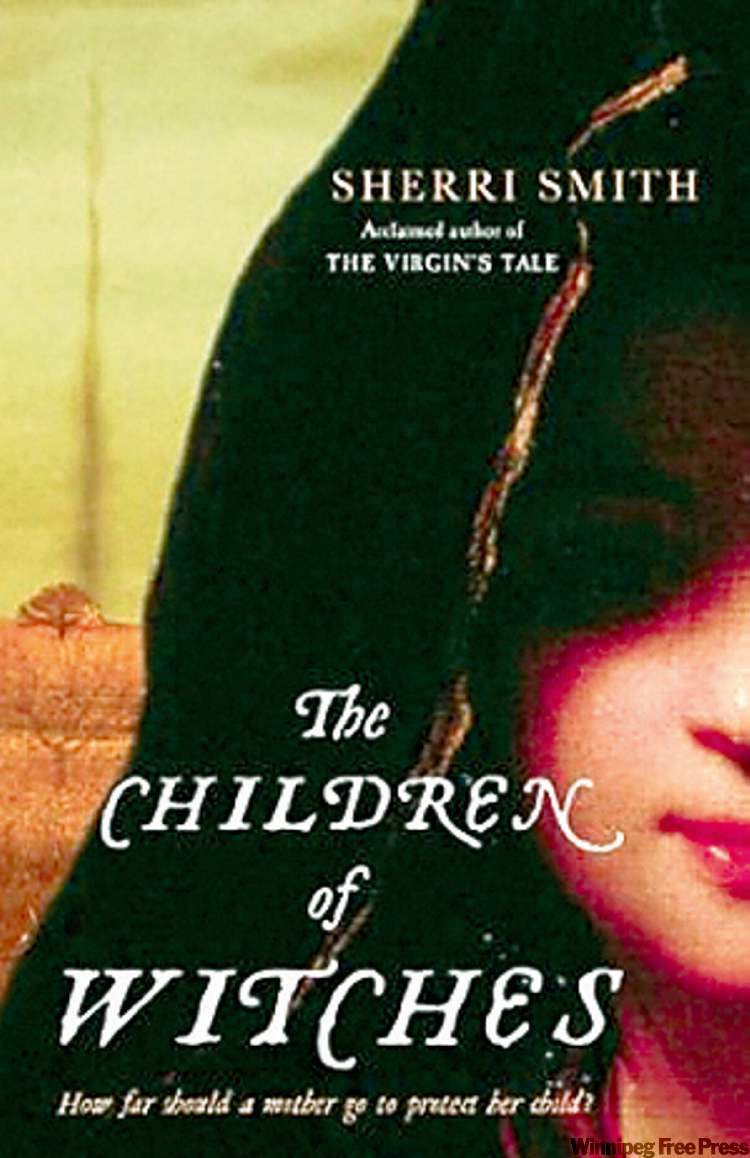
The Children of Witches
By Sherri Smith
Simon & Schuster, 321 pages, $20

Religion in the wrong hands has been an ill wind indeed for communities through the ages. Witness the still raw wounds exposed by the recent Truth and Reconciliation Commission hearings in Winnipeg.
Local writer Sherri Smith’s new work of commercial historical fiction, The Children of Witches, is an eye-opening portrayal of an average, devout, 17th-century German market town ripped asunder by accusations of witchcraft.
Admirably well-researched and imaginative, but somewhat monochromatic in tone, it paints a grisly picture of an era when being different was a death sentence.
Smith’s first novel, The Virgin’s Tale (2008), dealt with the limited existence of seven virgins dedicated to the goddess Vesta in ancient Rome.
She manages in both works to strike a balance between fiction and history. An overabundance of similes and metaphors in the earlier book is evident in this one as well, though it’s less noticeable in the last half.
Some of her metaphors are lovely: "the citrus smell of drying hops had slowly folded under the soft aroma of rising bread"; others are awkward. Also common to both is that Smith’s characters generally seem to lack depth.
Take Anna Wirth, for example, from whose perspective the story is mainly told. She and her alcoholic husband, Wilhelm, are the proprietors of a down-at-the-heel tavern. (In fact, Smith’s description of the inn is so vivid you can almost hear the floorboards creak.)
Her fights with Wilhelm, as well as her friendship with a woman later accused of witchcraft, are lukewarm emotionally.
Anna is profoundly worried about her four-year-old son. She and her eldest, Konrad, know that "there is something wrong with Manfred," and that it must be hidden.
He doesn’t speak or show affection, ritually lines up objects for hours, and carries a spoon wherever he goes. Manfred’s singing voice, however, can move even the crustiest old reprobate to tears.
After a severe hailstorm and many days of rain that threaten to bring back starvation, the clouds part and Manfred begins to sing on the church steps. A legend is born.
It’s clear that Smith has a sensitive and perceptive understanding of the dynamics between the brothers (Konrad is convinced that Manfred is "faking it") and their playmates — not surprising for an author who works at a school for children with special needs.
The hailstorm is considered by the local priest to be God’s punishment for sin, so when a homosexual relationship between two young men comes to light, that seems to explain everything.

The two young men are tortured until they confess to titillating dealings with Satan. (Here Smith draws partly on heartbreaking verbatim transcriptions of witchcraft trials in Germany and accounts from Sweden in the late 1600s).
They are pressed to name others, who in turn name more, and so the hysteria begins.
As neighbours are put to death, the priest offers to protect orphans and other children, including Manfred, from the influence of witches by offering them shelter in the church. His fanatical influence turns them into a menace that Anna must face.
Smith has a good eye for an interesting story. She may not have the flair of popular fiction writers Philippa Gregory and Elizabeth Thornton, but The Children of Witches is a sensitive, thoughtful recreation of a world we in the 21st century have difficulty imagining.
Winnipeg nurse Ursula Fuchs spent a year in Bamberg, Germany, where more than 1,000 people were condemned to death as witches in the early 1600s.