Novel about kibbutz life unsatisfactory
Advertisement
Read this article for free:
or
Already have an account? Log in here »
To continue reading, please subscribe:

Digital Subscription
One year of digital access for only $205*
- Enjoy unlimited reading on winnipegfreepress.com
- Read the E-Edition, our digital replica newspaper
- Access News Break, our award-winning app
- Play interactive puzzles
*First annual payment billed as $205.00 + GST for one year. This annual subscription will automatically renew at $233.00 + GST every 52 weeks (10% off the regular annual price of $259.35). Offer available to new and qualified returning subscribers only. Cancel any time.
To continue reading, please subscribe:
Add Free Press access to your Brandon Sun subscription for only an additional
$1 for the first 4 weeks*
- Enjoy unlimited reading on winnipegfreepress.com
- Read the E-Edition, our digital replica newspaper
- Access News Break, our award-winning app
- Play interactive puzzles
*Your next Brandon Sun subscription payment will increase by $1.00 and you will be charged $17.95 plus GST for four weeks. After four weeks, your payment will increase to $24.95 plus GST every four weeks.
Read unlimited articles for free today:
or
Already have an account? Log in here »
Hey there, time traveller!
This article was published 28/05/2011 (5595 days ago), so information in it may no longer be current.
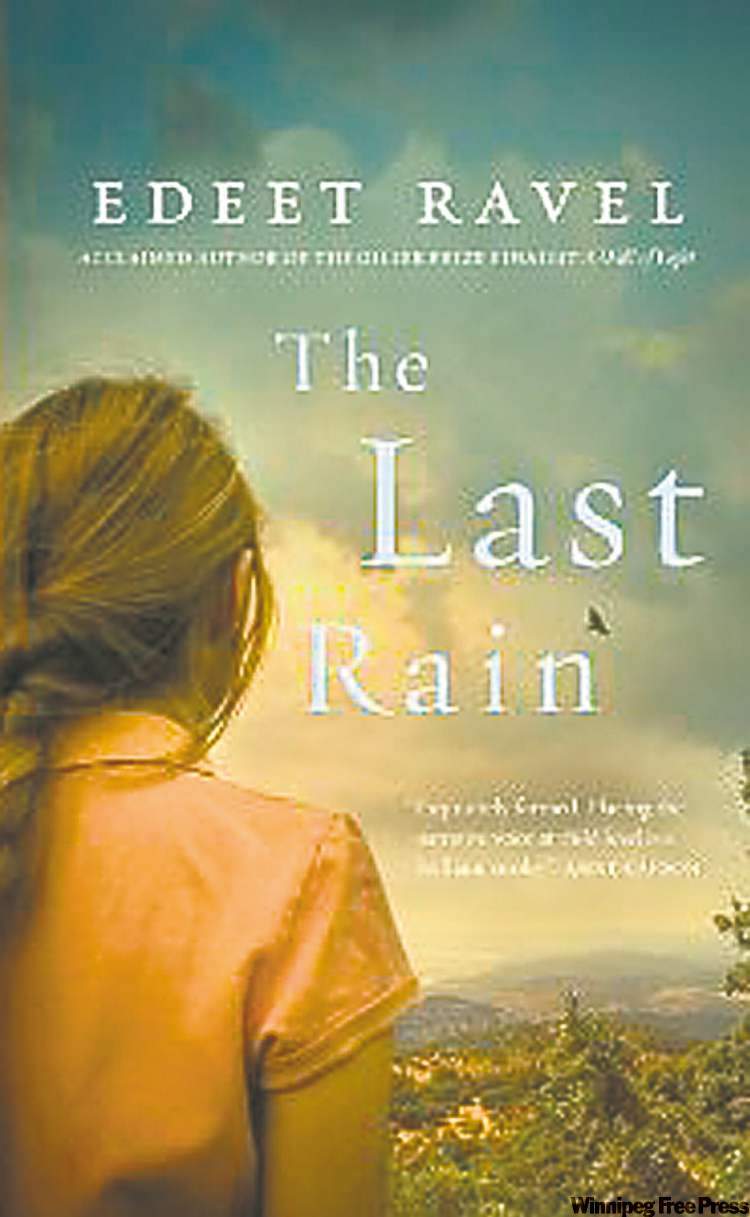
The Last Rain
By Edeet Ravel
Viking Canada, 256 pages, $32
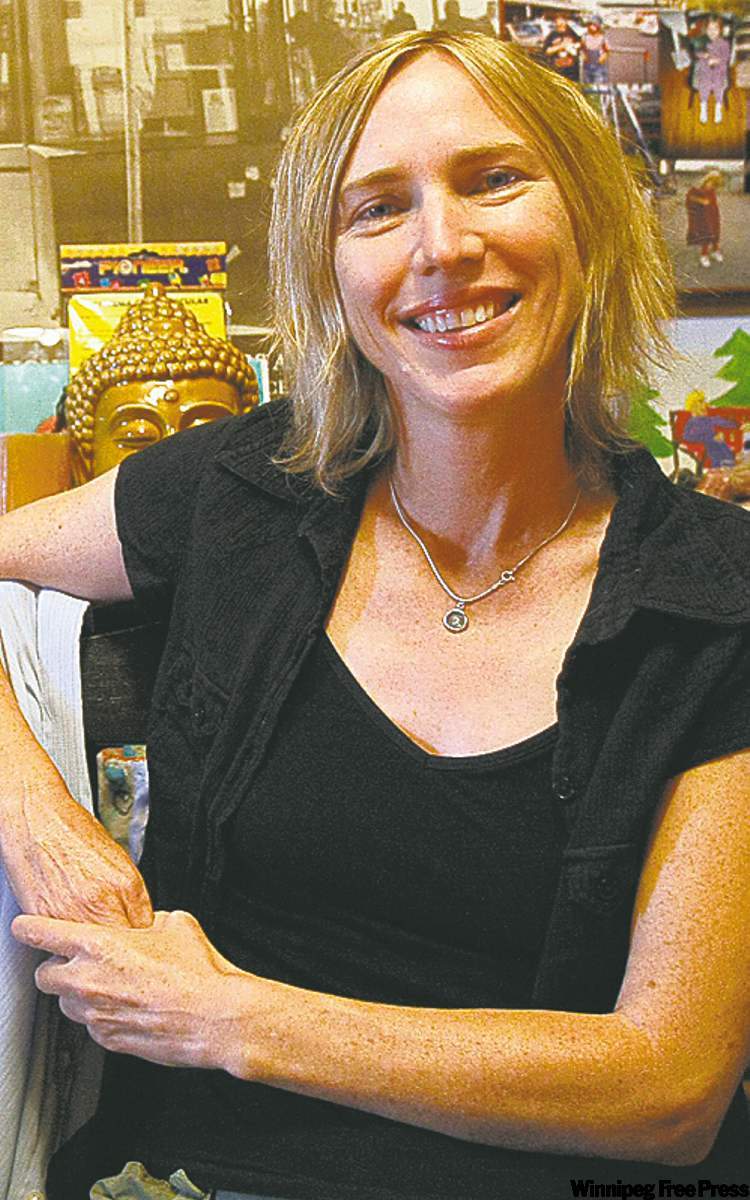
THIS novel about Israeli kibbutz life circa 1960 could have been fascinating. Instead, Canadian-Israeli author Edeet Ravel has penned a gimmicky, unengaging and disappointing work.
It is so unsatisfactory, in fact, that it is difficult to believe that it is from the same author who wrote the remarkable Ten Thousand Lovers.
A Governor General’s Literary Award finalist in 2003, Ten Thousand Lovers was the debut novel in Ravel’s Tel Aviv Trilogy, which also includes Look for Me and A Wall of Light. Like this trilogy, Ravel’s latest book is set in Israel.
The novel’s primary narrator is six-year-old Dori, who lives with her siblings and parents, Naftali and Vaarda, on Kibbutz Eldar. Naftali and Vaarda are North American idealists who moved to the fledgling kibbutz (or collective settlement) in Israel’s northern Galilee, three miles from Lebanon, shortly after the creation of the Jewish state in 1948.
Dori is clearly a fictionalized version of Ravel, who, like her protagonist, spent the formative years of her childhood on a kibbutz in the northern Galilee before moving back to Canada with her parents.
Given that Ravel, who lives in Guelph, Ont., is essentially writing an account of her own early years, she manages, for the most part, to capture Dori’s voice accurately, relaying a child’s sense of wonder, fear and confusion about the world around her.
Listening to the jackals howling in the mountains as she lays in bed at night, Dori muses, “The enemy is dangerous no matter what but most animals won’t bother you if you don’t bother them.”
The majority of what Dori shares with readers, however, is much more mundane than this. Adding to this frustration is the fact that these lacklustre musings are interjected by an odd assortment of other voices, reflections and ruminations, most of them equally uninspiring.
The few gems among them include an account of attempts by Israelis to walk to Petra in Jordan, and the diary of a young man dating from 1922. In this diary, the anonymous author writes, “[W]e must direct our efforts first and foremost to creating a new society and living our collective lives in the most profound way possible.”

While the kibbutz system flourished in Israel for many years, the new society that its earliest pioneers dreamed of was influenced by the realpolitik of living in a country where so many other imperatives vied for their attention. Ideas about living collectively and creating a new society took on much greater meaning after 1948 and 1967.
These of course are some of the very issues that Ravel addressed so well in her Tel Aviv Trilogy, a fact that makes this new book seem so much weaker by comparison.
Sharon Chisvin is a Winnipeg writer who lived in the western Galilee in 1981.
Related Articles
Toews learns to live with past
Advertisement Advertise With Us
Advertisement Advertise With Us