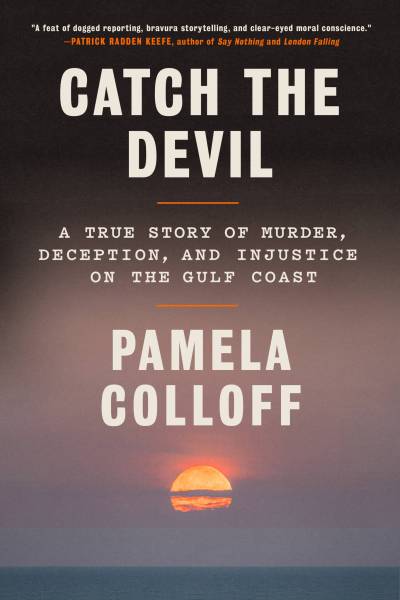
Red difficult to find in black and white newspapers

Advertisement

Advertise with us

Seeing Red

Read this article for free:


or

Already have an account? Log in here »

To continue reading, please subscribe:

Subscribe and receive a limited-edition Free Press branded hat or tote.

Digital Subscription

One year of digital access for only $205*

  • Enjoy unlimited reading on winnipegfreepress.com
  • Read the E-Edition, our digital replica newspaper
  • Access News Break, our award-winning app
  • Play interactive puzzles

*First annual payment billed as $205.00 + GST for one year. This annual subscription will automatically renew at $233.00 + GST every 52 weeks (10% off the regular annual price of $259.35). Offer available to new and qualified returning subscribers only. Cancel any time.

To continue reading, please subscribe:

Add Free Press access to your Brandon Sun subscription for only an additional

$1 for the first 4 weeks*

  • Enjoy unlimited reading on winnipegfreepress.com
  • Read the E-Edition, our digital replica newspaper
  • Access News Break, our award-winning app
  • Play interactive puzzles
Start now

*Your next Brandon Sun subscription payment will increase by $1.00 and you will be charged $17.95 plus GST for four weeks. After four weeks, your payment will increase to $24.95 plus GST every four weeks.

Opinion

Hey there, time traveller!
This article was published 12/11/2011 (5404 days ago), so information in it may no longer be current.

Seeing Red

A History of Natives in Canadian Newspapers

By Mark Cronlund Anderson and Carmen Robertson

University of Manitoba Press, 336 pages, $28

THE uproar surrounding Air Canada’s decision in September to pull its crews out of downtown Winnipeg hotels, blaming “instances of public intoxication” from “1,000 displaced people from rural Manitoba” — code for aboriginals — might lead you to believe that we’ve progressed beyond negative representations of First Nation peoples in the mainstream media.

In their informative history of how aboriginal subjects are treated in Canadian newspapers however, University of Regina professors Mark Cronlund Anderson and Carmen Robertson assure you that we have not.

Over 12 concise and well-written chapters, examining a range of stories in Canadian newspapers, Anderson and Robertson document a history of native representation from 1869 to the early 2000s.

The researchers find that Canadian print journalists have continually and consistently perpetuated a myth of native inferiority by creating stereotypes of un-evolving and exotic savages, supporting racist and violent policies and practices, and framing native peoples unfairly and inaccurately.

They provide many detailed examples from the pages of history, including those that encouraged Canadians to celebrate the post-Confederation dispossession of First Nation territories, consider treaty-making and residential schools as just, and use the death of leaders like Louis Riel for political purposes.

Utilizing more recent articles, the authors show how the media situate native peoples as criminals and terrorists, frame native women as sex and material objects, and construct a “common sense” ideology that ignores treaty responsibilities, defines native people as exploitative and ungrateful children, and demonizes those who speak otherwise.

The media, the authors argue, have primed Canadians to “see red” when they see red.

Unquestionably, Seeing Red is a remarkable contribution to this country’s political and social history. Joining a niche market of texts examining the misrepresentations of First Nation peoples, it sets a new standard for archival research and critical thinking that hopefully will shake the Canadian media establishment.

It should be of interest to historians, those interested in indigenous issues, and every person who has ever read a Canadian newspaper. For anyone who believes that the Canadian print establishment has progressed beyond some fundamentally racist beliefs, stereotypes and political views regarding First Nation peoples, this study is sure to be an eye-opener.

But Seeing Red is also, ironically, a bit one-sided. A chapter on the equally remarkable and brave work of native journalists in Canadian newspapers, not to mention the many sensitive non-native writers who strive to tell a counter-narrative, would have provided an important counter-balance to a heavily-fortified argument.

While the authors draw upon writers like Saskatoon’s Doug Cuthand, many more who witnessed and wrote about the events represented in Seeing Red could be included. Everett Soop, Bernelda Wheeler and Richard Wagamese come to mind.

As shown in the media’s coverage of the Air Canada memo debacle, the attention paid to the fact that it was based on inaccurate, stereotypical, and racist claims is hope that First Nation representations aren’t as black and white as they once were.

They might even have a touch of red.

Niigaanwewidam James Sinclair is a journalist, assistant professor of native studies and English at the University of Manitoba, and an avid newspaper subscriber.
Report Error Submit a Tip

More Stories

Of frogs, roses, kings and a Great Lake

Editorial 4 minute read Preview

Of frogs, roses, kings and a Great Lake

Editorial 4 minute read 2:01 AM CDT

A rose by any other name would smell as sweet, as the saying goes. Basically, if you change something’s name, you don’t actually change the nature of the thing.

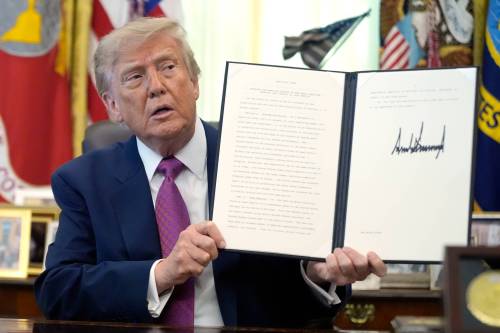
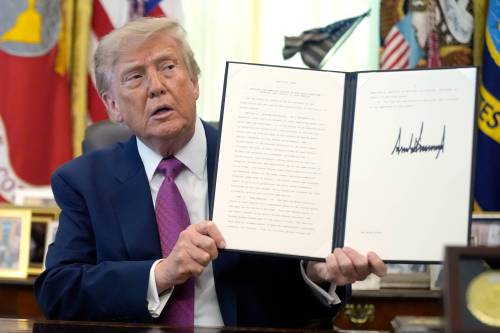
That being said, if even 15 years ago an American president had called an entire news conference to announce he was renaming one of the Great Lakes by writing on a map with a red pen and issuing an executive order purporting to rename Lake Ontario as “Lake America,” all and sundry would question his mental health.

Maybe, after witnessing so much from Donald Trump, we’ve all just been hardened off and the foolish is now expected daily. Perhaps it’s the political equivalent of the fable of the boiling frog.

As the fable goes, drop a frog into a pot of boiling water and it will jump right out. But put the frog in room temperature water and bring the pot to a boil, the frog will stay until its death. (It’s unlikely the frog would actually wait.)

Read
2:01 AM CDT

Carney’s defence of Lake Ontario carries enormous weight

Niigaan Sinclair 5 minute read Preview

Carney’s defence of Lake Ontario carries enormous weight

Niigaan Sinclair 5 minute read Yesterday at 4:28 PM CDT

For centuries on Turtle Island (North America), explorers, map makers, and political leaders have erased Indigenous place names and substituted them — more often than not — with political, ethnocentric, and self-aggrandizing names.

In recent years, a few places on the continent have had Indigenous names re-established, but as of today, few of the original names are “official.”

So, it was no surprise when U.S. President Donald Trump on Thursday signed an executive order directing the U.S. Department of the Interior and Board on Geographic Names to take steps within 30 days to officially rename Lake Ontario as “Lake America.”

The move may have been a result of the Canada-U.S. trade war and Trump’s pettiness and ego, but it also fits in perfectly with his career.

Read
Yesterday at 4:28 PM CDT

Frank Kriz was always willing to lend a hand to someone in need

Jim Timlick 7 minute read Preview

Frank Kriz was always willing to lend a hand to someone in need

Jim Timlick 7 minute read 2:00 AM CDT

Frank Kriz never wore a halo or wings, but talk to the many people he helped during his life and you would swear the man was a real-life angel.

For those who were fortunate enough to call him friend, he was always there to lend a hand, whether it was helping fix a wiring issue in someone’s house or organizing a group camping trip.

“He lived for other people, for helping other people,” says close friend Brian Turner.

“He was a very special guy that way. There’s no one like him that I know. Everyone has a little piece of him, in a sense, with how he fixed something for them or helped them out with something. That was his legacy.”

Read
2:00 AM CDT

As camp fees increase, Sunshine Fund delivers another summer of adventures

Ken Wiebe 4 minute read Preview

As camp fees increase, Sunshine Fund delivers another summer of adventures

Ken Wiebe 4 minute read 2:01 AM CDT

Dana Moroz is on the other end of the line and the manager of the Sunshine Fund can hardly contain her enthusiasm.

With the summer winding down and school on the verge of being back in session, Moroz was asked about the 46th season of the program that sent children in need to 31 accredited camps across the province and northwestern Ontario.

Although the final numbers are still being calculated, it was a banner year for the program, which benefited from the Free Press Sunshine Fund campaign that ran throughout the past several months.

“We had over 700 kids that we supported to go to summer camp,” said Moroz, noting the cost of doing so eclipsed $300,000.

Read
2:01 AM CDT

Doctor pays $500K to revamp courtyard at care home where he works

By Zoe Pierce 4 minute read Preview

Doctor pays $500K to revamp courtyard at care home where he works

By Zoe Pierce 4 minute read Thursday, Aug. 27, 2026

Fifty years after Dr. Pravinsagar Mehta began caring for residents at Actionmarguerite, a courtyard he had long watched deteriorate is getting a new life after he and his wife committed $500,000 to its redevelopment and long-term maintenance.

Read
Thursday, Aug. 27, 2026

Catch the Devil follows serial con man preying on victims along the Gulf Coast — then repatedly duping law enforcement

Reviewed by Jordan Ross 4 minute read Preview

Catch the Devil follows serial con man preying on victims along the Gulf Coast — then repatedly duping law enforcement

Reviewed by Jordan Ross 4 minute read 2:00 AM CDT

The debut book from Pamela Colloff, a Texas-based investigative reporter for ProPublica and staff writer for the New York Times Magazine, complicates romantic notions of the scam artist and invites readers to reflect on the systems that enable them.

Read
2:00 AM CDT