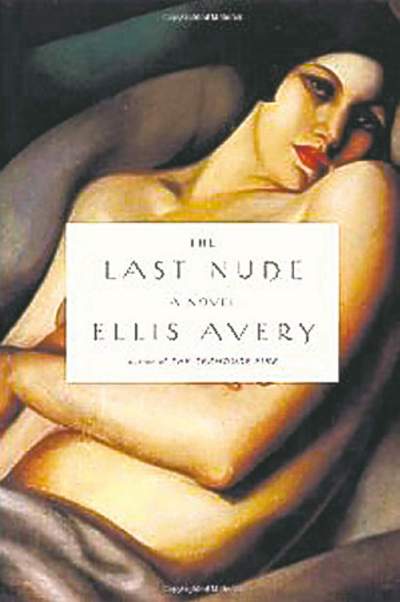
Sizzling historical novel about nude art leaves unanswered questions

Advertisement
Read this article for free:
or
Already have an account? Log in here »
To continue reading, please subscribe:

Digital Subscription
One year of digital access for only $205*
- Enjoy unlimited reading on winnipegfreepress.com
- Read the E-Edition, our digital replica newspaper
- Access News Break, our award-winning app
- Play interactive puzzles
*First annual payment billed as $205.00 + GST for one year. This annual subscription will automatically renew at $233.00 + GST every 52 weeks (10% off the regular annual price of $259.35). Offer available to new and qualified returning subscribers only. Cancel any time.
To continue reading, please subscribe:
Add Free Press access to your Brandon Sun subscription for only an additional
$1 for the first 4 weeks*
- Enjoy unlimited reading on winnipegfreepress.com
- Read the E-Edition, our digital replica newspaper
- Access News Break, our award-winning app
- Play interactive puzzles
*Your next Brandon Sun subscription payment will increase by $1.00 and you will be charged $17.95 plus GST for four weeks. After four weeks, your payment will increase to $24.95 plus GST every four weeks.
Read unlimited articles for free today:
or
Already have an account? Log in here »
Hey there, time traveller!
This article was published 18/02/2012 (5342 days ago), so information in it may no longer be current.
THIS sizzling historical fiction is about a woman who modelled for a famous bisexual artist in 1920s Paris and fell madly in love with her.
Hollywood stars such as Jack Nicholson, Barbra Streisand and Madonna collect Tamara de Lempicka’s art, and Madonna has featured it in music videos such as Express Yourself and Vogue.
De Lempicka died in 1980 at age 82, but her reputation has grown in her last decade. But in 1927, the Jewish-Italian Rafaela Fano inspired the Art Deco diva’s most famous nude paintings.
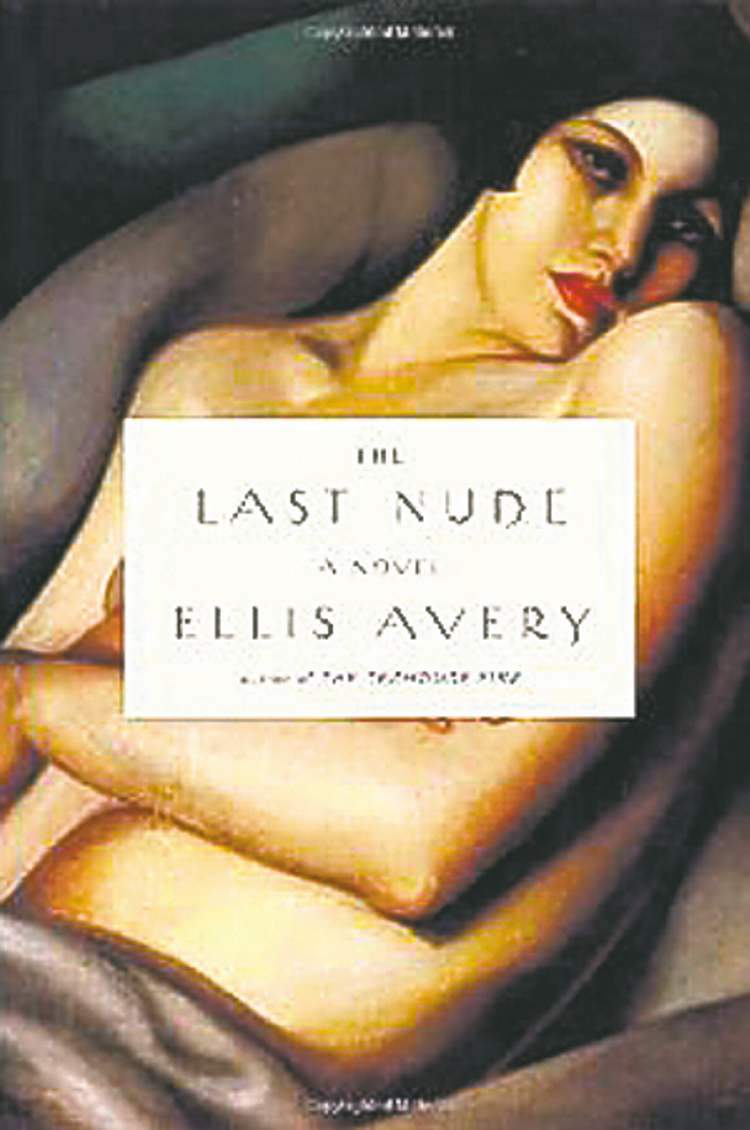
The voluptuous 17-year-old, travelling from New York with her grandmother (under lock and key) jumps ship in Marseilles, France. She drops into de Lempicka’s life in Paris like a fragrant flower.
New York author Ellis Avery, who has one previous novel under her belt, unravels an erotic story of love, intrigue and betrayal. The first three quarters of the novel is told Fano’s point of view.
She is practical and a survivor. She offers her virginity to an old man on the ship at Marseilles to take her with him by train to Paris — and away from her fate as a bride in an arranged marriage back in Italy.
Losing her virginity was hardly a trauma, as she departs from the hotel and instantly falls in love with Paris.
Needing to survive, she lets herself get picked up in the infamous Bois de Bologne area by a wealthy-looking woman in a green Bugatti convertible. Fano soon becomes driver Tamara de Lempicka’s nude model, muse and lover, as she poses for paintings that became famous, notably La Belle Rafaela.
Google de Lempicka’s paintings, so you know what the fuss is about when rich men start fighting over them. You can see both de Lempicka (in the convertible) and Rafaela’s face, when she’s not lying down with her back arched, in other paintings.
What’s fascinating is the contrast between the wealth of the art buyers, the cold ambition of the rising artist de Lempicka, and the poverty and insecurity of Fano’s life.
Betrayals in this dog-eat-dog world happen at all levels and with both sexes. Unbeknownst to the naive Fano, de Lempicka is on the prowl for an extremely rich man to restore her to the wealth and privilege that had been stripped from her in the Russian Revolution.
In this novel, you never know who’s going to be sold out next. Sometimes the twists and turns of the plot feel like the comic strip Spy vs. Spy and you have to go back and re-read.
When the painter betrays her young lover big time, Fano says: “I could have piled up Tamara’s paintings and burned them all. But Tamara had given me the one thing I thought I would never feel; the ability to love someone I went to bed with, to feel desire without calculation.”

The disappointing aspect of this period piece is the ending, which switches to de Lempicka’s point of view as on old woman. She’s still painting, albeit with a shaky hand, and living among family and the international artistic set in Cuernavaca, Mexico.
Frankly, we’d rather hear from La Belle Rafaela in her later life, as she is the one we have attached to emotionally. But Fano was only famous for her body and not as easy to research.
This is definitely a novel worth reading, but it does leave the reader with questions.
Maureen Scurfield, who writes Miss Lonelyhearts for the Winnipeg Free Press, collects modern goddess art.
Our newsroom depends on a growing audience of readers to power our journalism. If you are not a paid reader, please consider becoming a subscriber.
Our newsroom depends on its audience of readers to power our journalism. Thank you for your support.
Book review
The Last Nude
- By Ellis Avery
- Riverhead, 310 pages, $27.50
Our newsroom depends on a growing audience of readers to power our journalism. If you are not a paid reader, please consider becoming a subscriber.
Our newsroom depends on its audience of readers to power our journalism. Thank you for your support.
Related Articles
Jennifer Hudson memoir a little thin in spots
Advertisement Advertise With Us
Advertisement Advertise With Us
History
Updated on Tuesday, February 21, 2012 11:55 AM CST: Corrects name of publisher