Novelist explores climber’s obsession
Advertisement
Read this article for free:
or
Already have an account? Log in here »
To continue reading, please subscribe:

Digital Subscription
One year of digital access for only $205*
- Enjoy unlimited reading on winnipegfreepress.com
- Read the E-Edition, our digital replica newspaper
- Access News Break, our award-winning app
- Play interactive puzzles
*First annual payment billed as $205.00 + GST for one year. This annual subscription will automatically renew at $233.00 + GST every 52 weeks (10% off the regular annual price of $259.35). Offer available to new and qualified returning subscribers only. Cancel any time.
To continue reading, please subscribe:
Add Free Press access to your Brandon Sun subscription for only an additional
$1 for the first 4 weeks*
- Enjoy unlimited reading on winnipegfreepress.com
- Read the E-Edition, our digital replica newspaper
- Access News Break, our award-winning app
- Play interactive puzzles
*Your next Brandon Sun subscription payment will increase by $1.00 and you will be charged $17.95 plus GST for four weeks. After four weeks, your payment will increase to $24.95 plus GST every four weeks.
Read unlimited articles for free today:
or
Already have an account? Log in here »
Hey there, time traveller!
This article was published 23/06/2012 (5205 days ago), so information in it may no longer be current.
As fee-paying bucket-listers clog the main route to the summit of Mount Everest and litter the upper slopes with their corpses, Ontario writer Tanis Rideout explores the obsession of the early mountaineer who famously offered an explanation for the deadly quest.
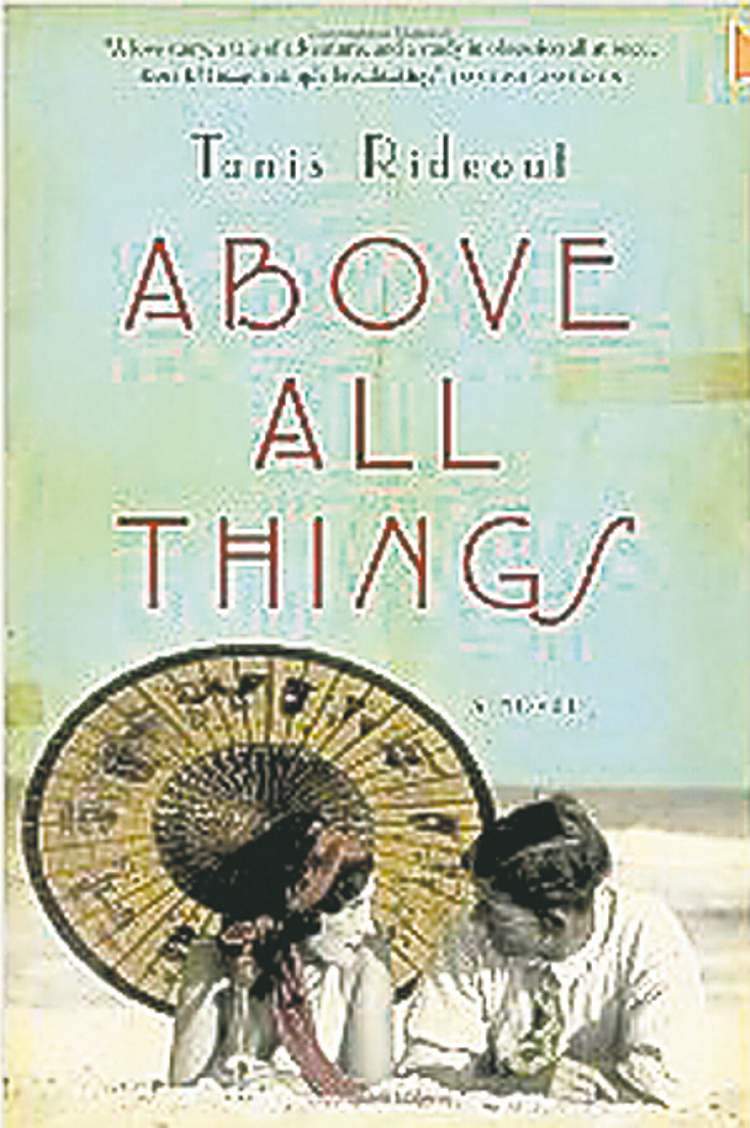
Her debut novel, Above All Things, brings to life George Mallory, the climber who is nearly as well known for his exasperated answer of “because it’s there” as for his 1924 death near the mountain’s summit — as well as his wife, Ruth, and his young climbing partner, Andrew Irvine.
Like Wade Davis’s 2011 non-fiction epic Into the Silence, Rideout’s novel is the product of years of research. But freed from the constraints of history, she delves into the thoughts and emotions of her main characters and, in places, modifies the historical record for artistic effect (for example, Rideout has Mallory’s RAF-flyer brother Trafford killed in the war, to heighten George’s survivor guilt, when in reality he died in a plane crash in 1944.)

Her descriptions of fatigue, hypothermia and altitude-wrought hallucinations are vivid and gripping as she follows the progress of the 1924 expedition.
Rideout, a poet-activist who has collaborated with Canadian rock stars such as Gord Downie and Sarah Harmer on environmental projects, is as interested in the relationship between George and Ruth Mallory as between George and Everest.
She tells the story by alternating between the expedition and a single day in Ruth’s life as she waits for news. Ruth’s sections of the novel are reminiscent of Virginia Woolf’s Mrs. Dalloway (fittingly, as George was a fringe participant in Woolf’s Bloomsbury literary group). Ruth spends the day preparing for a dinner party, even, like Mrs. Dalloway, buying flowers for the table.
We see Ruth’s fears and her anger at having been left behind three times while George has journeyed to Everest.
“It’s humiliating, to come second to a mountain,” she thinks.
George, for his part, thinks often of Ruth, and feels guilt at having left home yet again. But his guilt only motivates him much more strongly to succeed.
Rideout paints a portrait of George as a man wracked by guilt over his brother’s death and tormented by thoughts of his stern clergyman father. In response, he has hidden his doubts and fears under an impenetrable resolution.
At one point, he thinks back to a climb when he fell and was caught by a friend. “It was the only time he’d ever fallen. And it was because he’d doubted himself. He couldn’t imagine ever falling again.”
As becomes clear in time, that is hardly a recipe for good judgment.
“How far would you go?” Mallory asks the expedition’s leader, Teddy Norton, who replies: “It would be remarkable. But — “
Mallory replies. “I don’t need to hear any more. I don’t think there is a but for me.”
As in Davis’s non-fiction account, the shadow of the First World War falls heavily across the expedition. Climbers think of friends and family who died in the war and believe that for the people back home a successful expedition will help to assuage the pain of the nation’s losses.

“They want us to make it all worth it,” George says.
Nearly 90 years later, as tourists die attempting to be the 3,500th person on the summit, it’s clear that there is still no “but” for many.

Bob Armstrong is a Winnipeg novelist and playwright.
Above All Things
By Tanis Rideout
McClelland & Stewart, 368 pages, $30
Related Articles
Radical translation of Antigone a lively work Novel trumps short stories in new Alix Ohlin pair
Advertisement Advertise With Us
Advertisement Advertise With Us