Pair of books reminder of Summit Series influence
Advertisement
Read this article for free:
or
Already have an account? Log in here »
To continue reading, please subscribe:

Digital Subscription
One year of digital access for only $205*
- Enjoy unlimited reading on winnipegfreepress.com
- Read the E-Edition, our digital replica newspaper
- Access News Break, our award-winning app
- Play interactive puzzles
*First annual payment billed as $205.00 + GST for one year. This annual subscription will automatically renew at $233.00 + GST every 52 weeks (10% off the regular annual price of $259.35). Offer available to new and qualified returning subscribers only. Cancel any time.
To continue reading, please subscribe:
Add Free Press access to your Brandon Sun subscription for only an additional
$1 for the first 4 weeks*
- Enjoy unlimited reading on winnipegfreepress.com
- Read the E-Edition, our digital replica newspaper
- Access News Break, our award-winning app
- Play interactive puzzles
*Your next Brandon Sun subscription payment will increase by $1.00 and you will be charged $17.95 plus GST for four weeks. After four weeks, your payment will increase to $24.95 plus GST every four weeks.
Read unlimited articles for free today:
or
Already have an account? Log in here »
Hey there, time traveller!
This article was published 13/10/2012 (5104 days ago), so information in it may no longer be current.
HERE are two distinct attempts to make some sense of a 40-year-old Canadian cultural earthquake. Neither of them top the Richter scale of literary brilliance.
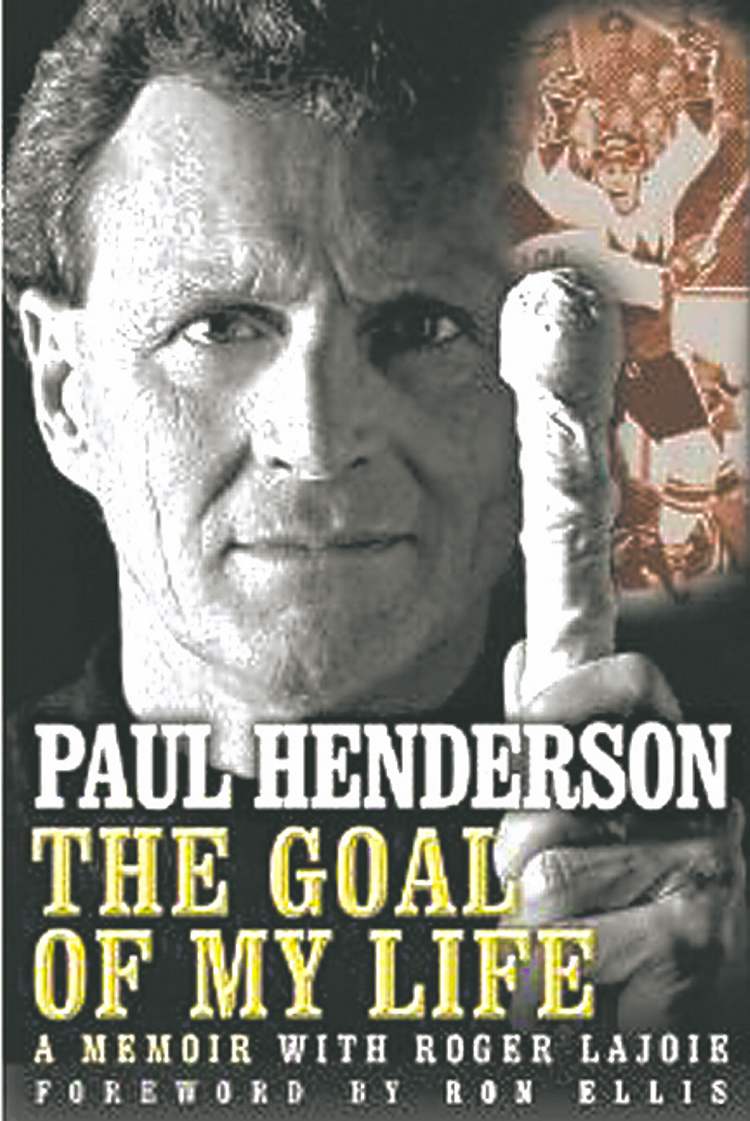
In The Goal of My Life, former Toronto Maple Leaf Paul Henderson, who netted the Team Canada Summit Series-winner 40 years ago this fall, brings a highly personal but sincerely earnest perspective to the event that changed his life.
With the help of his co-author, Toronto sportscaster Roger Lavoie, Henderson embeds “the Goal” within his story of spiritual awakening and evangelical Christianity.
In Toronto musician and author Dave Bidini’s case, he finds the series’ significance by stitching together a web of diverse reminiscences — the memories of players, pundits, politicians and artists — about and around Game 8.
By organizing his work like this, he calls attention and offers insight into the “shared-ness” of this sporting spectacle, how it held a nation’s attention and impressed itself upon our collective memory.
While Henderson uses his memoir to plot “the Goal” as a great watershed moment in a pilgrim’s progress, he also uses it to take on some of hockey’s more controversial issues.
For example, he calls for an end to fighting. With the size and strength of today’s players, he fears “somebody is going to get killed out there.”
Henderson, who played on a line with Flin Flon’s Bobby Clarke during the Summit Series, admits that in 1972 he didn’t see any reason to condemn Clarke’s ruthless slash to the ankle of Valeri Kharlamov, a blow delivered with the intent of removing the Russian star from the game.
It “seemed to be the right thing to do” at the time. But upon decades of reflection, Henderson views it as “the low point of the series.”
“In terms of sportsmanship,” he adds, “I have always felt that if you can’t beat them straight up, you don’t deserve to win.”
Forthcoming with such honest admissions, his reflections offer little in the way of personal introspection — at least of the psychological variety — or any broader historical contextualization.
What Henderson, who was diagnosed with a chronic form of cancer in 2009, is primarily doing here is publishing a heroic testament to his faith, which has all the literary charm of a log cabin.
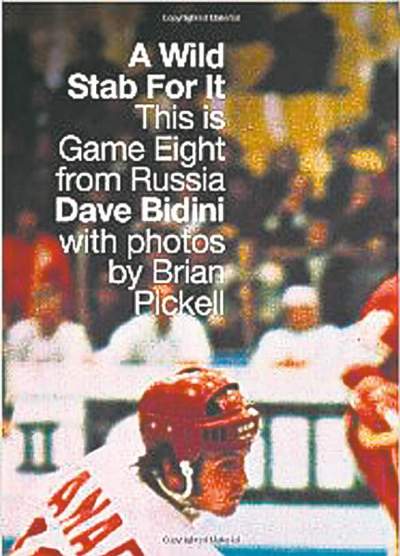
Bidini’s aim in his pamphlet-sized paean is to tap into a different kind of heroic spirit. The author of Tropic of Hockey is interested in resurrecting, others might say constructing, a sense of Canadianness that emerged from this odd cultural exchange with “the East.”
Not only did this meeting transform “our” game strategically and developmentally, as former Montreal Canadiens coach Scotty Bowman and others relate, it also, Bidini suggests, re-forged the Canadian identity for a Cold War, multicultural reality.

He asserts, “It wasn’t until ’72 that people started talking about the game in terms of what it said about who we were and where we were going.”
And while this may be so, Bidini’s enthusiastic promotion of the series can be a bit excessive. Nostalgia mixed with a treatment of the past as a done deal, as preordained in favour of Canada, is hard to swallow at times, especially if it is served up in syrupy prose.
But whether you have the stomach for this Summit Series mythology — in its personal or public forms — or not, both these works are profound and powerful reminders of its real and lasting influence.
Winnipeg journalist and hockey fan Greg Di Cresce was almost a twinkle in his mother’s eye in 1972.
Book review
The Goal of My Life
A Memoir
- By Paul Henderson with Roger Lajoie
- Fenn/McClelland & Stewart, 304 pages, $33
A Wild Stab for It
This Is Game Eight from Russia
- By Dave Bidini
- ECW Press, 112 pages, $20
Related Articles
A concession-stand view of Jets' return season
Advertisement Advertise With Us
Advertisement Advertise With Us
History
Updated on Saturday, October 13, 2012 2:39 PM CDT: adds fact box