Novel has more tangles than a bowl of spaghetti
Advertisement
Read this article for free:
or
Already have an account? Log in here »
To continue reading, please subscribe:

Digital Subscription
One year of digital access for only $205*
- Enjoy unlimited reading on winnipegfreepress.com
- Read the E-Edition, our digital replica newspaper
- Access News Break, our award-winning app
- Play interactive puzzles
*First annual payment billed as $205.00 + GST for one year. This annual subscription will automatically renew at $233.00 + GST every 52 weeks (10% off the regular annual price of $259.35). Offer available to new and qualified returning subscribers only. Cancel any time.
To continue reading, please subscribe:
Add Free Press access to your Brandon Sun subscription for only an additional
$1 for the first 4 weeks*
- Enjoy unlimited reading on winnipegfreepress.com
- Read the E-Edition, our digital replica newspaper
- Access News Break, our award-winning app
- Play interactive puzzles
*Your next Brandon Sun subscription payment will increase by $1.00 and you will be charged $17.95 plus GST for four weeks. After four weeks, your payment will increase to $24.95 plus GST every four weeks.
Read unlimited articles for free today:
or
Already have an account? Log in here »
Hey there, time traveller!
This article was published 05/10/2013 (4733 days ago), so information in it may no longer be current.
Toronto-based David Macfarlane’s third novel has a lot of good things going for it, but there are too many disparate pieces that don’t quite add up to a remarkable whole.
Macfarlane is best known for his memoir of Newfoundland, The Danger Tree, and the 1999 Giller-nominated novel Summer Gone.
In The Figures of Beauty, 20-something Oliver Hughson from Cathcart, Ont. (the setting of Summer Gone) spends one summer in the small Italian town of Pietrabella, a rustic village that has relied on the historic marble quarries for hundreds of years. It is local legend that Michelangelo himself travelled to the town to oversee the excavation of marble, though there is little actual proof of his presence.
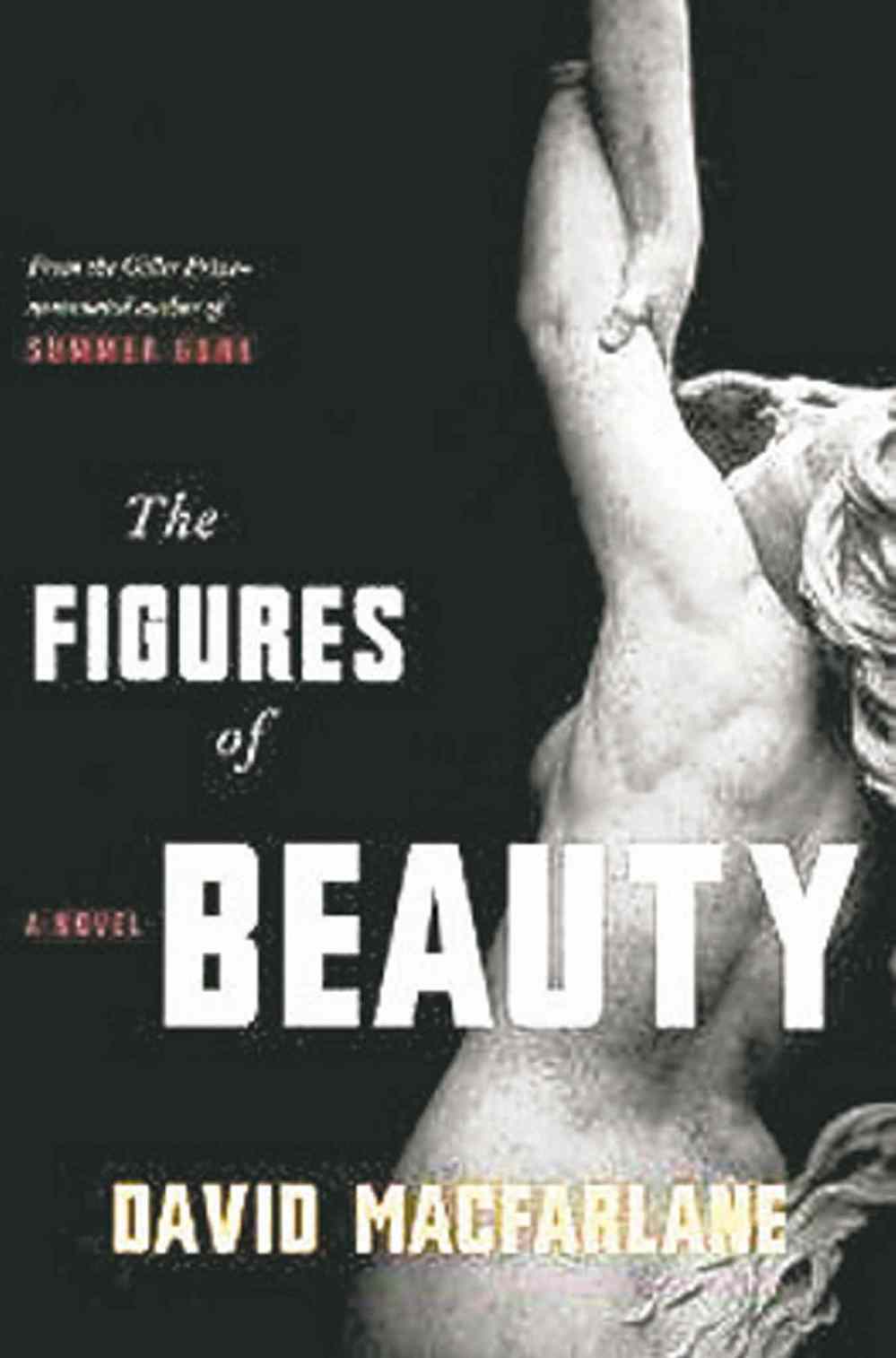
Once in Pietrabella, Oliver begins an exciting relationship with Anna, a local sculptor. Indeed, it will be the most important relationship of his life, though he only stays in Pietrabella for four months.
In his 60s, Oliver is tracked down by Teresa, the adult daughter he never knew he had. Teresa’s mother, Anna, has only just divulged any information about her and Oliver’s summer together, and Teresa travels to Ontario to meet the father she has never known.
There is also the story of a tragic accident in one of the marble quarries in the 1920s, a savage raid through the town by the Nazis in 1944 and even a Welsh businessman who becomes so enamoured with the little Italian town that he becomes the chief marble exporter of the region. And herein lies the novel’s greatest flaw: there are too many narrative threads.
The story does not unfold in chronological order and there are a number of different points of view; some sections are narrated by Oliver and some by Teresa. Long portions are supposed to be taken from letters that Oliver has included to Teresa in his will; still other sections have a more neutral third-person narrator.
The constant shifts in narration, often several times in one chapter, and the many seemingly unrelated and disjointed plot elements give the impression that Macfarlane is unsure of what direction he wants all of these threads to lead.
At the beginning of the novel, readers already know that Oliver and Anna do not reunite, and so there is little conflict or tension to their love story.
Even at the level of description, the writing is often overly figurative and inexact. When describing a particular sculpture of Michelangelo’s, Macfarlane writes: “[Michaelangelo’s] real battle was with beauty itself. It was never easy to find. He had no choice but to put everything that sits at the heart of a stone carver’s soul into every stroke of his mallet.”

The novel is filled with these vague, overly romanticized descriptions of beauty and sculpture, and rather than contribute to a greater appreciation of the art, these passages get to be tiring.
Macfarlane’s novel is certainly ambitious. It draws from a beautiful and romantic setting and dabbles with some interesting subject matter. But it is ultimately unsatisfying.
The plot is too complicated for a casual reader, and more dedicated readers are likely to be frustrated by the disjointed and tangential narrative structure.
Keith Cadieux is the author of the novella Gaze, He teaches English literature and creative writing at the University of Winnipeg.