Engineer-turned-spy invaluable to Cold War-era CIA

Advertisement

Advertise with us

The Cold War dominated world history in the latter half of the 20th century.

Read this article for free:


or

Already have an account? Log in here »

To continue reading, please subscribe:

Subscribe and receive a limited-edition Free Press branded hat or tote.

Digital Subscription

One year of digital access for only $205*

  • Enjoy unlimited reading on winnipegfreepress.com
  • Read the E-Edition, our digital replica newspaper
  • Access News Break, our award-winning app
  • Play interactive puzzles

*First annual payment billed as $205.00 + GST for one year. This annual subscription will automatically renew at $233.00 + GST every 52 weeks (10% off the regular annual price of $259.35). Offer available to new and qualified returning subscribers only. Cancel any time.

To continue reading, please subscribe:

Add Free Press access to your Brandon Sun subscription for only an additional

$1 for the first 4 weeks*

  • Enjoy unlimited reading on winnipegfreepress.com
  • Read the E-Edition, our digital replica newspaper
  • Access News Break, our award-winning app
  • Play interactive puzzles
Start now

*Your next Brandon Sun subscription payment will increase by $1.00 and you will be charged $17.95 plus GST for four weeks. After four weeks, your payment will increase to $24.95 plus GST every four weeks.

Hey there, time traveller!
This article was published 22/08/2015 (4022 days ago), so information in it may no longer be current.

The Cold War dominated world history in the latter half of the 20th century.

It was a global competition for spheres of influence between the United States and the Soviet Union, the two superpowers that emerged after the Second World War.

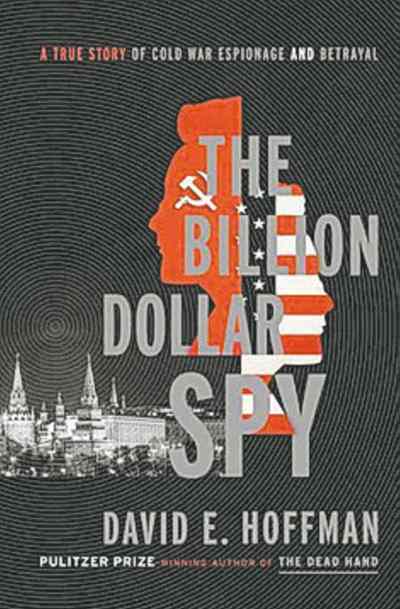
Author David E. Hoffman, a contributing editor at the Washington Post, has written a gripping true story of Cold War espionage.
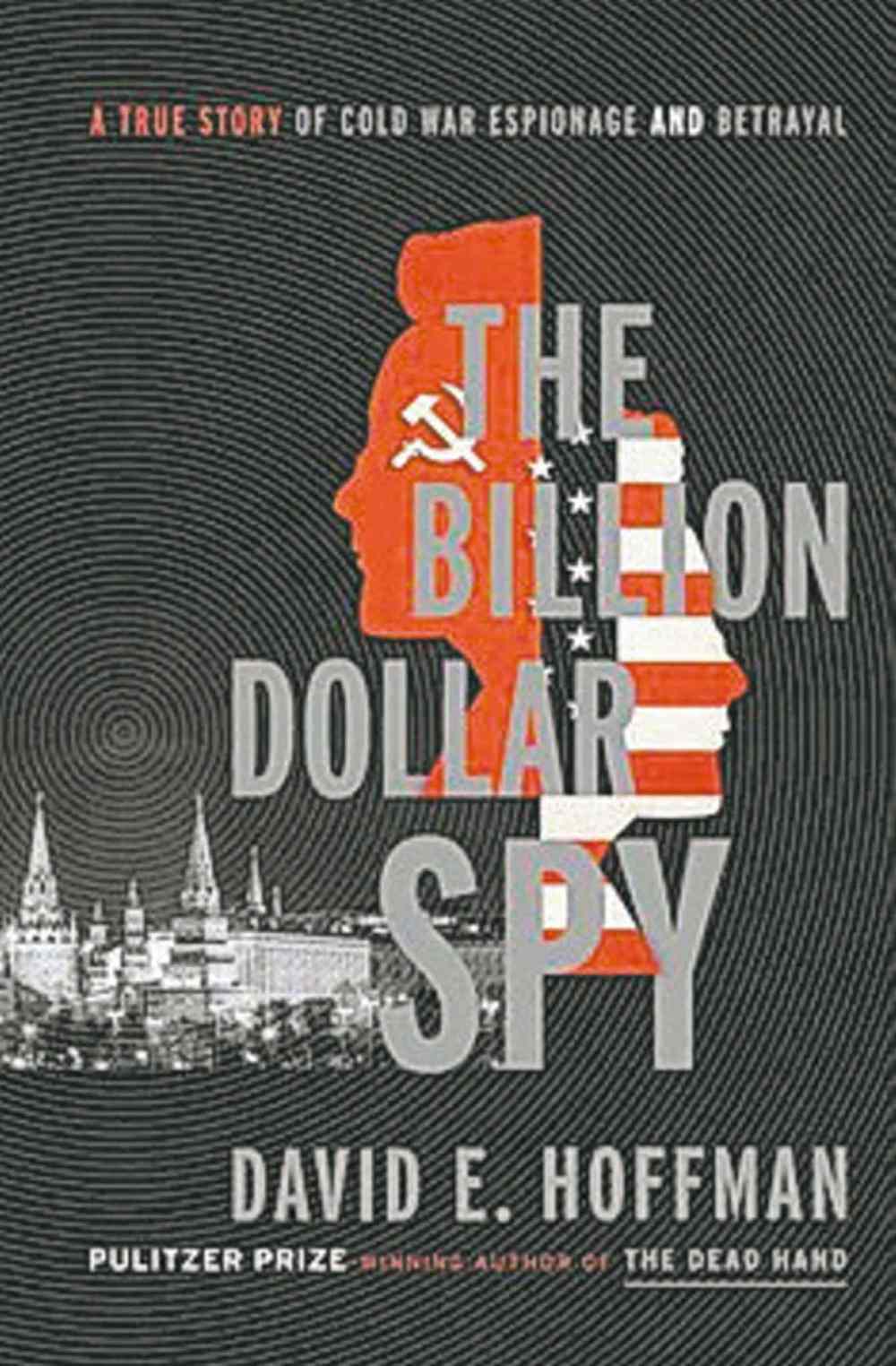
While the Cold War never escalated into open military combat between the U.S. and the Soviet Union it was contested, Hoffman remarks, “in the shadows between war and peace.”

On the front lines of this struggle was the Central Intelligence Agency (CIA). Founded in 1947, the CIA was originally intended to provide objective analysis of intelligence, but its role quickly expanded into espionage and covert action.

There was one place, however, where the CIA had not been able to gain a foothold: the Soviet Union, and especially Moscow.

It was simply too dangerous. Moscow was swarming with KGB, the Soviet secret police.

Soviet dictator Josef Stalin had created a brutal, closed society rife with suspicion.

The CIA’s fortunes in Moscow were to change dramatically in the late 1970s, Hoffman writes, when Soviet engineer and radar specialist Adolf Tolkachev clandestinely contacted the CIA and offered to spy for the Americans.

After some initial caution — the CIA had to ensure Tolkachev was not a “dangle,” a plant controlled by the KGB to mislead the Americans — the agency realized he was legitimate and a productive, albeit risky, relationship began.

Ultimately, Tolkachev was to meet with CIA officers 21 times during six years on the streets of Moscow. Most of these meetings, Hoffman observes, were held within five kilometres of KGB headquarters.

At these meetings, Tolkachev passed to the CIA diagrams and documents he would smuggle out of his laboratory, take to his apartment, photograph with a camera supplied by the CIA, and then return to the laboratory.

Sometimes, he would even photograph documents in the washroom at the laboratory.

What motivated Tolkachev to take such risks? He detested the Soviet regime, and wanted to damage it as much as he could, describing himself as a “dissident at heart.”

The intelligence Tolkachev provided to the CIA was invaluable. The U.S. Air Force estimated Tolkachev’s material had saved it about $2 billion in research and development costs.

Tolkachev had “unlocked the secrets of Soviet radar and revealed sensitive plans for research on weapons systems a decade into the future.”

The Tolkachev operation, however, ended badly. He was betrayed by a disgruntled former CIA employee who defected to the Soviets. Tolkachev was arrested and executed in 1986.

Hoffman’s narrative is an intense, dramatic and ultimately tragic story of what he calls “the shadow war against communism.”


Graeme Voyer is a Winnipeg writer.
Report Error Submit a Tip

More Stories

AI literacy course mandatory at U of W Collegiate

Maggie Macintosh 5 minute read Preview

AI literacy course mandatory at U of W Collegiate

Maggie Macintosh 5 minute read Updated: Yesterday at 9:25 AM CDT

The University of Winnipeg Collegiate is requiring new students to complete artificial intelligence 101 lessons and offering a first-of-its-kind elective for those who want to perfect their chatbot prompts.

The private high school is piloting two projects this year in a bid to improve digital literacy on the downtown campus.

Every Grade 9 and 10 student will have to pass an approximately two-hour long online course about “AI essentials.”

Dean Osaed Khan likened the mandatory e-learning sessions to requiring students to complete a safety course before they can participate in a science lab.

Read
Updated: Yesterday at 9:25 AM CDT

Thirteen accused in gun, drug trafficking network in rural Manitoba

Erik Pindera 5 minute read Preview

Thirteen accused in gun, drug trafficking network in rural Manitoba

Erik Pindera 5 minute read Updated: Yesterday at 3:59 PM CDT

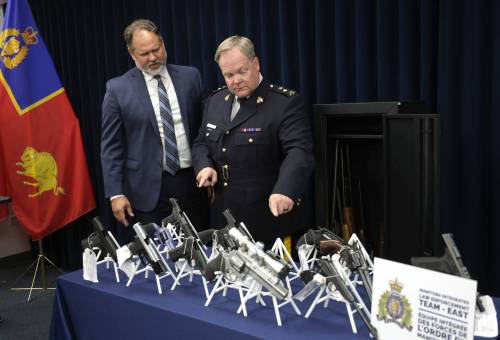
RCMP and Winkler police have arrested more than a dozen people allegedly connected to a drug-and-gun trafficking network that operated in rural Manitoba.

The joint investigation began in December 2024, when officers from the Winkler Police Service asked the Mounties for help after learning kilograms of cocaine were being imported to a Winkler-area truck repair business, said RCMP Supt. Jeff Asmundson, who oversees the force’s Manitoba integrated law enforcement team.

Mounties and Winkler police gathered evidence for 19 months and expanded the probe, dubbed Project Dolor, as investigators learned other types of illicit substances and firearms were being trafficked by the network in a number of southern Manitoba communities, said Asmundson, whose team investigates serious and organized crime.

“It started as a cocaine trafficking investigation, and obviously, as we move along in a project or a file, evidence is gathered and an opportunity arose and we wanted to ensure public safety,” he told reporters Tuesday. “We were able to secure some firearms.”

Read
Updated: Yesterday at 3:59 PM CDT

Cryopreservation — now that’s playing the long game

Pam Frampton 5 minute read Preview

Cryopreservation — now that’s playing the long game

Pam Frampton 5 minute read 2:00 AM CDT

They say you can’t cheat death, but what if you could?

What if the promise of some future scientific breakthrough offered the possibility that you could be revived many years after your demise? Would you be willing to pay your money and take your chances?

This is the premise behind Tomorrow.bio, the Berlin-based cryopreservation company that keeps sending me intriguing emails about lifespan extension, biostasis and dewars — the latter being the liquid nitrogen tanks where long-term “patients” are stored.

Maybe Tomorrow.bio found out about the pair of columns I wrote about death for the Free Press in April 2025, in which I confessed my profound fear of the end that comes to us all.

Read
2:00 AM CDT

Bombers give would-be boo birds their marching orders

Taylor Allen 3 minute read Preview

Bombers give would-be boo birds their marching orders

Taylor Allen 3 minute read Yesterday at 7:08 PM CDT

The Winnipeg Blue Bombers are being criticized by some fans online for booking the University of North Dakota’s marching band for Friday’s game against Montreal.

With the current state of Canada-U.S. relations, and Friday being designated as Canadian Armed Forces Appreciation Night, many view the club’s decision to invite a band from a pro-Trump state as a puzzling one.

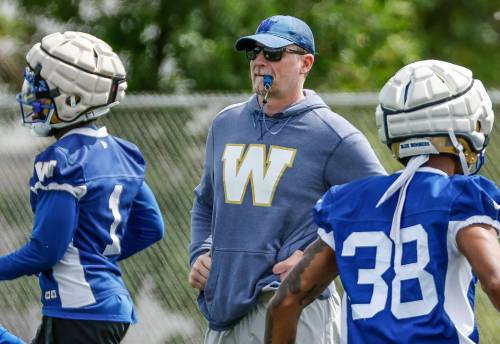
“I’m a very proud Canadian,” said Bombers head coach Mike O’Shea after Tuesday’s practice.

“But I don’t think politics enter into this entertainment realm when you’re dealing with university kids that are coming up here to put on a show.”

Read
Yesterday at 7:08 PM CDT

Engineer-turned-spy invaluable to Cold War-era CIA

Reviewed by Graeme Voyer 3 minute read Preview

Engineer-turned-spy invaluable to Cold War-era CIA

Reviewed by Graeme Voyer 3 minute read Saturday, Aug. 22, 2015

The Cold War dominated world history in the latter half of the 20th century.

It was a global competition for spheres of influence between the United States and the Soviet Union, the two superpowers that emerged after the Second World War.

Author David E. Hoffman, a contributing editor at the Washington Post, has written a gripping true story of Cold War espionage.

While the Cold War never escalated into open military combat between the U.S. and the Soviet Union it was contested, Hoffman remarks, "in the shadows between war and peace."

Read
Saturday, Aug. 22, 2015

Another downtown eatery bites the dust

Nicole Buffie 6 minute read Preview

Another downtown eatery bites the dust

Nicole Buffie 6 minute read Monday, Aug. 24, 2026

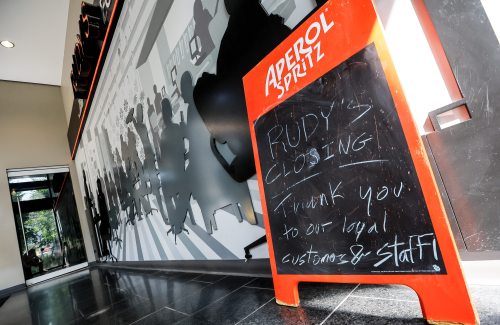
Another longtime downtown Winnipeg restaurant has closed its doors, leaving another hole in the city’s core.

Rudy’s Eat & Drink announced on social media it was closing after 15 years in Manitoba Hydro Place but did not cite a reason.

“Cheers to the years of local beer, burger weeks, jets games, weddings, catering, stone soup week, DJ nights, charitable events and everything in between — we will hold these memories forever,” the post said. “The end of an era — but there’s always another chapter.”

General manager Mackenzie Robb declined to comment on the eatery’s closure. Rudy’s last day of service was on Friday.

Read
Monday, Aug. 24, 2026