Literary road trip: ex-publisher dishes about CanLit icons
Advertisement
Read this article for free:
or
Already have an account? Log in here »
To continue reading, please subscribe:

Digital Subscription
One year of digital access for only $205*
- Enjoy unlimited reading on winnipegfreepress.com
- Read the E-Edition, our digital replica newspaper
- Access News Break, our award-winning app
- Play interactive puzzles
*First annual payment billed as $205.00 + GST for one year. This annual subscription will automatically renew at $233.00 + GST every 52 weeks (10% off the regular annual price of $259.35). Offer available to new and qualified returning subscribers only. Cancel any time.
To continue reading, please subscribe:
Add Free Press access to your Brandon Sun subscription for only an additional
$1 for the first 4 weeks*
- Enjoy unlimited reading on winnipegfreepress.com
- Read the E-Edition, our digital replica newspaper
- Access News Break, our award-winning app
- Play interactive puzzles
*Your next Brandon Sun subscription payment will increase by $1.00 and you will be charged $17.95 plus GST for four weeks. After four weeks, your payment will increase to $24.95 plus GST every four weeks.
Read unlimited articles for free today:
or
Already have an account? Log in here »
Hey there, time traveller!
This article was published 05/09/2015 (3997 days ago), so information in it may no longer be current.
Summer is the season when avid readers burrow through books they have missed all year. But they’re really just waiting for the fall, when the latest batch of new releases fill bookstore shelves. The urge to settle in and ignore the leaves falling from the trees is strong.
While it’s exciting to look forward, it’s also a good idea to look back occasionally and realize how many high-calibre writers Canada has produced over the decades — especially since the 1960s, when CanLit came of age.
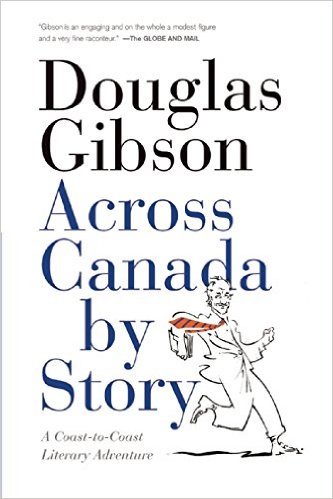
Who better to do that than Douglas Gibson? The former editor and publisher at McClelland & Stewart worked with many of Canada’s internationally known literary stars, including Alice Munro, Robertson Davies, Alistair Macleod and Margaret Atwood.

In his “retirement,” Gibson has penned a literary geography of Canada, an enjoyable stream of stories that traverse the country.
This memoir grew from a stage play Gibson created about his career in publishing. Based on an earlier memoir, Stories About Storytellers, Gibson took the play on tour and came to realize he had accumulated a wealth of anecdotes through his business and personal relationships with many writers and their families. His brief accounts about them (a few paragraphs to a few pages) add a human touch to their image and enrich our understanding of their work.
His chatty style and wry wit are endearing. He uses hyperbole to rank each author on the ladder of the literary canon. Satirist Charles Gordon, for example, has “a dry sense of humour so Canadian that it deserves to occupy our seat at the United Nations.”
Gibson’s humour extends to himself, as he confesses making catastrophic publishing blunders (losing Carol Shields before she won the Pulitzer Prize for The Stone Diaries — “another one that got away”) and lampooning the dubious respectability of his Scottish heritage.
Some stories reveal surprising information about the individuals. Historian Pierre Berton stepped in anonymously to fund a writers’ conference after the federal government abruptly withdrew funding. Hugh MacLennan fathered a daughter with a married woman and carried on their relationship, despite marrying twice. Alice Munro lost her ability to write in the mid-1970s when she was being pressured to produce novels instead of short stories.
The journey across Canada follows his theatrical tour rather than the Trans-Canada Highway. It begins in Manitoba, where a nervous Gibson first presented his play at McNally Robinson Booksellers (he offers a nod to then-owners Paul and Holly McNally and former Free Press Books editor Morley Walker for their assistance). His chapter titles reflect his view of Canada: Hogtown Heroes, Alice Munro Country, In the Middle of Canada, Rock Talk. Gibson’s use of parenthetical comments is chuckle-inducing.
Cartoonist Anthony Jenkins livens up the pages with line-drawn caricatures, from a stern-looking Margaret Laurence, a devilish Michael Ondaatje (women swoon at his every word, according to Gibson) to a frumpish Linwood Barclay (decidedly not a babe magnet).

Anyone who isn’t familiar with older writers can learn how Margaret Laurence, Gabrielle Roy and Northrop Frye shaped the Canadian literary world, but the narrative presupposes a level of knowledge about the arts and publishing scene as well as political and social events over the last 50 years.
New stories tempt us — like kids in a candy store, it’s hard to choose. But reading about writers is a good way to explore new directions in reading. Gibson’s chronicle is a pleasant page-turner, one to curl up with on the sofa.
And those pesky leaves? Maybe the wind will blow them into the neighbour’s yard. After a good yarn, it’s a reader’s fondest wish.
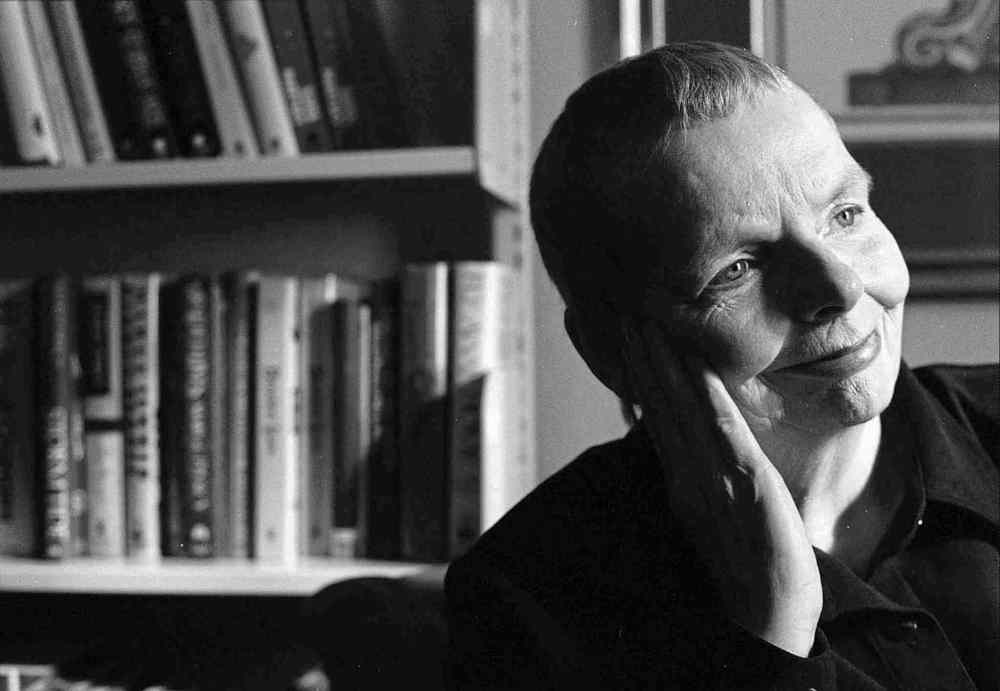
Harriet Zaidman is a teacher-librarian in Winnipeg.
History
Updated on Saturday, September 5, 2015 7:50 AM CDT: Formatting.