Feminist icon’s reflections filled with humour, quick wit
Advertisement
Read this article for free:
or
Already have an account? Log in here »
To continue reading, please subscribe:

Digital Subscription
One year of digital access for only $205*
- Enjoy unlimited reading on winnipegfreepress.com
- Read the E-Edition, our digital replica newspaper
- Access News Break, our award-winning app
- Play interactive puzzles
*First annual payment billed as $205.00 + GST for one year. This annual subscription will automatically renew at $233.00 + GST every 52 weeks (10% off the regular annual price of $259.35). Offer available to new and qualified returning subscribers only. Cancel any time.
To continue reading, please subscribe:
Add Free Press access to your Brandon Sun subscription for only an additional
$1 for the first 4 weeks*
- Enjoy unlimited reading on winnipegfreepress.com
- Read the E-Edition, our digital replica newspaper
- Access News Break, our award-winning app
- Play interactive puzzles
*Your next Brandon Sun subscription payment will increase by $1.00 and you will be charged $17.95 plus GST for four weeks. After four weeks, your payment will increase to $24.95 plus GST every four weeks.
Read unlimited articles for free today:
or
Already have an account? Log in here »
Hey there, time traveller!
This article was published 06/02/2016 (3887 days ago), so information in it may no longer be current.
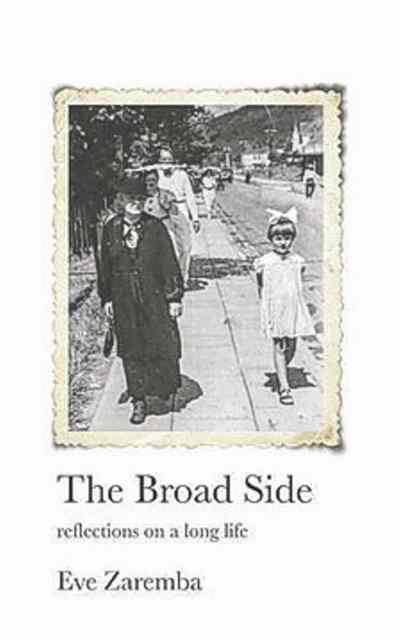
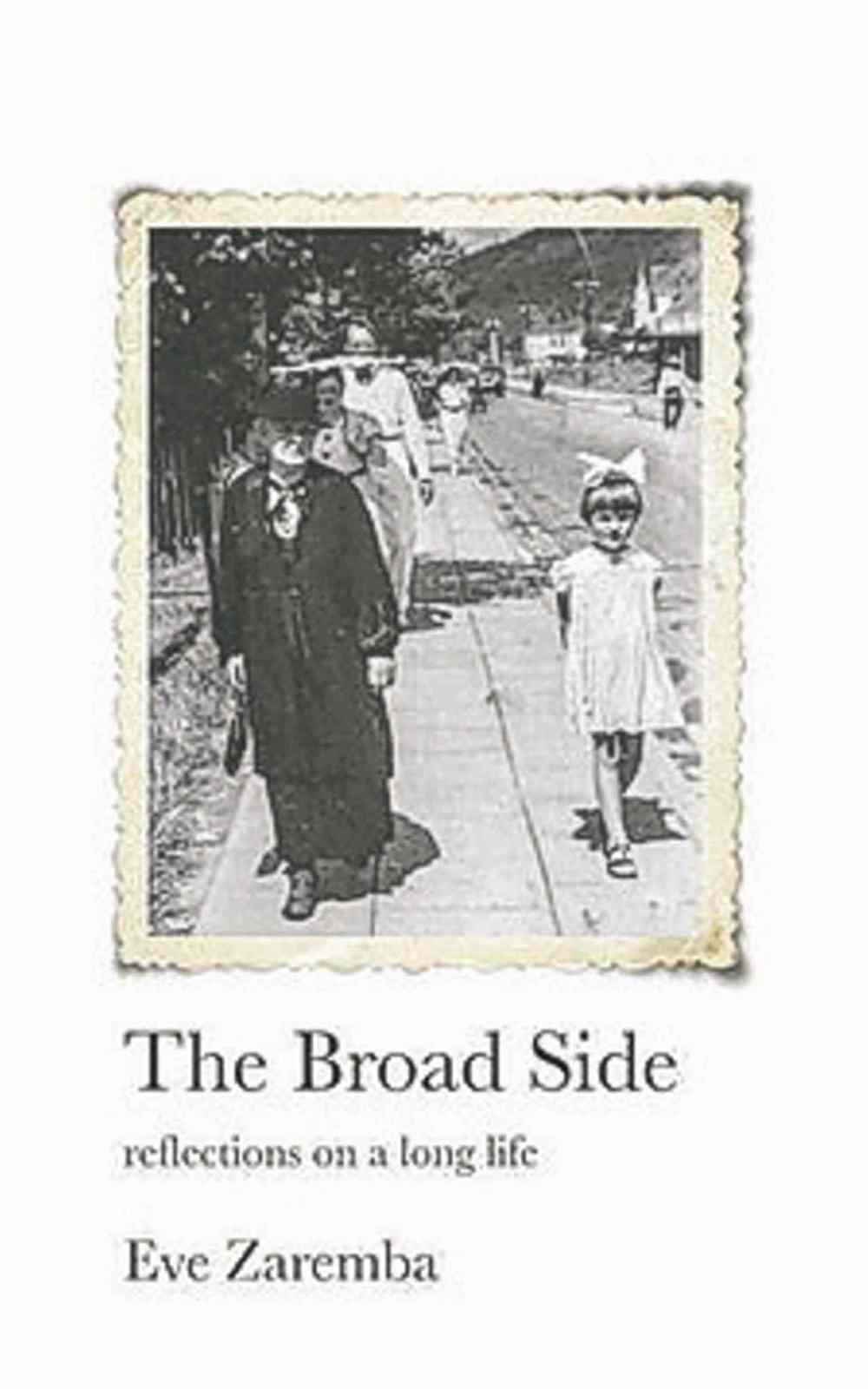
In 1940, Eve Zaremba left war-torn Poland at the age of nine. Forced from their home by the encroaching Nazis, Eve and her mother fled to Italy, France and Britain.
Choosing to stay in Poland, her brother Andrzej was captured and suffered in Auschwitz before being liberated. Her father, an army officer, could not return their family to Poland after the war because the Soviets had stripped their citizenships. Faced with national homelessness, Eve and her parents decided to immigrate to Canada, and settled in Hamilton, Ont.
Thus begins Zaremba’s memoir The Broad Side. Filled with quick wit and humour, Zaremba’s book serves as an important historical document that addresses not only the position of Poles during the Second World War and their resulting widespread diaspora, but also Zaremba’s important contribution to the women’s liberation movement in Canada through her work at the famous feminist magazine The Broadside.
Zaremba spent her 20s and 30s working her way up a variety of corporate ladders in the advertising industry before turning to a career in feminist activism and becoming a writer of lesbian detective fiction. Around this time, she begins to write candidly about lovers, her own foibles in and out of love, and her final commitment to her wife, Ottie. Her life story is an inspiring one, and she tells it with a warm flippancy that is both charming and indicative of her vibrant, courageous spirit.
That said, The Broad Side — written as though to a close friend sitting at her kitchen table with her after a hearty meal — is often rambling and disjointed, making mention of intriguing details and names of people only in passing. But it does name names — a great many of them. We are taken on detours that jaunt along, sliding from this acquaintance to that on a cross-country tour, with few memorable anecdotes to make the trip worthwhile.
This desire for depth is particularly evident in moments when Zaremba glosses over the homophobia of her and Ottie’s families, or her own self-reflection about the death of her brother. These points are given short shrift, which is disappointing, given their potential to tell us a great deal about Zaremba, about grief and about the experience of lesbians in the latter part of the 20th century.
Keen insights on the women’s movement, including its problems, its fissures and its possibilities, abound. In one poignant passage, she writes: “Patriarchy is an abstract noun. No matter how profound its meaning, an abstraction cannot be combatted directly but only via its symptoms, its results.”
Though frequent and often pleasantly pithy, these moments are as short-lived as they are discerning.
What results is a book that, while interesting, is not overly engaging and thus seems more suited to assist a historian than entertain the casual reader.
As a testimony to Zaremba’s clear love of her friends, lovers, and family, however, The Broad Side offers a series of fleeting memories that are a valuable addition to feminist, queer and immigrant Canadian history.
Katelyn Dykstra Dykerman is a doctoral candidate at the University of Manitoba. She studies feminist and LGBTQ literature. She lives in Steinbach.