Few heroes in story of L.A. serial killer

Advertisement

Advertise with us

There is likely no Canadian reader of this book, a look at one of Los Angeles’ most notorious murder sprees, who won’t think of the bungled Robert Pickton investigation or the ongoing inquiries into missing and murdered Indigenous women and girls.

Read this article for free:


or

Already have an account? Log in here »

To continue reading, please subscribe:

Subscribe and receive a limited-edition Free Press branded hat or tote.

Digital Subscription

One year of digital access for only $205*

  • Enjoy unlimited reading on winnipegfreepress.com
  • Read the E-Edition, our digital replica newspaper
  • Access News Break, our award-winning app
  • Play interactive puzzles

*First annual payment billed as $205.00 + GST for one year. This annual subscription will automatically renew at $233.00 + GST every 52 weeks (10% off the regular annual price of $259.35). Offer available to new and qualified returning subscribers only. Cancel any time.

To continue reading, please subscribe:

Add Free Press access to your Brandon Sun subscription for only an additional

$1 for the first 4 weeks*

  • Enjoy unlimited reading on winnipegfreepress.com
  • Read the E-Edition, our digital replica newspaper
  • Access News Break, our award-winning app
  • Play interactive puzzles
Start now

*Your next Brandon Sun subscription payment will increase by $1.00 and you will be charged $17.95 plus GST for four weeks. After four weeks, your payment will increase to $24.95 plus GST every four weeks.

Hey there, time traveller!
This article was published 07/10/2017 (3284 days ago), so information in it may no longer be current.

There is likely no Canadian reader of this book, a look at one of Los Angeles’ most notorious murder sprees, who won’t think of the bungled Robert Pickton investigation or the ongoing inquiries into missing and murdered Indigenous women and girls.

No one will likely ever know how many South Central women of colour were murdered and abused by Lonnie Franklin Jr. during his decades-long criminal career, but if there are any heroes in the book, few came from the Los Angeles Police Department.

Author Christine Pelisek, a senior writer with People magazine, deserves credit for covering this case with passion, giving victims’ families and the crimes national attention.

Pelisek was the one who gave Franklin his nickname. “Jill Stewart, a brash intelligent no-nonsense editor (at L.A. Weekly), insisted we name him,” she says. “Keeping the story in the public consciousness by giving him a name seemed the best way to do that. Everyone remembered BTK, Zodiac and Son of Sam. We wanted the serial killer to be remembered long after the initial shock and news coverage ran its pace.”

The other killers mentioned in the quote named themselves. Part of their pathology was the cat-and-mouse game they played with police. This is why, despite the horrifying nature of their crimes, these heartless killers make compelling subjects for non-fiction books.

The “Grim Sleeper,” now on death row for 10 murders, is a mystery. No reason is given for his heinous crimes; to his neighbours he was an affable, average person. His nickname comes not from what he did, but rather refers to the 14 years from 1988 to 2002 when he committed no murders.

With the absence of the killer as a main character, there are lesser villains to fill the void. With the victims being black, many of them sex workers and often addicts, the LAPD’s response to solving the crimes was underwhelming. When Franklin was finally identified by a familial DNA match and arrested in 2010, the back-patting and credit-taking by the LAPD, decades after the first crime was committed, is borderline nauseating.

Franklin’s crimes are framed within the wider context of the Night Stalker, a killer targeting white victims in suburban homes, as well as a serial killer operating at the time in South Central. Alongside these cases, which took up significant manpower and money, was the almost pathological corruption and racism that plagued the LAPD. Pelisek introduces some good detectives along the way, but as Nick Broomfield exposes in his documentary Tales of the Grim Sleeper, many of the murders were informally filed by LAPD beat cops as “NHI” — No Human Involved.

The author’s pedigree with People magazine shines through, both good and bad. Anyone who has read a true crime piece in the magazine will recognize the tone. The book is victim-focused and redemptive, with an eye towards finding heroes in the chaos.

One never really gets a sense of what it was like to live in South Central during those violent years, what conditions made Franklin the beast he became, or how a major city could get so dysfunctional as to allow perhaps dozens of women to die in the most terrifying way and have no one seem to care.

Were there answers, we might bring them to the table to help with the unanswered questions of Indigenous families on this side of the border.

Lara Rae is a comedian and longtime fan of the true crime genre.
Report Error Submit a Tip

More Stories

Moving drama at MTYP gives voice to boy who changed law

Holly Harris 5 minute read Preview

Moving drama at MTYP gives voice to boy who changed law

Holly Harris 5 minute read Yesterday at 2:37 PM CDT

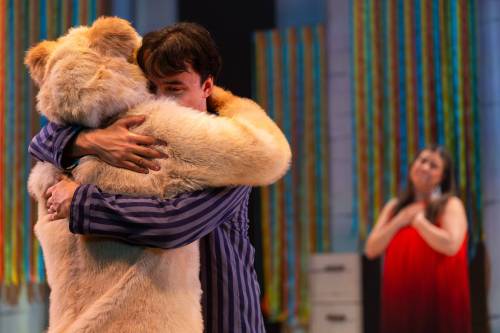
The heroic true tale of Norway House Cree Nation-born Jordan River Anderson came home Friday night, as Manitoba Theatre for Young People presented Yvette Nolan’s Jordan.

The touring production, a collaboration with Geordie Theatre, runs weekends through Oct. 11, with additional stops in Toronto, Vancouver and Ottawa’s National Arts Centre.

Having several of Anderson’s family members witness the local première underscored the evening with poignancy. Elder and Pine Creek First Nation member Barbara Nepinak added her own dignified presence and prayers following MTYP artistic director Pablo Felices-Luna’s welcoming remarks.

The season-opener also marks the Winnipeg-raised playwright’s homecoming; the Algonquin playwright, director, dramaturg, actor and educator was a fixture in our local theatre community for many years before going on to serve as artistic director for Native Earth Performing Arts from 2003 to ‘11, among other contributions.

Read
Yesterday at 2:37 PM CDT

Mayoral candidate Vogiatzakis criticized for living outside Winnipeg

Malak Abas 4 minute read Preview

Mayoral candidate Vogiatzakis criticized for living outside Winnipeg

Malak Abas 4 minute read Friday, Oct. 2, 2026

A mayoral hopeful took heat from other candidates Friday for living outside Winnipeg while running in the civic election.

Mike Vogiatzakis’s primary residence is in the Rural Municipality of St. Andrews, about 25 kilometres north of Winnipeg — a community with its own mayor and councillors.

But the funeral director said he owns a home in Winnipeg where he divides his time, and he would move to the city full-time if elected mayor.

“It doesn’t matter where a person lives. Why are we dividing St. Andrews and Manitoba and Winnipeg? I’ve met the criteria to run for mayor,” Vogiatzakis said Friday morning.

Read
Friday, Oct. 2, 2026

Winnipeggers witness unveiling of Japanese Canadian monument in B.C.

Morgan Modjeski 6 minute read Preview

Winnipeggers witness unveiling of Japanese Canadian monument in B.C.

Morgan Modjeski 6 minute read Yesterday at 8:39 PM CDT

As Miki Stewart gathered with her family at the Japanese Cultural Association of Manitoba on Saturday afternoon, she was thinking of her parents, Yoshimaru and Yoshi Abe.

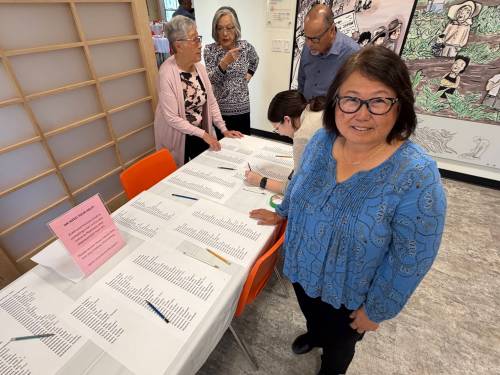
Both Stewart, 80, and her sister Yumi Falk, 81, alongside an older brother, were born in the Tashme internment camp in British Columbia. They were among more than 2,600 Japanese Canadians who were forcefully removed and interred at the camp following the bombing of Pearl Harbour and Canada’s declaration of war on Japan in 1941.

“They didn’t talk much about how they suffered,” Stewart said of her parents. “But they did.”

She was amongst a group of more than 150 people who gathered at the association’s McPhillips headquarters on Saturday afternoon to watch the unveiling of the Japanese Canadian Monument in Victoria B.C.

Read
Yesterday at 8:39 PM CDT

Manitoba’s own Summer Howell takes on biggest role yet as Stephen King’s telekinetic teen Carrie

Randall King 7 minute read Preview

Manitoba’s own Summer Howell takes on biggest role yet as Stephen King’s telekinetic teen Carrie

Randall King 7 minute read Friday, Oct. 2, 2026

From the tender age of eight, actress Summer Howell has made her presence known in a series of horror films shot in her home province of Manitoba.

Her first film was Curse of Chucky (2013), director Don Mancini’s continuation of the venerable killer doll series he started (as a screenwriter) in 1988 with Child’s Play.

“Even then, it was obvious she was very talented, intelligent and delightful,” Mancini said of Howell.

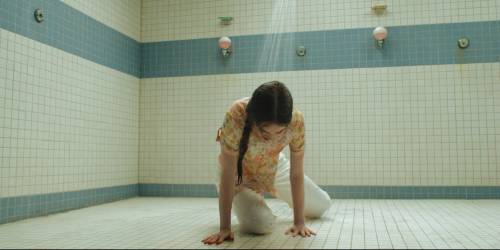
Though she has worked in other genres, Howell gravitated to horror repeatedly, with credits in Shawn Linden’s harrowing Hunter Hunter (2020) and the 2023 possession thriller All Fun and Games. Earlier this year, she shot the horror film Sundown in Winnipeg with director Rebekah McKendry, which premièred last week at Beyond Fest in Los Angeles and is headed for a streaming berth on Shudder.

Read
Friday, Oct. 2, 2026

Blown lead spoils Jets opener

Mike McIntyre 7 minute read Preview

Blown lead spoils Jets opener

Mike McIntyre 7 minute read Friday, Oct. 2, 2026

Younger. Faster. Stronger.

They may still be a long ways from a finished product, but it’s safe to say the new-look Winnipeg Jets made a mostly favourable first impression on Friday night in front of a sold-out crowd at Canada Life Centre.

Sure, a 4-3 overtime loss to a hard-nosed Boston Bruins outfit is going to sting a little, especially since the home team was just 98 seconds away from a regulation victory.

But if the Jets can bottle up this kind of energy and effort, they should enjoy plenty of success over the course of the 84-game campaign.

Read
Friday, Oct. 2, 2026

Creative powerhouse Perry Rosemond never lost Winnipeg roots

Ben Waldman 7 minute read Preview

Creative powerhouse Perry Rosemond never lost Winnipeg roots

Ben Waldman 7 minute read Yesterday at 6:00 AM CDT

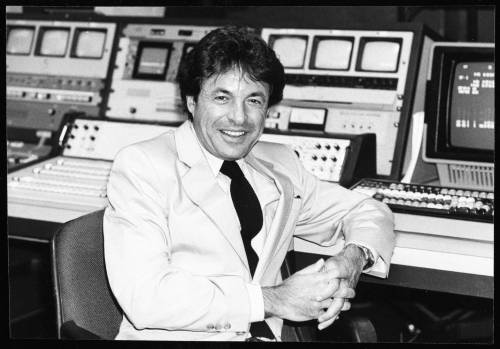
He created King of Kensington, directed the troops in the Royal Canadian Air Farce, and his creative eye was behind the lens for television shows starring Johnny Cash, Tom Jones, Mr. Dress-Up and the Friendly Giant.

He also wrote and developed the Canadian version of Sesame Street during his time as the head of school and preschool programming for CBC in Toronto, and directed a televised special in 2002 for Winnipeg sketch comedy troupe Royal Liechtenstein Theatre Company.

But before his name featured in the credits of some of the most iconic and influential pieces of the Cancon canon, Perry Rosemond was an only child living in a crammed, multi-generational home in Winnipeg’s North End, racing each day to beat the morning bell next door at William Whyte School.

In memoirs that have yet to be published, the late television producer recalled his childhood. “(T)here were 14 of us in the house at 193 Andrews St., and it wasn’t that big of a house,” he writes.

Read
Yesterday at 6:00 AM CDT