Asian stories Hollywood could adapt next
Here are six other books that should be brought to the big screen
Advertisement
Read this article for free:
or
Already have an account? Log in here »
To continue reading, please subscribe:

Digital Subscription
One year of digital access for only $205*
- Enjoy unlimited reading on winnipegfreepress.com
- Read the E-Edition, our digital replica newspaper
- Access News Break, our award-winning app
- Play interactive puzzles
*First annual payment billed as $205.00 + GST for one year. This annual subscription will automatically renew at $233.00 + GST every 52 weeks (10% off the regular annual price of $259.35). Offer available to new and qualified returning subscribers only. Cancel any time.
To continue reading, please subscribe:
Add Free Press access to your Brandon Sun subscription for only an additional
$1 for the first 4 weeks*
- Enjoy unlimited reading on winnipegfreepress.com
- Read the E-Edition, our digital replica newspaper
- Access News Break, our award-winning app
- Play interactive puzzles
*Your next Brandon Sun subscription payment will increase by $1.00 and you will be charged $17.95 plus GST for four weeks. After four weeks, your payment will increase to $24.95 plus GST every four weeks.
Read unlimited articles for free today:
or
Already have an account? Log in here »
Hey there, time traveller!
This article was published 19/08/2018 (2933 days ago), so information in it may no longer be current.
We hear the expression “Representation matters” all the time, and it’s still worth repeating. As a Korean-American, I grew up yearning to see actors that looked like me. On the rare occasions I saw an Asian celebrity, I adored them unflaggingly. Still, I can count those figures on one hand: champion figure skater Kristi Yamaguchi, the yellow Power Ranger, Lucy Liu in the 2000 movie version of Charlie’s Angels. I twirled, wrestled and jumped around fighting crime as if I were these characters, relishing my small moments of recognition. Even now, the desire to be considered an integral, natural part of American society pulses in me, and I delightedly point out Asian actors whenever they appear onscreen, even if they’re only in a 30-second commercial.
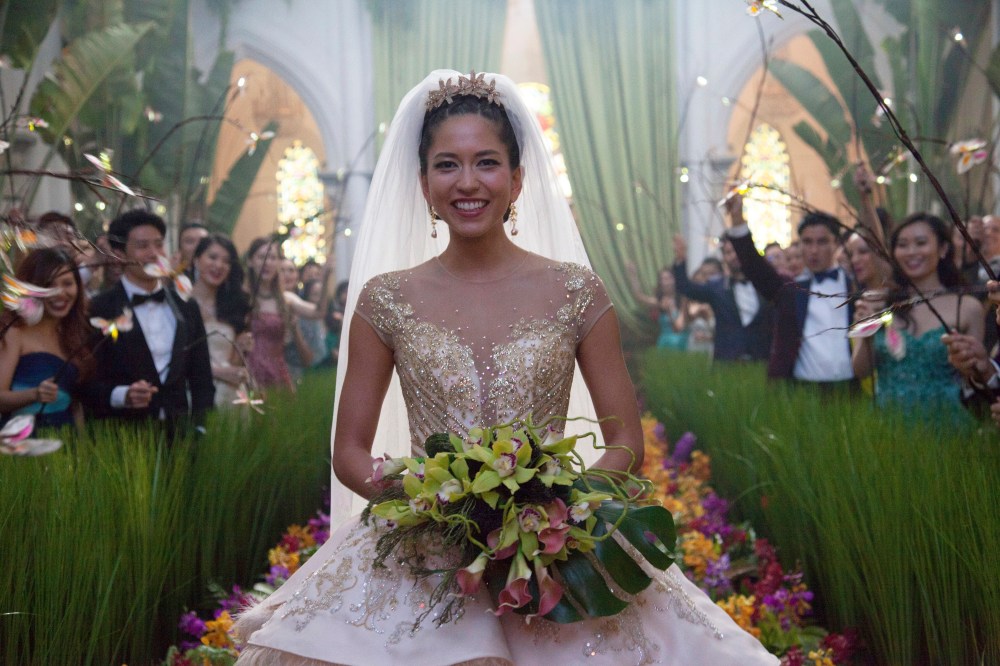
When I heard that Hollywood was going to make Kevin Kwan’s novel Crazy Rich Asians into a movie, I was so ecstatic I nearly cried. That may sound overly dramatic, but it’s important to consider what this movie means to the more than 17 million Asian-Americans living in the United States. As a major feature film with Asian-Americans in leading roles, Crazy Rich Asians is important. We hope that this movie will be our Black Panther, announcing to Hollywood that we are here, we belong and we are ready for more. To celebrate, I’ve come up with a list of six books that should be adapted for the screen next.
What We Were Promised, by Lucy Tan. This recently published debut novel is set in glittering modern Shanghai, where the Zhen family lives in a luxury hotel-and-apartment complex. Wei, Lina and their daughter are Chinese-born, western-educated and full of complex drama. When Wei’s long-lost brother returns after years on the run, questions about family, loyalty and past love threaten to tear the family apart. Woven into this narrative is the Zhens’ housekeeper, whose friendship with the family’s driver provides a stark contrast to their wealthy bosses’ lives. Dramatic and deeply moving, this would be perfect Oscar material.
The Windfall, by Diksha Basu. Kwan describes this novel as a “sharply observed satire” and “a delicious, addictive treat.” In this comedy of manners, Basu brings us to modern India, where Mr. and Mrs. Jha’s newfound money propels them from a cramped housing complex in East Delhi to the rich side of town. What follows is a hilarious and charming story about social status, pride and reputation as Mr. Jha becomes increasingly involved in a competitive display of wealth with his neighbours. The Windfall would make a great movie with just the right balance of humour and heart.
The Gangster We Are All Looking For, by Le Thi Diem Thuy. This fragmented, lyrical novel is told from the perspective of a nameless young Vietnamese girl whose family immigrates to California after the Vietnam War. Shifting in time and place, the young narrator sees the world through a lens of trauma. As she waits for her mother to join the rest of the family in San Diego and watches her former gangster father fall into drunken rages, the narrator also grieves for a drowned brother. Impressionistic and brooding, the drama would make a haunting short film.
Pachinko, by Min Jin Lee. This bestseller is a sprawling, nearly 500-page novel about four generations of a Korean family living in Japan. The novel gripped me until the very end, and an equally epic eight-part prestige TV series would do the material justice. Pachinko begins in Korea with strong-willed Sunja, who falls in love with an older man. When she becomes pregnant, a Christian minister offers to take her as his wife to Japan. Their decision to forge a new life in a country that does not consider them citizens sparks a beautiful story about family, love and survival. Luckily for us viewers, Apple recently secured the rights to Pachinko, so a television series may well be in our future.
Bury What We Cannot Take, by Kirstin Chen. In 1950s communist China, nine-year-old San San and her older brother, Ah Liam, experience a terrible chain of events after their grandmother destroys a framed portrait of Chairman Mao. The family must flee their home, but when San San and Ah Liam’s mother tries to secure visas to Hong Kong, she is told that she must leave one of her children behind to prove that the family will return. How do you choose between your two children? This question drives the rest of the narrative to its poignant end.
Snow Hunters, by Paul Yoon. This slim, beautiful story follows Yohan, a North Korean refugee who flees his country at the end of the Korean War, settling in a coastal town in Brazil. Yohan is alone and lonely, traumatized by a war that has made him a stranger in a strange land. But he creates a new life, befriending the Japanese tailor who hires him, two vagabond children and a kindly church groundskeeper. Snow Hunters would make an elegiac and tender indie film, full of languorous shots and precise, spare dialogue.
Crystal Hana Kim is the author of the recently released novel If You Leave Me.
— Washington Post