Study of ‘social suite’ shows cause for optimism

Advertisement

Advertise with us

At first, it might seem that a book about the “evolutionary origins of a good society” must be somewhat naïve. After all, it comes at a time when the headlines are full of news about hate groups, the rise of authoritarian governments and anthropogenic climate disasters.

Read this article for free:


or

Already have an account? Log in here »

To continue reading, please subscribe:

Subscribe and receive a limited-edition Free Press branded hat or tote.

Digital Subscription

One year of digital access for only $205*

  • Enjoy unlimited reading on winnipegfreepress.com
  • Read the E-Edition, our digital replica newspaper
  • Access News Break, our award-winning app
  • Play interactive puzzles

*First annual payment billed as $205.00 + GST for one year. This annual subscription will automatically renew at $233.00 + GST every 52 weeks (10% off the regular annual price of $259.35). Offer available to new and qualified returning subscribers only. Cancel any time.

To continue reading, please subscribe:

Add Free Press access to your Brandon Sun subscription for only an additional

$1 for the first 4 weeks*

  • Enjoy unlimited reading on winnipegfreepress.com
  • Read the E-Edition, our digital replica newspaper
  • Access News Break, our award-winning app
  • Play interactive puzzles
Start now

*Your next Brandon Sun subscription payment will increase by $1.00 and you will be charged $17.95 plus GST for four weeks. After four weeks, your payment will increase to $24.95 plus GST every four weeks.

Hey there, time traveller!
This article was published 18/05/2019 (2675 days ago), so information in it may no longer be current.

At first, it might seem that a book about the “evolutionary origins of a good society” must be somewhat naïve. After all, it comes at a time when the headlines are full of news about hate groups, the rise of authoritarian governments and anthropogenic climate disasters.

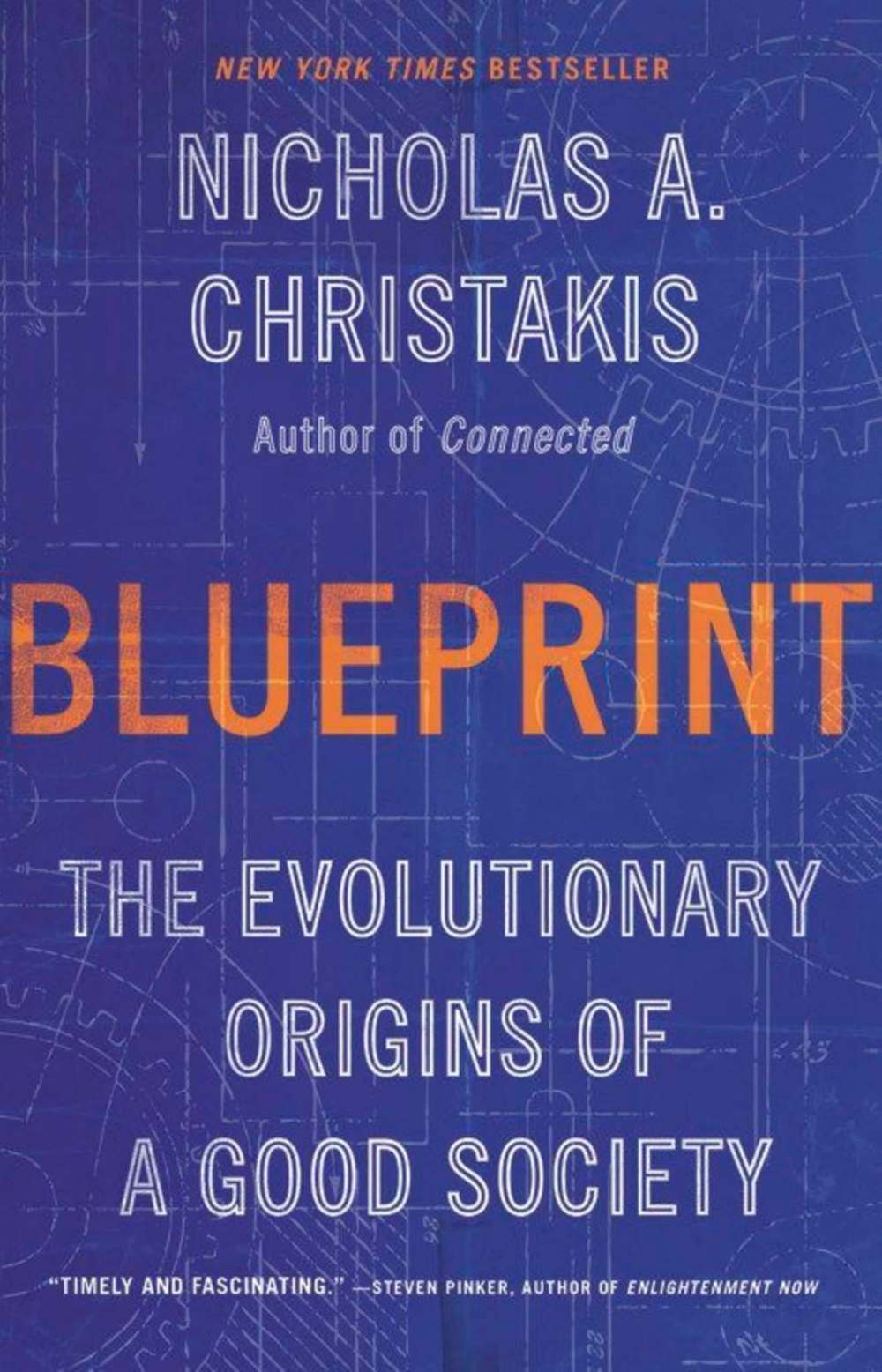
However, Nicholas Christakis’s Blueprint presents a convincing argument that there is a scientifically demonstrable basis for our shared humanity — one that connects us profoundly not only with each other, but with animals as well.

For Christakis, this connection may be found in what he calls the “social suite”: the practices found in all human societies regarding the recognition of individuals; romantic and familial love; friendships and social networks; co-operation; group identity; social structures combining aspects of hierarchy and egalitarianism; and the ability to learn from others.

Supplied
In 1914, Sir Ernest Shackleton’s ship became trapped in an Antarctic ice pack. This ‘unintentional community’ is one example Nicholas Christakis cites to demonstrate that failures have as much to teach us as successes.
Supplied In 1914, Sir Ernest Shackleton’s ship became trapped in an Antarctic ice pack. This ‘unintentional community’ is one example Nicholas Christakis cites to demonstrate that failures have as much to teach us as successes.

The bestselling and award-winning author of 2011’s Connected: The Surprising Power of Our Social Networks and How They Shape Our Lives (co-written with James H. Fowler), Christakis teaches social and natural sciences at Yale University and was named to Time magazine’s “Time 100” list of the world’s most influential people. In his fascinating and deeply informed Blueprint, he does an excellent job of explaining often-complex scientific principles for the lay reader.

To illustrate how the elements of the social suite operate, Christakis first examines cases of people thrown together by accident in shipwrecks — i.e., unintentional communities — as well as intentional utopias and communes. Here we learn that failures have as much to teach us about the social suite as successes: the dysfunctional colony on Pitcairn Island established by the mutineers of the Bounty, for example, fell into chaos and murder owing to the racism and drunkenness of the mutineers, while Ernest Shackleton helped 28 men survive co-operatively for nearly two years while stuck in the Antarctic ice.

Next, the author turns to cross-cultural studies by anthropologists to discover both universal practices (such as social networks) as well as some that are not so universal, such as kissing and monogamy. In his view, the bonds our species feel for our children and mates are the core of the blueprint, as they evolved to extend in ever wider circles to include kin and community.

Over the years, Christakis has conducted or led numerous large-scale studies through Yale University’s Human Nature Lab, and he refers to these frequently in the book. But he also relies heavily on the work of scientists from across the zoological sciences for evidence of the extent to which many of the features of the social suite may also be seen in the living arrangements of dolphins, whales, elephants and the great apes who, to varying capacities, demonstrate self-awareness, co-operation, empathy, grief and pair-bonding.

These discoveries bring us to his most controversial argument: that, if the strategies of the social suite are found in nature where they are attributed to advantageous genetic evolution, why then may we not also see these forces at work in ourselves?

He theorizes that our genetic makeup has “downstream effects” in shaping our physical and social environments to help ensure our survival — and thus the ability to pass on our genes — with the result that we are all influenced to some degree by other peoples’ genes.
While he acknowledges the dark and troubling history of citing genetics to claim distinctions between social groups, Christakis also points out that the opposite argument — that human social behaviour has nothing to do with genes and is therefore infinitely malleable — has also resulted in the deaths of millions at the hands of totalitarian leaders.

His Blueprint represents a third path: a positive counter-narrative to the seemingly dominant cloud of hatred and prejudice surrounding us to reveal that we are, in fact, hard-wired to live together and love one another, and to do both well.

Michael Dudley is a librarian at the University of Winnipeg.

Report Error Submit a Tip

More Stories

Port of Churchill expansion could chase belugas away, U of M researcher says

Nicole Buffie 4 minute read Preview

Port of Churchill expansion could chase belugas away, U of M researcher says

Nicole Buffie 4 minute read 9:07 AM CDT

As plans to expand the Port of Churchill into a four-season trade corridor gathers momentum, a University of Manitoba researcher has published a report on what ship traffic could mean for the beluga whales that gather in the Churchill River estuary each summer.

Veronica Coppolaro said more vessels in the waterways bring a risk that belugas will stop using the estuary for migration, which would impact the ecological landscape, tourism and communities that rely on the animals for food and cultural purposes.

“There are studies showing that (noises) change the way they swim, they change the way (the whales) are vocalizing, they change their main activity, and so this (expansion) can have consequences at different levels,” she said.

The Churchill river estuary is a marine habitat where the Churchill River empties into Hudson Bay. During the summer months belugas gather in the area to feed and give birth.

Read
9:07 AM CDT

News briefs for Sunday, September 13, 2026

1 minute read Updated: 9:47 AM CDT

A collection of breaking news briefs filed on Sunday, September 13, 2026

Suspect arrested two months after bear spray, air rifle incident at Henderson Hwy. hotel

9:47 AM

A man has been arrested and remains in police custody after being charged with spraying bear spray inside a Henderson Highway hotel in early July. The suspect is also accused of  pointing a gun, chasing people and making violent threats in the hotel's parking lot after a dispute over a VLT ticket at the licensed establishment in the 1000 block of Henderson Highway.

A life's story: ‘Ivor the Driver’ found his calling in the ranching life

Aaron Epp 7 minute read Preview

A life's story: ‘Ivor the Driver’ found his calling in the ranching life

Aaron Epp 7 minute read Updated: Yesterday at 9:59 AM CDT

Ivor Asham’s family couldn’t have picked a better image to accompany his obituary. There he is, riding Flash, his beloved brown and white quarter horse, a black cowboy hat on his head and a drink in his hand.

Asham owned and operated Birds Hill Park Ranch for nearly 35 years, where he shared his lifelong passion for horses with thousands of visitors. He moved hay, harnessed horses and drove the wagons, introducing himself as “Ivor the Driver.”

Over the years, Asham built a reputation as the quintessential cowboy.

There’s a restaurant at the ranch filled with memorabilia that he collected over the years. Calgary Stampede posters, cowboy boot-shaped shot glasses, a child’s rocking horse, a wagon wheel and numerous photos of legendary actor John Wayne are just some of the items that line the walls.

Read
Updated: Yesterday at 9:59 AM CDT

Pokemon thieves clear out collectibles shop

Scott Billeck 5 minute read Preview

Pokemon thieves clear out collectibles shop

Scott Billeck 5 minute read Friday, Sep. 11, 2026

Terri Settle loved watching children walk into her collectibles shop to hunt for their favourite Pokemon cards.

After the latest break in stripped her shelves of much of the inventory, she’s not sure she’ll get to see it again.

Thieves broke into Terri’s Trinkets and Toys on Tuesday evening, punching through a grate and then the store’s bathroom wall to reach the storefront.

They made off with about $6,000 worth of merchandise, including all of the store’s Pokemon cards — about 7,000 of them — along with toys, Lego, jewelry, video games, a debit machine and personal laptop. They even took her vacuum cleaner.

Read
Friday, Sep. 11, 2026

Canadians loving Carney’s decision to stand tall against floundering U.S. bully

Tom Brodbeck 5 minute read Preview

Canadians loving Carney’s decision to stand tall against floundering U.S. bully

Tom Brodbeck 5 minute read Friday, Sep. 11, 2026

It’s hard to imagine a more dramatic political contrast than the one unfolding on opposite sides of the Canada-U.S. border.

Mark Carney is fighting a trade war with Donald Trump, taking the occasional verbal punch from the American president and imposing retaliatory tariffs on U.S. products.

And the prime minister is being rewarded for it politically.

Trump, meanwhile, is fighting pretty much everyone he can find — including some of America’s closest allies — and his own voters are increasingly giving him the political equivalent of a raised middle finger. That’s quite a tale of two leaders.

Read
Friday, Sep. 11, 2026

Sex assault charges against basketball referee stayed

Dean Pritchard 3 minute read Preview

Sex assault charges against basketball referee stayed

Dean Pritchard 3 minute read Friday, Sep. 11, 2026

A Winnipeg basketball referee accused of sexual offences involving three men has had criminal charges against him stayed.

Michael Shane Maryk, 45, had been set to stand trial July 20 on five counts of sexual assault and two counts of committing an indecent act, but instead agreed to a one-year peace bond prohibiting him from having any contact with the three men.

Maryk was employed by the Manitoba Association of Basketball Officials at the time the offences were alleged to have occurred.

The peace bond requires that Maryk not come within 200 metres of the men’s homes, schools or places of worship and have no contact with their families.

Read
Friday, Sep. 11, 2026