Author forages for elusive wild foods
Advertisement
Read this article for free:
or
Already have an account? Log in here »
To continue reading, please subscribe:

Digital Subscription
One year of digital access for only $205*
- Enjoy unlimited reading on winnipegfreepress.com
- Read the E-Edition, our digital replica newspaper
- Access News Break, our award-winning app
- Play interactive puzzles
*First annual payment billed as $205.00 + GST for one year. This annual subscription will automatically renew at $233.00 + GST every 52 weeks (10% off the regular annual price of $259.35). Offer available to new and qualified returning subscribers only. Cancel any time.
To continue reading, please subscribe:
Add Free Press access to your Brandon Sun subscription for only an additional
$1 for the first 4 weeks*
- Enjoy unlimited reading on winnipegfreepress.com
- Read the E-Edition, our digital replica newspaper
- Access News Break, our award-winning app
- Play interactive puzzles
*Your next Brandon Sun subscription payment will increase by $1.00 and you will be charged $17.95 plus GST for four weeks. After four weeks, your payment will increase to $24.95 plus GST every four weeks.
Read unlimited articles for free today:
or
Already have an account? Log in here »
Hey there, time traveller!
This article was published 13/06/2020 (2272 days ago), so information in it may no longer be current.
The way we eat today is strikingly different than how we ate in the past. And while our hunting and gathering days are typically associated with the neolithic, the disappearance of undomesticated plants and animals from our diet is a far more recent phenomenon, the transition taking place after the industrial revolution.
Gina Rae La Cerva, a geographer and anthropologist, has something to say about it.
It’s not always entirely clear what she is trying to say, however. Flawed but still in the main fascinating, her book Feasting Wild follows in the footsteps of Michael Pollan’s The Omnivore’s Dilemma in more ways than one.
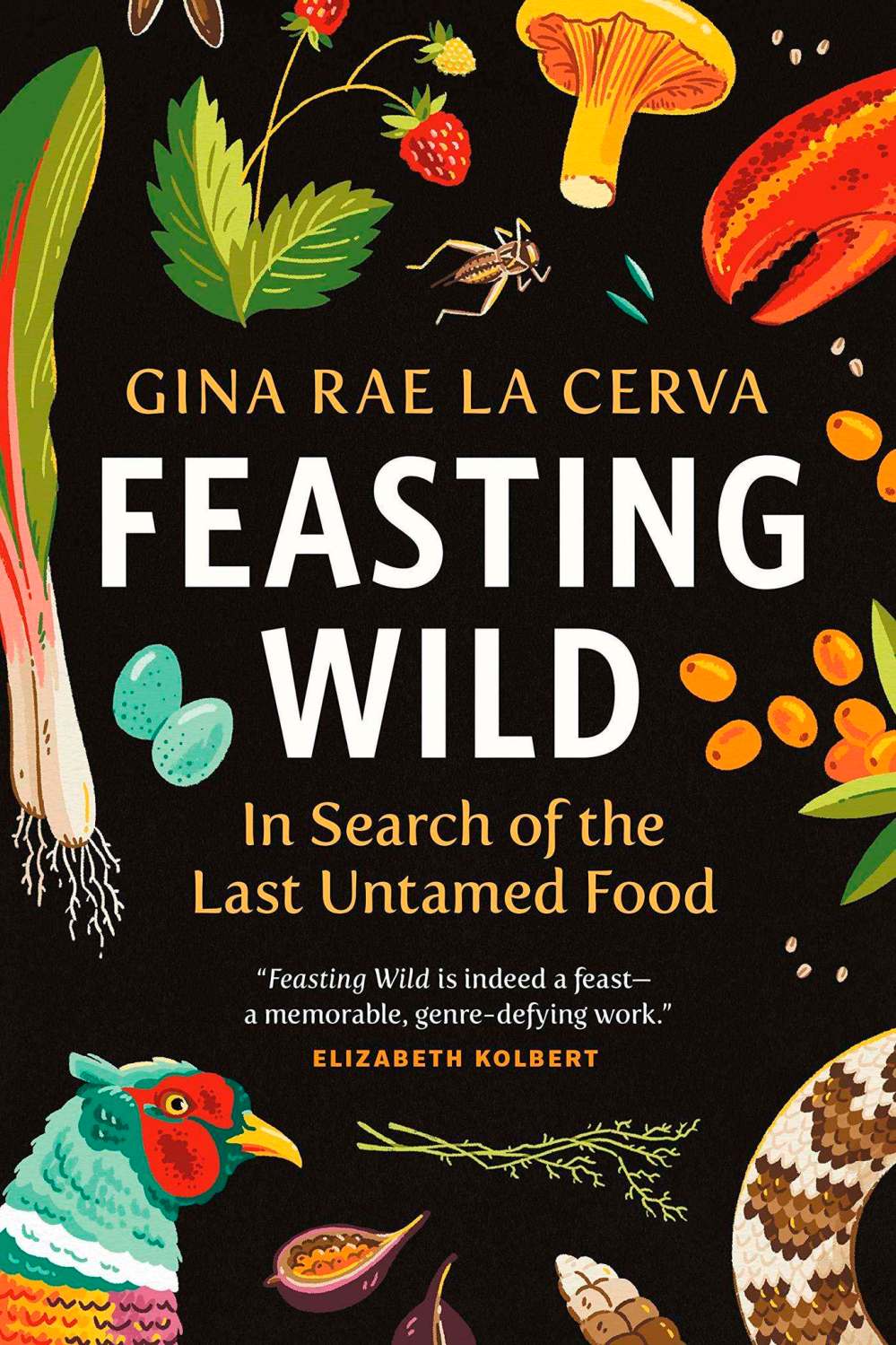
Like Pollan, La Cerva peppers her humanity-spanning journey with absorbing anecdotes, far-ranging factoids and many examples of her personal fascination with the flavours and textures of food and life. She borrows the conceit Pollan foreshadowed in his subtitle, A Natural History of Four Meals, the idea of capping each major section of his book with a representative meal.
He did it better, in part because he had far fewer meals, but in part because he used these to lay bare the major themes of the preceding chapters, where La Cerva’s chapters often lack a clear theme in the first place. The opening chapter on herbs and insects would actually seem to make a lot of sense, as these are both foods gathered rather than hunted and available even to small patches of urban greenery, but the insect stuff feels tacked on and the main takeaway of the chapter unclear.
This is followed by a chapter on “heavy beasts, mushrooms, and wild honey,” which is even more disjointed, as it merely discusses three unrelated forms of wild food serially, two of which are revisited in a later chapter.

Chapters are actually tied more to place than to specific food types. The author visits the famous Noma restaurant in Denmark, the last of Europe’s ancient forest in Poland, the game preserves of the Democratic Republic of the Congo. This would be an interesting way to organize a book — because perhaps understanding the sorts of meals people eat tells you something about the people themselves. But no, this isn’t what is happening here either.
Pollan structured his book to build up an argument about the ways in which we have become disconnected from the food we eat, and the effects this has had on our public health, the environment, the economy, animal welfare and more. He also lays out some more sustainable ways forward. While the title, jacket copy, and prologue here suggest that La Cerva has likewise developed some insight into a problem many of us didn’t know we had, the purpose of this book never really materializes.
Frequent and sophomoric personal notes, disconnected from the larger narrative, muddy the genre and themes further. One can appreciate the temptation to wax poetic at the foot of primeval forests and dead civilizations, and good popular science writing leans into this, using narrative and emotion to provide context to a collection of facts and ideas in which readers do not necessarily have any technical grounding. But the reader will not know why it seems the author can fall in love with food but not a human being. These two-sentence non-sequiturs are too brief and scattered to add up to anything.
While this all might make it sound like Feasting Wild isn’t a very readable book, the prose is in fact largely competent and the content consistently interesting. Flip to any random page and it may well be absorbing and thought-provoking. The flaws aren’t insurmountable, but they require adjusting one’s expectations and focusing on the journey rather than the destination.
Joel Boyce is a Winnipeg writer and educator.