Burke drops the gloves in bristling bio
Advertisement
Read this article for free:
or
Already have an account? Log in here »
To continue reading, please subscribe:

Digital Subscription
One year of digital access for only $205*
- Enjoy unlimited reading on winnipegfreepress.com
- Read the E-Edition, our digital replica newspaper
- Access News Break, our award-winning app
- Play interactive puzzles
*First annual payment billed as $205.00 + GST for one year. This annual subscription will automatically renew at $233.00 + GST every 52 weeks (10% off the regular annual price of $259.35). Offer available to new and qualified returning subscribers only. Cancel any time.
To continue reading, please subscribe:
Add Free Press access to your Brandon Sun subscription for only an additional
$1 for the first 4 weeks*
- Enjoy unlimited reading on winnipegfreepress.com
- Read the E-Edition, our digital replica newspaper
- Access News Break, our award-winning app
- Play interactive puzzles
*Your next Brandon Sun subscription payment will increase by $1.00 and you will be charged $17.95 plus GST for four weeks. After four weeks, your payment will increase to $24.95 plus GST every four weeks.
Read unlimited articles for free today:
or
Already have an account? Log in here »
Hey there, time traveller!
This article was published 12/12/2020 (2116 days ago), so information in it may no longer be current.
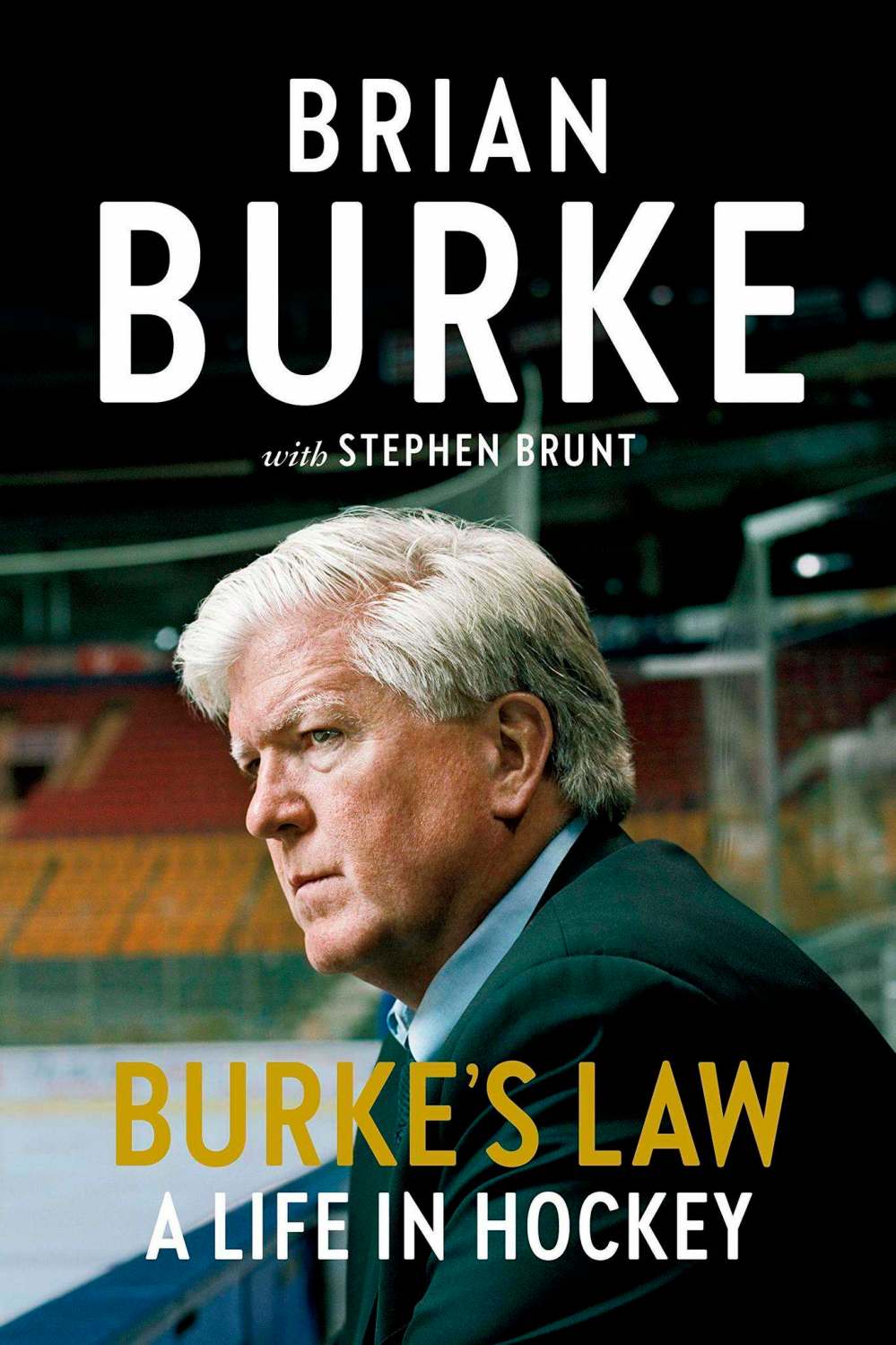
Brian Burke’s memoir is a great read.
But it’s also greatly flawed, both in its language and logic.
Currently a hockey analyst for Sportsnet broadcasts, Burke has a long track record as a hockey executive.
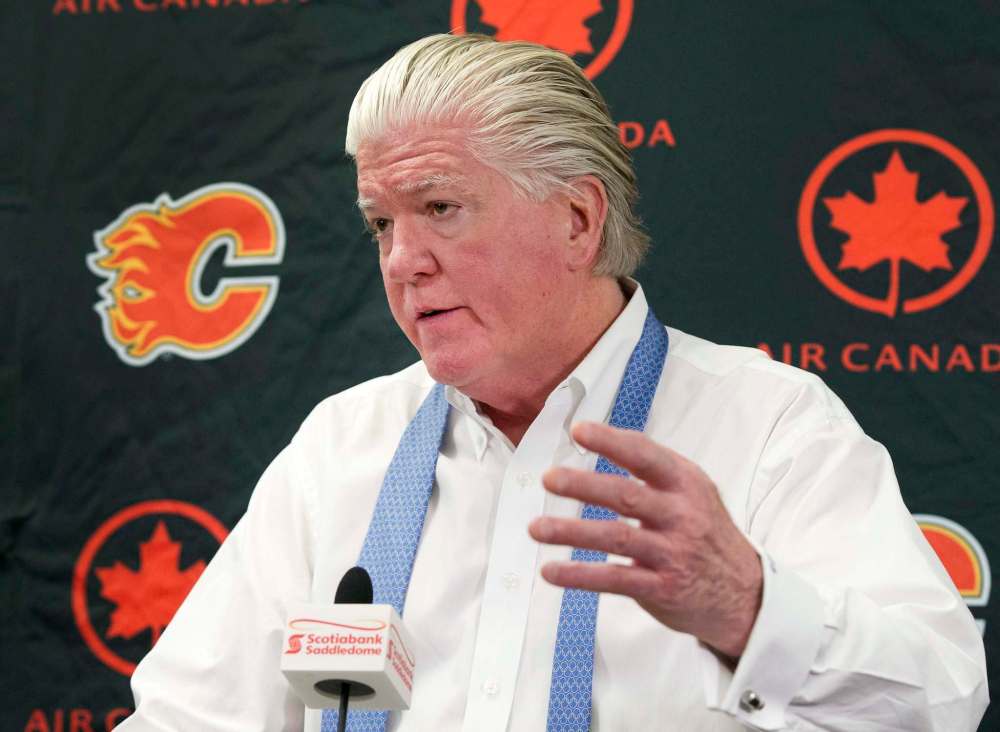
He’s had stints as a vice-president and director of hockey operations with the National Hockey League (NHL) and as a president and/or general manager of five NHL teams (Calgary Flames, Toronto Maple Leafs, Anaheim Ducks, Vancouver Canucks and Hartford Whalers).
Co-author Stephen Brunt is a former Globe and Mail sports reporter and columnist and the author of seven books, including Searching for Bobby Orr (2006) and Gretzky’s Tears (2009).
Burke has a law degree from Harvard University and an undergraduate history degree from Providence College. Brunt is an award-winning veteran journalist.
Both are literate men, capable of adroit manipulation of the English language.
Which leads you to wonder why their book is so laced with profanity.
Variants of the “f” word abound. By way of example, it appears on page 1 as an adjective, on page 2 as a noun and on page 3 as an adjective.
It surfaces regularly thereafter throughout the book (and so frequently this reviewer gave up the count).
Employing the “f” word at every turn is lazy, and lousy, writing. Tossed around so liberally, it loses any residual punch it might have carried if used sparingly.
Worse, its omnipresence distracts from the narrative, which is a good one, because Burke has an interesting story to tell.
There’s lots of juicy insider stuff here about evaluating and drafting young players, negotiating contracts, making trades and dealing with the league salary cap.
Burke famously managed to draft the Sedin twins, Daniel and Henrik, for the Vancouver Canucks in 1999. How he did that is still the stuff of hockey legend, and you get it straight from the horse’s mouth here.
He also, while running the Anaheim Ducks, pulled off a trade with the Edmonton Oilers that saw star defenceman Chris Pronger join the Ducks — a master stroke that gave them the jam to win the 2007 Stanley Cup.
Burke likes his hockey with plenty of fighting.
“I have no problem with fighting, and I’m never going to apologize for being a fighting guy,” he writes. “I believe in it.”
He even complains there’s not enough fighting, allowing that “I don’t always like the way the game is played now. There’s too much flag football being played.”
The problem with that stance is that it leads to tragic results, one of the very worst of which occurred on his watch.
In a March 2004 game between the Vancouver Canucks and Colorado Avalanche, while Burke was general manager of the Canucks, Vancouver player Todd Bertuzzi twice sucker punched Colorado player Steve Moore in the back of the head. Moore hit the ice face first, and players from both teams piled on top of the pair.
Moore suffered fractured neck vertebrae, a concussion and facial cuts. The attack ended his professional hockey career. It also resulted in criminal charges against Bertuzzi and a civil suit against Bertuzzi and the Vancouver Canucks.
But in Burke’s spinning of the incident, and its fallout, Bertuzzi suffered as much, if not more than, Moore. He laments that Bertuzzi thereafter ceased to be an on-ice pugilist.

“Todd was never the same player again,” he writes. “He wasn’t as committed physically. I think he was afraid of hurting somebody.”
Burke’s memoir is gossipy, names names and pulls no punches, which makes it an engaging read.
But beware, this is also memoir as self-justification.
Enjoy it. But don’t believe everything you read.
Douglas J. Johnston is a Winnipeg lawyer and writer.
History
Updated on Saturday, December 12, 2020 1:58 PM CST: Corrects that Burke is a hockey analyst for Sportsnet broadcasts