Upstart fictional band can carry a tune

Advertisement
Read this article for free:
or
Already have an account? Log in here »
To continue reading, please subscribe:

Digital Subscription
One year of digital access for only $205*
- Enjoy unlimited reading on winnipegfreepress.com
- Read the E-Edition, our digital replica newspaper
- Access News Break, our award-winning app
- Play interactive puzzles
*First annual payment billed as $205.00 + GST for one year. This annual subscription will automatically renew at $233.00 + GST every 52 weeks (10% off the regular annual price of $259.35). Offer available to new and qualified returning subscribers only. Cancel any time.
To continue reading, please subscribe:
Add Free Press access to your Brandon Sun subscription for only an additional
$1 for the first 4 weeks*
- Enjoy unlimited reading on winnipegfreepress.com
- Read the E-Edition, our digital replica newspaper
- Access News Break, our award-winning app
- Play interactive puzzles
*Your next Brandon Sun subscription payment will increase by $1.00 and you will be charged $17.95 plus GST for four weeks. After four weeks, your payment will increase to $24.95 plus GST every four weeks.
Read unlimited articles for free today:
or
Already have an account? Log in here »
Hey there, time traveller!
This article was published 26/12/2020 (2101 days ago), so information in it may no longer be current.
There may be no author whose collected work spans such a beautifully realized diversity of genres — sometimes even within a single book — as David Mitchell.
The British novelist’s latest, Utopia Avenue, doesn’t disappoint in that regard, catapulting us into a vividly rendered England of the ‘60s. The book is a kaleidoscopic saga, reflective of the psychedelic, paisley-powered era it conveys.
It’s the story of a mismatched group of musicians: fleet-fingered guitarist Jasper de Zoet, whose wicked riffs make up for his lack of social skills; ethereal-voiced keyboardist Elf, who brings a delicate folk sensibility to the group; dreamboat bassist Dean, a working-class blues-rocker with a knack for melody; and wildman drummer Griff, a foul-mouthed Scot.
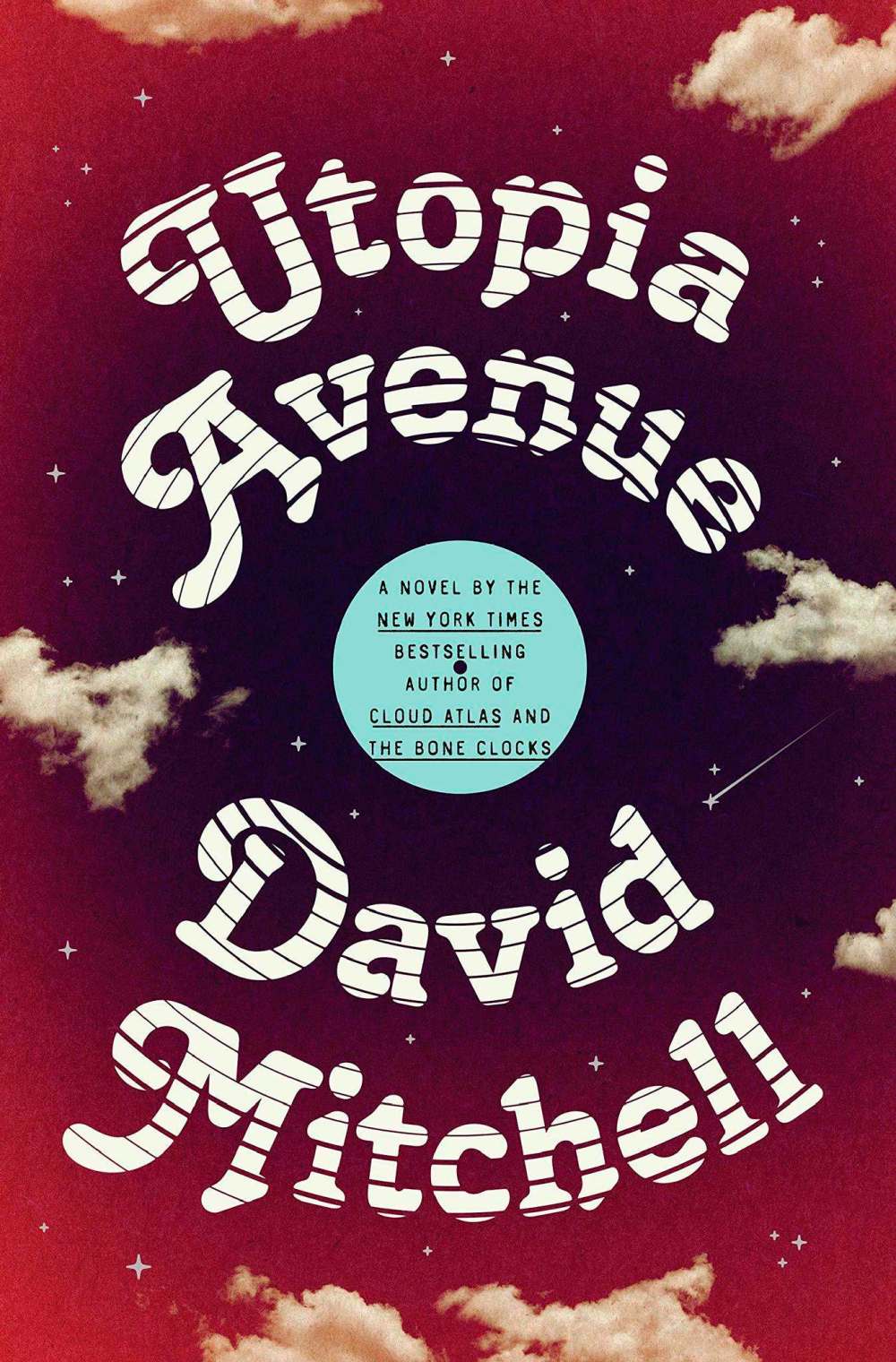
This ragtag bunch are unlikely bandmates, but manager Levon Frankland — like Simon Cowell, but less mercenary and smug, and Canadian to boot — rightly predicts that bringing them together will result in a kind of musical alchemy.
Utopia Avenue, as the band comes to call itself, finds itself part of the whirlwind of a thriving music scene of 1967, and Mitchell nails the electric excitement of finding oneself on the cusp of fame, where idols can become peers.
But while Utopia Avenue is as compulsively readable as any of Mitchell’s work (which includes Cloud Atlas and The Bone Clocks) because of its vivid sense of place and the way he takes us inside his characters’ heads, there are some stumbling blocks here that feel jarring.
The author peppers the narrative with real people, mostly musicians from the era — Janis Joplin, Jerry Garcia, Brian Jones, Leonard Cohen, Sandy Denny — and their interactions with the characters can feel forced and cringey, especially when he puts words in their mouths.
A clever bit of foreshadowing is weakened by Mitchell feeling compelled to flash back to it directly before the events it foretold, which feels like a sign of disdain for the attention of the reader.
More troublesome to new readers may be Mitchell’s penchant for weaving characters and ideas from earlier books into his work, what fans call his multiverse. It can be a fun sleuthing game for longtime readers (who will recognize Levon from The Bone Clocks) but in this case, even those familiar with the author’s oeuvre may be baffled by some of the supernatural tangents shoehorned into the plot.
It’s not a coincidence that Jasper shares a last name with the title character of Mitchell’s 2010 opus, The Thousand Autumns of Jacob de Zoet, but the flashbacks to his youth and callbacks to characters in that book come off as a stunt, rather than an organic part of the story.

Other meanderings of the plot are more welcome. Like the albums of Utopia Avenue, the story is told in alternating fashion from the perspectives of songwriters Dean, Elf and Jasper (in fiction as in real life, the drummer gets no respect) and Mitchell’s ability to capture distinct voices is wondrous.
Although the moments onstage are thrilling — we get a strong sense of what Utopia Avenue would sound like, but even better, a sense of how thrilling it would be to have an audience respond to one’s music — it’s the homier moments that propel the story: Dean’s relationship with his alcoholic father; Elf’s inability to escape her ass of a boyfriend; a heartbreaking family tragedy for Griff. Even Levon gets a chapter, taking us in the underground gay clubs of London.
Mitchell weaves these strands into a plot that isn’t much more than a document of the short rise of a band that burned brightly for just a moment, but he makes it feel monumental, with flawless period detail and nods to the familiar biographies of bands of the era (Dean’s brief incarceration for drug possession in Rome, for instance). Band squabbles and artistic collaboration are set against a backdrop of sex, drugs and rock and roll, which itself is set against the backdrop of revolution and protest of the era.
The saying goes, if you remember the ‘60s, you weren’t really there. Born in 1969, Mitchell wasn’t there, but with Utopia Avenue, he’s created a pretty decent time machine.
Jill Wilson, like David Mitchell, gives the drummer no respect.
Jill Wilson is the editor of the Arts & Life section. A born and bred Winnipegger, she graduated from the University of Winnipeg and worked at Stylus magazine, the Winnipeg Sun and Uptown before joining the Free Press in 2003. Read more about Jill.
Jill oversees the team that publishes news and analysis about art, entertainment and culture in Manitoba. It’s part of the Free Press‘s tradition, since 1872, of producing reliable independent journalism. Read more about Free Press’s history and mandate, and learn how our newsroom operates.
Our newsroom depends on a growing audience of readers to power our journalism. If you are not a paid reader, please consider becoming a subscriber.
Our newsroom depends on its audience of readers to power our journalism. Thank you for your support.
Jill Wilson is the editor of the Arts & Life section. A born and bred Winnipegger, she graduated from the University of Winnipeg and worked at Stylus magazine, the Winnipeg Sun and Uptown before joining the Free Press in 2003. Read more about Jill.
Jill oversees the team that publishes news and analysis about art, entertainment and culture in Manitoba. It’s part of the Free Press‘s tradition, since 1872, of producing reliable independent journalism. Read more about Free Press’s history and mandate, and learn how our newsroom operates.
Our newsroom depends on a growing audience of readers to power our journalism. If you are not a paid reader, please consider becoming a subscriber.
Our newsroom depends on its audience of readers to power our journalism. Thank you for your support.
Advertisement Advertise With Us
Advertisement Advertise With Us