Heavy artillery

Tackling climate change requires wartime mentality, Klein argues

Advertisement

Advertise with us

The book is new, but the idea has circulated around environmental groups for years: If climate change was treated as a threat the same way conflicts were, enough political might could be rallied to address the problem.

Read this article for free:


or

Already have an account? Log in here »

To continue reading, please subscribe:

Subscribe and receive a limited-edition Free Press branded hat or tote.

Digital Subscription

One year of digital access for only $205*

  • Enjoy unlimited reading on winnipegfreepress.com
  • Read the E-Edition, our digital replica newspaper
  • Access News Break, our award-winning app
  • Play interactive puzzles

*First annual payment billed as $205.00 + GST for one year. This annual subscription will automatically renew at $233.00 + GST every 52 weeks (10% off the regular annual price of $259.35). Offer available to new and qualified returning subscribers only. Cancel any time.

To continue reading, please subscribe:

Add Free Press access to your Brandon Sun subscription for only an additional

$1 for the first 4 weeks*

  • Enjoy unlimited reading on winnipegfreepress.com
  • Read the E-Edition, our digital replica newspaper
  • Access News Break, our award-winning app
  • Play interactive puzzles
Start now

*Your next Brandon Sun subscription payment will increase by $1.00 and you will be charged $17.95 plus GST for four weeks. After four weeks, your payment will increase to $24.95 plus GST every four weeks.

Hey there, time traveller!
This article was published 16/01/2021 (2071 days ago), so information in it may no longer be current.

The book is new, but the idea has circulated around environmental groups for years: If climate change was treated as a threat the same way conflicts were, enough political might could be rallied to address the problem.
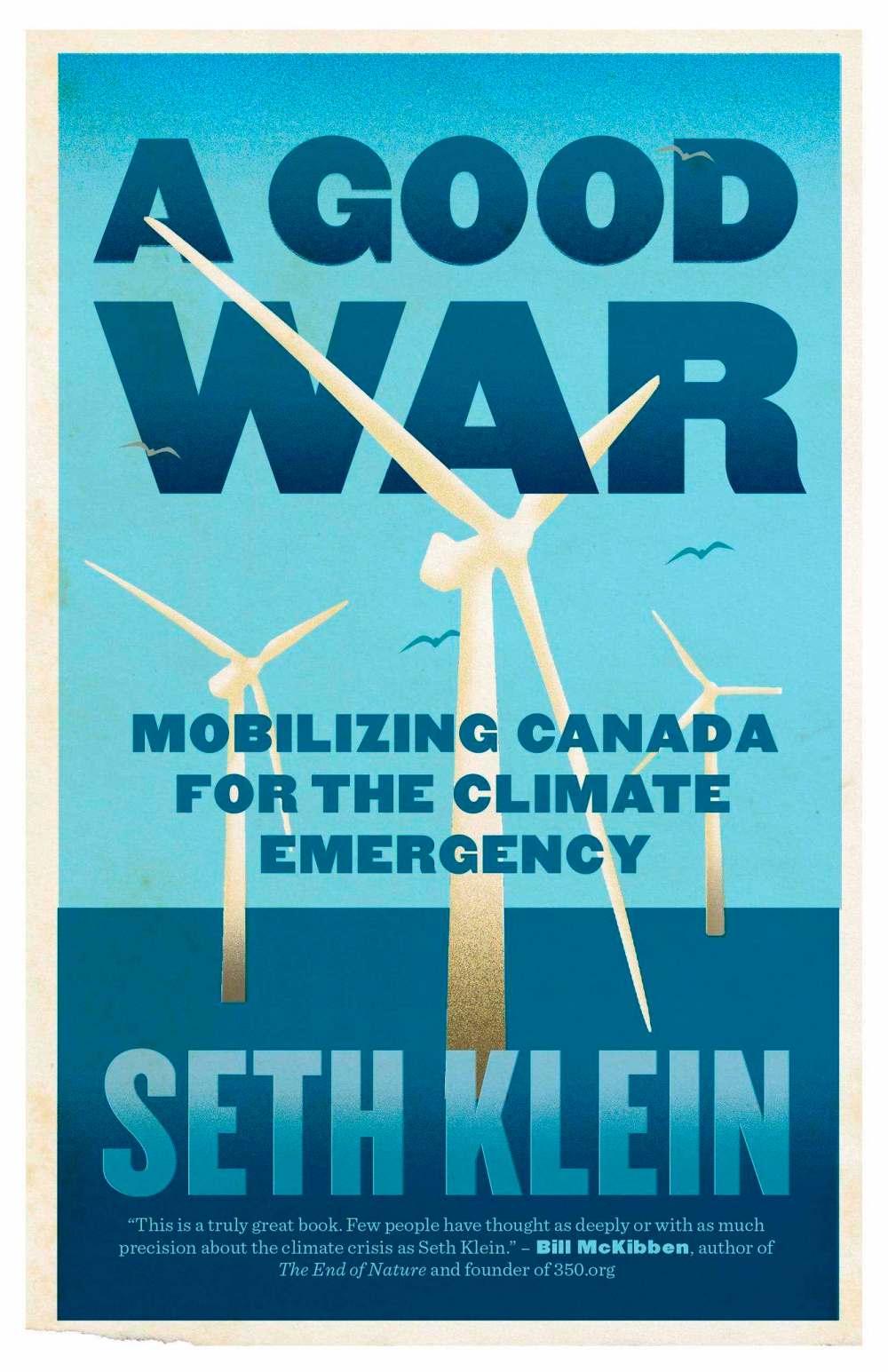
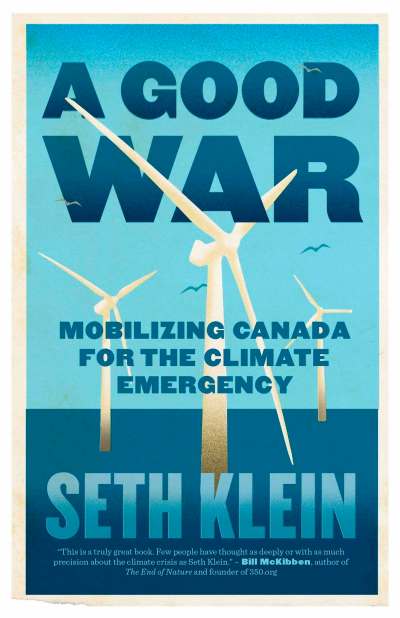
In fact, this is the underlying argument for climate change policy proposals like the Green New Deal in the United States. In A Good War author Seth Klein takes this concept and uses the Canadian context to explain how the country could use lessons from the Second World War and apply them to the fight against climate change.

Klein is a public policy writer and researcher, and served as the founding director of the Canadian Centre for Policy Alternatives in B.C. (Klein’s sister, Naomi Klein, is a climate activist and has published books such as This Changes Everything and On Fire: The Burning Case for A Green New Deal.)

In his introduction, Klein writes that he is the last person who ever intended to write a book about war, having been born to pacifist parents who came to Canada as conscientious objectors to the Vietnam War. But he makes the case that there is no other example in modern history that offers a framework for how to rally the political will, economic and industrial resources as well as the support of the people to tackle climate change.

“The wartime example is also informative because the climate crisis, like the Second World War, can be confronted only by all of us together,” Klein writes. “We are told to fix this ourselves as consumers or to embrace the capacity of the market to develop and adopt new technologies if given the right price signals and incentives. Neither of these approaches can or will work on their own.”

Erin Flegg photo
In his new book, author Seth Klein explains how Canada could use lessons learned during the Second World War and apply them to the fight against climate change.
Erin Flegg photo In his new book, author Seth Klein explains how Canada could use lessons learned during the Second World War and apply them to the fight against climate change.

Klein uses historical examples from the Second World War to outline a number of parallels between the two challenges, pointing out that the issues we face now are not only common but predictable. This begins with the hesitancy to confront the threat head-on. Before the war started, then-Canadian prime minister William Lyon Mackenzie King originally tried to dismiss Adolf Hitler as “no serious danger” and even once Canada committed to the war effort, leadership was indecisive on the prospect of deploying troops. Today, climate change faces denialism at every turn in various forms.

One might think that Klein is taking aim at modern Conservative politicians, but they’re far from alone, with Prime Minister Justin Trudeau, former Alberta premier Rachel Notley and B.C. Premier John Horgan all named as complicit in the problem at hand. He accuses them of opting for policies that are “considered politically possible” but fall short of what is needed.

Klein writes with an attitude of frustration with the status quo, but also of deep hope that things can and will change. He challenges conventional economic thinking, as well as the institutions that perpetuate inequality.

But the bulk of Klein’s argument is outlined in his 63-page chapter on how economic resources could be remodeled in short order to address the climate crisis and lead Canada to be a leader in a net-zero world.

The book is topical, weaving in 2019 public opinion polling data. It’s accessible and not bogged down by technical policy or scientific jargon. Klein explains the thinking he is fighting against, and in the end is convincing in his argument for why a wartime effort is needed to address climate change. Unfortunately, it still comes off as idealistic, if only because of all of the obstacles he names outright.

But perhaps a little idealism is warranted in the face of an existential threat.

Sarah Lawrynuik is the Winnipeg Free Press’ climate change reporter.

Report Error Submit a Tip

More Stories

Police officer faces charges of domestic assault

Free Press staff 2 minute read Preview

Police officer faces charges of domestic assault

Free Press staff 2 minute read 4:26 PM CDT

A Winnipeg police officer has been charged after police said he broke into a woman’s home and attacked her.

Police were sent to a home on Wednesday shortly before 10:20 p.m., the Winnipeg Police Service said in a Thursday news release. When officers arrived, they found the man, 20-year member in his 40s, inside a home assaulting the woman, the release said.

The man was taken into custody and the woman was given medical aid.

She told officers the man broke into the home, threatened to kill her and then attacked her.

Read
4:26 PM CDT

‘A new future’: city dentist Cholakis donates $2M to school of dental hygiene

Melissa Martin 3 minute read Preview

‘A new future’: city dentist Cholakis donates $2M to school of dental hygiene

Melissa Martin 3 minute read Updated: 3:25 PM CDT

Dental hygienist training in Manitoba is getting a big boost, after a major gift from a local dentist.

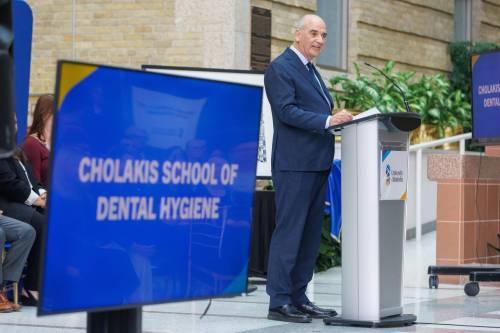
On Thursday, the dental hygiene school at the University of Manitoba’s Dr. Gerald Niznick College of Dentistry unveiled a new $2-million donation from Dr. Ernest Cholakis. It’s the largest gift the program has ever received, and in honour of the funding, the school will be named the Cholakis School of Dental Hygiene.

The gift was unveiled at a ceremony Thursday morning at the U of M’s Brodie Centre in the Health Sciences Centre complex. The benefactor and other dignitaries, including Premier Wab Kinew, were in attendance, as well as the three-year program’s current students.

Cholakis, who graduated from the U of M’s dentistry school in 1982, had high praise for the dental hygiene profession.

Read
Updated: 3:25 PM CDT

Online fundraiser for ‘polite, modest farmer’ facing firearms charges sending message, neighbour says

Nicole Buffie 4 minute read Preview

Online fundraiser for ‘polite, modest farmer’ facing firearms charges sending message, neighbour says

Nicole Buffie 4 minute read Yesterday at 5:45 PM CDT

Thousands of dollars have been raised to help cover the legal fees of a Manitoba man charged after he allegedly fired a gun at thieves during a theft on his farm in August.

Read
Yesterday at 5:45 PM CDT

Heavy artillery

 Reviewed by Sarah Lawrynuik 4 minute read Preview

Heavy artillery

 Reviewed by Sarah Lawrynuik 4 minute read Saturday, Jan. 16, 2021

The book is new, but the idea has circulated around environmental groups for years: If climate change was treated as a threat the same way conflicts were, enough political might could be rallied to address the problem.

In fact, this is the underlying argument for climate change policy proposals like the Green New Deal in the United States. In A Good War author Seth Klein takes this concept and uses the Canadian context to explain how the country could use lessons from the Second World War and apply them to the fight against climate change.

Klein is a public policy writer and researcher, and served as the founding director of the Canadian Centre for Policy Alternatives in B.C. (Klein’s sister, Naomi Klein, is a climate activist and has published books such as This Changes Everything and On Fire: The Burning Case for A Green New Deal.)

In his introduction, Klein writes that he is the last person who ever intended to write a book about war, having been born to pacifist parents who came to Canada as conscientious objectors to the Vietnam War. But he makes the case that there is no other example in modern history that offers a framework for how to rally the political will, economic and industrial resources as well as the support of the people to tackle climate change.

Read
Saturday, Jan. 16, 2021

Kinew delivered what most of us wanted; now we’ll have to deal with the consequences

Dan Lett 5 minute read Preview

Kinew delivered what most of us wanted; now we’ll have to deal with the consequences

Dan Lett 5 minute read 4:35 PM CDT

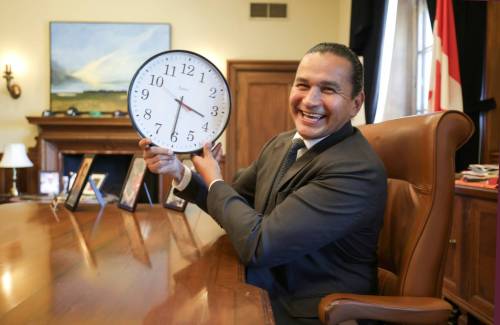
Premier Wab Kinew has decided to adopt permanent daylight savings time, which means a permanent end to the spring forward, fall back tradition of adjusting our clocks. And absolutely no one is surprised.

Read
4:35 PM CDT

Federal Court awards OCN $27M, 62 years after construction of hydro dam

Nicole Buffie 5 minute read Preview

Federal Court awards OCN $27M, 62 years after construction of hydro dam

Nicole Buffie 5 minute read Updated: Yesterday at 12:02 PM CDT

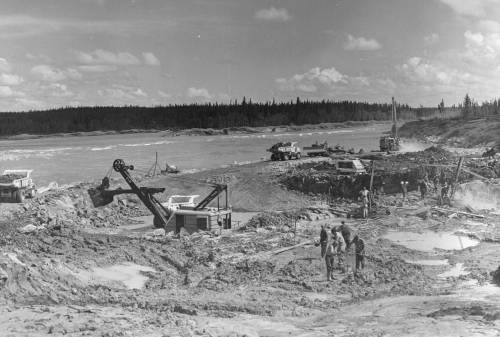
The Federal Court has ordered Ottawa pay Opaskwayak Cree Nation $27 million over damages suffered due to the construction of the Grand Rapids hydro dam in the 1960s.

In a decision dated Sept. 3, Federal Court Justice Sébastien Grammond says the federal government had a fiduciary duty to protect the community from the impacts of the dam.

“When the Crown exercises a discretionary power over an Indigenous interest, it has a fiduciary duty and it must exercise the discretion in the best interests of the Indigenous group,” the ruling said. “Canada breached its fiduciary duty to OCN because it approved the (project) without ensuring that the impacts of the Grand Rapids dam on OCN’s traditional way of life were mitigated or compensated.”

The First Nation took the federal government to court in February over impacts on the community after the dam, located about 145 kilometres southeast of Opaskwayak Cree Nation, was installed on the Saskatchewan River in 1964. The case was heard over 14 days in a judge-alone trial in Winnipeg.

Read
Updated: Yesterday at 12:02 PM CDT