Newfoundland rom-com the best kind? Yes b’y
Advertisement
Read this article for free:
or
Already have an account? Log in here »
To continue reading, please subscribe:

Digital Subscription
One year of digital access for only $205*
- Enjoy unlimited reading on winnipegfreepress.com
- Read the E-Edition, our digital replica newspaper
- Access News Break, our award-winning app
- Play interactive puzzles
*First annual payment billed as $205.00 + GST for one year. This annual subscription will automatically renew at $233.00 + GST every 52 weeks (10% off the regular annual price of $259.35). Offer available to new and qualified returning subscribers only. Cancel any time.
To continue reading, please subscribe:
Add Free Press access to your Brandon Sun subscription for only an additional
$1 for the first 4 weeks*
- Enjoy unlimited reading on winnipegfreepress.com
- Read the E-Edition, our digital replica newspaper
- Access News Break, our award-winning app
- Play interactive puzzles
*Your next Brandon Sun subscription payment will increase by $1.00 and you will be charged $17.95 plus GST for four weeks. After four weeks, your payment will increase to $24.95 plus GST every four weeks.
Read unlimited articles for free today:
or
Already have an account? Log in here »
Hey there, time traveller!
This article was published 06/03/2021 (2042 days ago), so information in it may no longer be current.
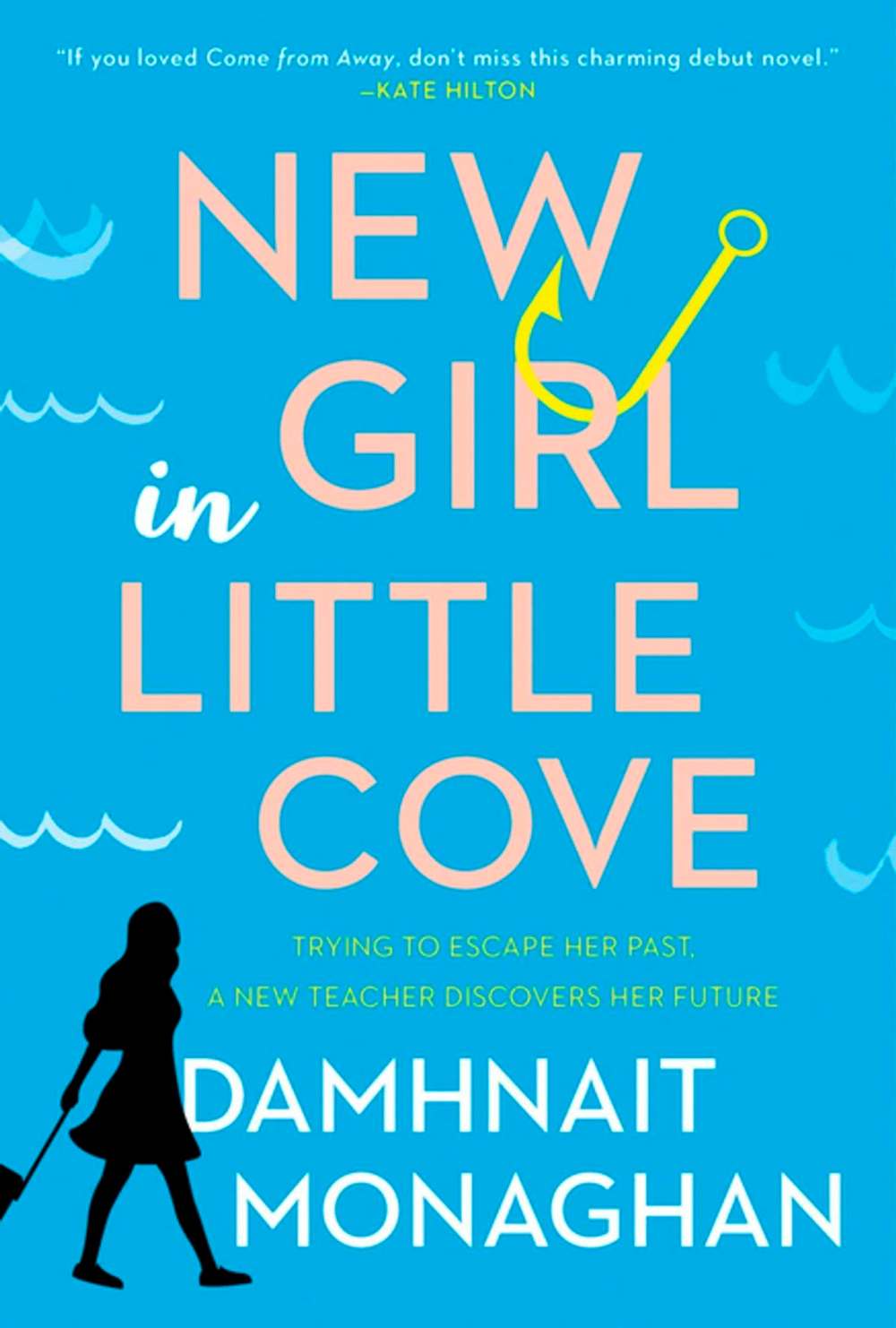
About three minutes into New Girl in Little Cove and I am whisked back nearly 40 years, settling comfortably into a chair in a pub in Deer Lake, N.L., enjoying (if not fully understanding) the local accent and toe tapping along to the island music which, along with cigarette smoke, saturates the pub.
Rachel O’Brien, the central character in Damhnait Monaghan’s rom-com set in outport Newfoundland, is a Come From Away — the term used for those who aren’t native Newfoundlanders. She struggles to adjust to this strange new world with its old traditions and culture.
O’Brien, a 23-year-old French teacher, has left behind a cheating ex-boyfriend in Toronto, but has brought along the sorrow over her father’s recent death. She was hastily recruited to replace the school’s French teacher, who ran off with the village priest. Local betting is the errant teacher will return with the “Irish toothache” (pregnant).
The characters in Little Cove are portrayed with such depth and warmth that it’s easy to suspect Monaghan is painting pictures of people she knew from her own time spent as a teacher in outport Newfoundland.
O’Brien’s difficulty grasping the Newfoundland accent and dialect (the province is pronounced New FUND Land by the locals), and her sharp tongue, often leads to problems, and provide much of the humour along the way. She might have foreseen the trouble when she was being interviewed for the job. What she heard was “Are you an arsey?” What was asked was “Are you an R.C.?” (as in Roman Catholic).
When O’Brien thinks a student has called her a slut, the principal explains she was called a scut — a mean person. O’Brien doesn’t think that’s fair, but the principal reminds her that she is the one who has to fit in. Adjusting to life in a community where “people know what you have had for breakfast before you’ve brushed your teeth” is difficult.
Appalled by the way Newfoundlanders speak English, she considers starting a remedial English club. She broaches the idea to another new teacher, Doug (who will become the romantic interest before the novel is over). His violent reaction surprises her. “I sees who you are now. Little Miss Mainlander wants to help us poor dumb Newfoundlanders talk nice. Is that it?” He goes on to explain that the Newfoundland dialect has its roots in Irish, Scottish and Gaelic, and he sits her down with a copy of Dictionary of Newfoundland English.
O’Brien comes to understand that “My snooty aversion to the locals’ speech and my lack of appreciation for their distinct dialect was no different than the attitude of many French-speaking purists towards the Québécois.”
There is occasion for a good chuckle at O’Brien’s expense. She is developing a rapport with some of the older girls. When they tell her one girl is mad at her boyfriend because he “hung a rat in her face” she steps right into it with a question. “Was it dead?” From the laughter this produces, she realizes this may not have been the right response. One of the girls explains it to her. “He took down his pants and wiggled his bird in her face.” Rather than respond, O’Brien beats a hasty retreat.
The school caretaker, Phonse, helps her ease into local life, as does her landlady Lucille and her friends, who shock O’Brien when they tell her they are hookers — by which they mean they hook rugs. The three women are also known as the Holy Dusters because they clean the church.
One day, a student’s dog falls into the water, and is unable to climb out onto the ice. O’Brien tries to pull the dog out, but can’t, so she jumps into the freezing water and pushes it out onto the ice.
That rescue cements her acceptance as a member of the community. Lucille explains to her that it wasn’t the dog that mattered to people, it was the rescue. That day will stay in people’s memories, she says. “You took on the sea, and you won. And those days are to be celebrated around here.”
Gordon Arnold is a Winnipeg writer.