Deep divides
Rift between India’s modern and traditional cultures at the core of Umrigar’s latest novel
Advertisement
Read this article for free:
or
Already have an account? Log in here »
To continue reading, please subscribe:

Digital Subscription
One year of digital access for only $205*
- Enjoy unlimited reading on winnipegfreepress.com
- Read the E-Edition, our digital replica newspaper
- Access News Break, our award-winning app
- Play interactive puzzles
*First annual payment billed as $205.00 + GST for one year. This annual subscription will automatically renew at $233.00 + GST every 52 weeks (10% off the regular annual price of $259.35). Offer available to new and qualified returning subscribers only. Cancel any time.
To continue reading, please subscribe:
Add Free Press access to your Brandon Sun subscription for only an additional
$1 for the first 4 weeks*
- Enjoy unlimited reading on winnipegfreepress.com
- Read the E-Edition, our digital replica newspaper
- Access News Break, our award-winning app
- Play interactive puzzles
*Your next Brandon Sun subscription payment will increase by $1.00 and you will be charged $17.95 plus GST for four weeks. After four weeks, your payment will increase to $24.95 plus GST every four weeks.
Read unlimited articles for free today:
or
Already have an account? Log in here »
Hey there, time traveller!
This article was published 08/01/2022 (1695 days ago), so information in it may no longer be current.
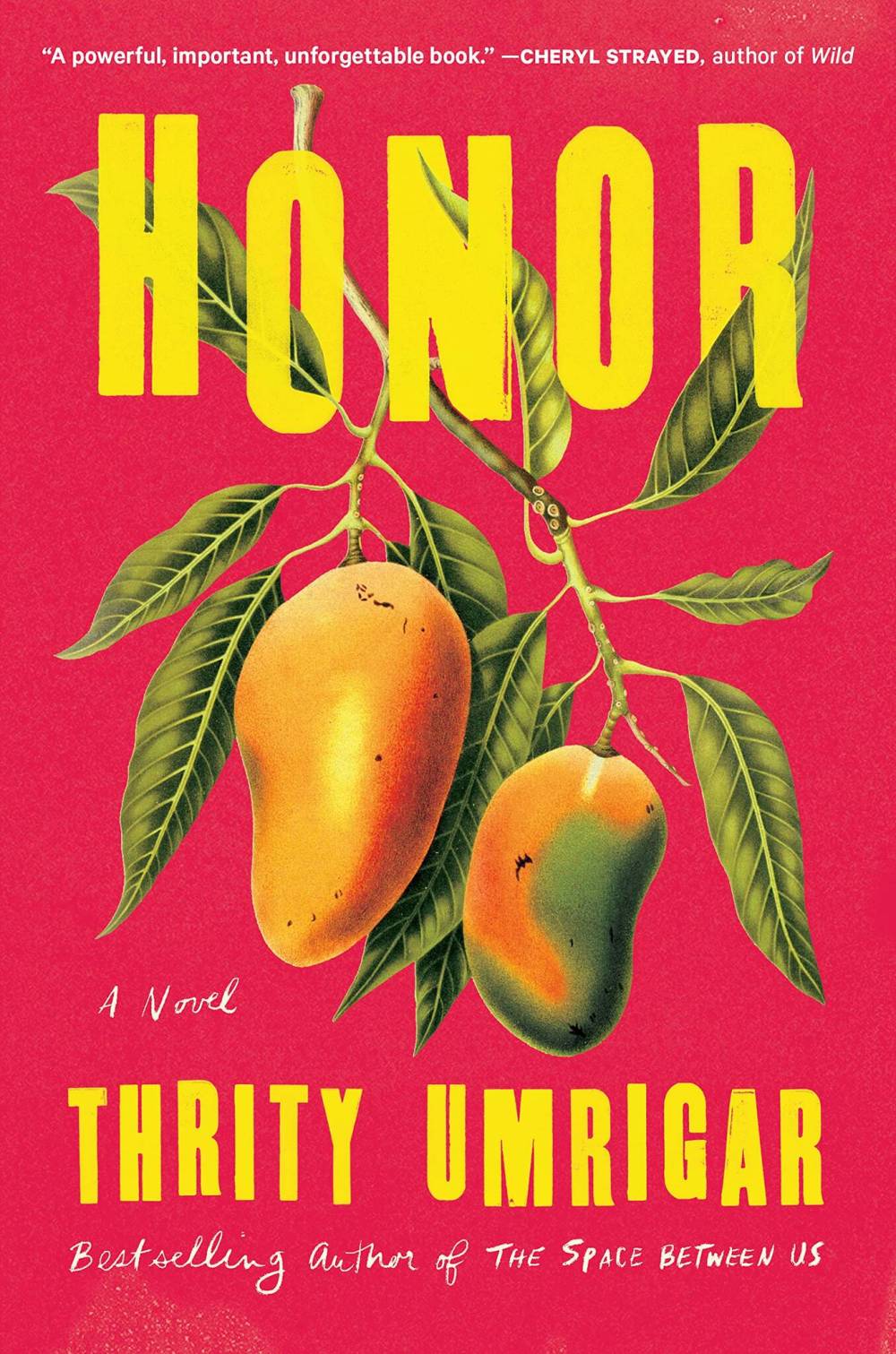
An unthinkably horrifying act lies at the heart of Thrity Umrigar’s novel, Honor: a Muslim man is set on fire and murdered by his two Hindu brothers-in-law, an act encouraged by the head of the village council while local police are bribed to stay away.
Terribly disfigured by her attempt to put out the flames that consumed her beloved husband Abdul, Meena Mustafa accepts a female lawyer’s pro bono offer to bring her brothers to trial for murder. It’s this decision that attracts an American journalist’s attention. Shannon writes about Meena’s bravery in trying to seek justice in her husband’s memory despite her family’s and society’s condemnation of her marriage to a Muslim.
Umrigar was born in Mumbai, the setting for part of Honor. She writes about the unexpected and secret beauty of the metropolis that’s overwhelmed by its human population, its rapid economic development and the pollution that growth brings. She moved to the United States when she was 21 to attend university. A journalist, critic and novelist, Umrigar has written a memoir, eight novels and three children’s books.

Umrigar uses her personal experience as an Indian-American journalist to create the character of Smita Agarwal. Smita also grows up in Mumbai, but leaves for America with her family when she’s 14. Her childhood memories resurface when she’s suddenly called to Mumbai by Shannon, who is hospitalized while awaiting hip surgery. Shannon asks Smita to take over coverage of Meena’s case against her brothers, as a verdict is expected soon. Smita agrees, even though she has actively worked to stay away from India and repress the bad memories it holds for her.
Shannon’s friend Mohan volunteers to accompany Smita to the tiny village where Meena and her young daughter Abru are living with Meena’s mother-in-law. In the Indian countryside, a woman travelling on her own is unusual, and there is a personal risk involved. Smita points out to Mohan that traditional Indian society dictates very different roles for women and men. This disparity is still common in rural India, where women are primarily expected to look after the home and children, and men to work outside the home. Meena and her sister challenge this traditional view by working as seamstresses at a nearby clothing factory to help supplement the family income. Their older brother Govind is struggling to make a living farming, and their younger brother Arvind is a drunkard. Even though the brothers take all the money their sisters earn, they still believe that women shouldn’t have jobs outside the home.
The bad feelings existing between the siblings reach a breaking point when Meena runs away to marry Abdul, who she meets at the factory. A few months later, the couple return to Meena’s former home and announce her pregnancy to her brothers and sister. Meena tells Smita, “… my older brother, Govind, would not even let us enter his home. He said I already cut his nose by running away to marry a Muslim. But to carry a Muslim child meant that the stain of dishonor would spread through the generations.”
Meena’s plight, caused by the deep religious rifts that continue to exist within modern India, brings back Smita’s memories of a traumatic event also related to Hindu-Muslim conflict. Visiting a former neighbour in the Mumbai apartment building where her family once lived only serves to increase her mental anguish.
In Honor, Umrigar depicts the natural beauty of her former homeland, balancing that depiction with the ravages that development is causing. The deeply held beliefs of rural villagers are slowly changing as their society evolves, but these changes aren’t always viewed as positive by all who are impacted. The ancient and modern faces of India are very different, and Umrigar manages to capture both views in her writing.
Andrea Geary is a freelance writer.